News
Guide to Jimi Hendrix's Essential Effect Pedals
Jimi Hendrix is perhaps the number one cited guitarist regarding influencing in the guitar realm. He learned to play guitar as a teenager and emerged as a rock icon who excited audiences in the 60s with his unique electric guitar playing. One of Hendrix’s most notable appearances was when he performed The Star-Spangled Banner at Woodstock in 1969. Despite his short stint in the limelight, his experimental tendencies, playing style, and creativity have resulted in a lasting legacy. He has been acknowledged as among the best guitarists of all time by icons in their own right, Eric Clapton and Jimmy Page, and his showmanship and expressive style altered the music world for good. Hendrix’s blending of the rhythm and lead styles helped shape his distinctive sound as heard on The Wind Cries Mary and Little Wing, with his impressive chordal playing and embellishments entirely removing the rule book on the conventional roles of the guitarist. Numerous guitarists before Hendrix’s arrival were popular for their technique, several players played pentatonic licks, broad-ranging vibrato, and huge bends, but Hendrix took these and set them to eleven. He had a crazy range of bends—exchange bends, harmony bends, unison bends, and so on. Over four decades after his death, hardly any guitar heroes even approach Hendrix’s status. This guitar icon’s unique musical direction, personal style, and uninhibited playing technique still can be heard, seen, and felt, as well as continues to inspire players around the globe and across age groups. There have been several other players who dabbled with effects since the 1960s, but it was Hendrix who first demonstrated to the world what an electric guitarist could attain with a handful of primitive stompboxes and a lot of imagination. While Hendrix was rightly revered for his live performances, his studio recordings boast daring tone and sonic experiments that will safeguard his spot in the pantheon of icons for as long as individuals play electric guitars. Hendrix employed a variety of amps, guitars, and pedals throughout his career. This article will look into the essential effects he used in his performances. It is important to note, however, that imitating Hendrix’s exact tone is impossible even with the exact gear he employed.
Wah
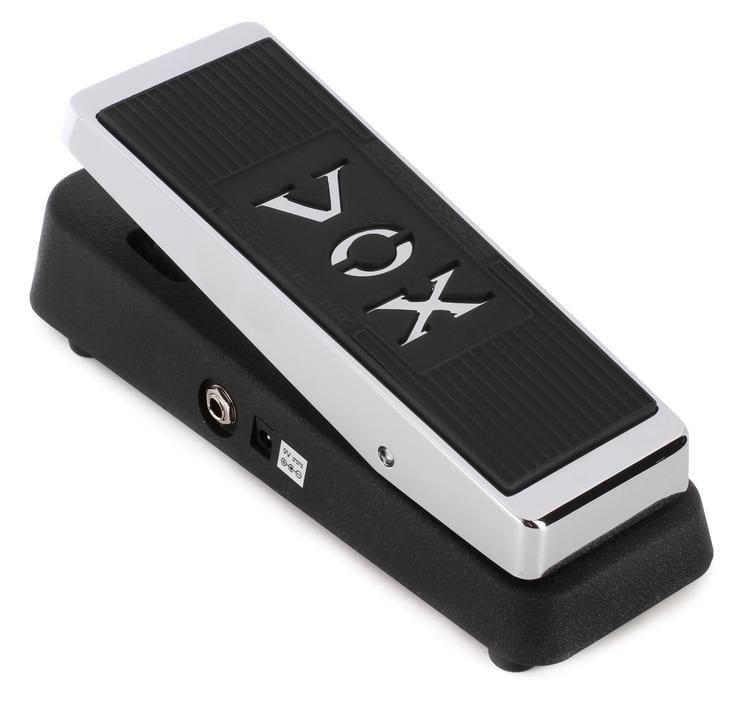
The legendary wah is the most essential piece of gear to yield a Hendrix-esque tone. The stompbox was relatively new when Hendrix burst on the scene in 1967. Until now, only a few guitarist names are more synonymous with wicked wah-driven syncopated rhythms and phenomenal leads. An example of a classic wah inspired song is the Voodoo Child (Slight Return). Hendrix employed VOX wahs, and the Vox V847A is a popular choice. The Vox V847A advances on the V847’s popular design with increased functionality and dynamics, courtesy of some design alterations. A revamped inductor brings the new unit’s specifications even closer to that of the original, while an extra input buffer prevents impedance loading of the guitar signal to keep the guitar’s tone in bypass mode. By remaining faithful to the vibe and tone of the 60s-era Vox wah while furthering its legacy, the V847A presents a modern update on a real classic. It provides guitarists with the same iconic tone plus AC power capability. A more expensive yet great alternative is Dunlop’s Jimi Hendrix Signature Wah. Hendrix fanatics have rated it as a viable option to copy his tone. Spec’d from a 60s design by the Thomas Organ Company and manufactured by JEN in Italy, the Jimi Hendrix Signature Wah is capable of reproducing Hendrix’s classic timbres, and more, with startling accuracy. It boasts the distinctive wah tone heard on classics such as Voodoo Child (Slight Return) and Up From the Sky, among several others. The Jimi Hendrix Signature Wah sports a sleek black Italian crinkle finish aluminum body and flashy chrome top.
Fuzz Distortion
Fuzz distortion is a fundamental component to nail a Hendrix tone. Hendrix utilized a Fuzz Face pedal to add more drive and dirt to his amp. Fuzz distortion is very different from regular overdrive or distortion stompboxes. It will be difficult to capture a decent Hendrix tone without a fuzz pedal.
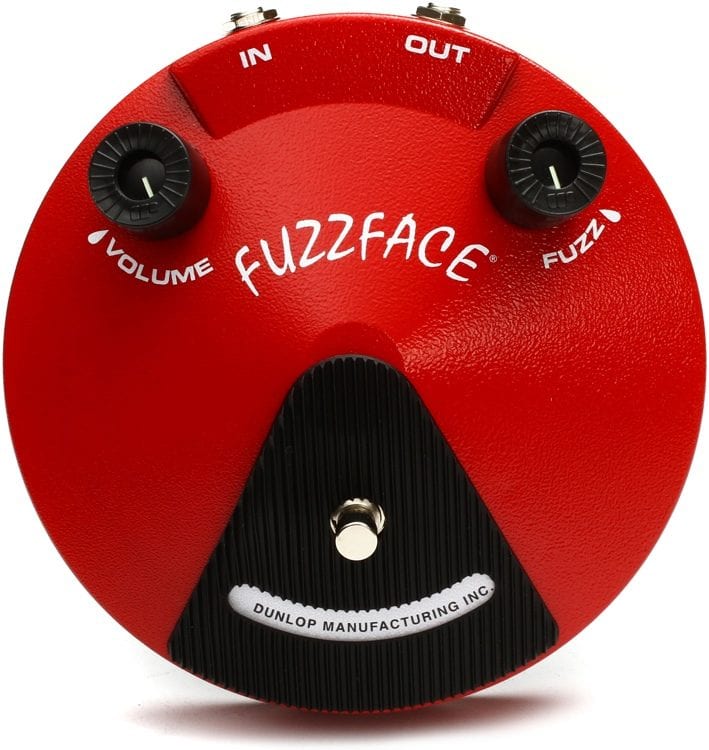
The Fuzz Face is well known for its thick, warm tones. This classic fuzz box, in all of its incarnations, was the fuzz unit Hendrix utilized more than any other. It was also employed by other notable rockers from the ’60s and ‘70s. Fuzz and Volume controls allow users to dial in their ideal sound. Dunlop has released a reissue constructed to the exact specs of the original Dallas Arbiter Fuzz Face. “In stompbox lore, the Fuzz Face Distortion sits among the icons. Its uncanny ability to add harmonic richness and hair around clean tones at lower settings is as satisfying as the full-on roar it wields when dimed and raging. With a roster of power users that includes guitar legends and modern heroes from David Gilmour and Jimi Hendrix to Eric Johnson and Joe Bonamassa, the Fuzz Face has a unique, unmistakable sound no matter the player,” Jim Dunlop describes. The JDF2 Classic Fuzz Face pedal from Dunlop is configured to vintage specifications, boasting the original Germanium PNP transistor design for a lush, creamy fuzz sound. The Fuzz Face is right up the alley of modern guitarists who are big on the great guitar tones of yesteryear. However, there are some drawbacks to consider with the JDF2 Classic Fuzz Face. Firstly, the unit runs exclusively on a 9V battery and has no option for an AC adapter, unless the user modifies it. That might be a problem for guitarists who prefer utilizing a power supply over batteries. Secondly, the JDF2 Classic Fuzz Face is pretty big, and therefore, will consume plenty of precious pedalboard real estate. The good news is that users can find an alternative that offers the same effect with some modern benefits. Designed for a modern pedalboard, the Dunlop FFM2 Germanium Fuzz Face Mini boasts the same iconic Fuzz Face tone in a way pedalboard-friendlier size. Spec’d from the mid-’60s Fuzz Faces with quite mismatched germanium transistors, this distortion stompbox enables users to capture that warm classic fuzz tone. Other features include a bright status LED and true bypass switching. The FFM2 Germanium Fuzz Face Mini is the perfect choice for those seeking that vintage germanium fuzz tone. For Hendrix enthusiasts, another option is the Dunlop Jimi Hendrix Fuzz Face JHW1. Per Jim Dunlop, this awesome stompbox “combines the two different flavors of Fuzz Face Distortion tones—aggressive silicon-based crunch and smooth germanium-based saturation—that Jimi Hendrix used throughout his career, all in a mini MXR housing modern appointments such as a status LED, true-bypass switching, and a 9-volt power jack. Emblazoned with the trippy, kaleidoscopic designs of award-winning UK-based design crüe ILOVEDUST.”
Uni-Vibe
Another vital component to capturing an exceptional Hendrix tone is the Uni-Vibe, which has been invented to emulate the Leslie speaker sound, as it is such a unique and distinctive effect. Think of it as a phaser/chorus/vibrato stompbox. The Uni-Vibe can be utilized to craft rich, swirling, hypnotic tones, or more subtly, to impart a bit of special texture to the tone. It is a perfect addition to a clean sound.
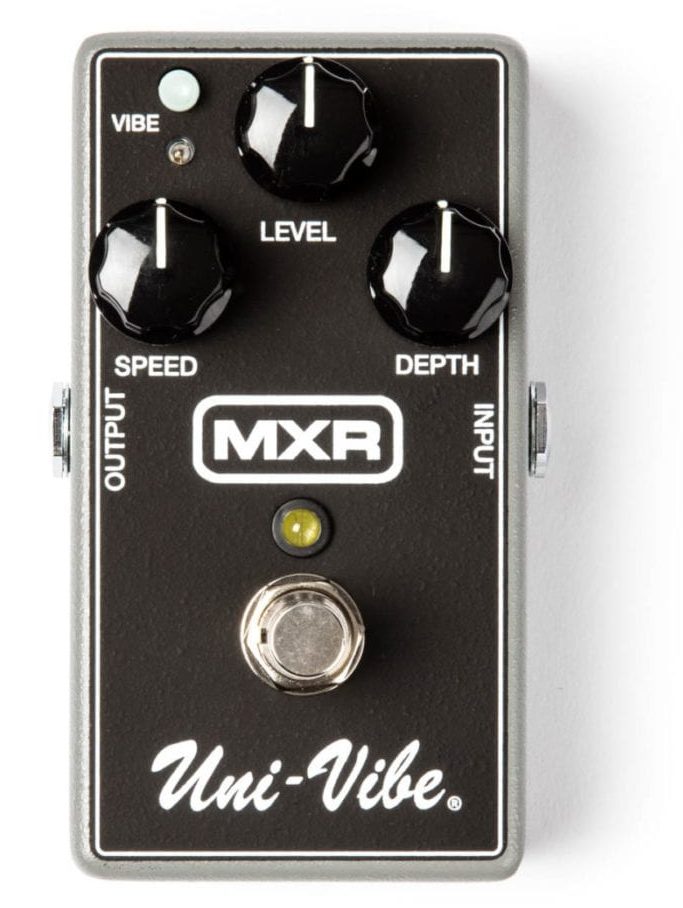
Try using a Uni-Vibe to play Little Wing to see why it is such a significant effect to capture a great Hendrix tone. The Machine Gun is a perfect example of how Uni-Vibe formed Hendrix’s tone. Fanatics of the 60s to 70s guitar-based music will recognize the Vibe on various tacks. Pink Floyd’s David Gilmour employed one up until the early 70s, so individuals can hear it in early Pink Floyd masterpiece. Presently, players can find pedalboard-friendlier options, including the reputable MXR M68 Uni-Vibe. With the Uni-Vibe Chorus/Vibrato pedal, users can add the distinctive sound of the classic Uni-Vibe effect to their pedalboard. It is among the most recognizable electric guitar effects of all time, boasting a warm, undulating tone that is highly addictive to play through. Since individuals are unlikely to find an authentic Uni-Vibe in working condition without a hefty price tag, MXR has remastered that legendary effect to take it to a different generation of sonically-adventurous guitarists. The Uni-Vibe Chorus/Vibrato dishes out that classic lush, chewy textures players have utilized since the late ‘60s. Revamped with modern gigging players in mind, this stompbox is packaged within a standard MXR chassis—a fraction of the weight and size of the original—equipped with true bypass switching. Sporting an intuitive three-knob interface, users can dial in the effect to their liking instantly. Start by using the Vibe switch to pick between two modes: Vibrato (only pitch-shifted signal) and Chorus (dry signal combined with pitch-shifted signal). Then, utilize the Speed, Level, and Depth knobs to set the sweep rate, the effect volume, and the overall intensity, respectively. The Uni-Vibe Chorus/Vibrato helps players expand their tonal palette. Similar to other effects, other options abound, including the Viscous Vibe by TC Electronic. This phenomenal vibe pedal is great for recreating the iconic Shin-Ei Uni-Vibe. It boasts a dead-on reproduction of the dramatic swirls and unique tones of the original Shin-Ei Uni-Vibe with the comfort of a modern stompbox. Designed and engineered in Denmark, the Viscous Vibe pedal is TonePrint-enabled so users can beam awesome signature tones into their stompbox with the free TonePrint App. It comes in a rugged die-cast metal chassis ready for life on the road. True stereo I/O offers incredibly wide 3D tones. “The original Shin-Ei Uni-Vibe* is a highly unique, complex and gorgeous-sounding analog unit, so when we set out to recreate it digitally we knew it wasn’t going to be easy. Through countless hours of meticulous side-by-side testing with the real thing and by pushing our insanely powerful DSP to its very limits, we’ve been able to recreate this legendary effect to a tee. You’ll get all the lush, syrupy vibe tones heard on countless tracks by Pink Floyd, Robin Trower, and Jimi Hendrix and when you dive into that opening Machine Gun riff, we just know you’ll be convinced that we nailed it,” TC Electronic detailed.
Octavia
Finally, the Octavia, also called Octafuzz, Octavio, and Octavia Fuzz, is another essential effect Hendrix utilized. It can be heard in his songs from 1967 onwards. The perfect example is the solo in Purple Haze, but individuals can also hear it utilized in various ways in We Gotta Live Together, One Rainy Wish, and several others.
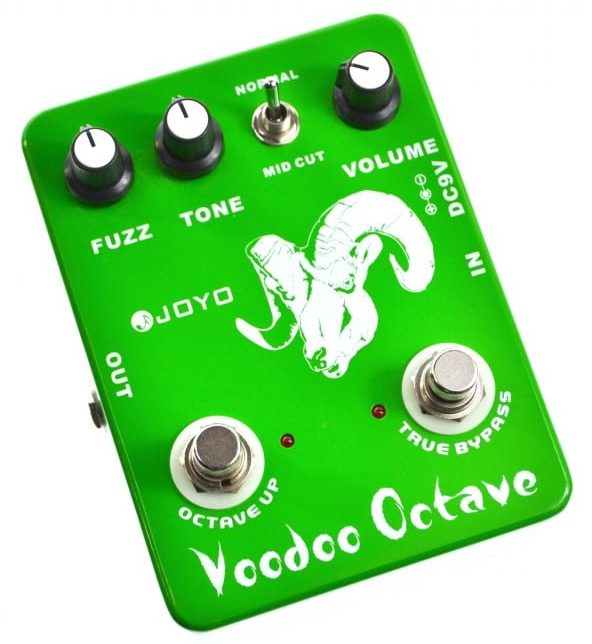
There are a handful of Octava pedals worth checking out, including Joyo’s Voodoo Octave and Dunlop’s Jimi Hendrix Octavio Fuzz. The Voodoo Octave is a tripped-out fuzz stompbox with a switchable octave-up feature as well as a more extensive tone control. It provides guitarists with some cool options to work with. “The fuzz on the ultimate octave is a brilliantly thick snarling beast. At the lowest possible settings, you can coax a more ‘vintage’ fuzz sound from this pedal but it really starts to shine when you crank the fuzz up and ‘Plug In Baby’. With buckets of sustain your lead lines will sound massive and you’ll be able to hold those notes all night. Add the brilliant Octave Up effect to the Fuzz and you’re in ‘White Stripes’ territory. The Octave Up adds a whole new dimension to your riffs making them really pop and stand out,” Joyo stated. The Voodoo Octave’s other features help keep a permanent place in the pedal chain. This pedal enables funk, jazz, blues, fusion, rock, and even country guitarists to access creative sounds from a budget-friendly, spicy pedal. The Voodoo Octave packs octave and distortion guitar effects in a single shell. It boasts quality internal components, true bypass wiring, 1/4-inch jacks, and connectors. Users can capture the mind-boggling sounds famous of analog-based octave shift stompboxes. The Jimi Hendrix Octavio Mini from Dunlop allows players to capture Hendrix’s huge, snarling tone in a pedalboard-friendly chassis. Part of the ’69 Psych Series, this pedal upgrades the circuitry of Hendrix’s fuzz to fit the size restrictions of modern players’ pedalboards. The Octavio Mini is a full-range fuzz that has been revamped to add an octave switch to change between Hendrix’s legendary octave-up sound and standard fuzz. It dishes out the satisfying, snarling, saturated Hendrix sound sans consuming plenty of pedalboard space.