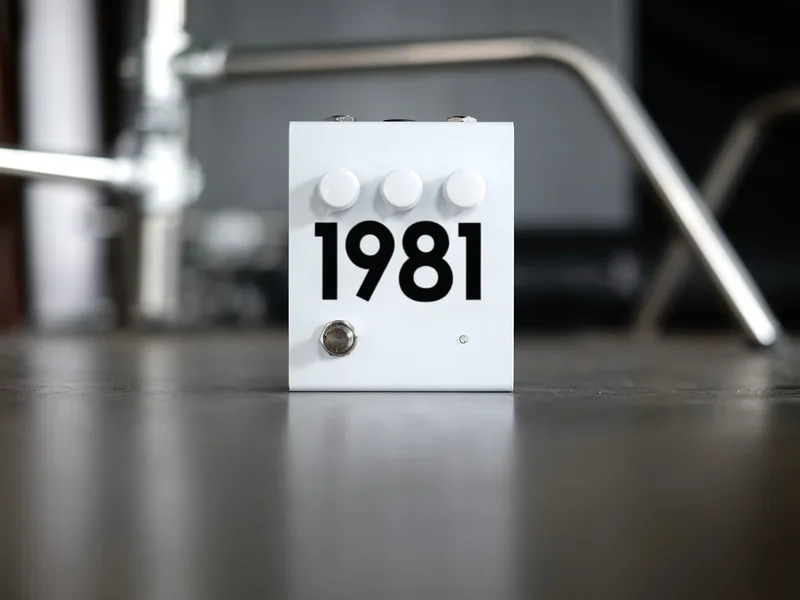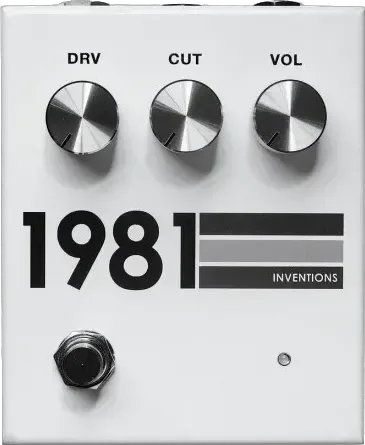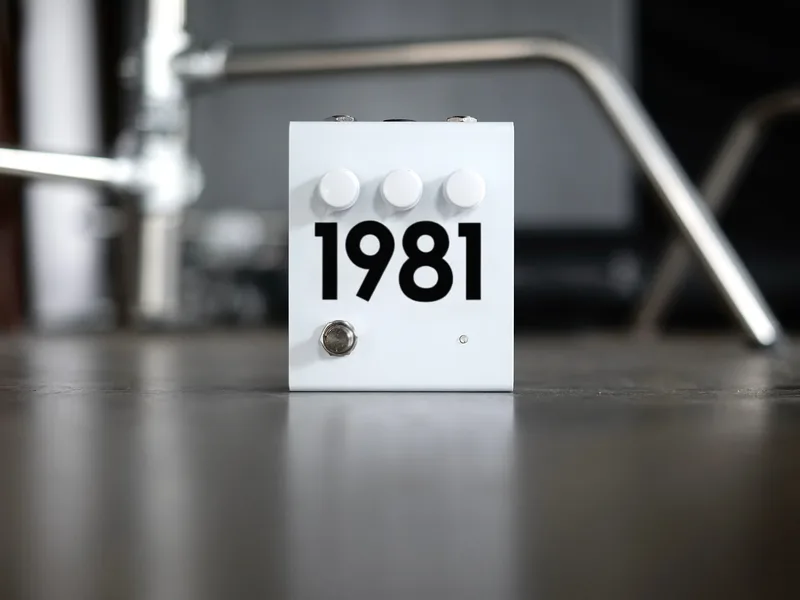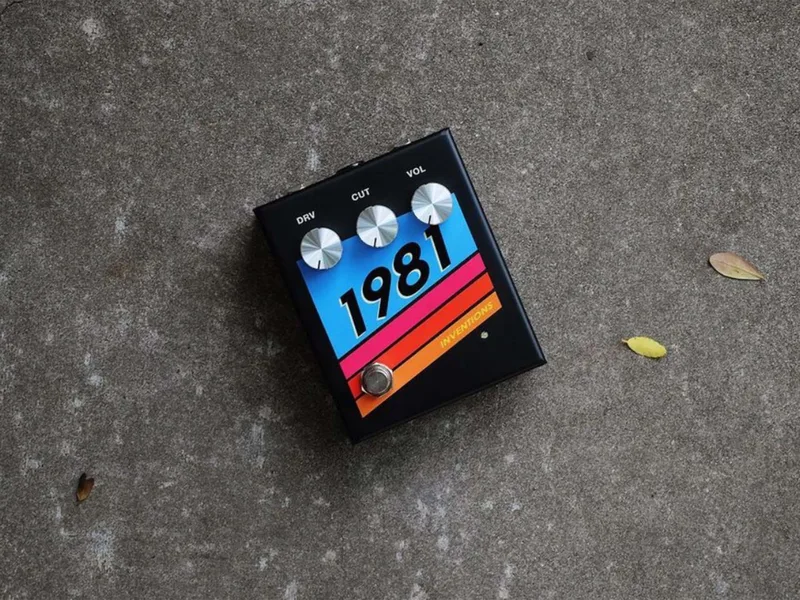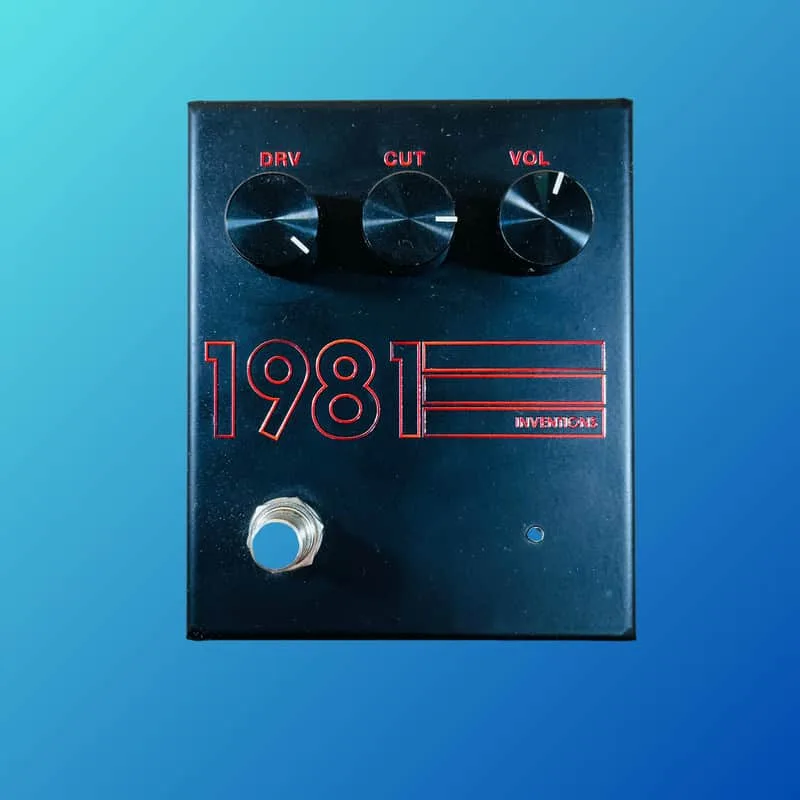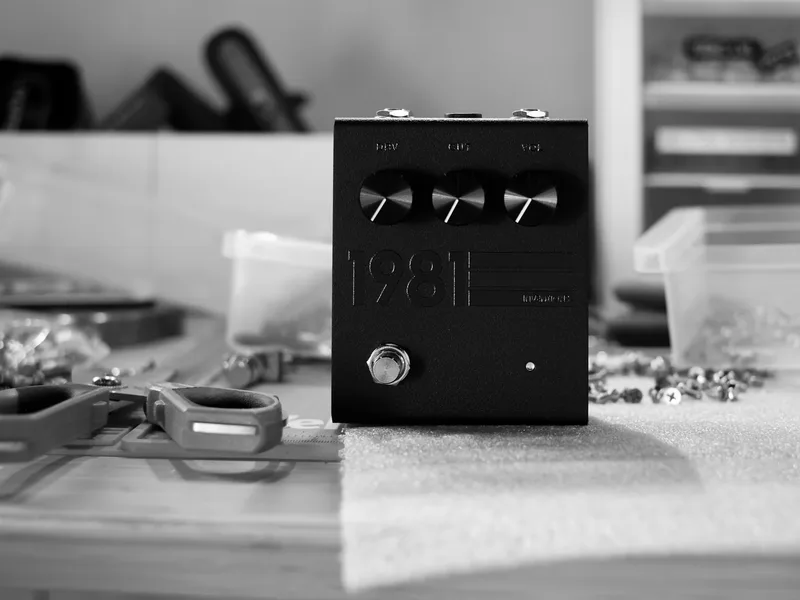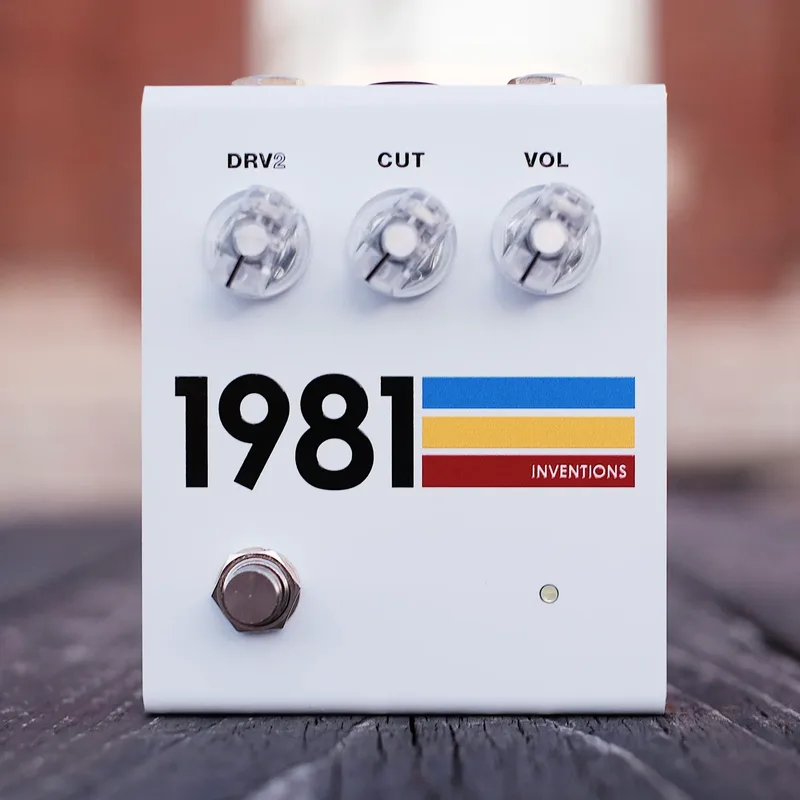
The 1981 Inventions DRV2 No3 is a distortion pedal and the second-generation version of the DRV, built in a new standard enclosure with clear knobs. The maker describes it as "a high quality and unique distortion pedal in sound and design," and says the circuit "really shines in the lower gain stages, and has a lot of clarity and character," running from barely clipping cleans through rock to almost fuzz territory1. It sits among the wider DRV family, which includes variants such as the DRV - Greyscale, the DRV MONO and the DRV ALT UNIVERSE.
As of 25 October 2026, the maker's product page lists the DRV2 No3 as sold out, with 0 in cart1.
The V2 circuit and how it differs from the original DRV
The original DRV was engineered and designed by Jon Ashley of Bondi Effects. For the DRV2, the circuit was redesigned and engineered by John Snyder of Electronic Audio Experiments1. The maker says the V2 circuit took more than a year to get right: "So I've been working on this V2 circuit of DRV for more than a year now, and I finally got it right"1.
The practical differences, according to 1981 Inventions:
- It is quieter, with less noise1
- It is more efficient than the original1
- It can run at 9V or 18V1
- It comes in the new standard DRV2 enclosure1
The maker also reports using this version personally: "I've been using this version personally with my band, and I love it," and sees it as an improvement in every way1.
Power: 9V or 18V
The DRV2 No3 runs on 9V standard, Boss-style power, and the V2 circuit can also run at 18V. An isolated power supply is recommended, and a battery clip or power supply is not included, so the pedal is powered from an external supply rather than a battery1.
Because the pedal has no battery clip included, plan for a dedicated isolated supply on your board rather than a battery compartment.
The DRV family
The DRV line has appeared in several forms. Alongside the DRV2, 1981 Inventions has released the DRV BASS MOD V2, one of several DRV BASS iterations, which shares the internal true-bypass switch and runs on 9V standard Boss-style power21. Other DRV variants on the site include the DRV - Silver, DRV - White, DRV - Gold/Cream, DRV - Pink, DRV - Stranger Things and the DRV MOD 2 HYPERFADE. For the wider category, see Distortion Pedals, Overdrive Pedals and Fuzz Pedals.
Buying and shipping
The DRV2 No3 ships in a blue 1981 zip pouch. International orders ship through UPS Expedited unless otherwise requested, at a flat rate of $35 USD. EU orders are responsible for VAT taxes, and all countries are responsible for knowing their own import tax laws1.
Questions
What is the difference between the 1981 Inventions DRV and the DRV2?
The DRV2 is the new standard enclosure and circuit of the DRV. The V2 circuit was in development for more than a year, and according to 1981 Inventions it is quieter, with less noise, and more efficient than the original. It can also run at 9V or 18V. The original DRV was designed by Jon Ashley of Bondi Effects, and the V2 was redesigned and engineered by John Snyder of Electronic Audio Experiments.
Can the DRV2 No3 run on 18V?
Yes. The V2 circuit can run at 9V or 18V. It runs on 9V standard, Boss-style power, and 1981 Inventions recommends an isolated power supply. A battery clip is not included.
Is the DRV2 No3 true bypass?
It can be. The pedal has an internal switch to select true bypass, which the maker describes with the note that it is 'almost always worse, but sometimes better.'
Does the DRV2 No3 take a battery?
No. The maker's product page states that a battery clip or power supply is not included, so the pedal is powered from an external supply rather than a battery.
Who designed the 1981 Inventions DRV?
The original DRV was engineered and designed by Jon Ashley of Bondi Effects. The DRV2's V2 circuit was redesigned and engineered by John Snyder of Electronic Audio Experiments.
Sources (2)
- DRV2 No3, 1981 Inventions
- DRV BASS + GTR MOD LED, 1981 Inventions