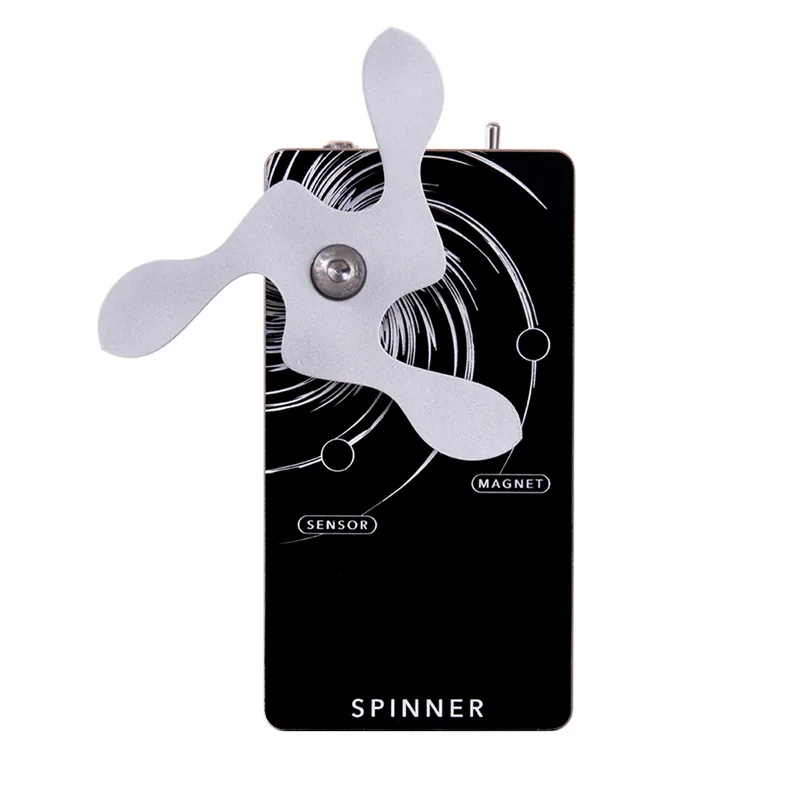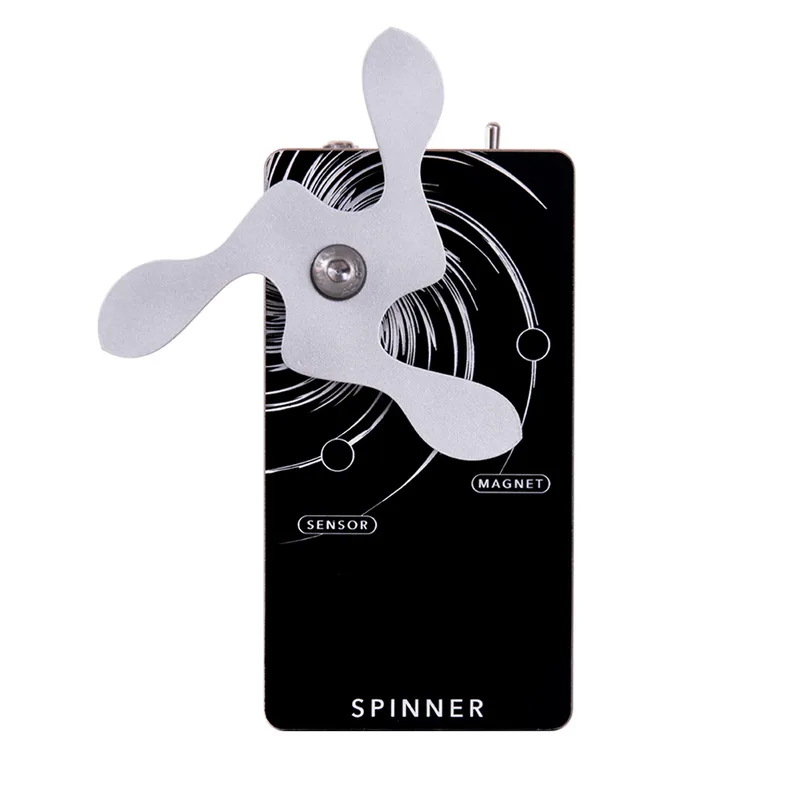


The Anasounds Spinner kit is a do-it-yourself expression pedal kit: instead of rocking a treadle with your foot, you spin a small aluminum propeller with your toe, and the rotation speed controls a parameter on a compatible pedal. Anasounds released it at Winter NAMM 2020, and the kit contains everything you need to build a working Spinner, including a 3.5mm jack cable to connect it to one of the company's pedals12.
Because it is an expression pedal, the Spinner generates no effect of its own. It only sends control information to the pedal it is plugged into, and that pedal decides what the rotation does to the sound1. A prebuilt version also exists as the Anasounds Spinner.
How it works
Inside, the Spinner uses a digital Hall sensor. When a magnet on the spinning propeller passes in front of the sensor, the logic level goes to 1, then back to 0, so the pedal counts magnet passes to measure how fast you are spinning1.
Anasounds developed its own communication protocol for the link between Spinner and pedal, built on the serial RS-232 standard and carried over a stereo jack1:
- Red wire: +9V (labeled on the mini jack wiring)
- Black wire: ground (GND)
- Green wire: data (Tx)1
The jack carries three wires in total: +5V, GND, and data. The +5V comes from the pedal and powers the Spinner, which is why no separate power supply is needed1. The data sent includes the rotation speed, an indication of on and off switching, and the mode selected by the switch on the back of the pedal1.
The brain is an Arduino-based chip sitting on a socket. If the firmware needs updating, you can pull the chip and reprogram it yourself at home, or Anasounds can send you a new chip1.
The controls
The Spinner has three trimmer potentiometers and a mode switch, all small internal or rear-panel controls rather than foot knobs1.
| Control | What it does |
|---|---|
| Impact trimpot | Sets whether the rotation has a big or small impact on the effect |
| Threshold trimpots (2) | Set the minimum speed for the effect to activate, and the minimum speed for it to stay activated |
| 3-position mode switch (next to the jack) | Selects one of 3 operating modes |
For a first test, Anasounds suggests setting the threshold trimpots to 1/4 and the impact trimpot to the middle1.
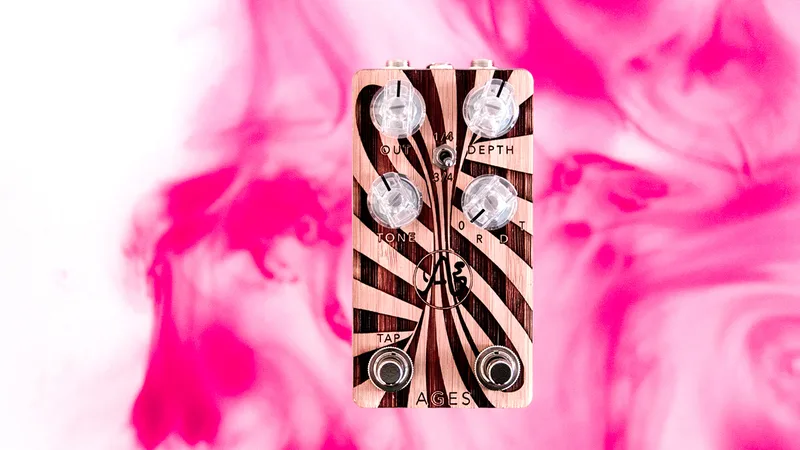
What the modes do depends on the pedal connected. With the Ages pedal, the top switch position accelerates the tremolo, while the middle position activates a kill switch that alternates between bass and treble1. Anasounds has also said a new Spinner-compatible pedal would be released at the following NAMM show1.
The propeller and the extra magnets
The propeller is milled from aluminum blocks by Joffrey Legouet, and the maker's product page notes the metallic part is built by a local French craftsman12.
The propeller ships with three extra magnets. A hidden magnet sits under the pedal's magnet area, and each time one of the extra magnets passes in front of it, the propeller is slowed down. Removing the three extras gives a smoother rotation if you prefer the propeller to spin more freely1.
Building the kit
Anasounds positions the Spinner as a good entry point into DIY pedal building. As Alex from Anasounds puts it1:
"It is a nice project to start in DIY, there are few components to solder and the canning is ultra simplified !"1
One assembly detail matters for correct operation: the Hall sensor should be soldered with its legs at maximum length so the sensor sits as close as possible to the enclosure1.
If you get stuck, support is handled in one place only. Anasounds states plainly1:
"no emails, no chat, no calls regarding DIY, only requests on comments section please."1
So questions about the build go in the comments of the maker's blog assembly article, which is also where the step-by-step instructions live1.
Videos
Martial Allart
Everyday Guitarist
TheGuitarGeek
Questions
Does the Anasounds Spinner kit need a power supply?
No. The Spinner is powered by the +5V that comes from the connected pedal through the jack cable, so you never plug in a separate power supply. The jack carries three wires: +5V, ground, and data.
How does the Spinner talk to a pedal?
It uses a serial RS-232 protocol over a stereo 3.5mm jack connection. The Spinner sends the rotation speed, an on and off switching indication, and the mode chosen with the switch on the back. A jack cable is included with the kit.
Do I need to solder to build the Spinner kit?
Yes, but Anasounds describes it as a good first DIY project because there are few components to solder and the enclosure work is simplified. One care point: the Hall sensor should be soldered with its legs at maximum length so it sits as close as possible to the enclosure.
Where do I get help building the Spinner kit?
Anasounds handles DIY support only through the comments section of its blog assembly article. The company asks for no emails, chat, or calls about DIY builds, only requests in the comments.
What are the extra magnets on the Spinner propeller for?
The propeller ships with three extra magnets. Each time one passes in front of a hidden magnet under the pedal's magnet area, the rotation is slowed down. You can remove them if you prefer a smoother, freer spin.
Sources (2)
- Assemble your spinner kit, Anasounds, 2020-03-21
- Spinner | Expression pedal | Kit version | Anasounds, Anasounds, 2026-04-04