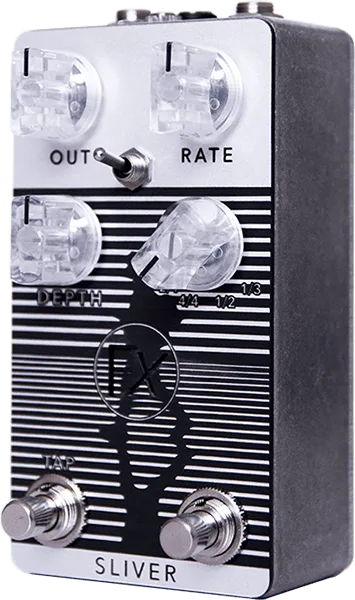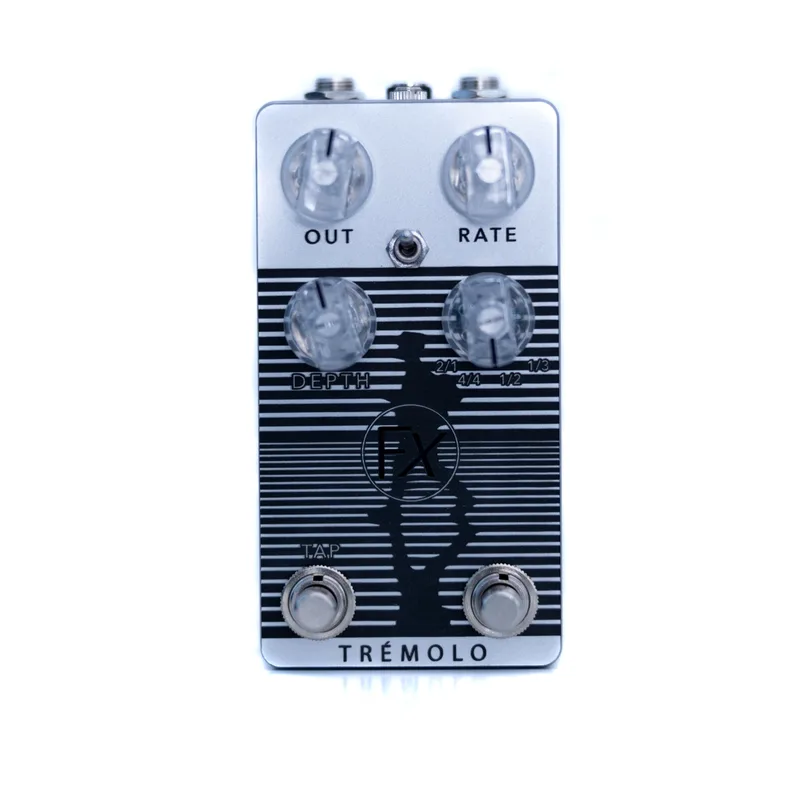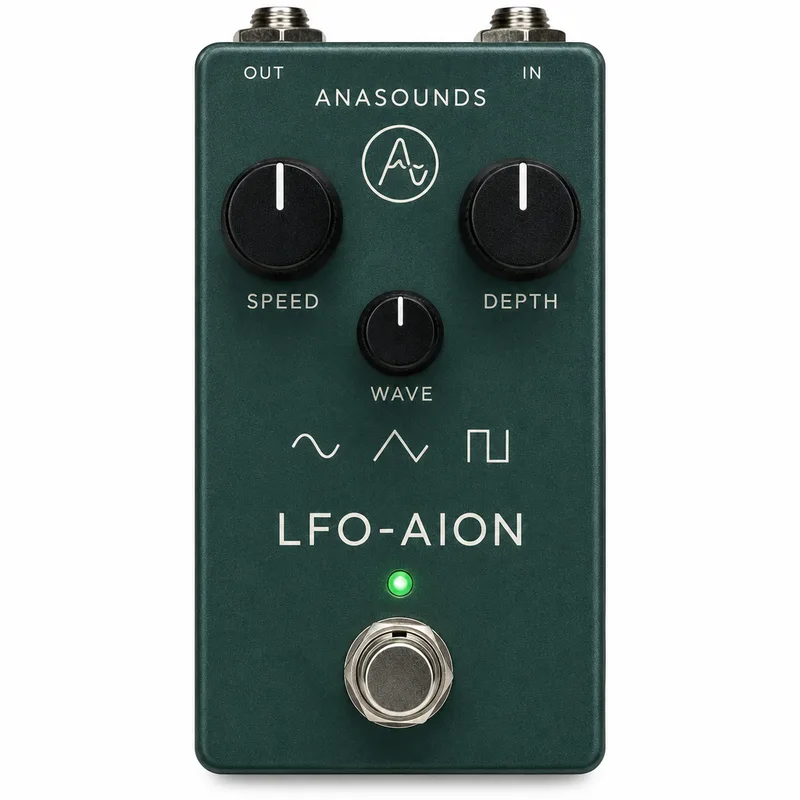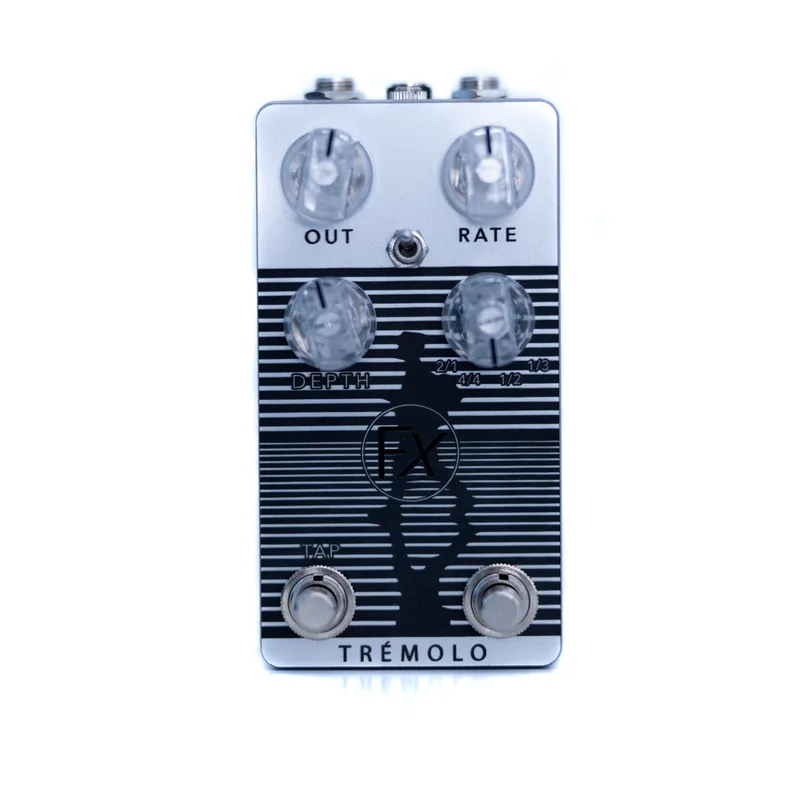
The Anasounds Trémolo is an optical tremolo pedal made in France by Anasounds, released at NAMM 2020 as the second pedal in the company's FX Teacher series12. It is an unusual hybrid: the guitar signal never passes through an analog-to-digital converter, but a processor generates the LFO waveforms that drive the optical circuit doing the actual amplitude modulation12.
Anasounds describes the result as "a highly flexible and evolving tremolo that still keeps the big warm sound of optical technology"3. The pedal was previously known as the Sliver before being introduced as the TREMOLO in 20214.
An optical-style tremolo with a digital brain
Optical tremolos work by using a light-dependent element to vary the signal's amplitude, the same principle as the photocell tremolo circuits built into vintage amplifiers. In the Trémolo, the analog audio path runs through the optical circuit, while the waveforms that pulse it are created digitally. As the maker puts it:
"Waveforms are created by a processor before they are transmitted to the optical circuit that creates the tremolo effect."3
Anasounds is explicit that the audio itself stays analog: "You won't find an analog to digital converter in there, your sound only goes through a purely analog signal path"1. The pedal offers six waveform presets, including sinus, saw and square, selectable via a switch in the center of the pedal1. Delicious Audio's writeup described it as "an optical tremolo with sinus, triangle and square LFO options that can also be purchased in a DIY kit"4.
The maker's own technical analysis explains how the optical stage behaves: with the LFO at 1 the LED lights up, the impedance at that stage is 440 Ohms and the gain is -5.7, increasing the volume; with the LFO at 0 the LED turns off, the impedance is 5 MOhms and the gain is -33 dB, muting the sound5.
The controls
The Trémolo has all the classic tremolo controls except one: there is no rate knob, because the rate is set entirely through the Tap Tempo footswitch4. That footswitch also carries killswitch functionality, in both momentary and Killswitch mode4.
| Control | What it does |
|---|---|
| Tap Tempo footswitch | Sets the rate; also momentary and latched Killswitch modes4 |
| RATE knob | Changes LFO speed; in Trimpot mode becomes SYMMETRY, editing the shape of the LFO wave24 |
| DEPTH | In Trimpot mode becomes FREE_SUBDIVISION, for setting your own time division6 |
| Waveform switch | Selects one of six presets: sinus, saw, square and others1 |
| BIAS (Trimpot mode) | Saturates the modulating signal, the LFO; originally set up at 3/106 |
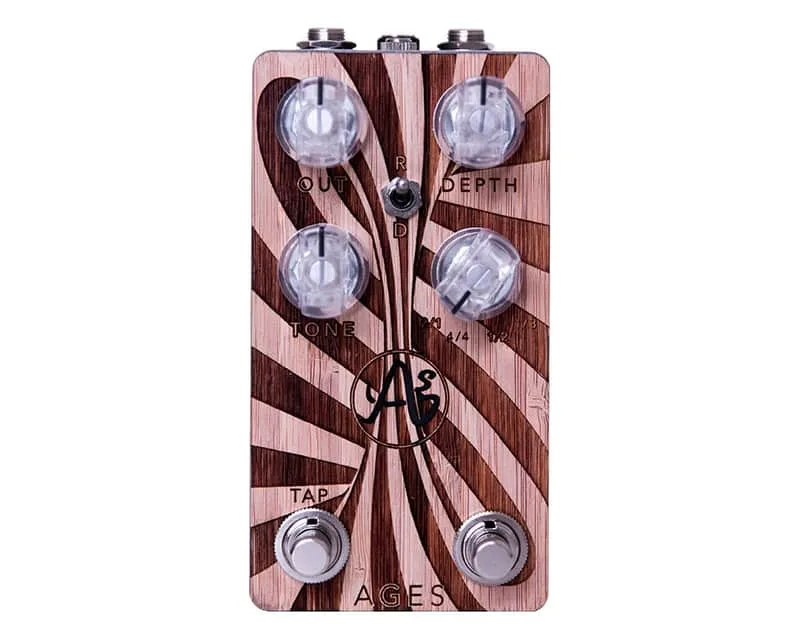
The Trimpot mode is a hidden second layer of controls, a scheme Anasounds also used on its Ages harmonic tremolo, where the Tone control becomes an Attack detector in the same mode7. For players with what the maker calls "an extremely precise rhythmic ear," FREE_SUBDIVISION allows a custom time division rather than a fixed one6.
Two boards, kit and assembled versions
Internally, the Trémolo is built on two printed circuit boards: a motherboard and a daughterboard. The daughterboard handles the analog signal processing, while the motherboard handles the power supplies and the digital signals, including generating the LFO2. An ATMEGA328 microcontroller on the motherboard drives the relay used for the true bypass switching, and the two footswitches are simple contactors that send information to that microcontroller2.
The pedal is sold in two forms:
- Assembled version: ready to play, listed at 199,00 €15
- Kit version: the same pedal as a DIY build, listed at 149,00 €, with internal trimpots to adjust the bias and output level35
The kit is part of the FX Teacher series, which the manual walks builders through step by step2. The kit version keeps the same optical circuit and the same set of features as the assembled pedal3.
The Spinner and external control
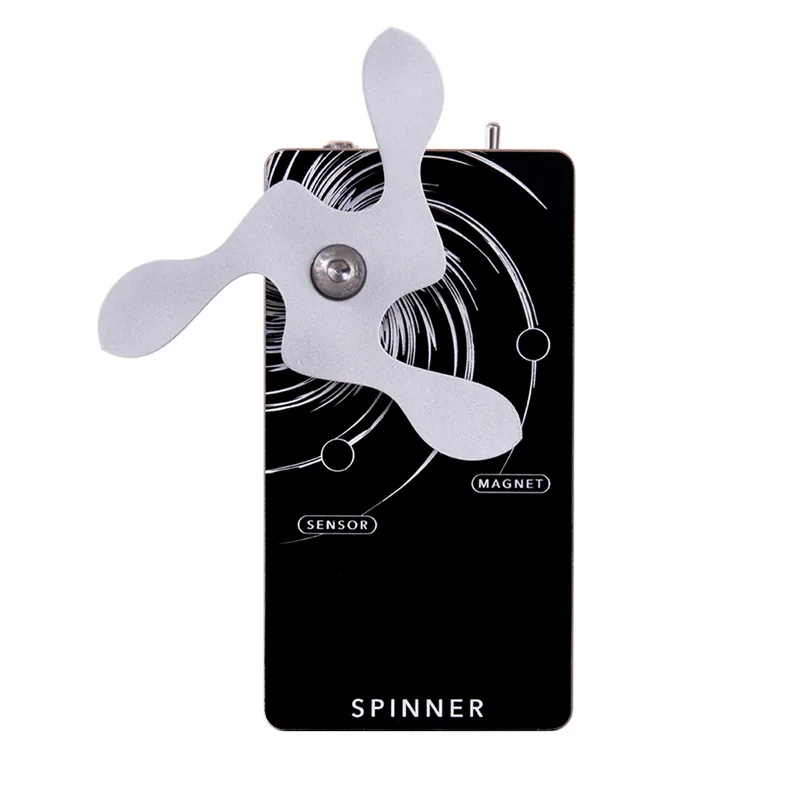
On the back of the pedal there is an additional stereo mini jack that accepts the Anasounds Spinner expression pedal or an external tap tempo source such as the Anasounds Tap68. Anasounds says the Spinner idea came directly out of the work on the Trémolo, "looking for ways to make the simple tremolo effect more lively"8. Plugging the Spinner in gives what the maker calls a large range of additional variations controlled by the speed of your foot1.
Guitar World's reviewer, writing about the pedal in its earlier Sliver form, found that it "really steps up a notch" with the Spinner, "capable of a beautifully expressive shimmer effect that interacts with your music overall"9.
Questions
Does the Anasounds Trémolo have tap tempo?
Yes. The Trémolo has a dedicated Tap Tempo footswitch that sets the rate, and there is no rate knob on the pedal. The same footswitch also provides killswitch functionality in both momentary and latched Killswitch mode. An external tap tempo source, such as the Anasounds Tap, can be connected through the mini jack on the back.
What power supply does the Anasounds Trémolo need?
It runs on a 9V DC power supply with a negative center, the standard arrangement for most guitar effect pedals. The manual specifies this connection directly. No battery or alternative voltage option is mentioned by the maker.
Is the Anasounds Trémolo true bypass?
Yes. The pedal uses true bypass switching implemented with a relay, which the manual describes as true bypass via relay. The relay itself is driven by the ATMEGA328 microcontroller on the motherboard, and the footswitches are simple contactors that send information to that microcontroller.
What is the difference between the kit and assembled Anasounds Trémolo?
The kit version is the same Trémolo circuit supplied as a DIY build, while the assembled version arrives ready to play. The kit keeps the same optical tremolo design, including internal trimpots to adjust the bias and output level. The kit is listed at 149,00 € and the assembled pedal at 199,00 €.
What does the Spinner do with the Anasounds Trémolo?
The Spinner is Anasounds' expression pedal, and plugging it into the Trémolo opens a large range of additional variations controlled by the speed of your foot. The Trémolo has a stereo mini jack on the back that accepts the Spinner or an external tap tempo source such as the Anasounds Tap.
Does the Anasounds Trémolo use a microcontroller?
Yes. An ATMEGA328 microcontroller sits on the motherboard and drives the relay used for true bypass switching. The maker describes the signal path as purely analog, with the processor generating the waveforms that are then sent to the optical circuit that creates the tremolo effect.
Sources (9)
- optical tremolo, Anasounds, 2026-03-26
- Assemble your trémolo, Anasounds, 2020-03-11
- optical tremolo, Anasounds, 2025-08-27
- Anasounds TREMOLO Optical Tremolo, Delicious Audio, 2021-04-12
- the tremolo effect: origins, mechanisms and improvements!, Anasounds (anasounds.com), 2020-02-22
- trémolo | Anasounds, Anasounds, 2021-03-24
- Anasounds Ages Harmonic Tremolo, Pedal of the Day, 2020-07-23
- Spinner | Expression pedal | Kit version | Anasounds, Anasounds, 2026-04-04
- Anasounds Spinner, Ages and Sliver Pedals review, Guitar World, 2020-10-14