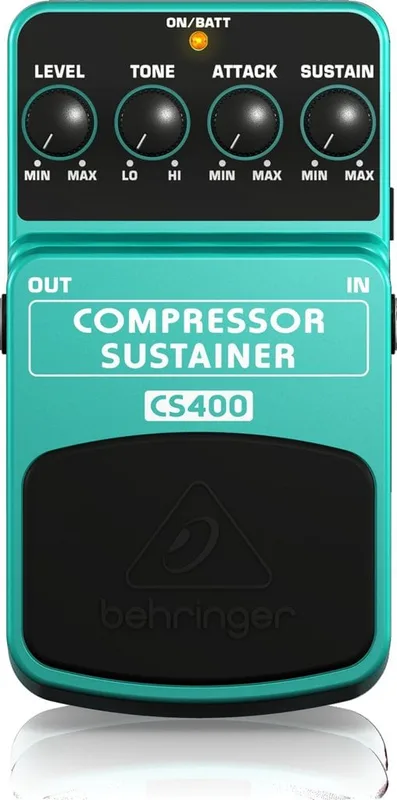


The Behringer CS400 Compressor Sustainer is a compact compressor pedal from Behringer, listed by the maker as a "COMPRESSOR/SUSTAINER CS400" and described as an "Ultimate Dynamics Effects Pedal"1. In plain terms, it does two related jobs: it evens out the difference between your loud and quiet notes so your playing sits at one consistent volume, and it stretches the length of held notes. Behringer's own description says the pedal "packages your sound into one velvety-smooth and consistent volume" and promises "virtually-endless sustain and ultra-stable dynamics"1.
RockBoard's PedalPedia, an independent pedal database, classifies the CS400 as a compressor and sustainer with an analog circuit2. That analog classification matters to players comparing it against digital compressors, which model the process in software rather than shaping the signal with analog components.
What it does
A compressor controls the envelope of a sound, which is the way volume changes over time: the attack of a picked note, its decay, and how long it sustains3. The CS400 applies this to your guitar signal in real time. Behringer pitches it at the moments a player wants notes to hold: "Whether it's a million-dollar hook or a soul-wrenching solo, some licks are just begging for some undivided attention from the COMPRESSOR/SUSTAINER CS400"1.
The maker's description of the result:
"this little magic box packages your sound into one velvety-smooth and consistent volume. With the CS400 in your pedalboard, you'll enjoy virtually-endless sustain and ultra-stable dynamics!"
That is the maker's own marketing voice, but the underlying function is standard compressor behavior: loud peaks are pulled down, quiet passages are held up, and notes decay more slowly, which players hear as longer sustain.
Controls
The CS400 has four controls. Behringer describes them as follows:
| Control | What it does, in Behringer's words |
|---|---|
| Attack | Dedicated dial for dialing in the right amount of compression14 |
| Sustain | Dedicated dial for dialing in the right amount of compression14 |
| Tone | "Tone lets you add exactly the right level of highs"1 |
| Level | "allows you to set the output to subtle, or engage a monster volume boost"1 |
The Attack and Sustain dials are the heart of the pedal. Behringer says you "can dial in the right amount of compression using the dedicated Attack and Sustain dials"14. In practice, attack shapes how quickly the compressor responds to the front of a note, and sustain sets how much leveling is applied as the note decays. For comparison, on the Ibanez CP10 Compressor Sustainer, a pedal from the Ibanez Power Series with the same compressor/sustainer job, the Sustain knob controls the threshold level: too-loud volume is compressed and too-quiet volume is boosted, keeping a constant output level3. The CP10 gives you three controls for attack time, sustain and output level3, where the CS400 adds a dedicated Tone control on top of the same basic set.
The Tone control addresses a common compressor complaint. Because compression clamps the signal's peaks, the result can read as darker or duller than the uncompressed sound. Behringer's answer is a high-end control: "Tone lets you add exactly the right level of highs"1.
The Level control sets the output volume, and Behringer gives it a wide range, from a subtle setting to what the maker calls "a monster volume boost"1. That boost range means the CS400 can also serve partly as a leveling boost at the end of a gain chain, pushing the amp harder once the compression is set.
A bright LED indicates when the pedal is on, and Behringer says the "top-quality on/off switch maintains outstanding signal integrity in bypass mode"1.
Power
The CS400 can be powered two ways: a 9 V battery, or Behringer's PSU-SB DC power supply1. The supply is not included with the pedal, so budget for it or a pedalboard power brick if you do not want to run on batteries1.
RockBoard's PedalPedia lists the pedal's electrical specifications as 9V DC, center negative, drawing 30mA2. The center negative polarity is the standard used by most modern pedal power supplies, so the CS400 fits a typical 9V pedalboard brick without an adapter cable.
The PSU-SB power supply is not included with the CS4001. Out of the box, the pedal runs on a 9 V battery1; for pedalboard use you need the PSU-SB or a compatible 9V DC center negative supply2.
How it compares with other compressor sustainers
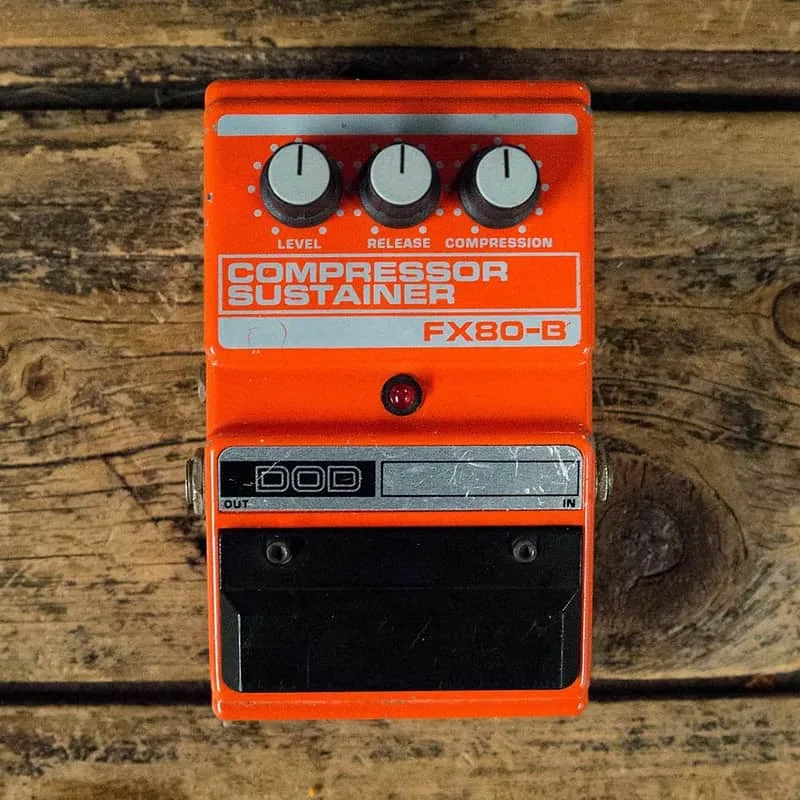
The compressor/sustainer format has a long history, and the CS400 sits in a family of pedals that share the same name and job. The DOD FX80B Compressor Sustainer, an updated version of the original FX80 introduced in the mid 1980s, takes a different control approach: three controls named Level, Compression and Release, adjusting output volume, compression strength and release time51. Where the CS400 splits the compression shaping between Attack and Sustain dials and adds a Tone control, the FX80B puts its third control on the release side and has no tone shaping. RockBoard describes the FX80B as delivering "subtle compression suitable for rhythm or clean lead tones"51.
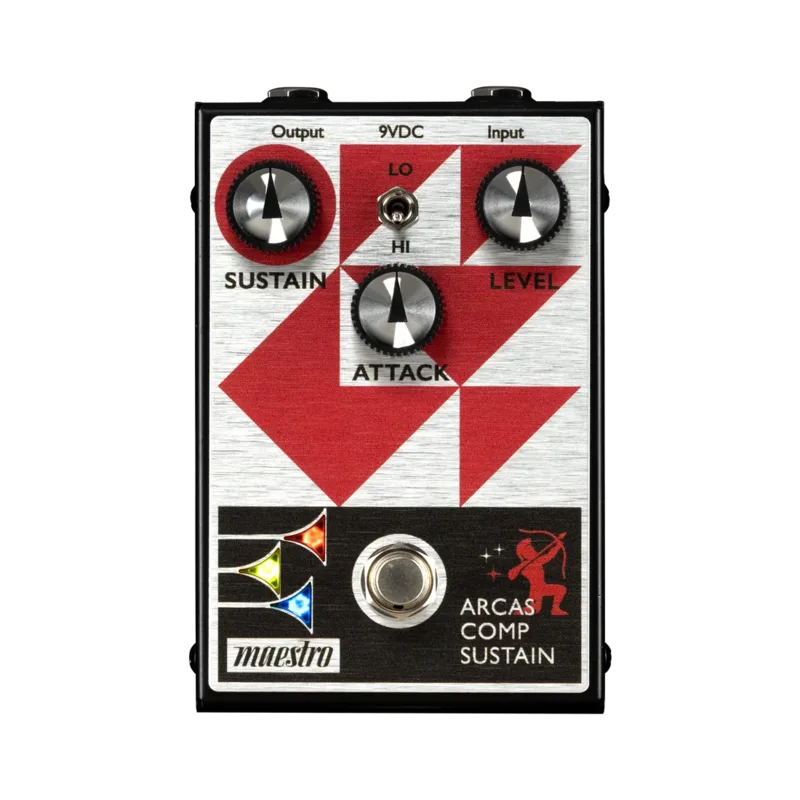
The Maestro Arcas Compressor Sustainer, made by Gibson, offers Sustain, Attack and Level controls6, with GuitarPlayer's Rod Brakes explaining that on that pedal "Sustain dials in the amount of gain applied during compression"7, and gearnews.com noting its Lo/Hi switch "controls the decrease and increase of the attack sensitivity"8. The Arcas handles attack with a two-position switch where the CS400 uses a continuously variable dial.
On the DIY side, Aion FX's Aurora is a Compressor/Sustainer pedal kit and PCB project that "makes several improvements to the original circuit as well as adding a few new features"9, aimed at builders rather than players who want a finished pedal.
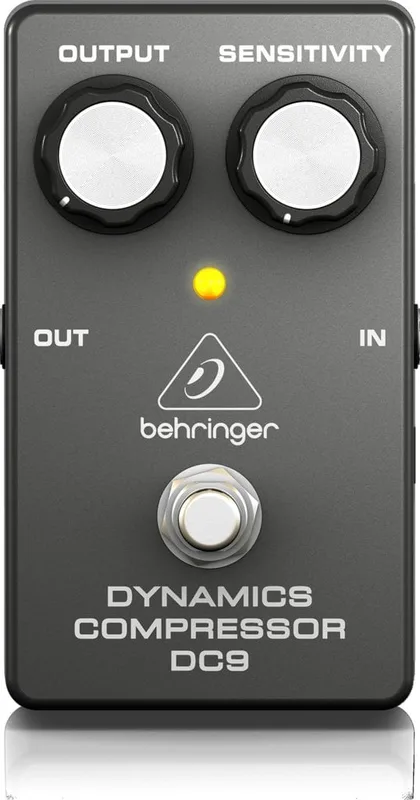
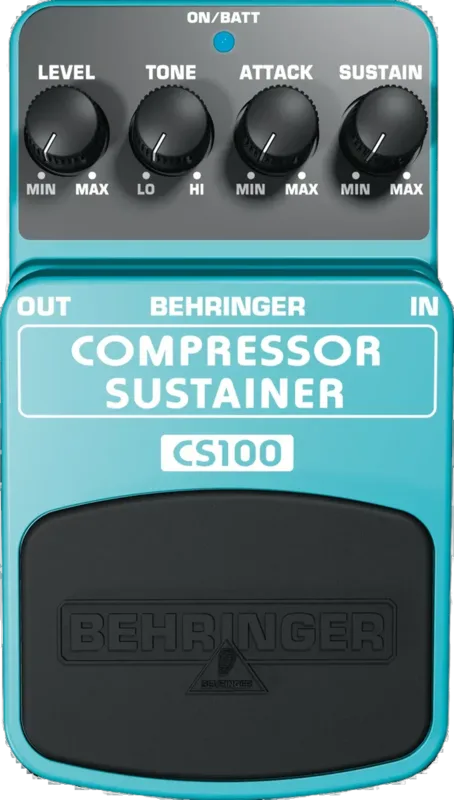
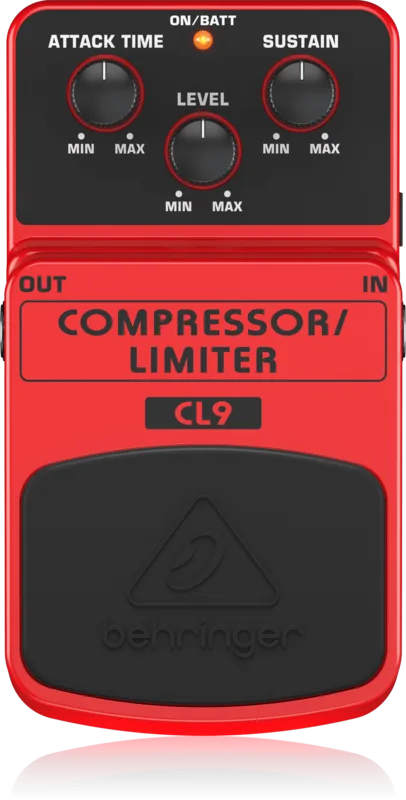
For players weighing the CS400 against Behringer's other dynamics pedals, related pages on this site cover the Behringer Dynamics Compressor, the Behringer CS400, the Behringer CS100 and the Behringer CL9 Compressor/Limiter.
Videos
Behringer
Poor Man Pedals
Ryan Lutton
Questions
Does the Behringer CS400 run on a battery?
Yes. Behringer says the CS400 can be powered with either a 9 V battery or the PSU-SB DC power supply1.
Does the CS400 come with a power supply?
No. The PSU-SB DC power supply is not included1.
What do the Attack and Sustain dials do on the CS400?
Behringer describes them as the dedicated dials for dialing in the right amount of compression14.
What does the Tone control do on the CS400?
Behringer says "Tone lets you add exactly the right level of highs"1.
Is the Behringer CS400 a compressor or a sustainer?
Both. Behringer lists it as a COMPRESSOR/SUSTAINER1, and RockBoard classifies it as a compressor and sustainer2.
Sources (9)
- CS400 | Behringer, Behringer
- CS400 Compressor Sustainer by Behringer, RockBoard PedalPedia, 2026
- TONEHOME, TONEHOME
- CS400 | Behringer, Behringer
- Compressor Sustainer FX80 B by DOD, RockBoard (www.rockboard.de), 2026
- Maestro Arcas Compressor Sustainer, Gibson (gibson.com)
- Maestro Knocks Out Another Batch of Classic Analog Stompboxes, GuitarPlayer, 2022-11-09
- Maestro releases second wave of effects pedals, gearnews.com, 2022-11-08
- Aurora Compressor / Sustainer, Aion FX, 2018-06-30