

A heavy squeezer with a dip and swell
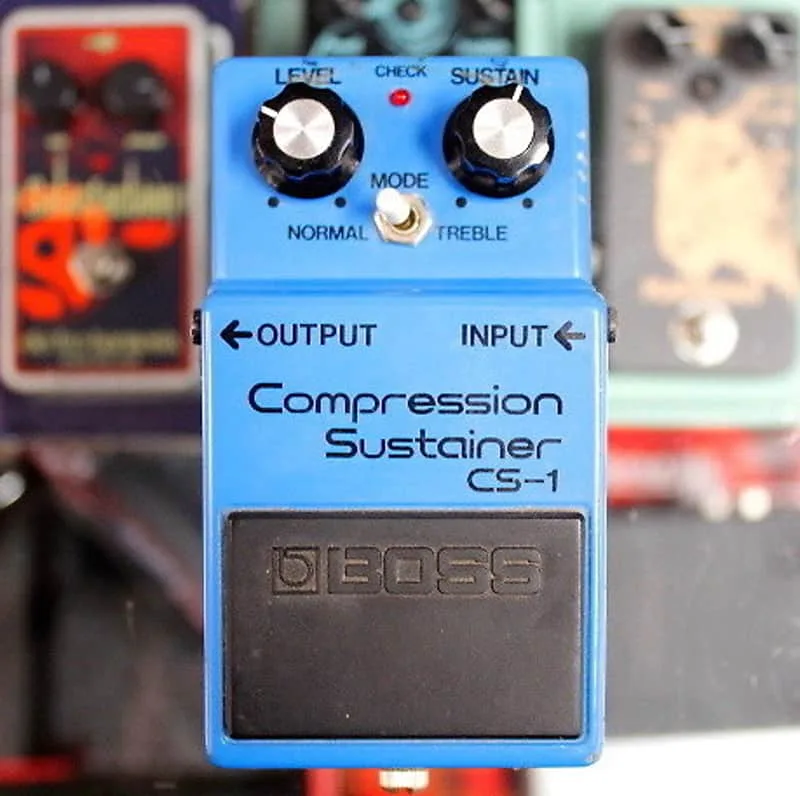
The CS-1's defining trait is how much compression it applies regardless of where the knobs sit. Even with Sustain at its lowest position the pedal is working hard, and raising it deepens the effect until the amplitude audibly dips and swells, the classic pumping of a high-ratio compressor working overtime1. For players who want that obvious, squashed country or studio-glass sustain, that is the point; for players who want transparent leveling, it is the pedal's main limitation.
Ovnilab's review also notes what the heavy squeeze costs in tone:
- A slight loss of highs and lows, described as a constricted or congested sound1
- An output level a bit lower than unity at low Sustain settings, which is annoying when switching the pedal on and off mid-song1
- A noise penalty at higher Sustain settings, though the noise is "not bad at all" at low settings1
The construction, by contrast, drew no complaints: "The construction quality is typical Boss," meaning the same compact die-cast housing and switch feel as the rest of the compact line1.
Sustain, Level and the Normal/Bright switch
The control set is minimal compared with later Boss compressors: two knobs and a switch51.
| Control | What it does |
|---|---|
| Sustain | Sets the compression amount; heavy compression even at the lowest setting1 |
| Level | Sets the output level; must be near maximum to approach unity gain at low Sustain settings1 |
| Normal/Bright switch | Selects between the normal voicing and a brighter Treble mode15 |
The Level knob's limited headroom is worth knowing before buying one used. Ovnilab's reviewer found that at the more usable low Sustain settings, the level knob has to be set to maximum just to approach unity gain, leaving no boost in reserve1.
The Bright side of the switch is the pedal's other voice. Boss describes the switchable Treble mode this way51:
"The switchable Treble mode adds a strident shimmer, pushing your tone forward with edge and clarity5."
Rod Brakes, BOSS articles5
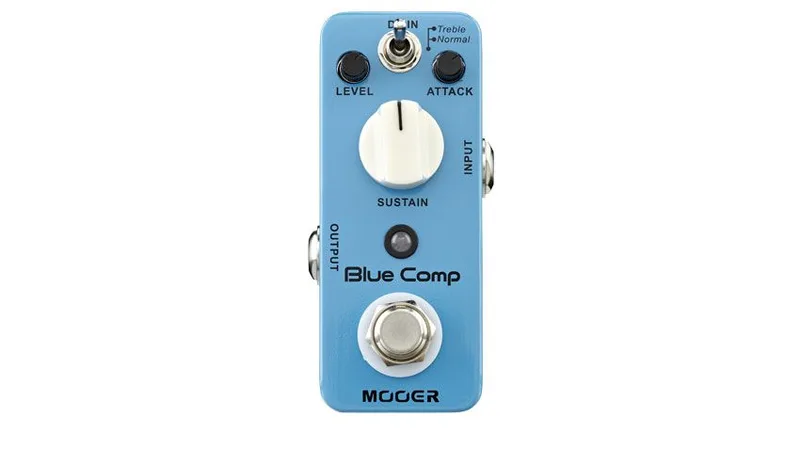
That two-mode design proved durable: MusicRadar notes that the Mooer Blue Comp's two-mode layout follows the CS-1's example6. On the used and modified market, the normal side has also proven tweakable, with Ovnilab's reviewer improving the lows by changing the resistor and capacitor values connected to it1.
A different circuit from the CS-2 and CS-3
The CS-1 is not simply an early version of the compressors Boss sells today. Boss states plainly that "the first BOSS compressor pedal has a distinctly different circuit than the later CS-2 and CS-3 models"7. The CS-1 is an optical design: a photocoupler reads the signal and controls the gain element, which Boss says "offers a slower attack with a unique character"2.
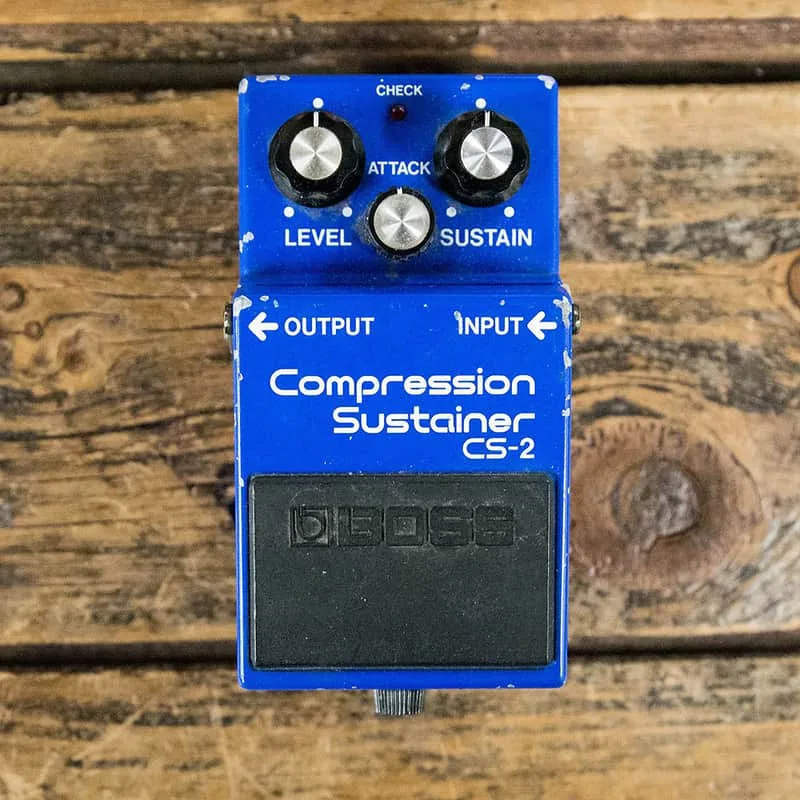
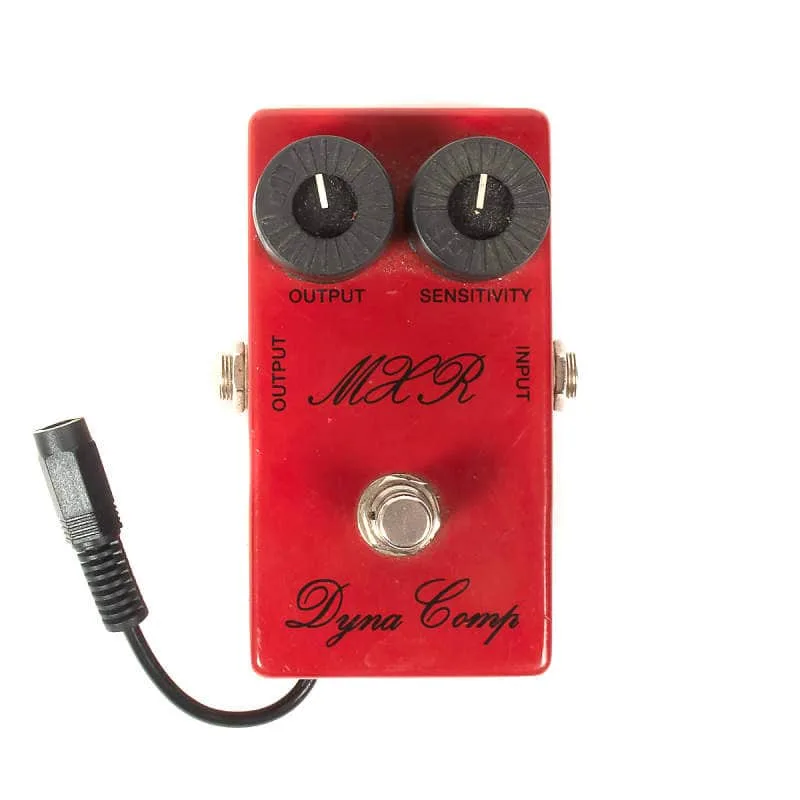
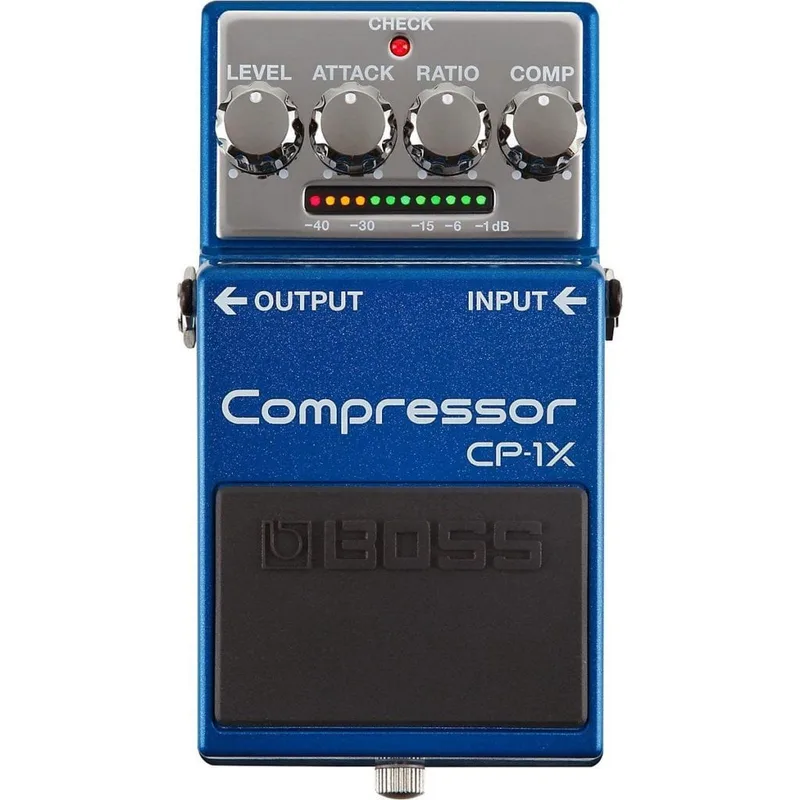
The CS-2 of 1981 moved to a different approach entirely. Boss explains that "while the CS-1 used an optical detector circuit, the next-generation CS-2 introduced a VCA for faster response," with subtle distortion in the VCA circuitry adding natural richness and an Attack knob for adjusting the response78. Aion FX adds that the CS-2 was based on the Dyna Comp circuit, though significantly overhauled by Boss engineers8.
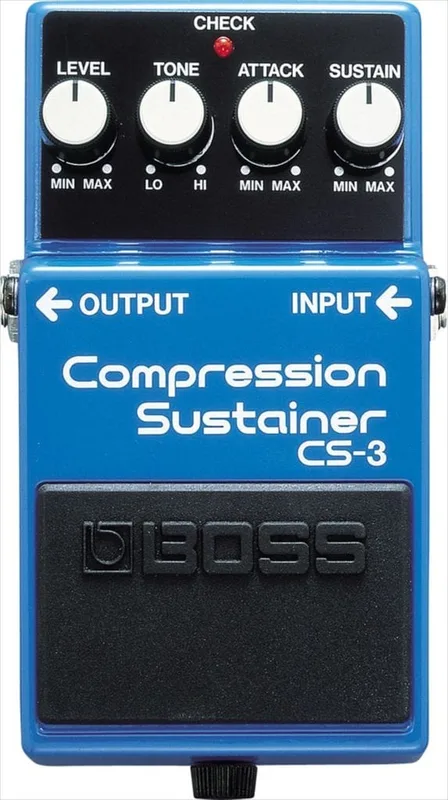
The CS-3 continues the VCA line, and on That Pedal Show, Dan and Mick described the family relationship: "CS2 and CS3 are very closely related," with the CS-3's addition being a Tone control9. TONEHOME summarizes the split: the CS-1 is optical, while the CS-2 and CS-3 use VCAs (voltage controlled amplifiers) to create the same effect10.
| Model | Year | Circuit | Distinctive controls |
|---|---|---|---|
| CS-1 | 19783 | Optical photocoupler2 | Sustain, Level, Normal/Bright15 |
| CS-2 | 19818 | VCA, Dyna Comp derived78 | Adds Attack7 |
| CS-3 | current | VCA10 | Adds Tone9 |
Bypass and noise
The CS-1 predates the true-bypass era. Ovnilab's reviewer found that "the footswitch is not true bypass, but the bypass is pretty clean," so the pedal should not noticeably darken your tone when switched off1. The same is true of the CS-3, whose bypassed tone the same reviewer called fairly clear11.
On noise, the practical answer is to keep the Sustain low. The noise penalty only appears at higher settings, and since the pedal compresses heavily anyway, low settings are where most of its usable sounds live1.
Where it came from and where it went
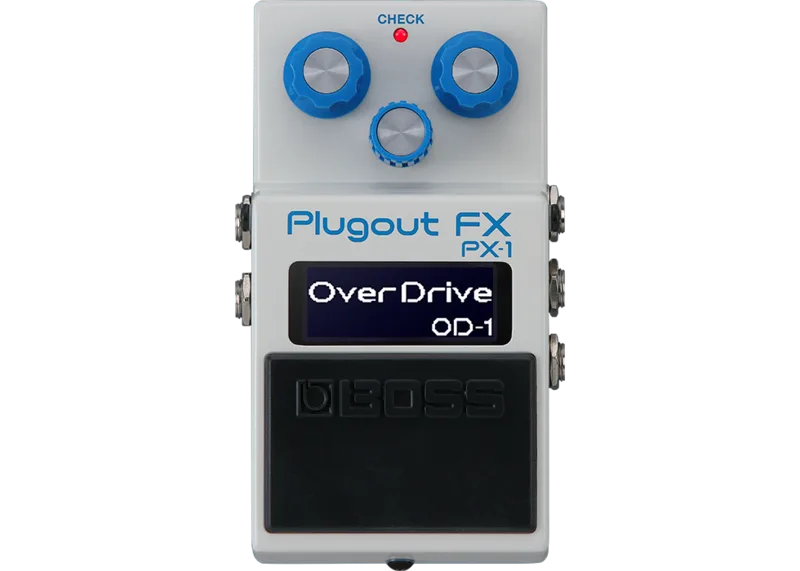
The CS-1 has since been reborn as a digital model. Boss describes the CS-1 model in the PX-1 Plugout FX as offering "a distinctly different circuit than the later CS-2 and CS-3 models"7. Guitar Pedal X's timeline of Boss's early pedals likewise lists the 1978 CS-1 Compression Sustainer among the originals gathered up for the PX-1 project4.
Videos
Cameron Johnson
ANTENNA565
KRAZEEIZATION
Questions
Is the Boss CS-1 true bypass?
No. The CS-1 uses a buffered bypass rather than true bypass, but Ovnilab's reviewer found the bypassed signal pretty clean, so it should not color your tone much when the pedal is off. This is typical of Boss compact pedals of the era, and the same is true of the later CS-3.
How is the Boss CS-1 different from the CS-2 and CS-3?
The CS-1 uses an optical detector circuit built around a photocoupler, which gives it a slower attack and its own character. The CS-2 of 1981 and the later CS-3 both use a VCA, or voltage controlled amplifier, for faster response. The CS-3 also adds a Tone control that neither earlier pedal has.
What does the Normal/Bright switch do on the CS-1?
It selects between two voicings. In Bright mode the pedal adds a strident shimmer that pushes your tone forward with edge and clarity, which Boss describes as the Treble mode. Normal mode leaves the basic voicing alone, and Ovnilab's reviewer found the lows on the normal side could be improved further by changing resistor and capacitor values.
Is the Boss CS-1 noisy?
It depends on the Sustain setting. Ovnilab's reviewer found the noise not bad at all at low settings, but noted a clear noise penalty at higher settings. Since the pedal compresses heavily even at the lowest Sustain setting, most players end up running it low, where noise is less of an issue.
Sources (11)
- Boss CS-1, ovnilab.com
- BOSS - PX-1 | Plugout FX, BOSS (www.boss.info)
- The PX-1 Plugout FX: Timeless BOSS Pedals Reborn, BOSS (articles.boss.info), 2025-06-06
- Guitar Pedal X, Guitar Pedal X, 2025-08-28
- The PX-1 Plugout FX: Timeless BOSS Pedals Reborn, articles.boss.info, 2025-06-06
- Mooer Blue Comp review, MusicRadar, 2013-01-30
- BOSS - PX-1 | Plugout FX, BOSS (boss.info)
- Aurora Compressor / Sustainer, Aion FX, 2018-06-30
- Beyond The MXR Dyna Comp & Boss CS-3 Compressor J Rockett Airchild, UA LA-2A, 1176 & Origin Cali76, That Pedal Show (YouTube), 2024-03-22
- TONEHOME, TONEHOME
- Boss CS-3, ovnilab.com