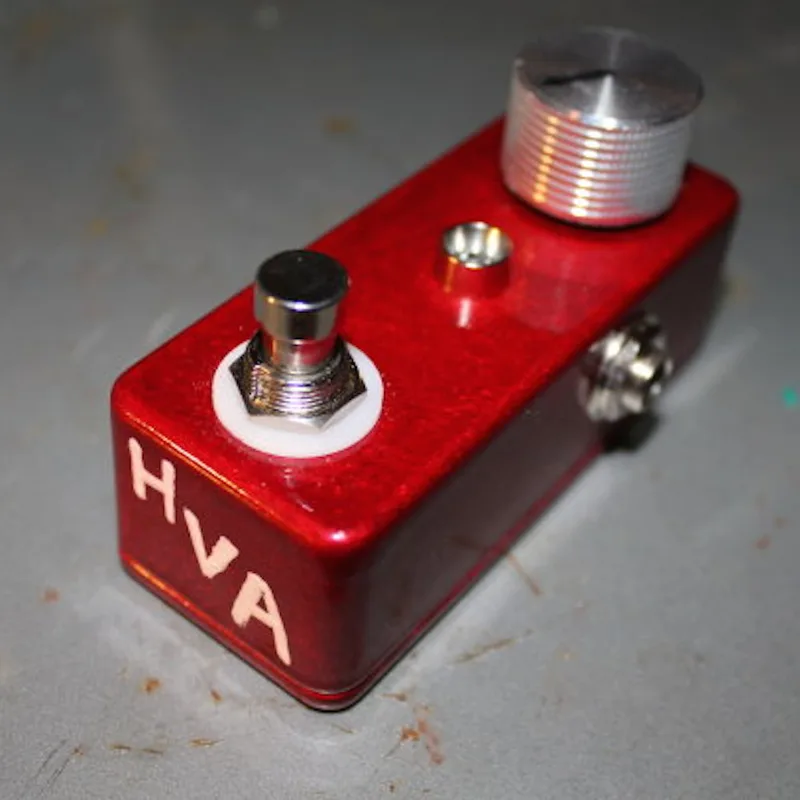
The Happy Valley Analog Clean Boost is a boutique clean boost effect pedal made by Happy Valley Analog. It does one job: it raises the volume of your guitar signal without adding gain or changing its character. The reviewer at Pedal of the Day, Benjamin M, called it "a very transparent pedal and does not color your tone. It does exactly what it says, adding a clean boost."1
What sets it apart from most pedals in its class is sheer output. It has 37 dB of boost on tap, which is much more than most boost pedals, and it sold for $50 new at the time of its 2014 review.1
A transparent clean boost with 37 dB of gain
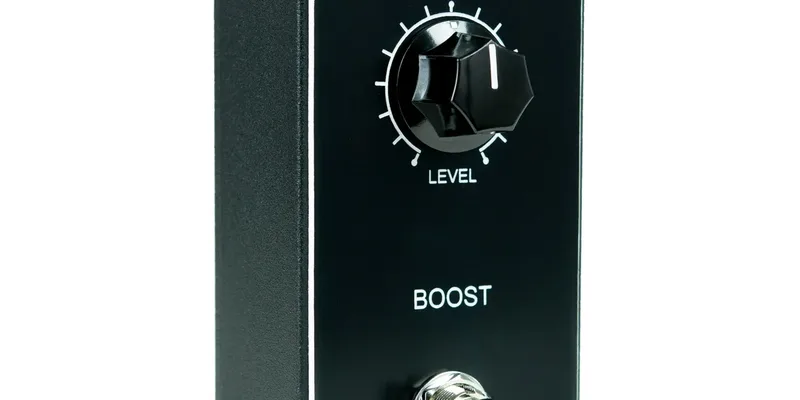
The pedal is an extremely well built, hand painted and hand wired boutique clean boost. Its front panel keeps things minimal: with one knob to adjust output, it is very easy to set to your liking. That single Level control is the whole interface, which is typical of the clean boost format, where the design goal is volume without added distortion.1
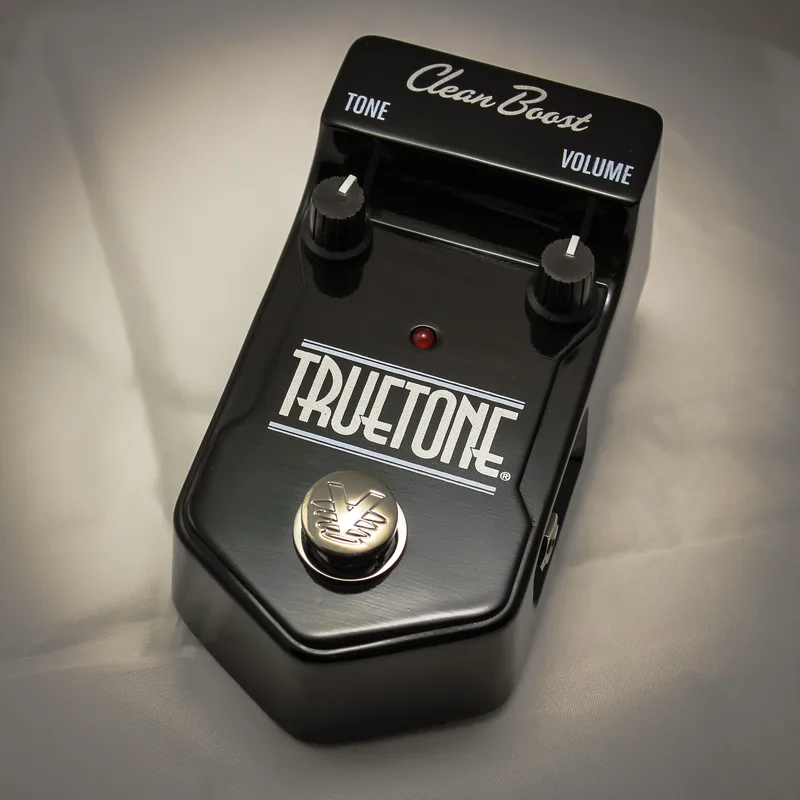
The 37 dB figure is worth putting in context. Other clean boosts on the market offer considerably less: the Truetone Clean Boost adds up to 15 dB of transparent gain, and the Shnobel Tone Clean Boost gives up to 27 dB of clean, uncolored volume boost231. Against those, the Happy Valley's 37 dB is a large amount of makeup gain, enough to push a tube amp's front end hard or to compensate for volume drops across a big pedalboard.
| Pedal | Boost range |
|---|---|
| Happy Valley Analog Clean Boost | 37 dB1 |
| Shnobel Tone Clean Boost | up to 27 dB3 |
| Truetone Clean Boost | up to 15 dB2 |
How it is used with a tube amp and long cable runs
The pedal was designed to be used with a tube amp, and it works in two distinct places in your signal chain1:
- In front of the amp: it can push the preamp into overdrive with added volume, so you get breakup and a louder solo at the same time.
- In the effects loop: it provides a clean boost, raising your solo level without changing the amp's distorted character.
- At moderate settings: it can be used as a buffer for long cable runs or large pedalboards, keeping your signal strong through a lot of cable and switches.1
That flexibility is the core of what a clean boost does. As Adrian Thorpe MBE explains at Guitar.com, "By maintaining the character of your original tone the clean boost can push the front end of an amplifier for a louder and cleaner sound."4 The same principle applies when a boost feeds another pedal: Premier Guitar's demo of the Visual Sound Truetone Clean Boost described it as "a way to push the front end of your tube amp. Then again, it's also a great way to push a good overdrive pedal a bit harder."5
"It has 37db of boost on tap which is much more than most boost pedals."
How it compares with other clean boosts
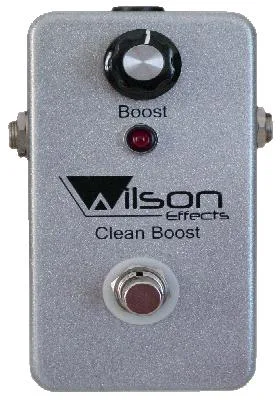
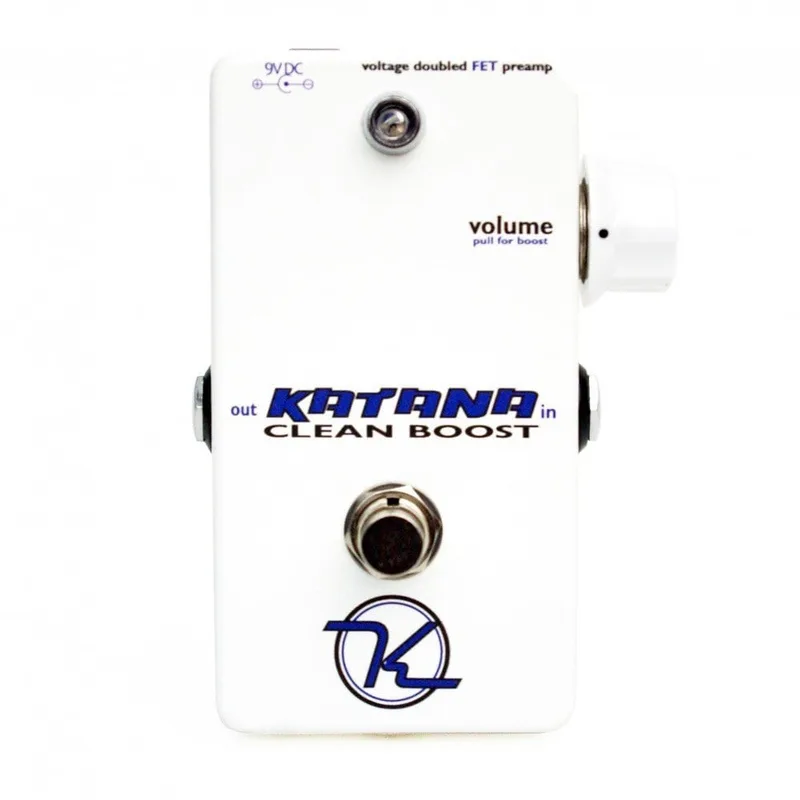
The clean boost field covers a range of approaches, and the Happy Valley sits at the high output, simple control end of it. Comparable pedals include the Shnobel Tone Clean Boost (up to 27 dB, IC style circuit suited to boosting solos or pushing another pedal or a tube amp)67, the Truetone Clean Boost from Visual Sound's line, and the Wilson Effects Clean Boost, which maker Wilson Effects describes as offering flexible gain staging: boost a clean tone, drive an amp's clean channel into overdrive, or push preamp tubes into harmonic saturation7. The Keeley Katana Clean Boost can be kept always on to hit a tube amp harder for enhanced harmonics, or kicked in for solos to cut cleanly through the mix8.
Premier Guitar's review of the Visual Sound Truetone Clean Boost noted that this kind of pedal is best with an amp with lots of headroom, and that it excels as a quasi-overdrive into warm multistage tube preamps9. That is a useful rule of thumb for any clean boost, including the Happy Valley: with a clean, high headroom amp you get louder and cleaner; with an amp already near breakup you get pushed into overdrive.
What the reviewer made of it
Benjamin M's 2014 Pedal of the Day review was positive on both build and function. On the sound, he found it transparent and true to its name, and on value he wrote1:
"At the price of $50 new, you can't beat it."
His overall verdict:
Pedal of the Day highlighted how simple the pedal is to dial in, noting that "with one knob to adjust output, it's very easy to set to your liking," and pointing to its value at $50 new1.
In his view it was great for adding volume for solos without adding gain overall, which is the exact use case a clean boost exists for1.
Questions
How much boost does the Happy Valley Analog Clean Boost give?
It has 37 dB of boost on tap, which is much more than most boost pedals. That is enough range to push a tube amp's preamp into overdrive in front of the amp, or to add clean solo volume from the effects loop.
Can the Happy Valley Clean Boost be used as a buffer?
Yes. The reviewer at Pedal of the Day found it could be set at moderate levels and used as a buffer for long cable runs or large pedalboards, so it can serve double duty as a volume boost and a signal conditioner.
Does a clean boost change your tone?
A clean boost is built not to. The Happy Valley was described as a very transparent pedal that does not color your tone, adding volume without adding gain. Pushed into a tube amp's front end, though, it can drive the preamp into overdrive with added volume.
Is the Happy Valley Analog Clean Boost hand wired?
Yes. It was reviewed as an extremely well built, hand painted and hand wired boutique clean boost effect pedal, and it sold for $50 new at the time of the 2014 review.
Sources (9)
- Happy Valley Analog Clean Boost, Pedal of the Day, 2014-07-21
- V2 Truetone Clean Boost, Truetone, 2026
- BOOST | Shnobel Tone, Shnobel Tone
- What does a guitar boost pedal actually do?, Guitar.com, 2024-04-03
- Visual Sound, Premier Guitar, 2009-08-28
- Shnobel Tone Introduces Clean Boost Pedal, Premier Guitar, 2023-01-19
- Clean Boost, Wilson Effects
- Keeley Katana Clean Boost Demo, Sweetwater, 2021-10-21
- Visual Sound Overdrive & Truetone Boost Review, Premier Guitar, 2009-07-22