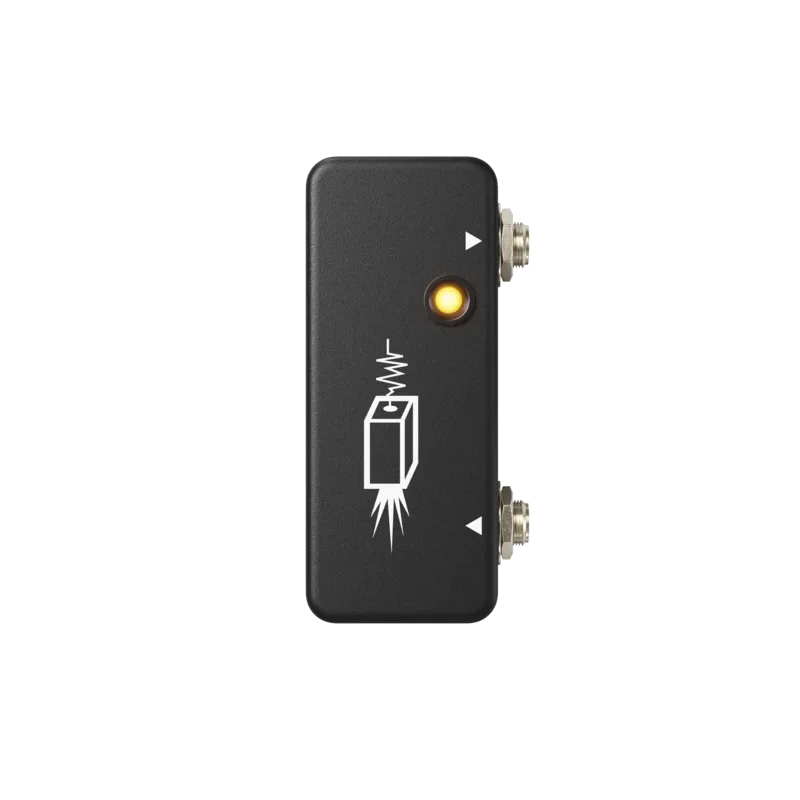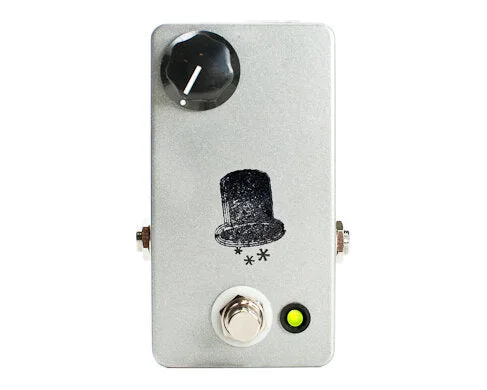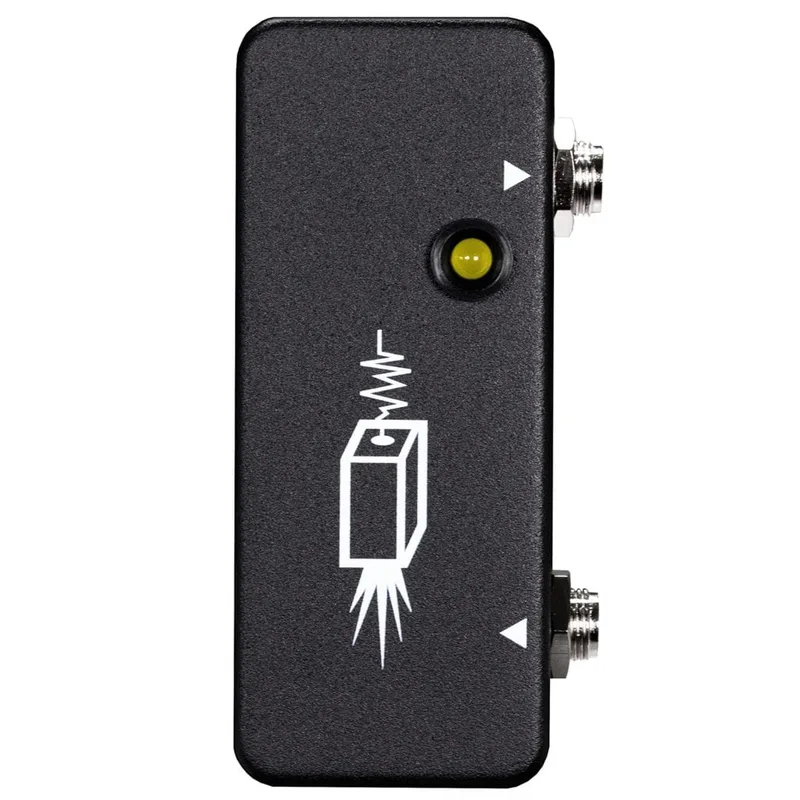


The JHS Pedals Little Black Buffer is a buffer utility pedal: a small box with no knobs whose job is to keep your guitar signal strong and clear on its way through cables and pedals. JHS says that with it in line, "you'll restore all the high-end detail, output level, and tonal character that involved pedal chains and long cable runs" take away1. Its small size is aimed at players who need to save pedalboard space1.
A buffer is the opposite approach to true bypass. Where a true-bypass pedal passes your signal through untouched when off, a long run of true-bypass pedals in series with long cables lets treble and level droop. The Little Black Buffer fixes that by converting the guitar's high-impedance output to a low-impedance one that survives the trip to the amp. See Buffer Pedals for how these compare across makers.
What it does
The pedal has no controls at all. It sits in your chain and buffers: a 1 megaohm high-impedance input receives the guitar signal, and a 100 ohm low-impedance output sends it on2. That impedance conversion is the whole function, and it is why the box can be so small.
JHS describes the use case directly: "If you're experiencing signal loss from a long cable run or from too many true-bypass pedals on your board, place one of our Little Black Buffers" at a key point in the chain2. The company recommends two placements:
- At the beginning of your board, after vintage fuzzes like Tonebenders and Fuzz Faces
- At the end of your board2
The placement advice matters because some pedals want to see the guitar directly. On the Guitar FX Layouts stripboard-layout blog, the advice given was to make it the first pedal in your chain "unless you have a fuzz or wha pedal that doesn't respond well to a buffered signal," in which case the buffer goes after those pedals3. Vintage-style fuzz circuits in particular are known for changing character when fed a buffered signal, which is why both JHS and the DIY community put the buffer behind them.
"Unless you have a fuzz or wha pedal that doesn't respond well to a buffered signal - these pedals should be first in the"
The DIY circuit
The Little Black Buffer has a life beyond the retail box. Guitar FX Layouts published a stripboard (vero) layout of the circuit in May 2014, traced from forum gutshots of the pedal3. Builders who made it up reported it working as expected: one builder wrote "Substituted a 4558D as I am out of TL072s. It works great, dead quiet but brings back some sparkle that was robbed by my" cable run3.
Two practical notes came out of that thread for anyone building the layout:
- A pop was reported when the buffer was used inside a true-bypass loop; the suggested fix was a 220K resistor from output to ground3.
- The circuit can be retrofitted into a volume pedal, and a 100K log pot was suggested so "the full range of frequencies" gets through without filtering out low end3.
Related JHS products
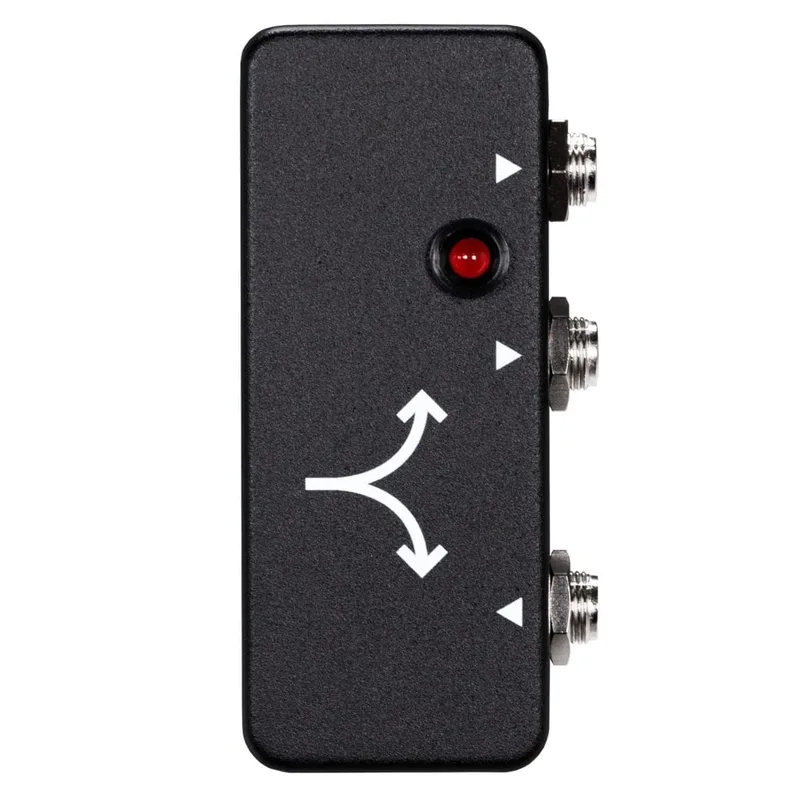
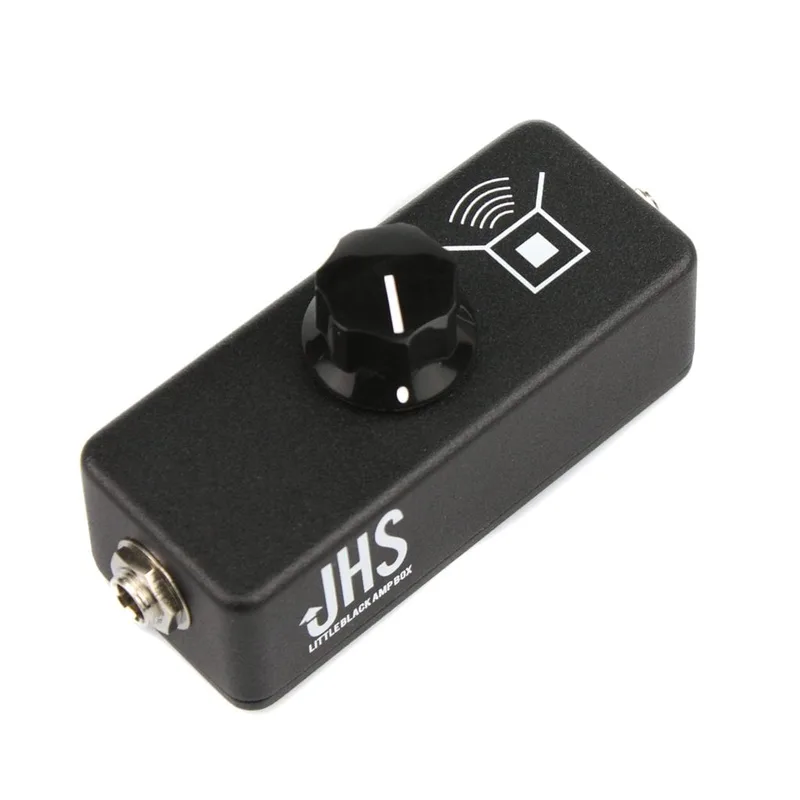
JHS makes the buffer in other forms. The JHS Pedals Buffered Splitter adds buffered splitting to the same basic job, and JHS The Prestige combines buffer, boost and amp-driving overdrive functions in one enclosure. The company's Little Black line also includes the Little Black Amp Box, a volume utility in the same small format, whose size is likewise aimed at saving pedalboard space or sitting on top of an amp14.
Videos
A MINOR ERROR
TooNyTooN
JHS Pedals
Questions
What does the JHS Little Black Buffer do?
It is a buffer utility pedal with no controls. JHS says it restores the high-end detail, output level and tonal character that long cable runs and large true-bypass pedal chains take away. It converts your guitar's high-impedance signal to a low-impedance one at the input, so the rest of your chain sees a stronger signal.
Where should I put the Little Black Buffer in my signal chain?
JHS says to place it either at the beginning of your board, after vintage fuzzes like Tonebenders and Fuzz Faces, or at the end of your board. If you have a fuzz or wah that does not respond well to a buffered signal, put the buffer after those pedals instead of first in the chain.
Does the Little Black Buffer have any controls?
No. It is a fixed buffer with no knobs or switches. Its input is 1 megaohm (high impedance) and its output is 100 ohms (low impedance), and it does its job whenever it is powered and in line with your signal.
Sources (4)
- LITTLE BLACK BUFFER, JHS Pedals
- UNDERSTANDING BUFFERS, JHS Pedals
- Guitar FX Layouts: JHS Little Black Buffer, Guitar FX Layouts (tagboardeffects.blogspot.com), 2016-03-04
- [LITTLE BLACK AMP BOX