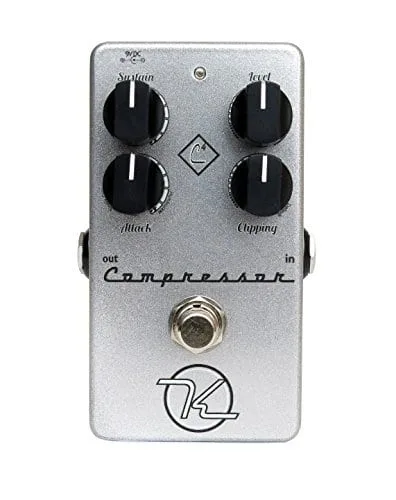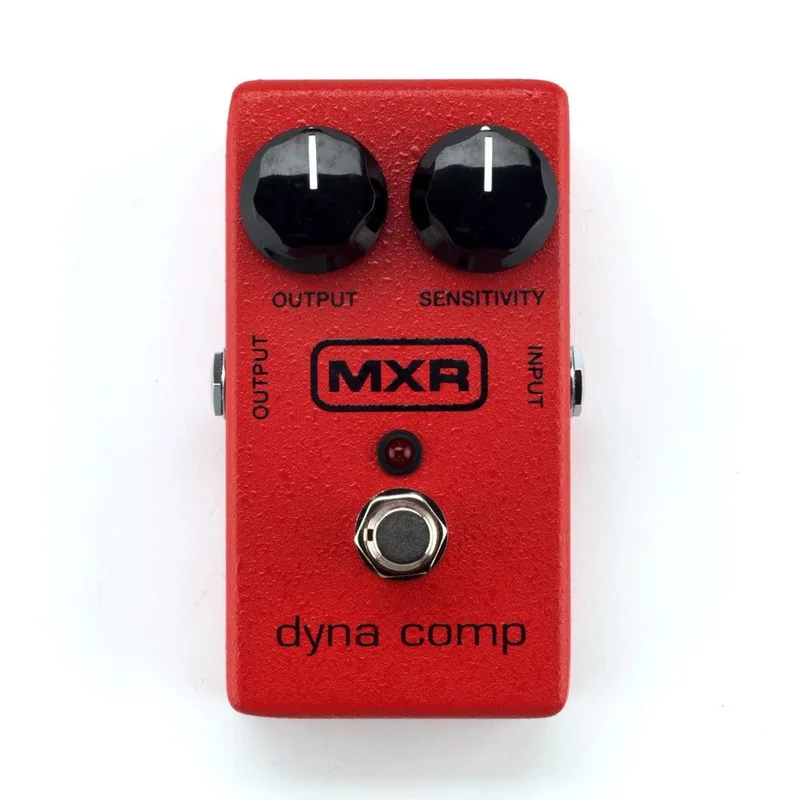


The Keeley Compressor Pro is a compressor pedal from Keeley Electronics, announced in 2014 as a larger sibling to the company's classic Keeley Compressor12. Where the original Keeley Compressor grew out of modifications to the classic MXR Dyna Comp and Ross gray compressor circuitry, the Pro is a different animal: Keeley describes it as "a very different type of compression than the original Keeley Compressor," not just an advancement of the old 4 Knob compressor13.
What that means for a player is studio-style control in a stompbox. Instead of two or four knobs, the Pro gives you a full set of compression parameters you would normally expect on a rack unit or mixing console, plus an auto mode that handles the timing for you. Reviewers took it seriously on those terms: Kenny M at Pedal of the Day wrote that he had "never used a stomp-box that truly had studio quality and versatility"4.
The controls
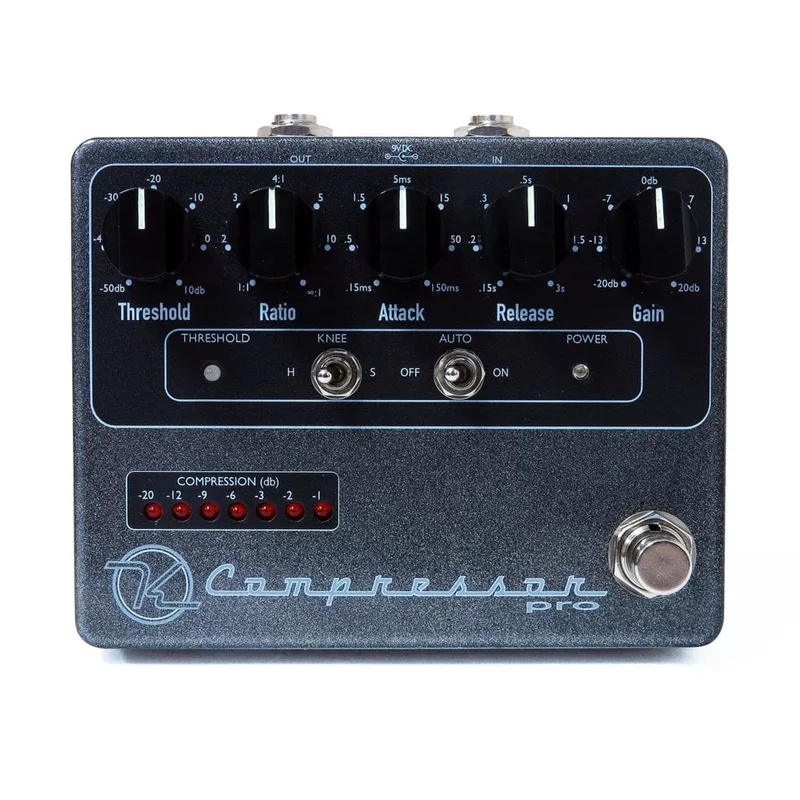
The front panel is built around a set of knobs covering the core compression parameters: Threshold, Ratio, Attack, Release and Output Gain1. For a player used to simpler pedals, here is what each one does in practice:
| Control | What it does |
|---|---|
| Threshold | Sets the level the compression comes in at1 |
| Ratio | How much compression is applied once the threshold is crossed1 |
| Attack | How quickly the compressor reacts to a note14 |
| Release | How quickly the compression lets go after the note14 |
| Output Gain | Sets the level leaving the pedal1 |
Kenny M was "thrilled to see separate 'Attack' and 'Release' controls," a feature the simpler Keeley compressors do not give you in that form4. The pedal also includes a Compression LED Display that shows what the compressor is doing, which the same reviewer found "very useful" and was grateful to finally have in a stompbox format4.
Hard Knee/Soft Knee switch
Alongside the knobs is a Hard Knee/Soft Knee switch. This governs how abruptly the compression engages as your signal crosses the threshold: a soft knee eases in gradually for a smoother effect, while a hard knee clamps down more decisively. Kenny M described the practical difference plainly4:
"With a quick flip of the switch it can go from subtle compression to a much more obviously and punchy compression."4
That makes the switch a fast way to move between transparent leveling, where the audience never notices the pedal, and an audible, squashed compressor effect that becomes part of your sound4.
Auto mode
If setting Attack and Release by hand is more than you want to deal with, the Pro has an auto mode. MusicRadar's reviewer Trevor Curwen explained that it "takes away the responsibility of setting the Attack and Release knobs, instead adjusting" the envelope automatically and naturally in response to the program material, meaning the actual signal you feed it1. Kenny M agreed on its usefulness, writing that "the 'auto' mode Keeley has included sounds truly great and is an easy starting point"4.
Guitar, bass and studio use
The Pro was not designed strictly as a guitar pedal. Curwen noted it was "designed not just for guitar but to accept a range of input signals for studio work," which is what lets it handle bass and line-level sources as well1. His overall verdict called it "a versatile compressor offering not just plenty of options for sculpting guitar and bass sounds, but also many practical" studio applications1.
Kenny M tested it in exactly that spread of contexts, playing it "with electric guitars and a couple different amps" and on acoustic guitar in live settings4.
Is it noisy?
Keeley's own writing on compressors addresses this directly. The company notes that compressors "don't add lots of noise in the signal and they serve to limit peaks," which is why they are found in mixing boards, and that designs without expanders "have the tendency to be very quite, almost noise free like the Compressor Pro"3. In plain terms: the Pro is built to be quiet, and the maker positions it as one of the near-noise-free examples of the type.
Where it came from
The Keeley compressor story starts in 2001, when Robert Keeley built his Keeley Compressor, initially based on R. G. Keen's schematic7. That circuit line, refined through modifications to the MXR Dyna Comp and Ross gray compressor designs, became the pedal that "captured the imagination of musicians," as Curwen put it1. The original two-knob version was discontinued at the end of 20147.
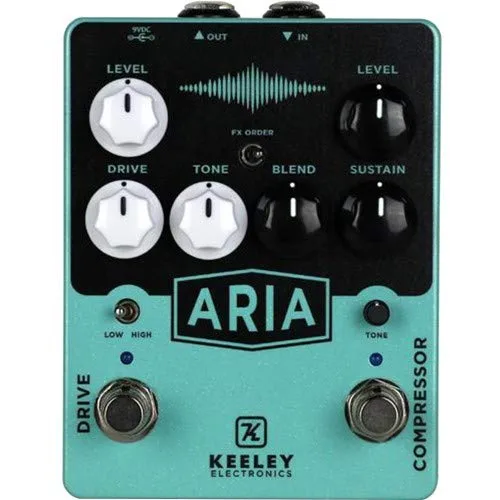
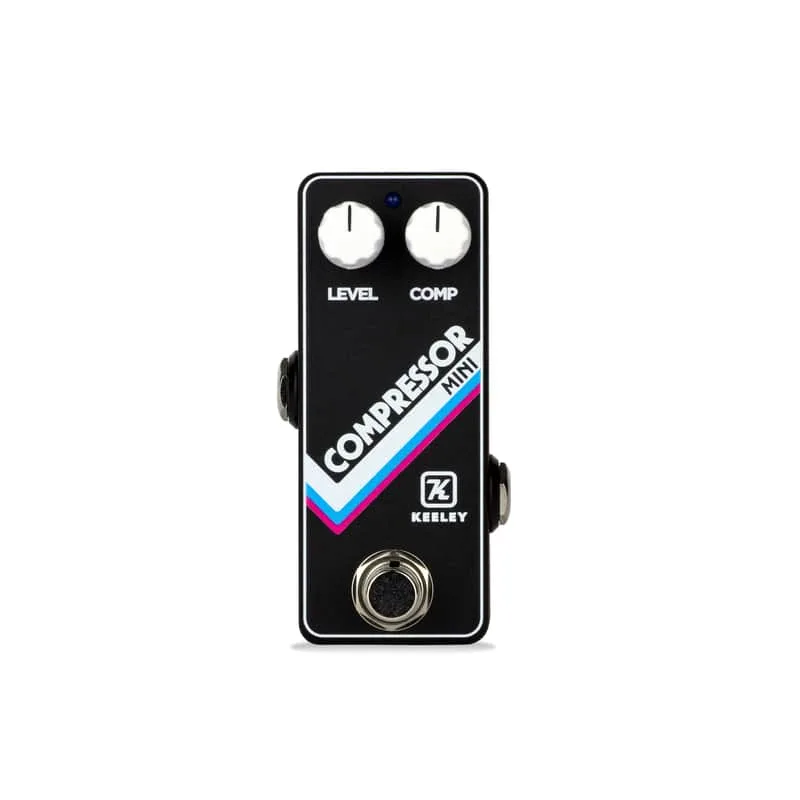
The Pro arrived in 2014 as the fully featured member of the family2. Pedal of the Day later summarized the line's progression as "starting with the classic 2-knob, moving up to the 4-knob, PRO and PLUS versions"8, with later additions such as the Keeley Aria compressor/overdrive and the Compressor Mini following in later years.
What reviewers said
The two published reviews of the Pro were positive. Curwen's MusicRadar verdict praised its versatility across guitar, bass and studio use1. Kenny M at Pedal of the Day went further on the hardware itself, reporting that "the build quality was fantastic and the pedal looks great," and concluding that he had never before used a stompbox with true studio quality and versatility4.
Videos
ProGuitarShopDemos
Pete Thorn
Mike Hermans
Questions
What does the Hard Knee/Soft Knee switch do on the Keeley Compressor Pro?
It changes how the compression engages as the signal crosses the threshold. In the review at Pedal of the Day, Kenny M found that a quick flip of the switch takes the pedal from subtle compression to a much more obvious and punchy compression, so you can use it for gentle leveling or for a more audible, squashed effect.
Does the Keeley Compressor Pro work on bass?
Yes. MusicRadar's reviewer Trevor Curwen described it as a versatile compressor offering plenty of options for sculpting both guitar and bass sounds, and noted it was designed to accept a range of input signals for studio work, not just guitar. That input flexibility is what makes it usable across instruments.
What is auto mode on the Keeley Compressor Pro?
Auto mode takes away the job of setting the Attack and Release knobs yourself. Instead, it adjusts the envelope automatically and naturally in response to the program material, the signal you feed it. Kenny M at Pedal of the Day called it a great-sounding and easy starting point.
When did the Keeley Compressor Pro come out?
Keeley announced it in 2014, alongside the original Keeley Compressor line that dates back to 2001. The Pro arrived as a larger sibling to the classic Keeley Compressor, with far more control rather than a simple update of the older four-knob design.
Is the Keeley Compressor Pro noisy?
No. Keeley itself describes compressors without expanders as tending to be very quiet, almost noise free, and names the Compressor Pro as an example. The company also notes that compressors limit peaks and do not add lots of noise, which is why they appear in mixing boards.
Sources (8)
- Keeley Compressor Pro review, MusicRadar, 2015-07-10
- Keeley Reveals 4 More New Effect Pedals, Keeley Electronics Guitar Effects Pedals (robertkeeley.com), 2014-01-15
- Compression, Keeley Electronics (robertkeeley.com), 2017-06-06
- Keeley Electronics Compressor Pro, Pedal of the Day (www.pedal-of-the-day.com), 2015-04-07
- Keeley Electronics Compressor Pro, Pedal of the Day, 2015-03-16
- Review: Becos CompIQ Pro Stella Compressor, guitar.com, 2019-07-15
- Aurora Compressor / Sustainer, Aion FX, 2018-06-30
- Keeley Electronics Aria Compressor Overdrive, Pedal of the Day, 2018-09-19