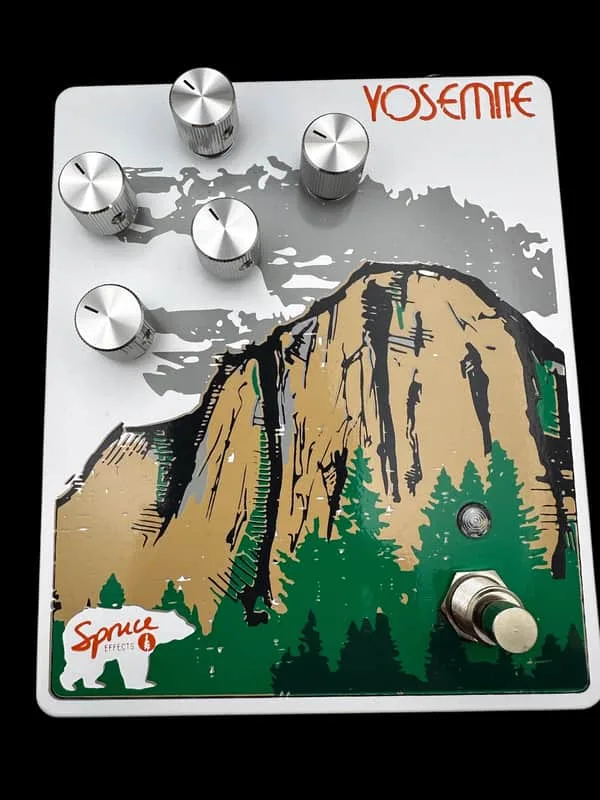


The Spruce Effects Yosemite is a pedal that puts a real spring reverb and an overdrive in the same box. It is analog throughout: the reverb is produced by an actual spring inside the pedal's case, not by a digital emulation, and a germanium preamp sits in front of it, feeding both the spring and the output1.
What it does
The Yosemite's germanium preamp feeds both the spring tank and the output with enough volume to overload the spring tank and also the amp, pushing it into break-up territory at high output levels1. That shared drive stage is the point of the design: because the spring itself can be overloaded, the pedal can produce overdriven reverberated tones that, in Delicious Audio's words, you do not get from a regular overdrive-into-reverb configuration1.
"This allows the creation of overdriven reverberated tones you don't get from your regular OD-into-reverb configuration."
Delicious Audio describes the resulting tones as somewhat lo-fi but full of character1. For players who want that pushed-spring sound, the Yosemite offers it in one unit instead of a chain of two pedals.
Size and controls
The pedal is actually a lot smaller than other pedals with a real spring, which matters on a board where spring tanks usually mean a large enclosure1.
Its controls are straightforward:
- The bottom left control sets the amount of reverb added to the dry signal1.
- The other knobs set the reverb's size and tone1.
Where Spruce Effects has gone since
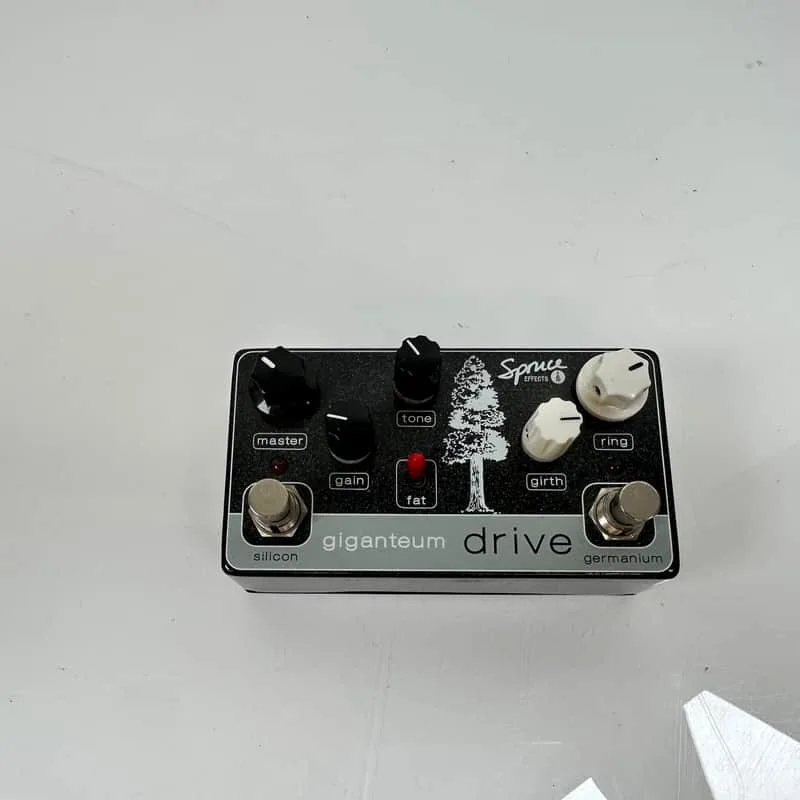
Spruce Effects has continued to build around germanium and other transistor designs: the brand's The Arborist V2 overdrive and the two-channel Giganteum Drive are covered elsewhere on the site, and the Yosemite sits in the same family of germanium-flavored circuits. For more on the effect types involved, see Reverb Pedals and Overdrive Pedals.
Videos
collector//emitter
collector//emitter
ambienttrash
Questions
Does the Spruce Effects Yosemite use a real spring?
Yes. According to Delicious Audio, the Yosemite uses an actual spring inside the pedal's case rather than emulating one. The publication notes that, in its view, using a real spring is the only way to produce a good-sounding reverb without resorting to digital technology, which is why the pedal is built around a physical spring tank.
Is the Yosemite analog or digital?
The Yosemite is analog. Delicious Audio describes it as an analog spring reverb, with the reverb produced by an actual spring inside the pedal's case rather than by digital processing. The germanium preamp that feeds the spring and the output is also part of the analog signal path.
How is the Yosemite different from running an overdrive into a reverb pedal?
Because the germanium preamp feeds both the spring tank and the output, the spring itself can be overloaded, not just the front of the amp. Delicious Audio says this allows the creation of overdriven reverberated tones that you do not get from a regular overdrive-into-reverb configuration, describing the results as somewhat lo-fi but full of character.
What does the germanium preamp do in the Yosemite?
The germanium preamp feeds both the spring and the output with enough volume to overload the spring tank and also the amp, pushing it into break-up territory at high output levels. That shared drive stage is what sets the Yosemite apart from simply chaining an overdrive into a separate reverb pedal.
Sources (1)
- Spruce Effects Yosemite Real Spring Reverb + Overdrive, Delicious Audio, 2022-01-27