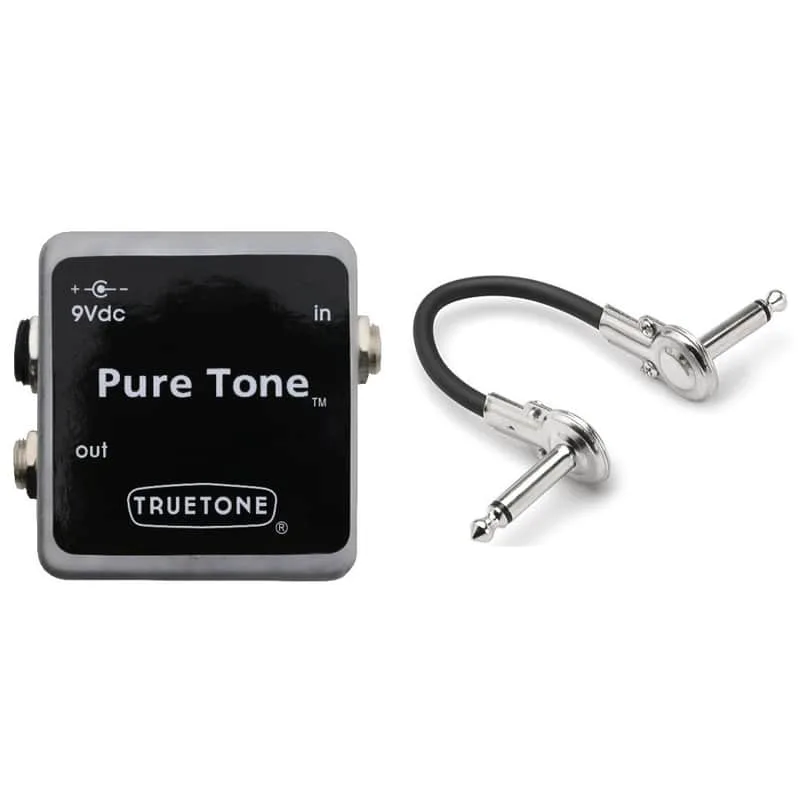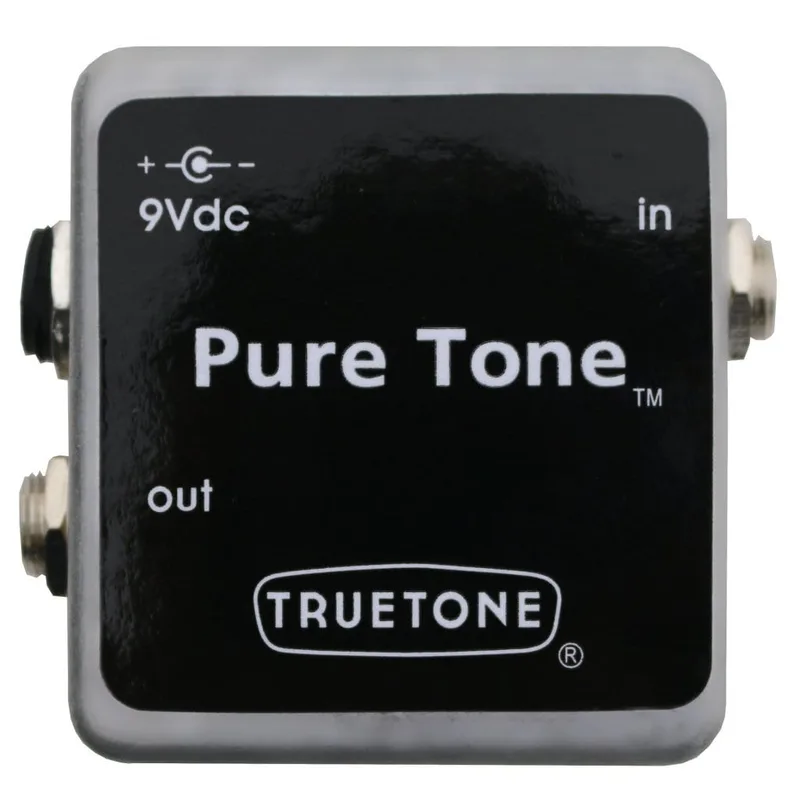


The Truetone Pure Tone is a compact buffer pedal: a small box that sits in your signal chain and converts your guitar's high-impedance output into a low-impedance signal that survives the trip through long cables and a crowded pedalboard. It has no knobs and no switchable modes. It does one job, and Truetone says it is the same buffer circuit the company has built into every pedal it has ever made, offered alone in its own housing1.
The problem it addresses is the gradual dulling of your tone caused by cable capacitance and the loading effect of multiple effects pedals. Truetone says the 1M ohm input impedance loads your guitar pickups minimally, preserving high-frequency content, while the 50 ohm output impedance drives long cable runs and multiple pedals without loss1.
The Pure Tone is an archive product. Truetone lists it in its legacy section rather than its current catalog, so it is no longer a new retail item1.
What it does to your signal
A buffer's job is impedance conversion, and the Pure Tone's two numbers tell the story. On the input side, 1M ohm is the same ballpark as a typical amplifier input, so the guitar sees a load it is designed for and its high frequencies are not dragged down before the signal even leaves the first cable. On the output side, 50 ohm is low enough that the signal can then travel through many meters of cable and a row of true-bypass pedals without the treble loss that plain cable capacitance would cause1.
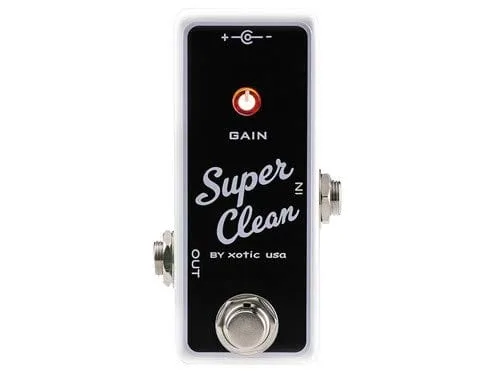
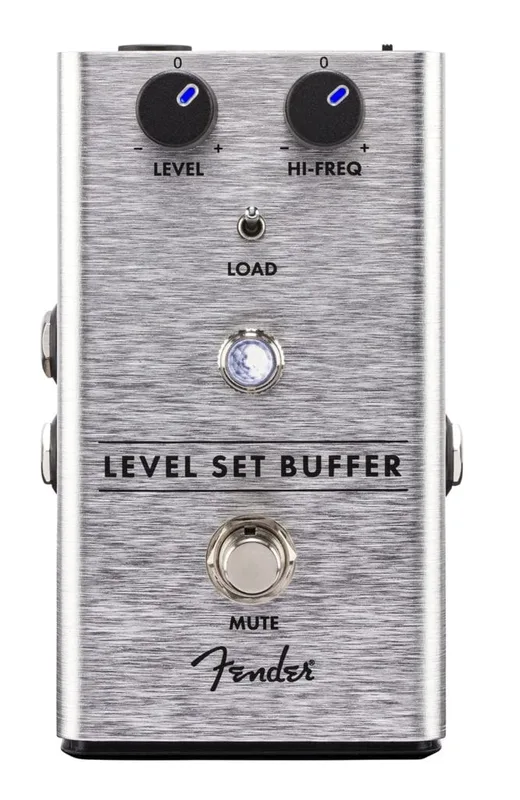
Because it is a buffer and nothing else, there are no controls to learn. Compare it with something like the Xotic Super Clean or the Fender Level Set Buffer, which add level or tone shaping on top of buffering: the Pure Tone's panel is just input, output and a power jack1.
Where it came from
The circuit's history goes back to 1997, when it was built for guitarist Neil Zaza under the name "The Black Box... Top Secret Tone Purifier"1. It later reached the wider market as the Visual Sound Pure Tone, announced by Premier Guitar in January 2012 as a Custom Shop release: "The buffer that is in all Visual Sound pedals is now available in a new, tiny, Custom Shop package"2. Visual Sound is the earlier name of the company that now trades as Truetone, a brand also known for pioneering switching power supply technology for musicians in 20003.
Truetone frames the Pure Tone as the origin point of its whole line: "The same buffer circuit has been built into every Truetone pedal ever made. This is that circuit, alone, in its own housing"1.
Where a buffer goes on a pedalboard
Placement is the one decision a buffer asks of you. In Sweetwater's demo video, Joki Schaller explains the general rule:
"there are exceptions like travel boosts fast pedals and War pedals but basically a buffer needs to be placed at the very beginning"
In other words, first in the chain, right after the guitar, so everything downstream benefits from the low-impedance signal. The exceptions he names are treble boosts, fuzz pedals and wah pedals, circuits that many players feel interact better with the pickups directly, so those often go before the buffer. If you run such pedals, the Pure Tone can also work at the end of the chain, driving only the long cable to the amplifier. For more on the trade-offs, see buffer pedals.
Videos
Truetone
poorguitar:-0
Made by Miike
Questions
Is the Truetone Pure Tone still made?
No. The Pure Tone Buffer sits in the Truetone Archive, the maker's legacy section for products no longer in the current catalog. It was originally sold under the Visual Sound name as the Pure Tone, announced in 2012 as a Custom Shop release, before Truetone became the brand name.
Where should a buffer go on a pedalboard?
As a rule, at the very beginning of the signal chain, so it drives everything after it. In Sweetwater's demo video, Joki Schaller notes there are exceptions, such as treble boosts, fuzz pedals and wah pedals, which many players prefer to feed with an unbuffered signal first.
Does the Pure Tone have any knobs?
No. The Pure Tone is a pure buffer with no controls. It has one job: present a 1M ohm input to your guitar and a 50 ohm output to the rest of your rig, with nothing to adjust.
What power supply does the Truetone Pure Tone need?
It runs on 9V DC with a center pin negative, the same standard arrangement as most compact pedals, so a typical 9V pedalboard supply works. When the pedal was sold as the Visual Sound Pure Tone, the maker suggested a 9V supply such as the 1 SPOT.
Is the Pure Tone the same buffer as in other Truetone pedals?
Yes. Truetone says the same buffer circuit has been built into every Truetone pedal ever made, and the Pure Tone is that circuit alone in its own housing. When it launched under the Visual Sound name in 2012, it was described the same way: the buffer from all Visual Sound pedals in a small Custom Shop package.
Sources (4)
- Pure Tone Buffer, Truetone, 2026
- Visual Sound Releases V3 Tap Delay & Time Bandit, Premier Guitar, 2012-01-13
- 1 SPOT Pro XP5-PS, Truetone, 2026
- Lehle Sunday Driver II: Give Your Darkened Tones a Boost!, Sweetwater, 2023-08-30