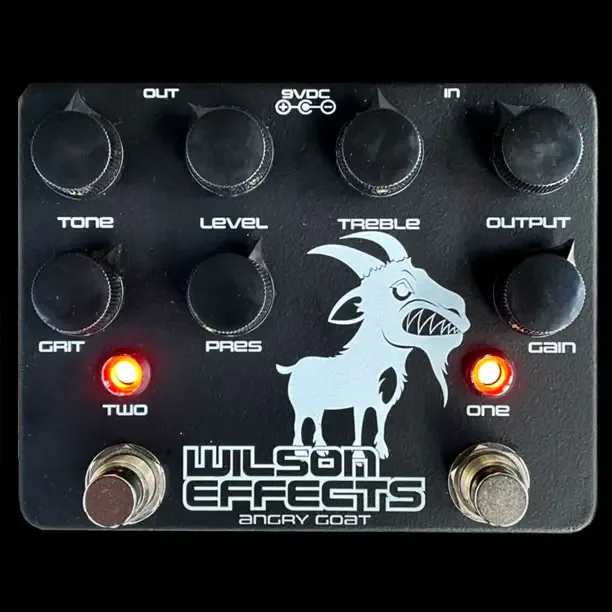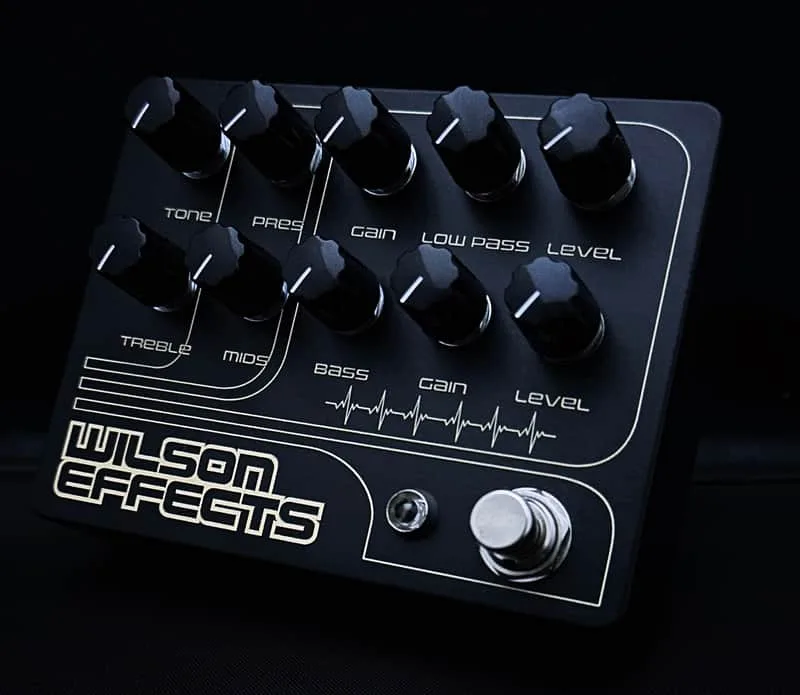


The Wilson Effects Pulse Line is a compact dual overdrive pedal that packs two separately voiced channels into one rugged enclosure. Wilson Effects describes it as delivering "searing leads or on the edge break up," and on the maker's index page sums up the concept as "A transparent overdrive stacked with a dumble style overdrive."12
Channel 1: Smooth Harmonic Overdrive
Wilson Effects describes Channel 1 as delivering "exceptionally smooth, rounded, and touch-sensitive overdrive," offering light-to-medium gain with lush compression, organic sustain, and harmonic richness.1
The top row of controls:
| Control | What it does |
|---|---|
| GAIN | Sets the amount of overdrive/distortion, ranging from subtle warmth and breakup to rich, sustaining saturation |
| TONE | Shapes the overall brightness and character, sweeping from darker/warmer to brighter/more open |
| LEVEL | Adjusts the output volume to match unity gain or push the amp harder |
Channel 1 also carries a President control, which the maker says shifts the character "from open and balanced to thicker mid-forward character with added bite."1
Channel 2: Transparent Dynamic Overdrive
Channel 2 is the transparent side of the pedal. Wilson Effects calls it "highly responsive and open-sounding, with a huge range from subtle clean boost to gritty breakup," designed to preserve the core sound of the rig. A cut-only EQ on this channel "keeps your guitar and amp's fundamental voice intact."1
The bottom row of controls:
| Control | What it does |
|---|---|
| GAIN | Determines the drive intensity, from clean boost/light grit to crunchy overdrive while staying open and amp-like |
| TREBLE | Boosts or cuts high-end frequencies for added bite or smoother top-end |
| LEVEL | Sets the overall output volume for transparent level matching or boosting subsequent stages |
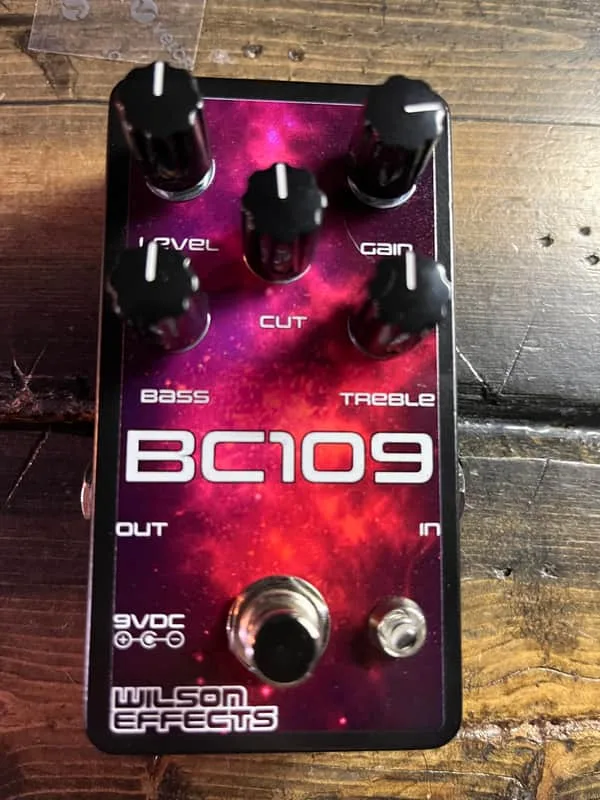
Two of these controls work at specific points in the circuit: the Bass control is a pre-drive cut for tightening low-end response, and the Treble control is a post-drive cut for smoothing highs.1
Power, bypass, and practicalities
The Pulse Line runs on standard 9VDC power through a 2.1mm center-negative power supply, the common connector type for compact pedals. When disengaged, True Bypass "preserves your signal integrity."1
Wilson Effects specifies a 2.1mm center-negative supply, so check the polarity of any shared or daisy-chained supply output before plugging in.
The enclosure is described by the maker as compact and pedalboard-friendly, with a layout designed for maximum efficiency.1
Where it sits in the Wilson Effects range
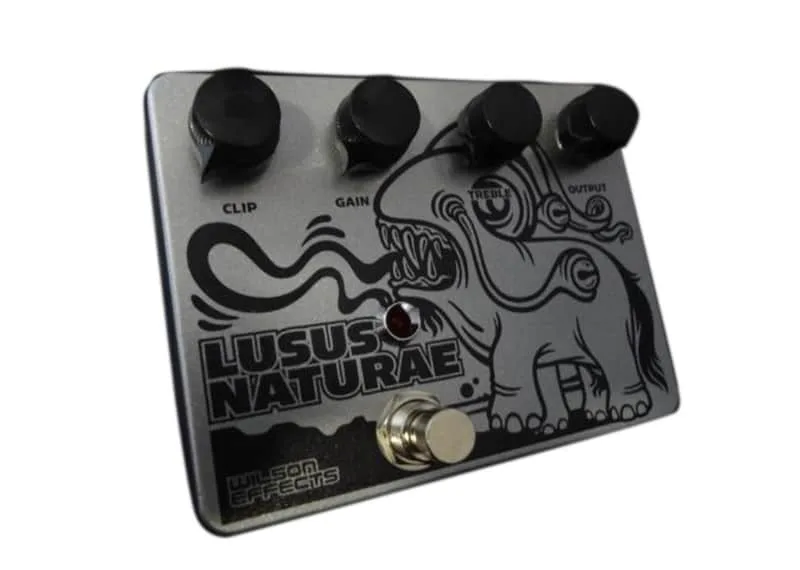
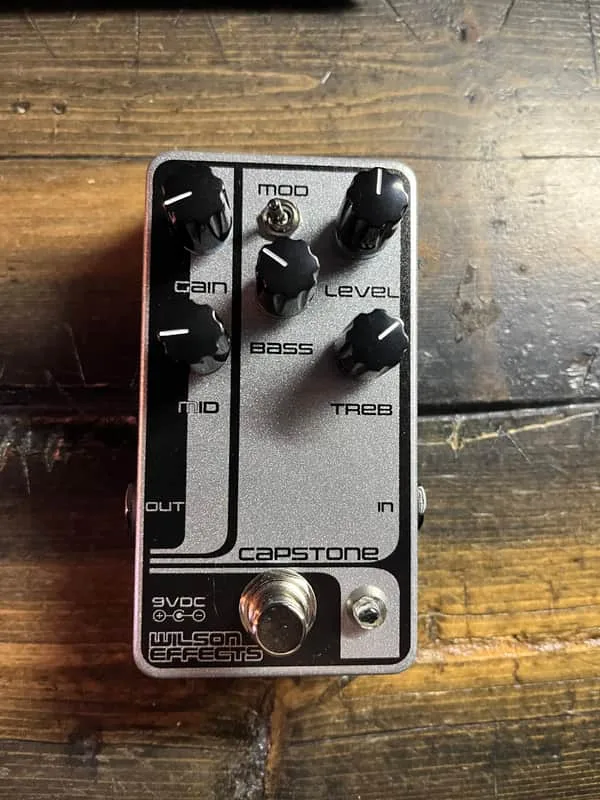
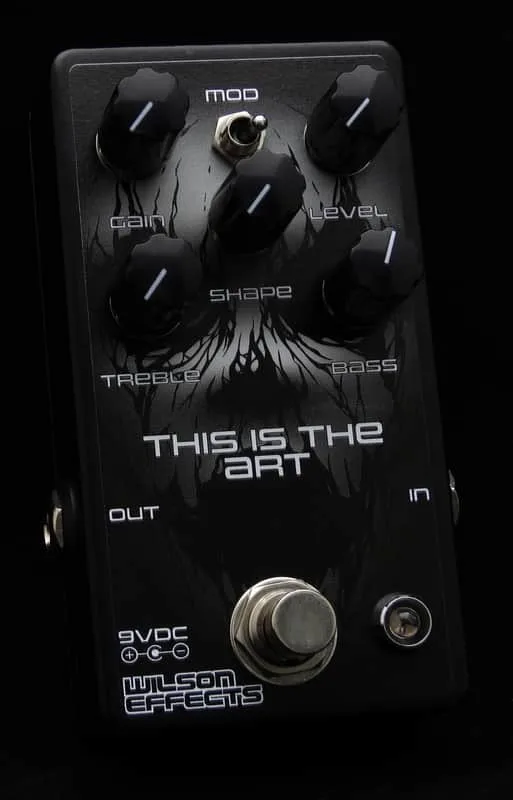
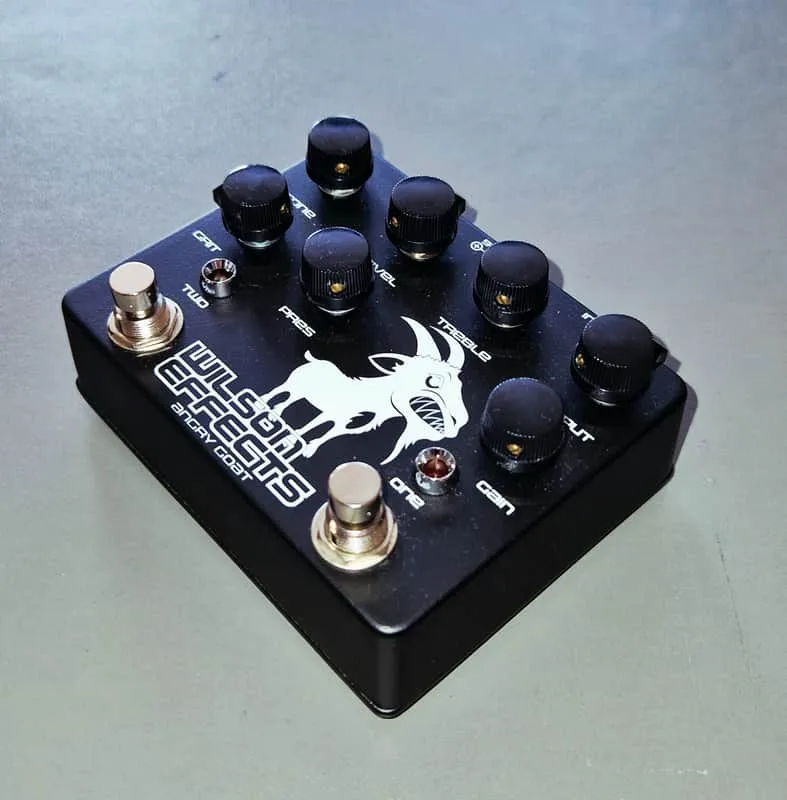
Wilson Effects builds its pedals by hand in Guilford, Indiana, and the Pulse Line joins a range of overdrive designs from the same shop, including the Lusus Naturae, the Capstone transparent overdrive, and the This is the Art overdrive/distortion. For how the Pulse Line's two-channel approach compares with single-channel designs, see the site's guide to Overdrive Pedals.1
Videos
Wilson Effects
Wilson Effects
Mike Hermans
Questions
Is the Wilson Effects Pulse Line true bypass?
Yes. Wilson Effects specifies True Bypass on the Pulse Line, which preserves your signal integrity when the pedal is disengaged. That means the pedal's circuit is removed from the signal path entirely when it is off, so your guitar's signal reaches the amp unchanged.
What power supply does the Pulse Line need?
The Pulse Line runs on standard 9VDC power through a 2.1mm center-negative power supply, the same connector type used by most compact pedals, so it works with a typical pedalboard power supply.
Where is the Wilson Pulse Line made?
Wilson Effects builds the Pulse Line by hand in the USA, in Guilford, Indiana, using premium components according to the maker's product page.
Can the two channels of the Pulse Line be stacked?
The Pulse Line is built as two unique circuits in one enclosure, described by the maker as delivering searing leads or on-the-edge breakup. Channel 2's cut-only EQ is designed to keep the guitar and amp's fundamental voice intact, which suits it to stacking with the other channel.
Sources (3)
- Pulse Line, Wilson Effects
- EFFECT PEDALS, Wilson Effects
- Pulse Line, Wilson Effects