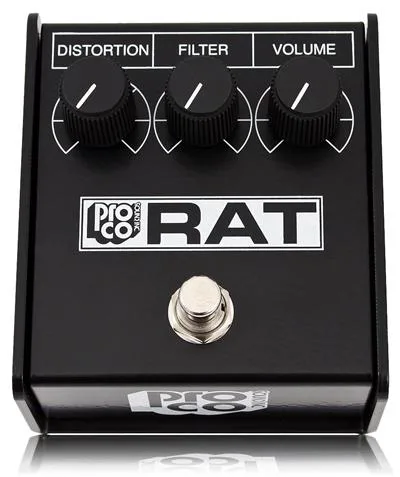
The RAT is one of the most copied distortion circuits in guitar effects. Built by Pro Co and first made in 1979, with the first 100 units hand painted, it runs a single op-amp into hard clipping diodes and finishes with a passive low-pass Filter control1. JHS calls it "one of the most classic and original designs in the history of effects pedals"2, and its circuit has been reissued, cloned, modded and rebuilt by dozens of makers ever since.
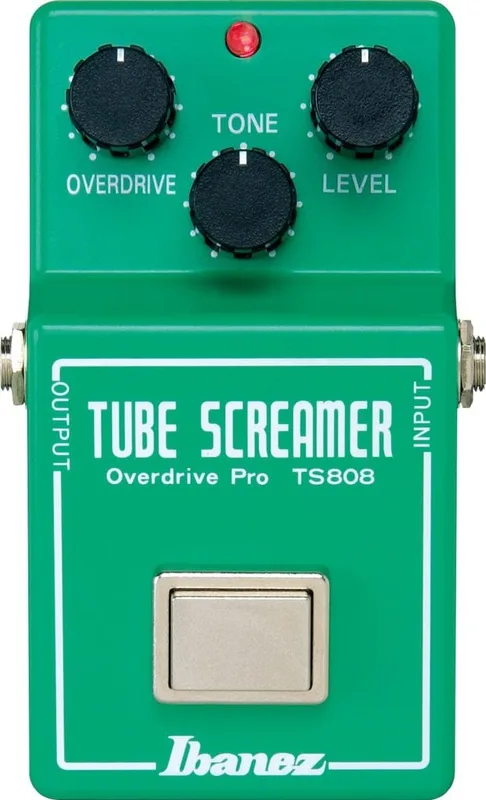
What sets the RAT apart from a Tube Screamer style overdrive is where the clipping happens. A Tube Screamer puts soft clipping diodes inside the op-amp's feedback loop3; the RAT slams its op-amp into diodes that clip the signal hard, which is why it sits firmly in distortion territory while still covering a wide gain range. JHS describes the vintage RAT's range as spanning "from clean/grit all the way to compressed sustaining fuzz"4.
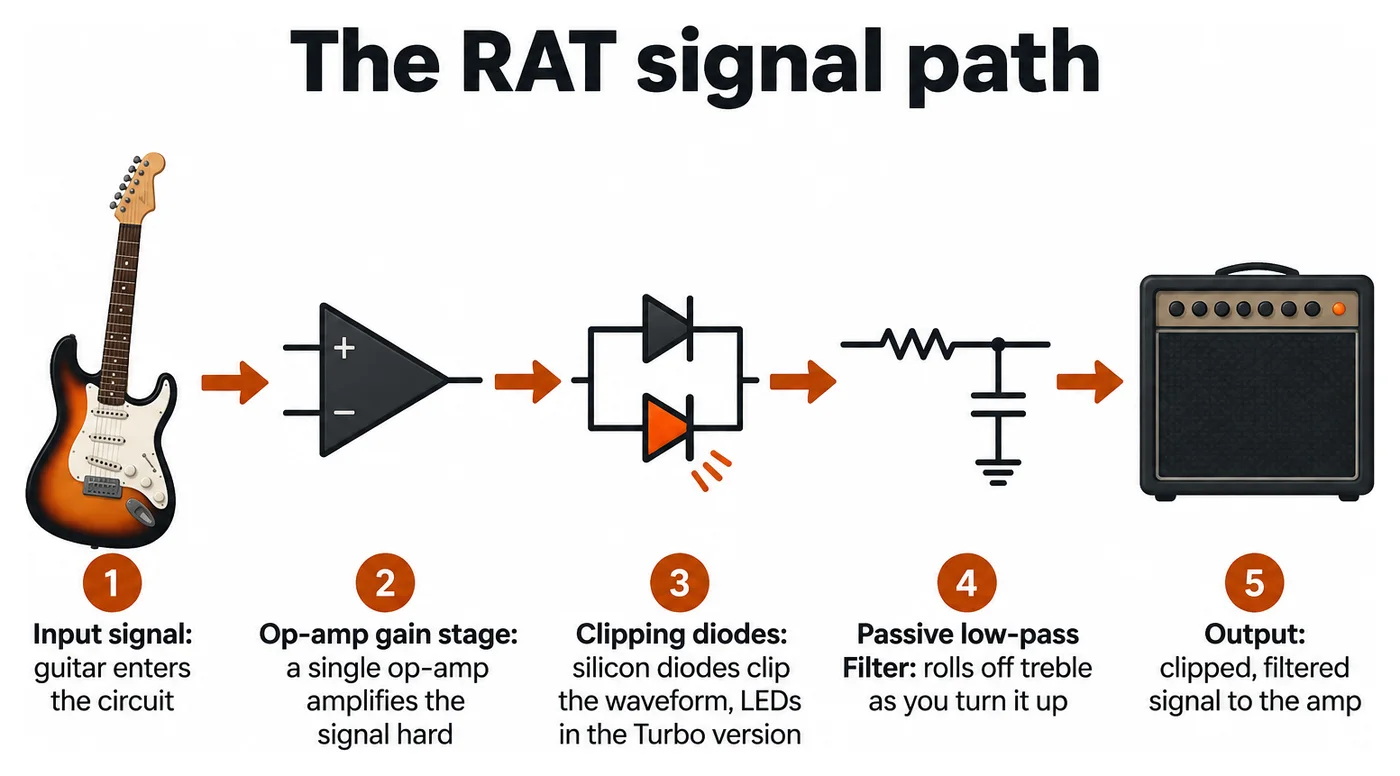
How it works: an op-amp into hard clipping diodes
The core of the RAT is a single op-amp wired for high gain, followed by a pair of clipping diodes. The op-amp amplifies the guitar signal until the diodes conduct and chop off the peaks of the waveform, which is what distortion is: hard clipping, as opposed to the gentler soft clipping of diodes placed inside an op-amp's feedback loop, the arrangement JET Pedals uses in its Lamb overdrive3. Drolo describes the main dirt circuit of its Giant Hogweed as "a single op amp in a topology similar to a RAT"8, which is the same idea: one gain stage doing the work.
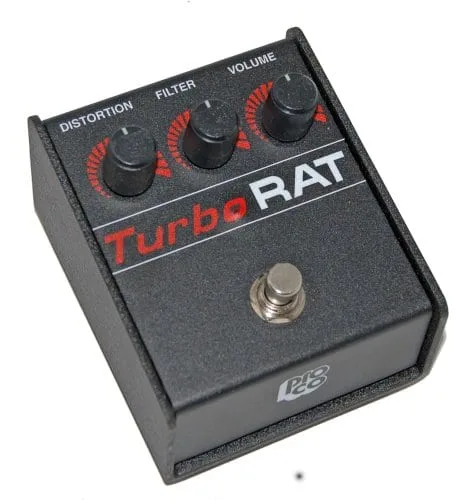
The choice of clipping diodes changes the character. The standard RAT uses silicon diodes; the Turbo version that appeared in the late 1980s used LEDs, which Tru-Fi describes as "more aggressive and with some more grit and bite"15. Sushi Box FX's handwired Lab Rat puts all the options on a three-way switch: "silicon diodes (standard Rat circuit), LEDs (Turbo Rat circuit), or no clipping diodes for a raw clipped op-amp sound"9. That last position is a useful window into how the circuit works: with the diodes removed, you hear the op-amp itself being pushed past its limits rather than the diodes doing the clipping.
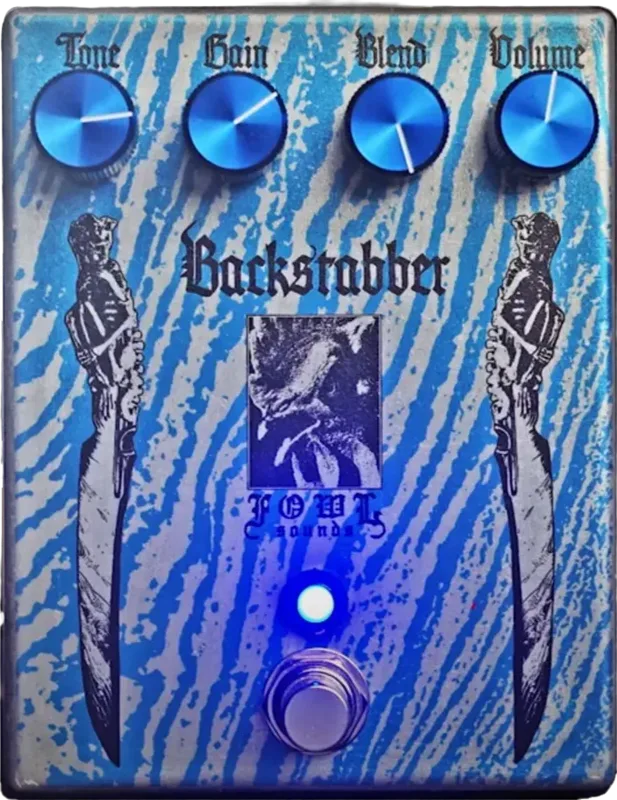
The op-amp itself is a defining part of the sound. Fowl Sounds notes that "the original RAT is known for a specific frequency response do to the inability of its IC to amplify quickly", and its Backstabber pedal chases RAT-like tones through filtering rather than using the original IC10. In other words, part of the RAT's voice comes from an old, slow chip that cannot keep up with fast transients, which rounds off the attack in a way players hear as warmth.
The Filter control
The RAT's third knob is a Filter control, and it works backwards from what most players expect. Catalinbread explains: "the 'Filter' control in the Rat is also a low-pass filter, but it's an extremely simple passive affair", and because it is passive, "the attenuation is not as steep as a state-variable design"11. A low-pass filter lets low frequencies through and cuts highs, so turning the Filter knob up makes the sound darker, not brighter.
"The filter knob works just like the old RAT pedal as you turn up the filter you get a darker sound"
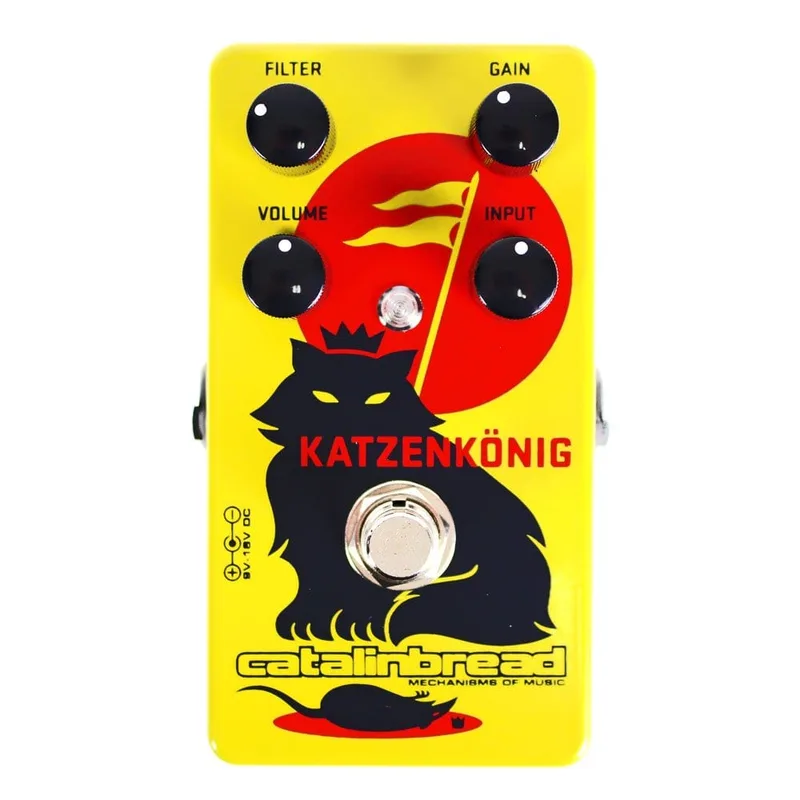
Because that simple passive filter is part of every RAT circuit, makers of RAT-derived pedals keep running into it. Catalinbread's Katzenkönig takes the idea further: "If you are familiar with the Filter control on a Rat then what you'll find is that this is an even better version of that idea"13. GUP Tech's Boo pedal uses a filter that "adjust[s] the EQ (like a RAT)"14, and the Cut knob on its 1982 DD Special Edition "act[s] like the Filter of the RAT"15. Tru-Fi goes the other way for authenticity: on its RAT tributes the builder wires the Tone knob backwards, "like the early one's", and labels it TONE rather than Filter16.
The LM308 and the chips that replaced it
Ask about RATs on any forum and the LM308 comes up immediately. Caroline Guitar Company recalls that "the internet forums telling me 'LM308 or GTFO' were years away from existing"17, but the chip has since become the circuit's defining component. General Guitar Gadgets lays out the practical picture: "The original Rat™ used the LM308, which is now obsolete and expensive to buy, though still available from some sources"18.
The chip matters because different op-amps sound different in this circuit. General Guitar Gadgets describes the LM308 as giving "a warmer tone, less treble, and a smoother, more tube-like attack" with no "plinking" on the attack, while TL061 and TL071 op-amps "sound OK in the Rat circuit, brighter and more of a heavy metal type of tone, with some 'plinking' to the attack"18. The two descriptions disagree on which chip is better, but they agree on the mechanism: the op-amp's speed shapes the attack and the treble.
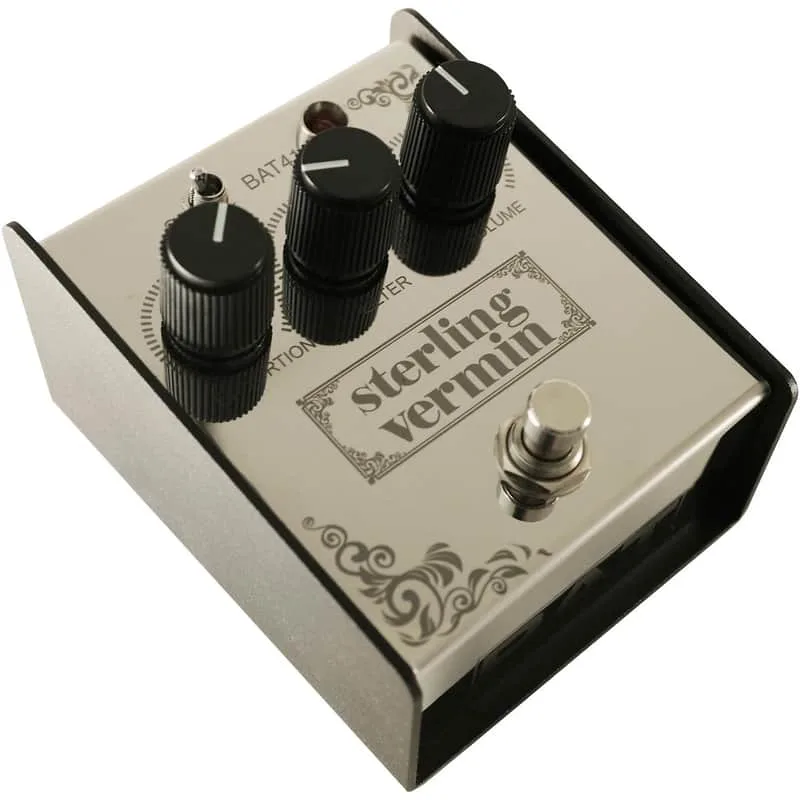
This is also the most common RAT mod. JHS's Turbo RAT Mod starts "by replacing the horrible factory chip with a little discovery of our own that no one else is using in their RATs", a chip the company says offers "less noise and a more well rounded response than the LMN308"2. Sterling Vermin's RAT instead uses an LM741 op-amp with selectable clipping diodes, letting a player "flip between the classic silicon RAT grind" and other options19.
If you are buying or building a RAT clone, check which op-amp it uses. The LM308 is obsolete and expensive, so many builders substitute other chips, and the sound changes with the swap: warmer and smoother with the LM308, brighter with more attack "plinking" with TL-series chips18.
Early RATs, reissues and later versions
The original RAT was made in 1979 in a large enclosure often called the Big Box, and the first 100 were hand painted16. The Turbo version followed in the late 1980s with LED clipping diodes and a more aggressive character1. General Guitar Gadgets' Rodent kit is based on "an older version of the Rat™ circuit sometimes known as version 'B'"18, one of the several circuit revisions Pro Co made over the years.
On the reissue front, JHS is blunt about the current production pedals, citing "the cheap construction of the current reissues"4. That complaint is part of what drives the clone and mod market covered below.
Pedals based on the RAT
The RAT circuit sits behind a long list of pedals from independent makers. Some are straightforward tributes, others extend the circuit in new directions.
| Pedal | Maker | Relationship to the RAT |
|---|---|---|
| Retro-Sonic Distortion | Retro-Sonic | "based on the classic RAT design"20 |
| Pile O' RATs | GUP Tech | "the GUP Tech take on the classic Proco RAT Distortion pedal"21 |
| Rattler / "Relic" Rattler | JAM Pedals | RAT-style distortion pedals, true bypass22 |
| Black Rat | Mosky | RAT-style distortion, true bypass switch23 |
| Gorilla Warfare MKII | Greer Amps | "the RAT circuit... done right" in a Greer version24 |
| WARTHOG | ThorpyFX | "a little RAT-like but so much more"25 |
| Deth Pedal | BLAMMO! Electronics | "takes a Rat distortion and pairs it with a green ringer analog octave up circuit"26 |
| 1982 DD Special Edition | GUP Tech | "our tribute of the RAT and DRV"15 |
| Backstabber | Fowl Sounds | RAT-like tones through filtering, not the original IC10 |
The spread is wide. Retro-Sonic and GUP Tech stay close to the original design; ThorpyFX and Fowl Sounds take the topology somewhere new; BLAMMO! bolts an analog octave-up circuit onto the front of one. JAM's Rattler and Mosky's Black Rat both list true bypass switching2223, a spec players often check on RAT-style pedals.
DIY kits and mods
The RAT is a popular circuit in DIY effects, with several RAT-based kits and PCBs available, such as Jeds Peds' 1590a R.A.T kit, GuitarPCB's Ratt Deluxe, and GuitarPCB's RATT Deluxe PCB for a Ratt style distortion circuit272829.
- Jeds Peds 1590a R.A.T: a small-format kit that "compares to the RAT"27.
- Jed's Ped's Rat-tack: "contains two excellent kits, The Wasteman (ts style circuit) into a R.A.T", a Tube Screamer style overdrive feeding a RAT in one box30.
- GuitarPCB Ratt Deluxe: "our Legacy RAT PCB", a DIY effects PCB for a Ratt style distortion circuit with on-board mount pots2829.
- General Guitar Gadgets Rodent: a kit based on the older version "B" RAT circuit18.
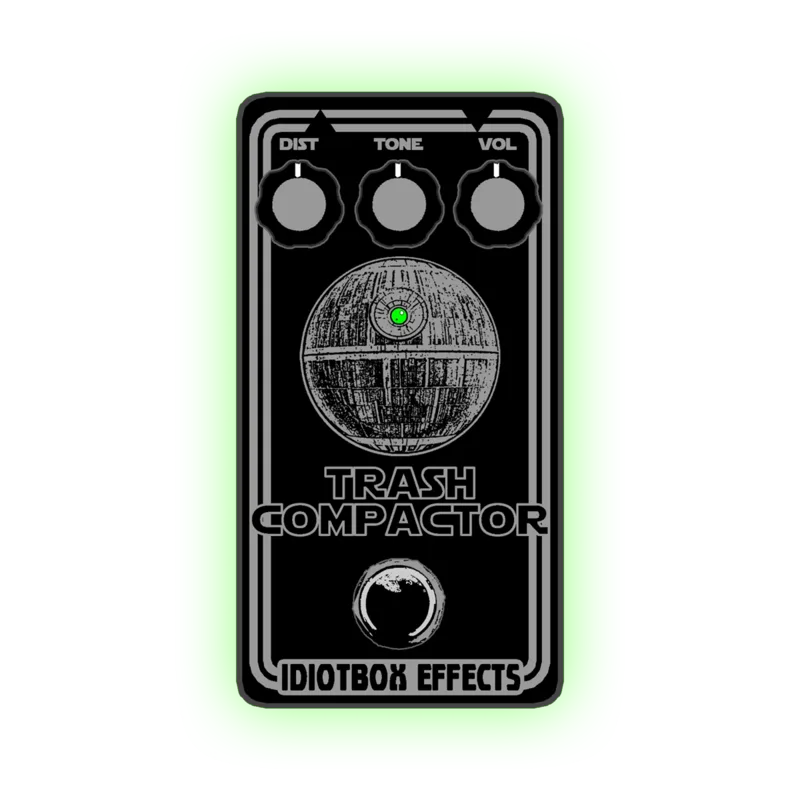
- IdiotBox Trash Compactor: IdiotBox's take on the rat section of its No Moon pedal31.
Mods follow the same paths as the commercial clones: swap the op-amp, swap the clipping diodes, or both. The JHS Turbo RAT Mod packages the chip swap as a service2, while Sushi Box FX's Lab Rat makes the diode choice a switch9. Builders experimenting at home can try the same things on any RAT or RAT clone, and the DIY kits above are the usual starting point.
Pedals on this page
Questions
Why is the Filter knob on a RAT backwards?
The RAT's Filter control is a passive low-pass filter, so turning it up rolls off treble and makes the sound darker, the opposite of a normal tone knob where up means brighter. Shnobel Tone describes the same behavior in its Ratatouille: as you turn up the filter you get a darker sound. Tru-Fi wires the Tone knob on its RAT tributes backwards, like the early originals.
Is the RAT an overdrive or a distortion?
It is a distortion circuit: a single op-amp driving hard clipping diodes to ground, rather than soft clipping diodes inside the op-amp's feedback loop as in a Tube Screamer style overdrive. That said, JHS notes the vintage RAT covers a range from clean grit all the way to compressed sustaining fuzz, so low gain settings can work like an overdrive.
What is the difference between a RAT and a Turbo RAT?
The Turbo version appeared in the late 1980s and used LED clipping diodes instead of silicon, giving a more aggressive sound with more grit and bite. Sushi Box FX's Lab Rat puts both options in one pedal with a three-way switch: silicon diodes for the standard Rat circuit, LEDs for the Turbo Rat circuit, or no diodes at all for a raw clipped op-amp sound.
Why do players care about the LM308 chip in a RAT?
The original RAT used the LM308 op-amp, which is now obsolete and expensive to buy, though still available from some sources. General Guitar Gadgets describes it as giving a warmer tone, less treble, and a smoother, more tube-like attack. Alternative chips like the TL061 and TL071 work in the circuit but sound brighter, with more of a heavy metal character.
Sources (31)
- The R*t Pack Pedalboard Mini Version Guitar Pedal, tru-fi.com
- TURBO RAT MOD, JHS Pedals
- Lamb Overdrive, JET Pedals
- ALL AMERICAN HAND PAINT, JHS Pedals
- Helios Vintage Distortion / Pro Co RAT, Aion FX, 2018-08-25
- Pro Co RAT 2 review: what makes it a distortion legend?, Guitar.com, 2024-05-29
- Knight School Filter DIY Kit, Catalinbread Effects
- Giant Hogweed, drolofx.com
- Handwired Lab Rat, Sushi Box FX
- Backstabber by Fowl Sounds, RockBoard PedalPedia, 2026
- Knightpass Filter, Catalinbread Effects
- Ratatouille Distortion, Shnobel Tone
- Katzenkönig (Fireworks Collection), Catalinbread Effects
- Douche Edition, GUP Tech (guptech.ca)
- 1982 RAT pedal, GUPtech (guptech.ca)
- R*T Pack Distortion Overdrive Guitar Pedal, tru-fi.com
- Holiday Special 2: Wave Cannon Silicon Zero, Caroline Guitar Company, 2025-11-24
- ProCo™ Rat™ Clone Kit: Build the Rodent Distortion Pedal, General Guitar Gadgets, 2014-05-12
- Sterling Vermin RAT by Sterling Vermin, RockBoard PedalPedia, 2026
- DISTORTION, retro-sonic.com
- Pile O' RATs, GUP Tech (guptech.ca)
- Rattler, JAM pedals (www.jampedals.com)
- Black Rat_Mini Guitar Pedals_Effect Pedals_Products_mosky pedal, moskyaudio.com
- Gorilla Warfare MKII, Greer Amps
- WARTHOG | Distortion, ThorpyFX
- Deth Pedal, BLAMMO! Electronics
- 1590a R.A.T, Jeds Peds
- Ratt Deluxe v4.5, GuitarPCB
- BD_RATT-DELUXE.pdf, GuitarPCB.com, 2018-06
- Rat-tack, Jed's Ped's (jedspeds.co.uk)
- Trash Compactor, IdiotBox Effects