The Sadowsky preamp is a bass preamp circuit, best known for the electronics Roger Sadowsky builds into his New York City session basses. It does one specific job: it lifts treble and bass above flat, and it never cuts either band. That design choice, simple as it sounds, is the whole reason the circuit has a following among working bassists and DIY builders alike1.
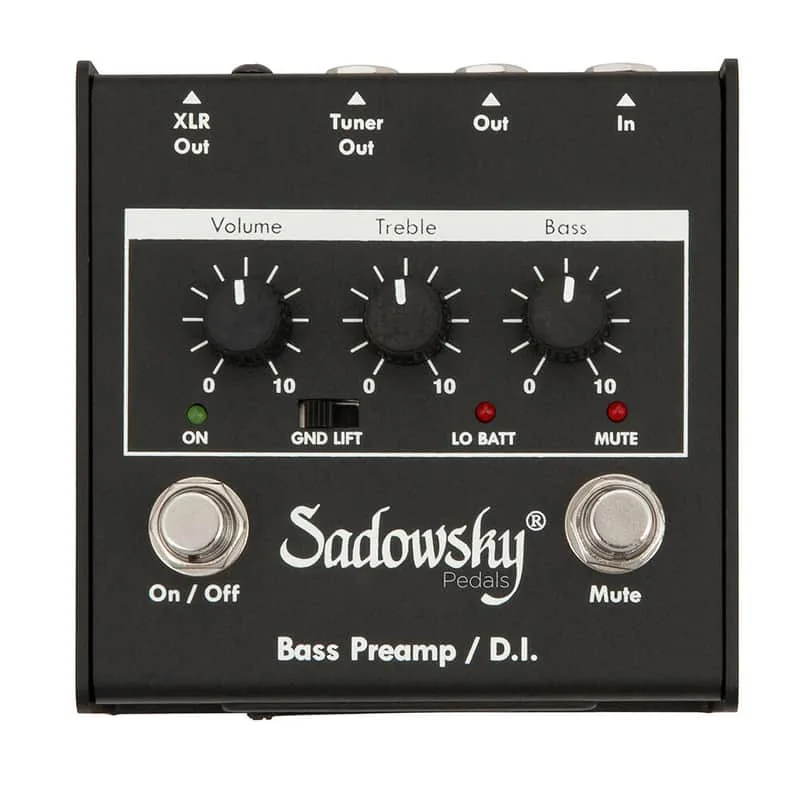
The circuit reached the wider market in pedal form. When Sadowsky unveiled the first Outboard Bass Preamp in 1990, it was aimed at passive and vintage bass owners who wanted Roger's trademark sound without buying one of his instruments2. Bass Player magazine reviewed the Outboard Bass Preamp/DI pedal in April 2002 and again covered the SBP-1 and SBP-2 preamp pedals in August 2017, and those reviews, hosted on Sadowsky's own site, are the main published record of how the circuit behaves23.
Where the circuit came from
The preamp began as an onboard modification. Roger Sadowsky built basses for New York session players, and the onboard preamp was his way of getting a modern, controllable tone out of passive-style instruments. The 1990 Outboard Bass Preamp extended that electronics package to players who owned other basses. As E.E. Bradman put it in BassPlayer's 2002 review12:
The original outboard unit was not even a floor pedal at first. Bradman notes that "the original preamp attached to a strap or belt; the VOLUME, BASS, and TREBLE knobs pointed up and out," before the design settled into the pedal format reviewed as the Outboard Bass Preamp/DI2. That history explains the control set: volume, bass and treble, the same three knobs an onboard plate carries.
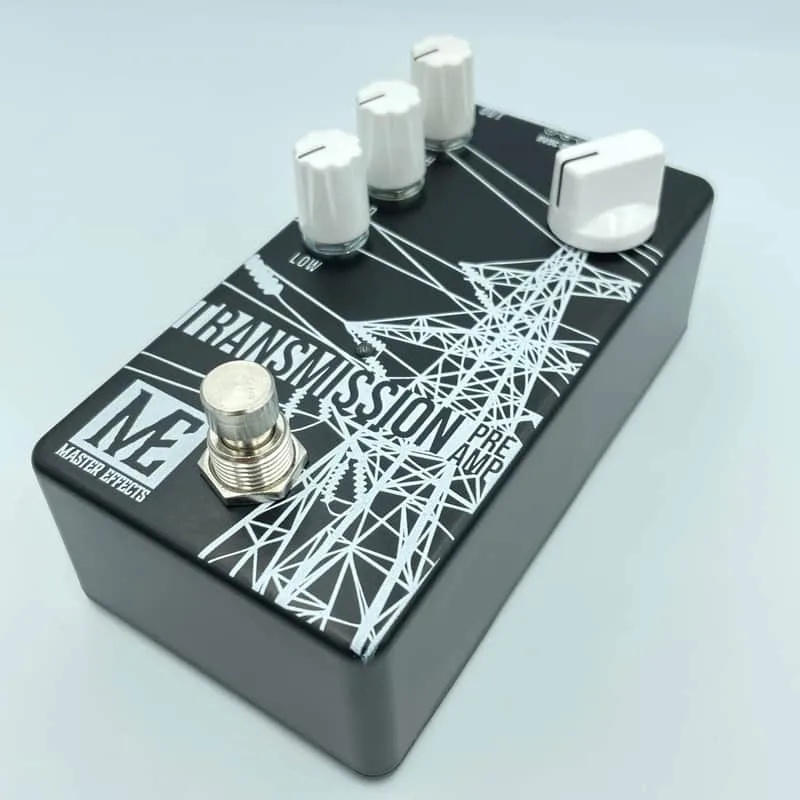
The circuit sits in a family of maker preamps that players associate with a particular builder's basses. Broughton Audio's Royal MK is "inspired by the preamp of the Wal MK series basses"4, and Master Effects' Transmission pedal is "based on the preamp circuit found in the vintage Yamaha BB1200 basses"5. The Sadowsky preamp is the same kind of object: a builder's onboard bass electronics, lifted out of the instrument and sold on its own.
How the FET circuit works
The Sadowsky preamp belongs to the broader tradition of FET (field-effect transistor) preamps in guitar and bass gear. FETs are transistor amplifiers prized for high input impedance and a soft, tube-like transfer curve, which is why so many preamp and boost designs are built around them rather than op-amps.
The published record on the Sadowsky circuit itself is thin, but the FET preamp tradition around it is well documented:
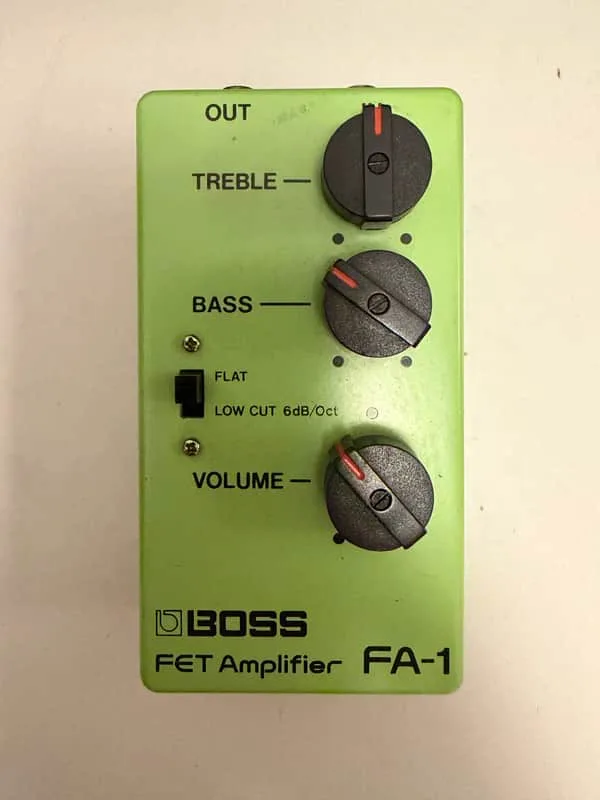
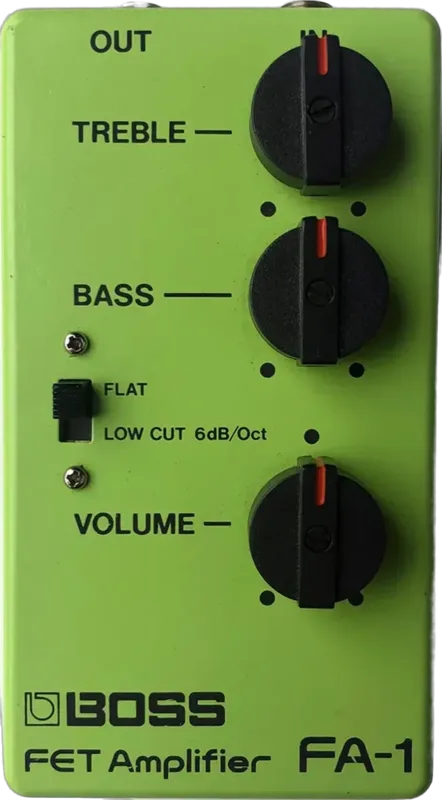
- The Boss FA-1 FET Amplifier, recreated faithfully by Retro-Sonic as "a faithful recreation of the original 'FA-1' FET Preamp circuit," is the classic Japanese example of the type67.
- Mozztronics' HP-2 harp preamp "uses 3 stages of JFET circuitry operating in pure Class A to emulate the sound and feel of a low-wattage valve amp"8.
- AMT's Preamp S1 "features JFET circuit design producing crazy tight and responsive distortion" aimed at Soldano-style guitar tones9.
- Horrothia's Triage Deluxe is "a FET preamp followed by an overdrive stage made from hand picked transistors which form a discrete opamp"10.
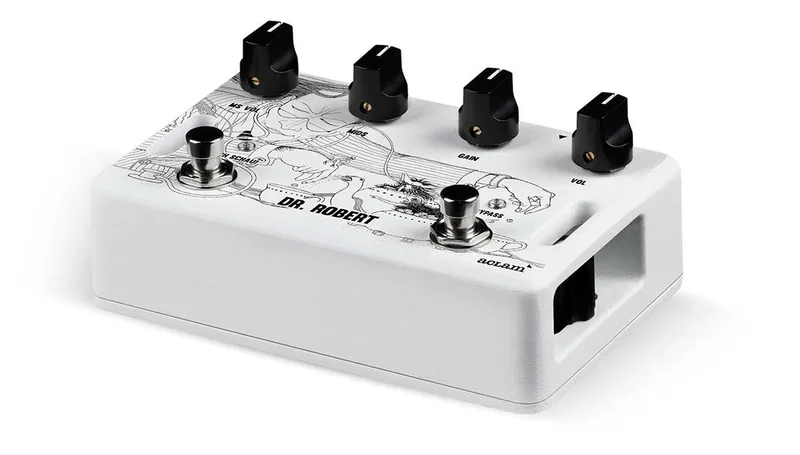
- Aclam's Dr. Robert pedal follows a solid-state preamp with "a custom FET based circuit emulating the saturation produced by the UL730 EL84's tube power" section, with a charge pump converting 9VDC to 18VDC11.
One thing FET circuits can get wrong is switching. Pendulum Audio's HZ-10SE manual explains the problem and its fix: the unit "utilizes FETs in a shunt switching mode, which effectively takes them out of the signal path when activated, for silent switching without FET-induced distortion"12. That last phrase, "FET-induced distortion," is worth holding onto: a badly biased or badly switched JFET stage distorts, and that is a common complaint with clones of simple FET preamps.
For a builder, the practical takeaway is that JFET stages need to be biased correctly to stay clean. General Guitar Gadgets' guidance on their Blue Star project states that "voltage at the JFET Drain should be about 4.7 volts, but tune it by ear with the trimmer"13. That figure comes from a different GGG project, not a Sadowsky schematic, but it is a widely used biasing target for single-supply JFET boost stages and a sensible starting point when a Sadowsky-style clone distorts more than expected.
Treble and bass boost only
The defining feature of the Sadowsky preamp is that its EQ only boosts. Jonathan Herrera's 2017 Bass Player review of the SBP-1 lists two things that make the pedal stand out, and "Second is its boost-only EQ circuit"3. The same review gives the one hard EQ figure in the published record: "treble, +18dB @ 4kHz"3.
Boost-only means the flat position is the bottom of the range. Turning the treble knob up adds up to +18dB of boost centered at 4kHz; turning it back to flat removes it. There is no cut on either band, so the circuit cannot scoop mids or tame a boomy bass. Players who need cut as well as boost need a different EQ31.
Sadowsky is not alone in this approach. Aguilar's OBP-1 SK is described by its maker as "a two-band boost-only bass and treble preamp, that has high headroom, low distortion"14. The OBP-1 and the Sadowsky preamp are the two circuits most often named together in the boost-only onboard category, and both target the same player: someone with a passive bass who wants more presence and more low end on tap, set with the knobs at or near flat most of the time.
Onboard and pedal versions
The circuit exists in several official forms. The onboard version lives in Sadowsky's basses. The outboard line began with the 1990 strap-mounted unit and grew into the Outboard Bass Preamp/DI pedal, which carried volume, bass and treble controls plus an AC adapter jack2. The SBP-1 and SBP-2 floor pedals followed, and according to Herrera's review, "The SBP-1 & SBP-2 are largely the same circuit," both based on Sadowsky's onboard preamp design3. The SBP-1 runs on 18 volts at 250mA with an adapter included3.
Sadowsky has also extended the circuit with mid boost options, documented on the maker's own preamp page15:
| Version | What it adds | How it is controlled |
|---|---|---|
| Onboard / Outboard / SBP-1 / SBP-2 | Treble and bass boost only | Volume, bass, treble knobs23 |
| Basic 500Hz Mid Boost Preamp | A wide band boost at 500Hz | Mini toggle switch15 |
| Will Lee Mid Boost Preamp | Mid boost with selectable voicing | Two trim pots on the control plate15 |
The Will Lee version offers three mid positions, "1 - 500Hz, Narrow," "3 - 800Hz, Narrow," and a middle position between them, with Trimpot A adjusting the gain of the mid boost and Trimpot B controlling the total output of the bass when the mid boost is engaged15. Sadowsky's usage guidance for that version is to take a little time to find your sound and then treat it as set-and-forget15. The Basic 500Hz Mid Boost Preamp is listed as available for custom builds and upgrades15, which means players with existing Sadowsky basses can have the mid option fitted rather than buying a new instrument.
Transistor choices: 2N5457, J201 and J113
DIY builders cloning JFET preamps face one recurring question: which JFET to use. The three parts that come up constantly are the 2N5457, the J201 and the J113, and the build documentation from several makers treats them as a family of near-interchangeable choices.
General Guitar Gadgets lists "2N5457 (or J201)" for Q3 and Q4 in their BSIAB2 project16 and "2N5457 (or J201) JFET Transistor" for Q1 in their Mini-Boosters17. GuitarPCB's NostalgiTone 60s Edition lists "Q3 J113 / 2N5457"18, and their Tweed Fuzztone Deluxe build document says "Q1 - Q5 of the Tweed section suggests 2N5457. You may also use J113, J201, etc., with excellent results"19.
The J113 in particular has become the practical substitute as 2N5457 stock gets harder to find. GuitarPCB's JHS Morning Glory build document puts it plainly20:
"A reliable substitute is the J113, which matches the key characteristics of the 2N5457 and is widely available."
GuitarPCB also notes that they "typically carries J113, J201 and 2N5457 transistors in our shop along with other accessories"21, so all three remain obtainable. For a Sadowsky-style clone, the same logic applies as for any JFET boost: pick one of these three, bias the drain correctly, and expect to sort or select parts, since JFET parameters vary widely between individual transistors.
The DIY layout
The Sadowsky preamp is a popular DIY target, and the broader kit market shows what builders should look for in a layout. Jeds Peds' Wizards Sleeve kit "includes my DIY friendly PCB design, with larger solder pads, and a spacious layout"22, which is the standard for a good beginner-friendly board. PedalPCB sells preamp PCBs across the category, including the Obsidius Preamp, a DIY PCB for a preamp/overdrive pedal listed under OD / Distortion / Fuzz, Overdrive and Preamps categories23, and the Bobby Preamp, a DIY PCB for a preamp pedal24. Jeds Peds' Sullenberger Preamp kit is sold as "PCB & Components - PCB, onboard components and any pots and toggle switches"25.
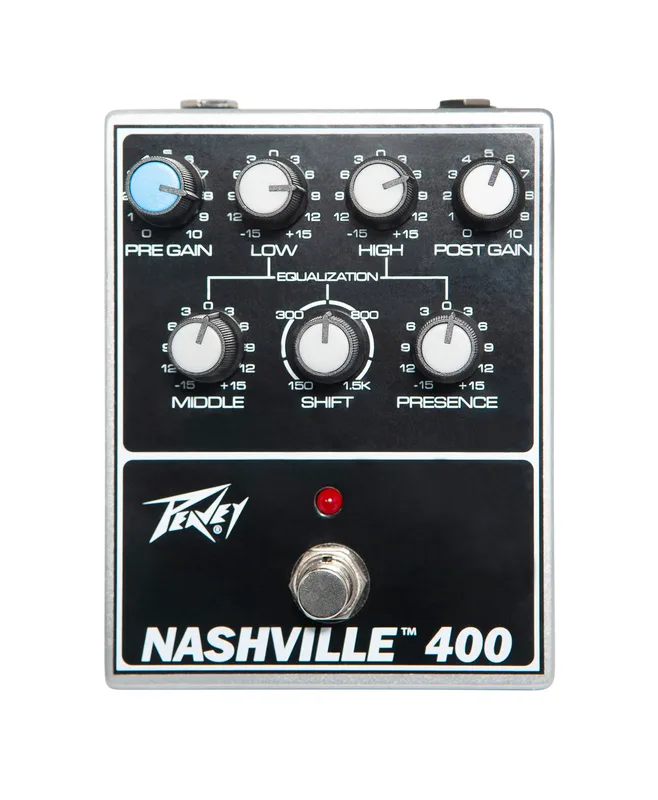
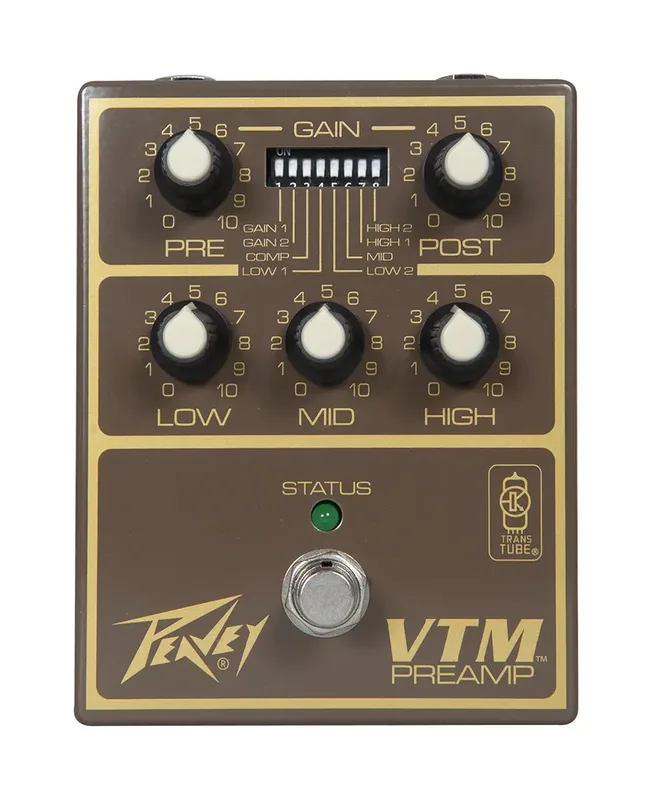
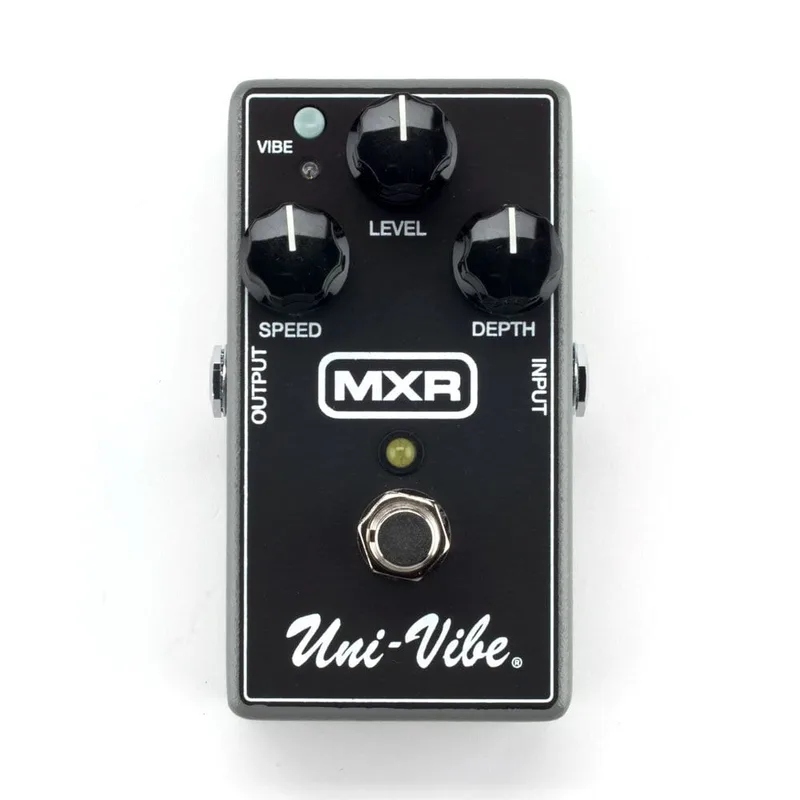
The wider preamp-in-a-pedal market gives a sense of how makers package amp-style circuits: Peavey's Nashville 400 Preamp Pedal is "a faithful recreation of the original Peavey Nashville 400/112 preamp circuit (including the 1997 mods)" with Pre Gain and Post Gain controls26, and their VTM Preamp Pedal is a "TransTube recreation of the legendary Peavey VTM 60/120 preamp circuit (circa 1987) in a pedal"27. PedalPCB's EVPreamp is a clone of the Uni-Vibe preamp28. These are all examples of the same pattern the Sadowsky outboard pedal set in 1990: take a circuit players already know from another context and put it in a box.
Mods: adding a mid control and moving the volume
The most common modification builders want is a mid control, and Sadowsky itself now offers one, as covered above. Outside the Sadowsky line, two other makers show how a mid option is typically implemented29130.
Jeds Peds' Super Lead kit "also includes a two position mid toggle switch enabling you to boost the mids for thicker tones or a more open voice"31. Master Effects' Thespian Valve Preamp takes it further with a full Middle control alongside Volume, Treble and Bass, plus a Bright switch and a Mid Boost switch; the Mid Boost switch "shifts the inherent mid scoop of the fender tone stack from 360Hz to 170Hz while giving about an 8 dB boost to the frequencies around 360Hz-1kHz"32. A toggle, as on the Sadowsky Basic 500Hz preamp, keeps the control set simple; a pot, as on the Thespian, gives continuous control but needs another hole in the plate or enclosure.
Moving the volume control is the other common change, usually so the knob sits where a player's hand expects it. There is no published guidance specific to the Sadowsky circuit on placement, but the same build-documentation sources that cover JFET selection and biasing are where builders find the general wiring practice for such changes.
Pedals on this page
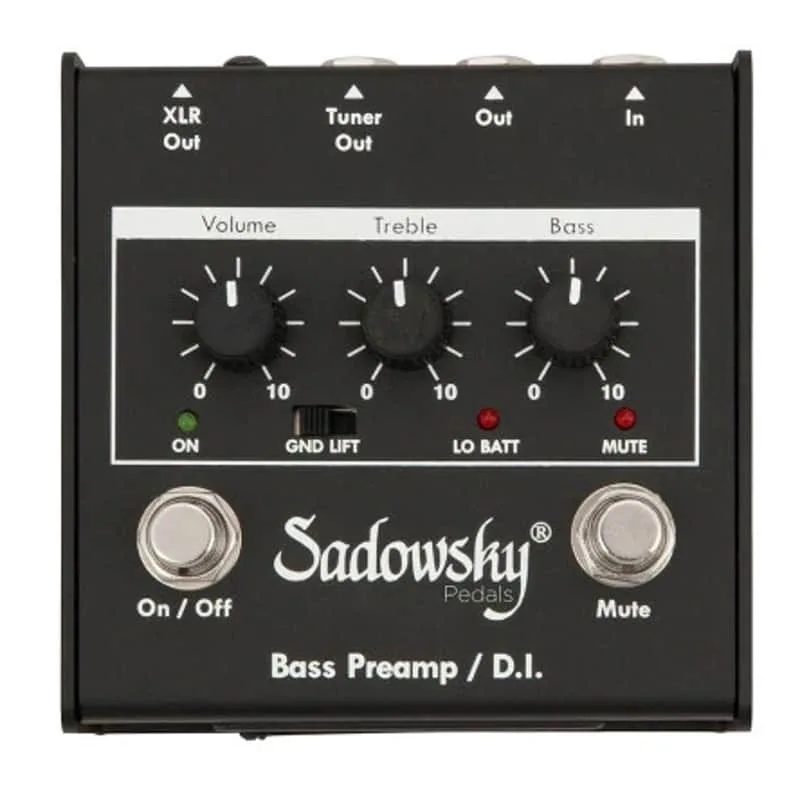
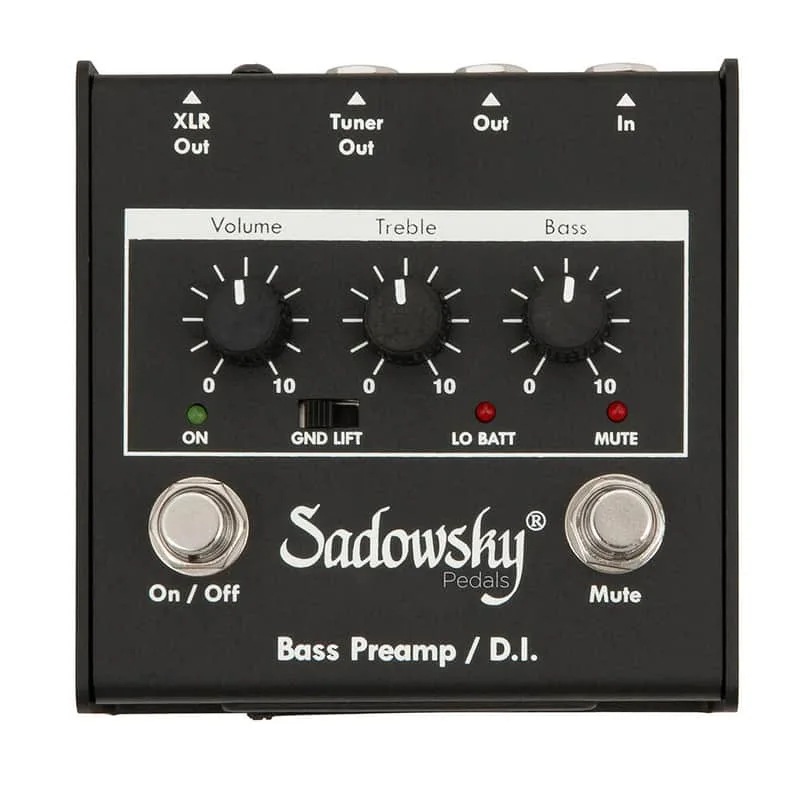
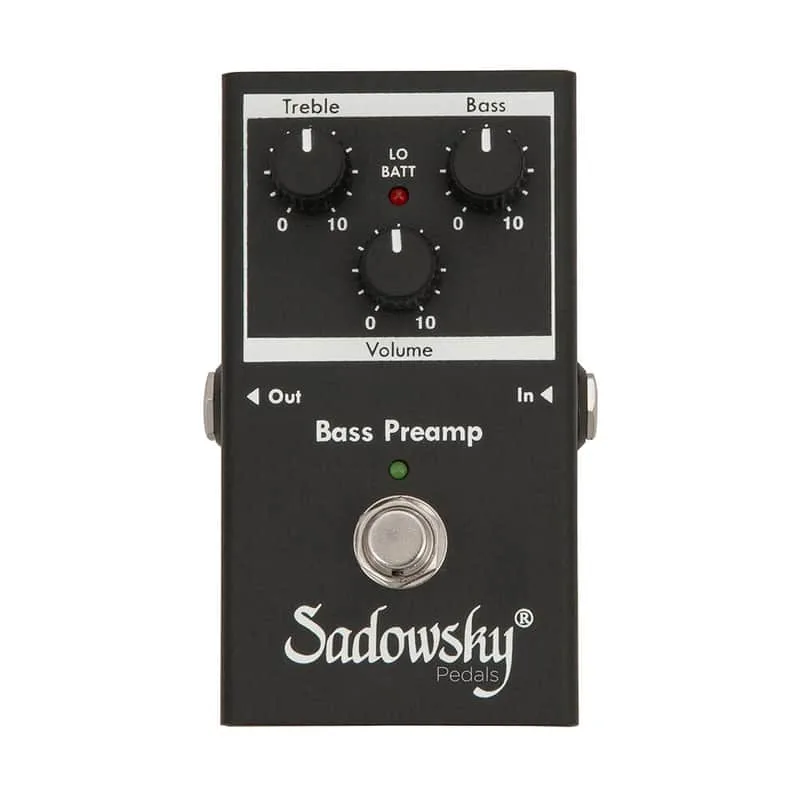
Questions
Can the Sadowsky preamp cut bass and treble or only boost?
It only boosts. Bass Player's review of the SBP-1 describes it as a boost-only EQ circuit, with a treble boost of +18dB centered at 4kHz3. There is no cut on either band, so the flat setting is the lowest point. Players who want to shape mids or cut frequencies need a different preamp, or one of Sadowsky's own mid boost options1.
What voltage should the JFET drains be at in a Sadowsky preamp build?
General Guitar Gadgets' JFET build guidance says the voltage at the JFET drain should be about 4.7 volts, tuned by ear with the trimmer13. That figure comes from their Blue Star project rather than a Sadowsky schematic, but it is a common biasing target for single-supply JFET boost stages and a sensible starting point when dialing in a clone.
Sources (32)
- Review - Sadowsky Preamp/DI Pedals SBP 1 and SBP 2 - Bass Musician Magazine, The Face of Bass, Bass Musician Magazine, 2017-05-29
- BassPlayer_2002APR.ill, BassPlayer, 2002-04
- 8_2017_BP_preamp_pedal_reviews.pdf, Bass Player (bassplayer.com), hosted on sadowsky.com, 2017-08
- Royal MK, Broughton Audio
- Transmission bass preamp / Yamaha BB1200s Preamp / Master Effects, Master Effects
- FET Amplifier FA-1 by BOSS, RockBoard PedalPedia, 2026
- PREAMP | retro-sonic, retro-sonic.com
- HP-2 HARP PREAMP by Mozztronics, RockBoard (rockboard.de PedalPedia), 2026
- Preamp S1 by AMT Electronics, RockBoard PedalPedia, 2026
- Triage Deluxe by Horrothia Effects, RockBoard PedalPedia, 2026
- AAFF-Intrucciones-Dr-Robert.indd, Aclam Guitars, 2023
- Microsoft Word, Pendulum Audio, Inc.
- Blue Star Overdrive: DIY Pedal Kit, PCB & Schematic, General Guitar Gadgets, 2014-05-12
- Aguilar OBP-1, Aguilar Shop (aguilaramp.com)
- Sadowsky Mid Boost Preamps, sadowsky.com, 2025
- BSIAB2 (Brown Sound in a Box 2): DIY Kit, PCB & Schematic, General Guitar Gadgets, 2014-05-12
- Mini-Boosters: JFET Mu-Amp Boost Schematics & Layouts, General Guitar Gadgets, 2014-05-12
- NostalgiTone 60s Edition, GuitarPCB.com, 2023-11
- Tweed-Fuzztone-Deluxe-Build-Document.pdf, GuitarPCB, 2024-05
- JHS-Morning-Glory-Build-Document.pdf, GuitarPCB, 2025-08
- Stage-3-Booster-v6-2022.pdf, GuitarPCB, 2022-06
- The Wizards Sleeve Preamp, Jeds Peds (jedspeds.co.uk)
- Obsidius Preamp, PedalPCB.com
- The Bobby Preamp, PedalPCB.com
- Sullenberger Preamp, Jeds Peds
- Nashville™ 400 Preamp Pedal, Peavey
- VTM™ Preamp Pedal, Peavey
- EVPreamp, PedalPCB.com
- Guitar FX Layouts: Sadowsky Preamp, Guitar FX Layouts (tagboardeffects.blogspot.com)
- [SideArm Overdrive ('70s Collection) B-Stock
- Super Lead, Jeds Peds (jedspeds.co.uk)
- Thespian Valve Preamp, Master Effects