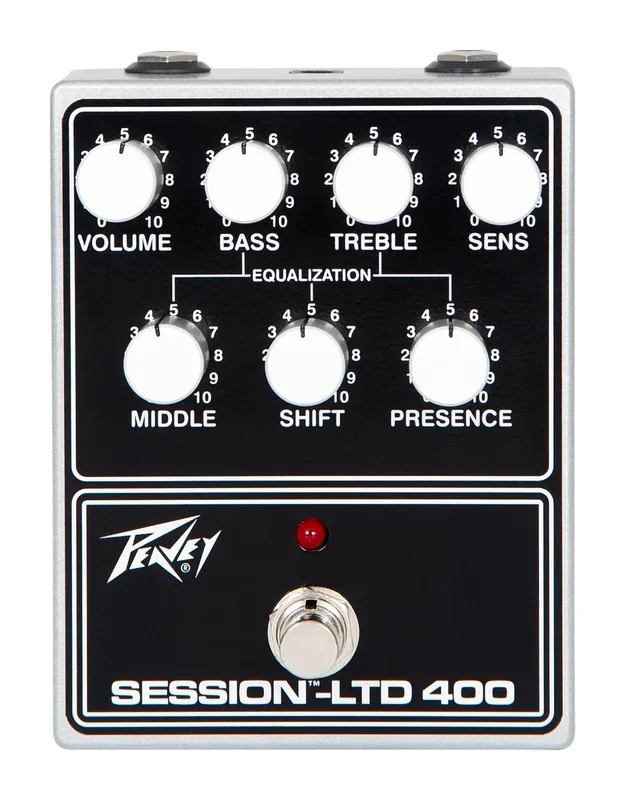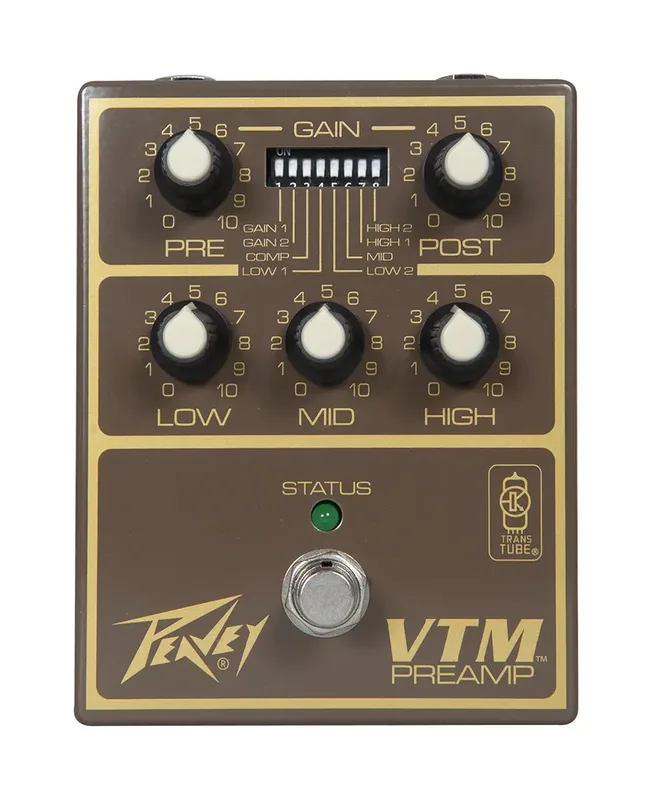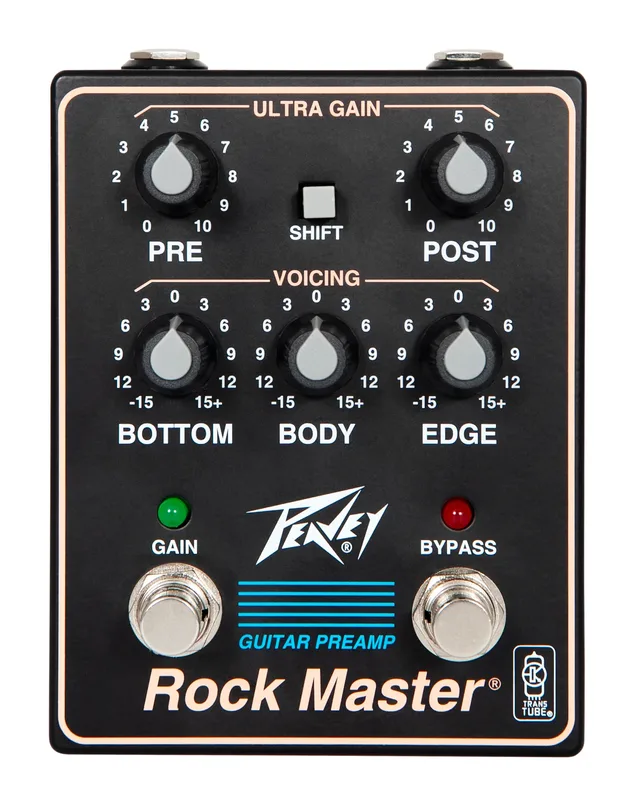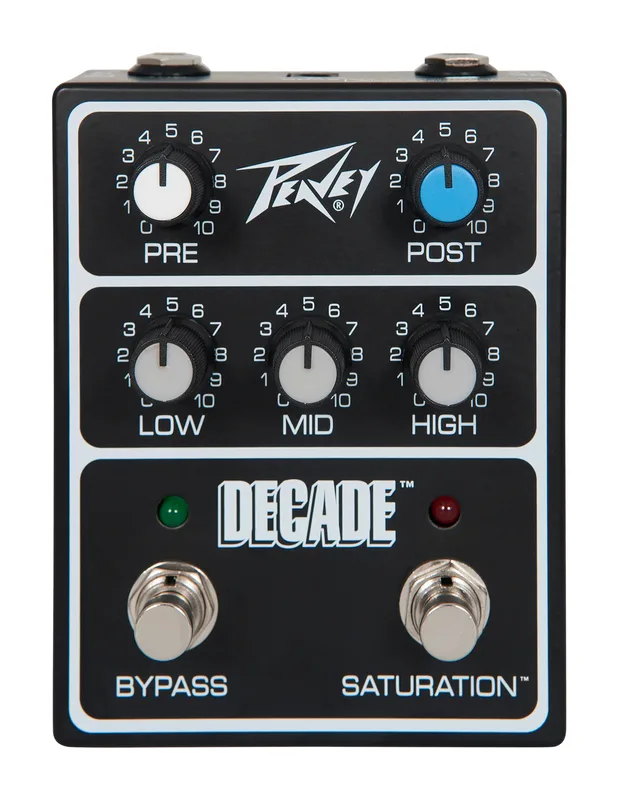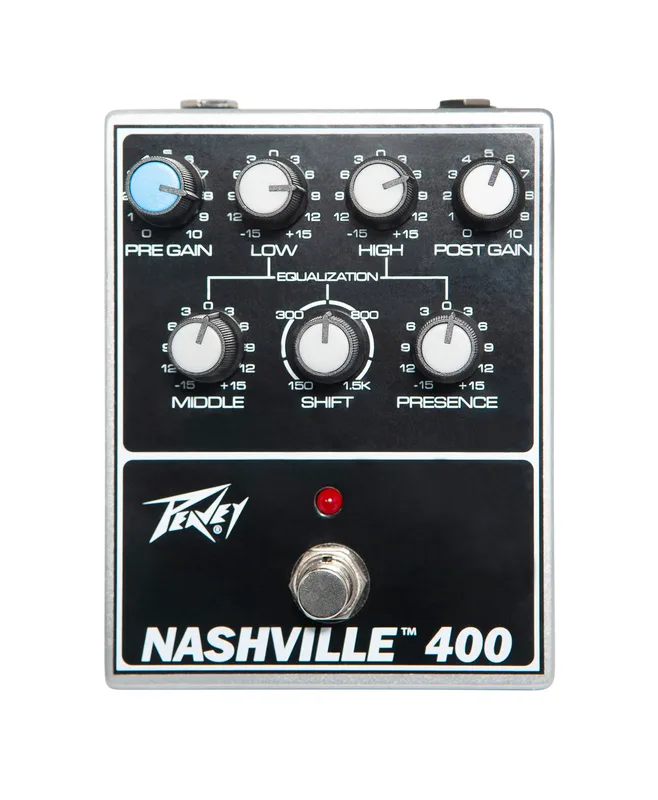


The Peavey Nashville 400 Preamp Pedal is a compact preamp pedal that recreates the preamp circuit of the original Peavey Nashville 400/112 amplifier, including the 1997 mods to that circuit. Peavey includes it in the company's Legacy Preamp Series, a line of pedals built around classic Peavey amp preamps, alongside the Peavey Session-LTD 400 Preamp Pedal, the Peavey Bandit Supreme Teal Stripe Preamp Pedal, the Peavey VTM Preamp Pedal, the Peavey Rock Master Preamp Pedal and the Peavey Decade Preamp. Peavey describes the pedal as delivering "the legendary tone of this iconic, highly sought-after amplifier without the weight," and says its controls and cosmetics reflect the original amp12.
What it does
Peavey describes the Nashville 400 pedal as a full-range clean preamp suitable for use with any electric instrument. The original Nashville 400 was a steel guitar amplifier, and the pedal carries over its preamp section rather than adding drive of its own; for dirt tones, players would pair a preamp like this with overdrive pedals or distortion pedals further down the chain. The output level is adjustable to cover a wide range of inputs, from instrument level to line level with margin to spare, so it can feed a guitar amp's input or act as a line-level preamp into an interface, a power amp or a modeler1.
Controls
The control set mirrors the original amplifier, per Peavey's product page1:
| Control | What it does |
|---|---|
| Pre Gain | Sets the amount of gain going into the preamp circuit |
| Post Gain | Sets the overall level after the preamp |
| Bass, Middle, High | Three-band active EQ |
| Mid Shift | Midrange shaping control, part of the active EQ section |
| Presence | Active Presence control for top-end bite |
| Hard Bypass switch | Takes the preamp out of the signal path, with an anti-click circuit |
Because the EQ is active and the output swings from instrument to line level, the pedal can be placed early in a signal chain as a tone foundation, or late as a clean level and EQ stage. Peavey's own positioning is as a faithful recreation of the amp's preamp voice1.
Power and build
The pedal runs from a standard 9V supply or a battery. Peavey specifies an internal bipolar supply, meaning the pedal generates the positive and negative rails the original amp's preamp circuit ran on, and draws less than 100mA doing it1. That is within the range of most standard 9V pedal power supplies, though a daisy chain shared with several other pedals is worth watching on any supply rated near its limit.
The pedal's internal bipolar supply draws less than 100mA, per Peavey. Check your power supply's per-output current rating if you plan to share it with other pedals.
The enclosure is die-cast metal, with what Peavey calls high-quality pots, switches and jacks. The PCB is fiberglass with 2-ounce copper and plated-thru holes on all components, a heavier construction than the thin copper of many pedals. Peavey also notes the pedal has been tested and formally approved for worldwide EMC and FCC compliance by an independent laboratory1.
Where it sits in Peavey's pedal line
The Nashville 400 pedal is Peavey's compact recreation of one of its own amplifier designs: Peavey describes it as "a faithful recreation of the original Peavey Nashville 400/112 preamp circuit (including the 1997 mods) in a compact" pedal format3. Rather than modeling the amp digitally, the pedal carries the steel guitar amplifier's preamp circuit into a pedalboard-friendly enclosure, housed in durable die-cast metal with high-quality pots, switches and jacks3. Peavey's UK product page lists the Nashville 400 pedal at £152.00 GBP2.
Videos
Matt Spinks
Alden Oldfield
Jody Cameron
Questions
Does the Peavey Nashville 400 Preamp Pedal take a battery?
Yes. Peavey says the pedal uses an internal bipolar supply derived from a standard 9V supply or a battery, so it can run either way. The internal supply draws less than 100mA, which is within reach of most standard 9V pedal supplies.
Is the Peavey Nashville 400 Preamp Pedal a clean preamp?
Peavey describes it as a full-range clean preamp suitable for use with any electric instrument. It is a recreation of the Nashville 400/112 amplifier's preamp section, a design long associated with pedal steel players, and it carries the amp's control layout and cosmetics.
How much current does the Peavey Nashville 400 Preamp Pedal draw?
Peavey specifies that the pedal's internal bipolar supply draws less than 100mA from a standard 9V supply or battery.
Is the Peavey Nashville 400 Preamp Pedal true bypass?
Peavey does not use the term true bypass. The pedal has a Hard Bypass switch with an anti-click circuit, which routes the preamp out of the signal path when engaged.
What series is the Peavey Nashville 400 Preamp Pedal part of?
It is part of Peavey's Legacy Preamp Series, a line of pedals that recreates the preamp circuits of classic Peavey amplifiers in compact enclosures.
What does the Mid Shift do on the Peavey Nashville 400 Preamp Pedal?
The pedal has a three-band active EQ with Bass, Middle and High controls, plus a Mid Shift control. Peavey lists it alongside the EQ band controls as part of the preamp's tone shaping section, carried over from the original amplifier's control set.
Sources (3)
- Nashville™ 400 Preamp Pedal, Peavey
- Nashville™ 400 Preamp Pedal, Peavey
- Peavey Preamp Pedals: Bandit, Rock Master, Decade, Session, and VTM, gearnews.com, 2025-01-25