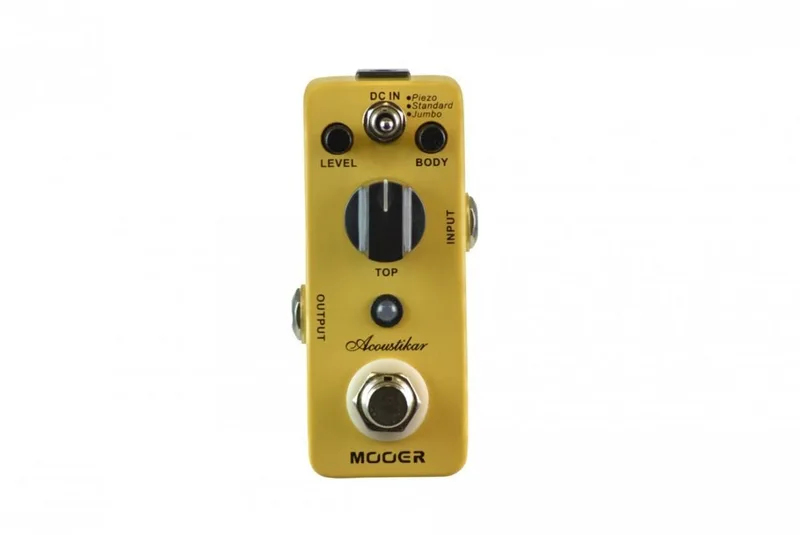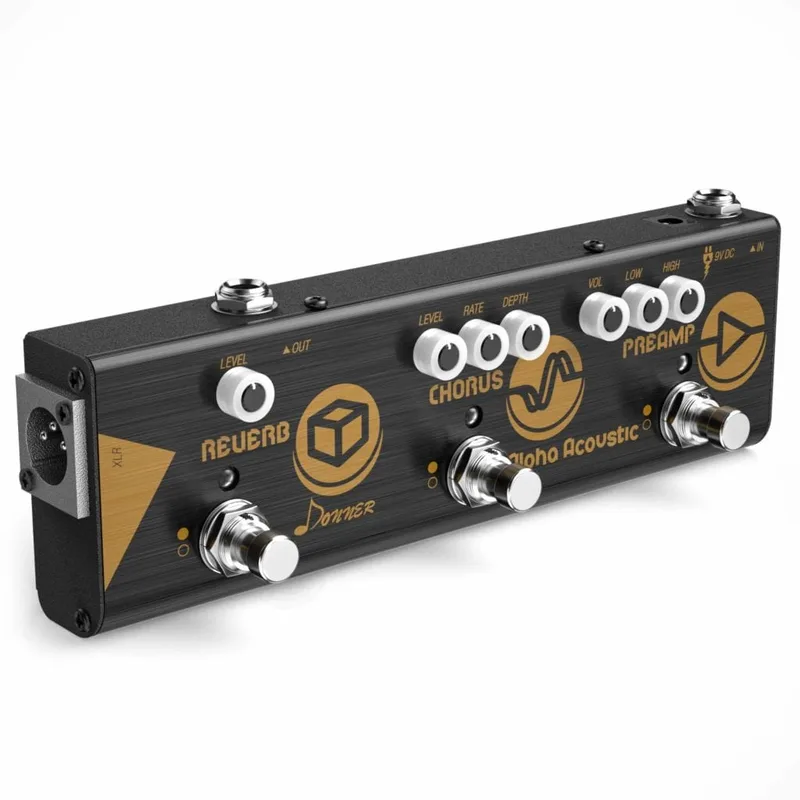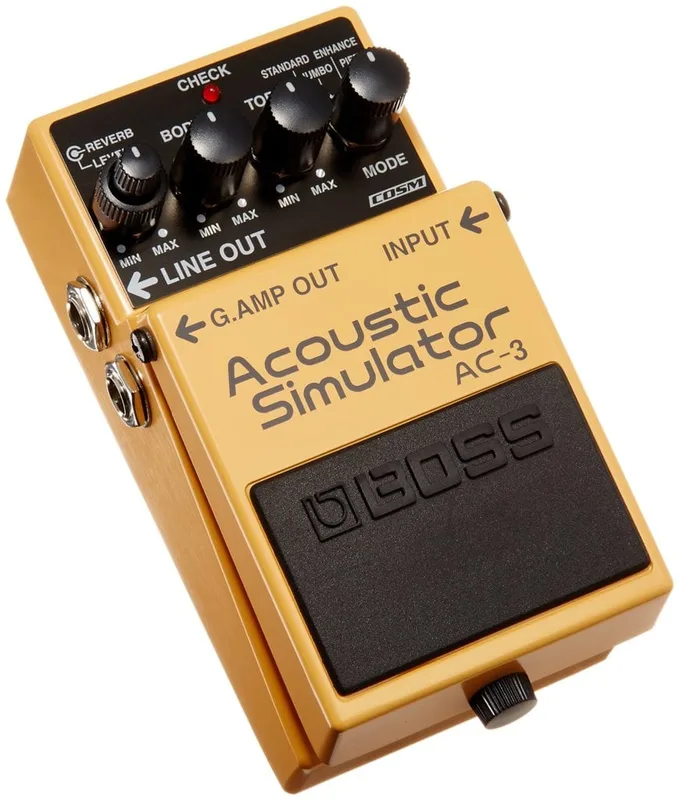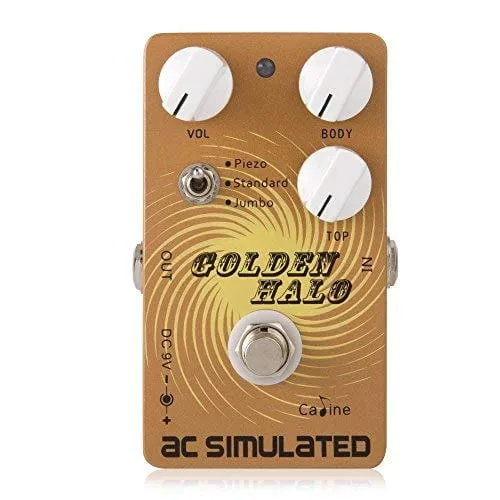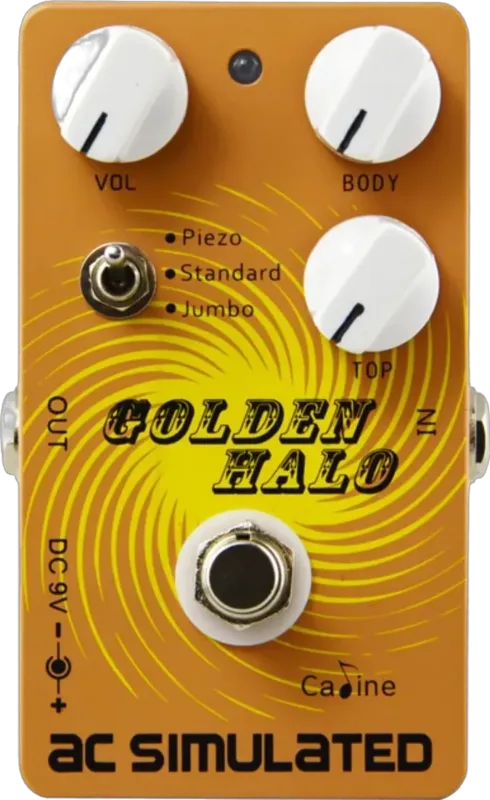



The Caline CP-35 Golden Halo AC SIMULATED is an analog acoustic simulator pedal: it takes an electric guitar's signal and reshapes it toward an acoustic-style tone using filtering and equalization. Its product page describes it as a pedal that "can give you some incredibly authentic sounding acoustic tones at a very low price," placing it among the budget acoustic simulators alongside pedals like the Mooer Acoustikar, Donner Alpha Acoustic and Boss AC-3 Acoustic Simulator.1
What it does to your sound
The CP-35 works as a filter and equalizer, carving an electric signal into something closer to an acoustic guitar. The heart of it is a three-way mode selector1:
| Mode | What it offers |
|---|---|
| Piezo | Acoustic character of the three-way selector |
| Standard | Middle setting of the selector |
| Jumbo | Third voicing of the selector |
The page is direct about the effect of this switch: "The 3 way selector of Piezo, Standard and Jumbo modes create quite a noticeable difference in sound."1
Around that selector sit three knobs:
- Body: simulates the actual resonance of the guitar body, the core of the acoustic effect1
- Top: adjusts the high end1
- Volume: controls the volume1
Power and practical notes
The CP-35 runs on 9V DC, center negative, and draws 20mA1. That is a modest draw by pedalboard standards, but it does mean a supply output with at least that much current available.
The pedal is specified for 9V DC center negative power at 20mA1. Match your supply's polarity and current rating before adding it to a daisy chain.
Where it sits
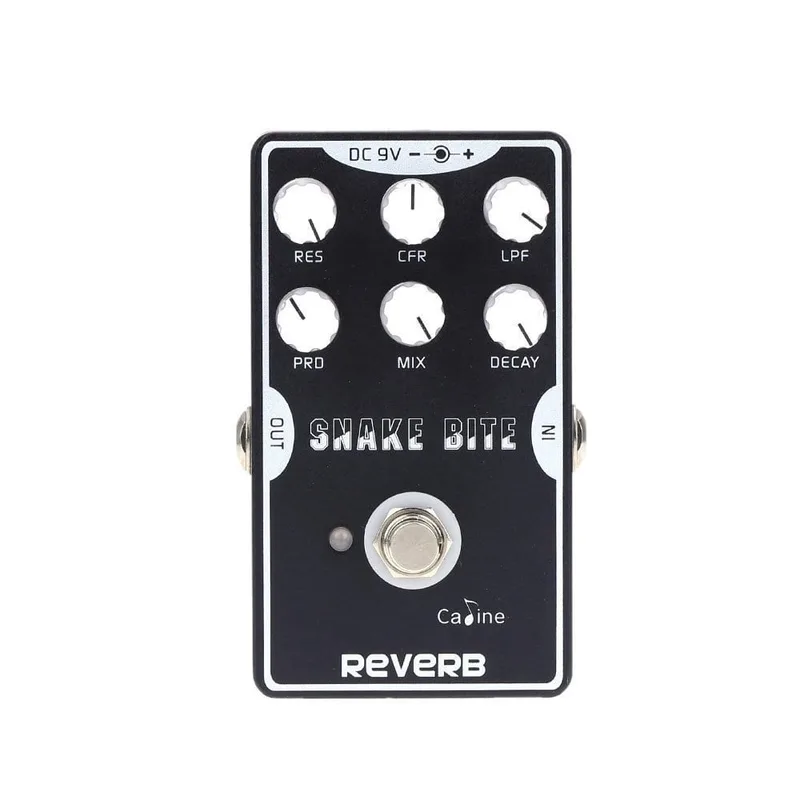
As an acoustic simulator, the CP-35 belongs to the acoustic pedals family, where it competes on price. Its maker's page frames the category itself plainly: "Good sounding acoustic simulator pedals are very hard to come, especially at a good price."1 Caline also makes the Caline Golden Halo and the Caline Snake Bite Reverb in the same budget range.
Videos
Old7StringGuy
guitarrasia
Andy Thomas
Questions
Does the Caline CP-35 Golden Halo run on a battery?
The CP-35 is specified for a 9V DC, center negative power supply drawing 20mA. That is the power arrangement given for the pedal, so plan your board's supply around a standard 9V DC center negative output with enough current headroom for the 20mA draw.
Is the Caline CP-35 an analog or digital pedal?
The CP-35 Golden Halo is an analog pedal. Its circuit type is listed as analog, and it works as a filter and equalizer, shaping the electric guitar's signal toward an acoustic-like tone rather than modeling one digitally.
What do the Piezo, Standard and Jumbo modes do on the Caline CP-35?
The CP-35 has a three-way selector with Piezo, Standard and Jumbo modes. According to the pedal's product page, these three modes create quite a noticeable difference in sound, giving you three distinct acoustic characters to choose from rather than a single fixed simulation.
What power supply does the Caline CP-35 need?
The CP-35 needs a 9V DC, center negative power supply and draws 20mA of current. A standard pedalboard power supply output or a dedicated 9V adapter of that polarity will suit it.
Can you use an acoustic simulator pedal with a bass?
Acoustic simulator pedals are designed around the resonance of a guitar body, and the CP-35's Body control is described as simulating the actual resonance of the guitar body. The pedal is presented as a guitar pedal, so its acoustic simulation is aimed at electric guitar rather than bass.
What does the Body knob do on the Caline CP-35?
The Body control simulates the actual resonance of the guitar body. Turning it shapes how much acoustic-style body resonance is added to your electric guitar's signal, which is the core of the pedal's acoustic simulation.
Sources (1)
- CP-35 Golden Halo AC SIMULATED by Caline, RockBoard PedalPedia, 2026