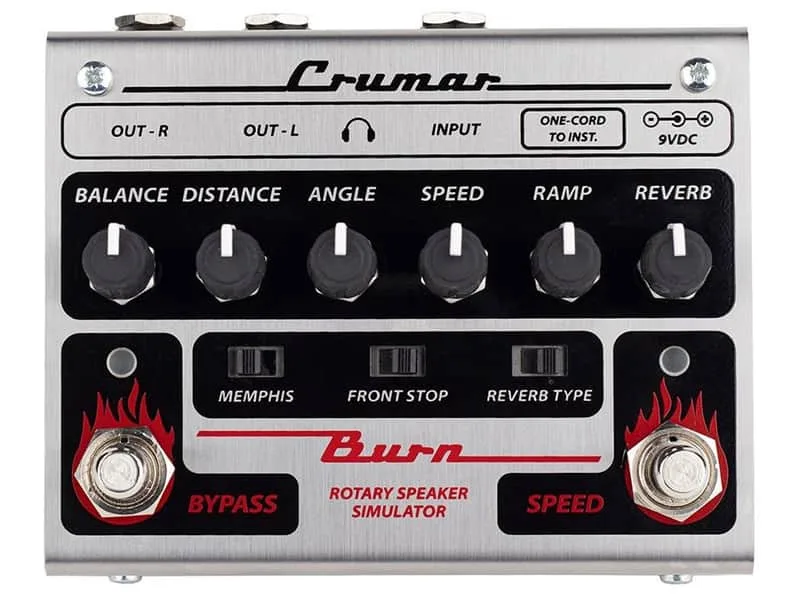


The Crumar Burn is a rotary speaker simulator pedal from Crumar, the Italian organ and synth brand. MusicRadar describes it as an in-depth Leslie emulation, replacing an earlier unit by fellow Italians Genuine Soundware, and Guitar World's Trevor Curwen calls it a mono in/stereo out rotary speaker simulator designed for both electric guitar and keyboard use. It carries a list price of $309 USD (also listed at £229 and €259) as of the 2026 reviews.12
What it does to your sound
A rotary speaker simulator imitates the spinning horn and drum of a Leslie cabinet, the sound long associated with Hammond organs. The Burn's Fast setting is described by MusicRadar as a pitch-perfect, Hammond organ-esque rotary sound, while the Slow setting is relaxed, akin to a very slow phaser or flanger. A rotary stop mode gives a subtle, tone-coloring preamp stage without the modulation.1
Controls and features
The pedal's Balance knob balances the level of horn against rotor, the two moving parts of a Leslie cabinet that give the effect its character.2
- Fast/Slow rotary speeds1
- Rotary stop mode1
- Memphis mode, stopping drum rotation for low frequencies1
- Dual-mode reverb1
- RGB LEDs1
- Two footswitches: one to switch the pedal on and off, the other to select Slow or Fast rotary speed1
Power and connections
The Burn runs on 9V DC and draws 300mA, a figure worth checking against your power supply before adding it to a board. Connectivity covers a ¼" instrument input, a Cat5 connector for One-Cord connection to compatible Crumar keyboards, a 3.5mm headphone output, a USB-C service input and a TRS jack for an optional footswitch, with ¼" Left and Right outputs on the other side. MusicRadar notes that the stereo outputs allow you to create the width you need from a rotary sound.1
The Burn's bypass is buffered, not true bypass.1
What reviewers said
Guitar World's Trevor Curwen listed the compact size among the pedal's positives, alongside its stereo rotary design for guitar and keyboards.2 MusicRadar's review went into detail on the mode set, calling the Fast setting a pitch-perfect, Hammond organ-esque rotary sound.1
How it compares
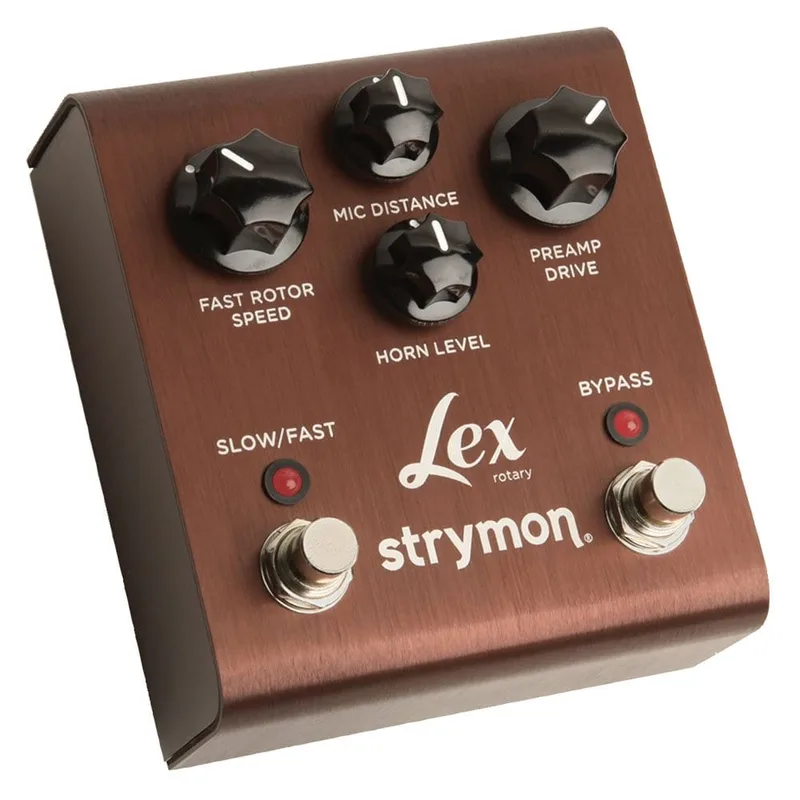
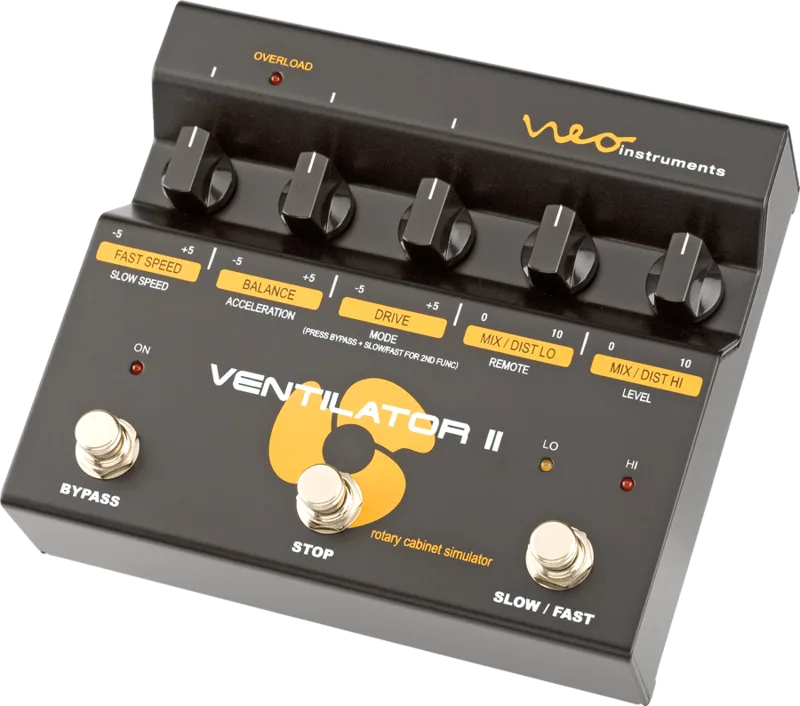
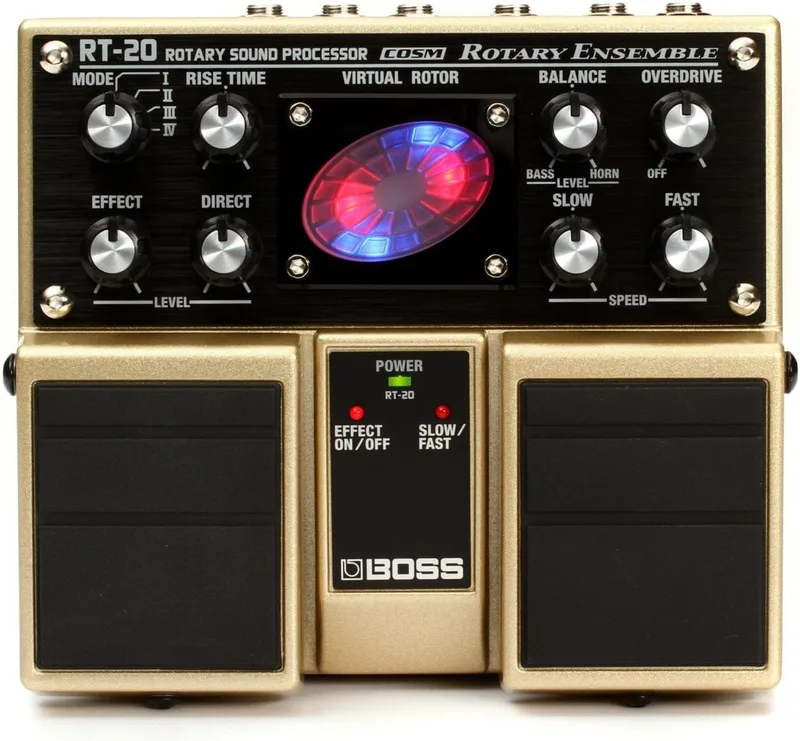
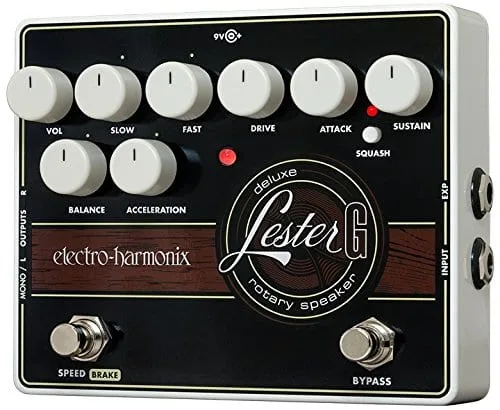
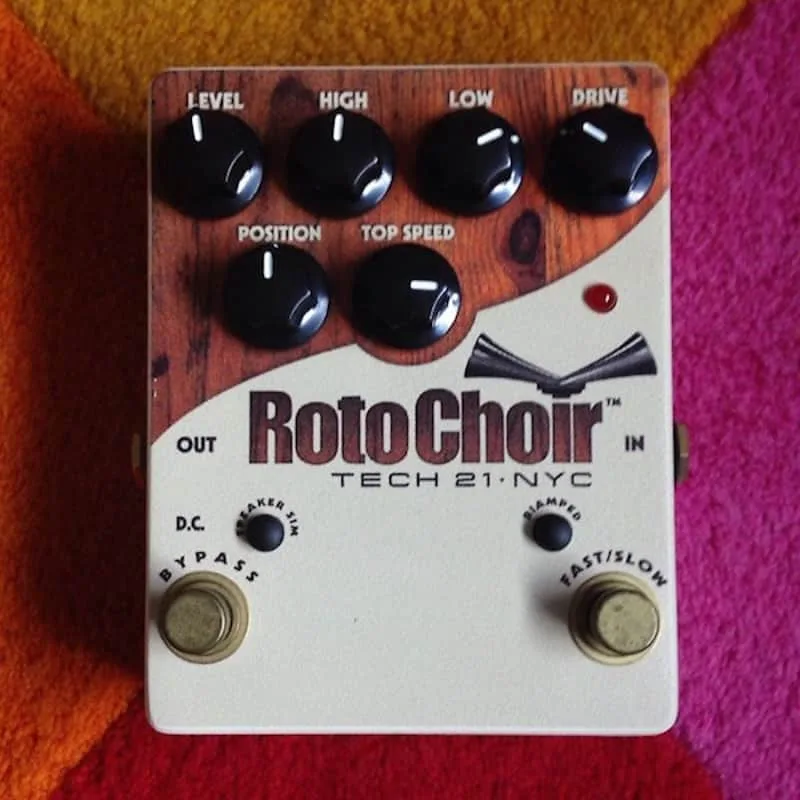
The Burn sits in a field of rotary pedals that includes the Strymon Lex Rotary, the Neo Instruments Ventilator, the Boss RT-20 Rotary Ensemble, the Electro-Harmonix Lester G Deluxe and the Tech 21 RotoChoir. For more on the category, see Speaker Simulation Pedals.
Videos
Woody Piano Shack
marcoballa
The Music Alliance - in total harmony
Questions
Is the Crumar Burn true bypass?
No. MusicRadar's review lists the Burn's bypass as buffered rather than true bypass. A buffered bypass keeps the signal passing through the pedal's buffer even when the effect is switched off, which can help preserve the signal on long cable runs, but players who want a fully mechanical connection to their amp when the pedal is off should be aware of the difference.
What power supply does the Crumar Burn need?
The Burn runs on a 9V DC supply and draws 300mA, according to MusicRadar's review. That current draw is higher than many single-effect pedals, so it is worth checking that your power supply has a spare output rated for at least 300mA rather than sharing an output on a daisy chain.
Does the Crumar Burn have stereo outputs?
Yes. The Burn is a mono in, stereo out pedal, with quarter-inch Left and Right outputs. MusicRadar notes that the stereo outputs allow you to create the width you need from a rotary sound, which is central to how a Leslie-style effect sits in a mix.
What is Memphis mode on the Crumar Burn?
Memphis mode stops the drum rotation for low frequencies, according to MusicRadar. It is one of the Burn's features alongside Fast and Slow rotary speeds, a rotary stop mode, RGB LEDs and a dual-mode reverb.
Can you plug headphones into the Crumar Burn?
Yes. Alongside its quarter-inch instrument input and Left and Right outputs, the Burn has a 3.5mm headphone output, so you can hear the rotary effect without an amp. It also carries a USB-C service input and a TRS jack for an optional footswitch.
Sources (2)
- “Evocative organ sounds and slower, gentler revolutions with a distinctive flavour”: Crumar Burn rotary speaker simulation pedal review, MusicRadar, 2026-03-05
- Crumar Burn review, Guitar World, 2026-03-16