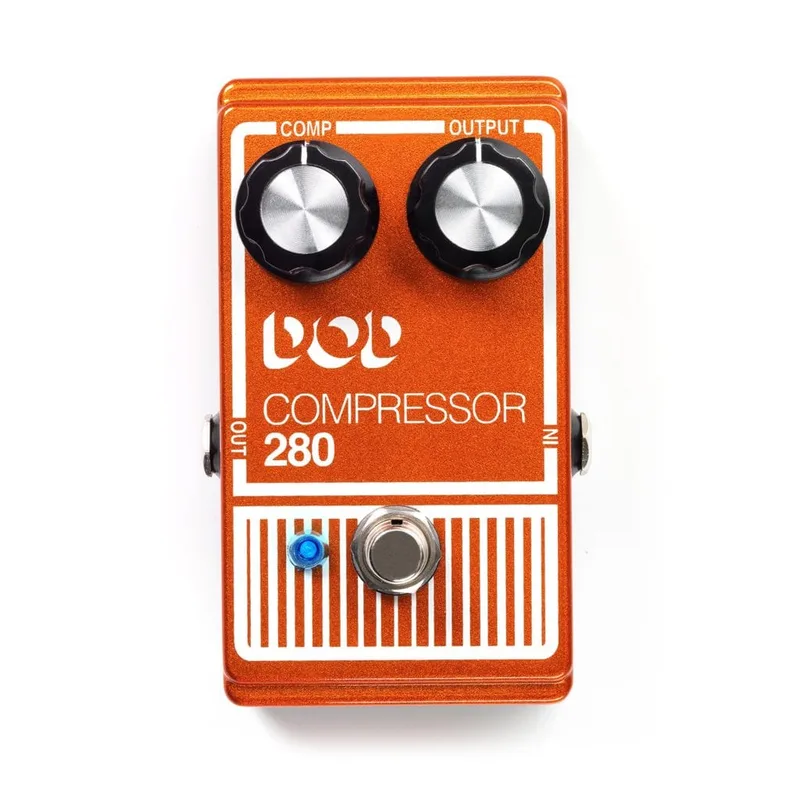


The DOD Compressor 280 is an analog optical compressor pedal from DOD, currently produced by DigiTech. It is built on the original Compressor 280 circuit design with updated components, and DOD describes it as a compressor that "can go from light sustain to utterly smashed with the turn of a knob"1. Where many compressors give you separate threshold, ratio and level controls, the 280 keeps it to a single knob, which is part of why reviewers have called it intuitive.
The reissue, announced by DigiTech in September 2014, keeps what Premier Guitar's press release called "all the distinctive sonic personality of the original while adding modern pedalboard-friendly features"2: true bypass switching, a blue LED status indicator, a modern power jack and a lighter aluminum chassis.
An optical compressor from light sustain to smashed
The 280 is an optical compressor, meaning it uses light rather than a voltage-controlled amplifier to control gain reduction. According to the DigiTech press release carried by Premier Guitar, the pedal "employs an electro-optical circuit that varies the amount of the pedal's dynamic compression" using a light-dependent resistor and an internal LED2. Your signal drives the LED, the light-dependent resistor reads its brightness, and the circuit reduces gain accordingly. Optical designs of this kind are known for smooth, gradual gain reduction rather than the harder grab of some other compressor circuits.
DOD positions the pedal across several playing styles. The maker's page says it is "ideal for chicken-pickin', added sustain for leads, or snappy-slappy funk rhythm," and notes that it "retains your high frequencies until you get into the more extreme settings." It also has enough output to serve as a lead boost with the compressor sustain on top1.
Controls
The control set is minimal by design.
| Control | What it does |
|---|---|
| Compression | Adjusts the amount of compression applied to your signal; turn clockwise to increase compression1 |
| Footswitch | Press to turn the effect on or off1 |
That single knob is the whole interface. Players who want to set attack, release and ratio separately will not find them here; players who want one knob that sweeps from subtle sustain to a heavily compressed squashed sound get exactly that1.
What reviewers said
Guitar World's Alex Lynham reviewed the pedal and was positive about both its sound and its ease of use4:
"The Compressor 280 is an excellent-sounding, intuitive optical compressor, and it could well challenge the Boss and MXR comps on the market as the go-to first compressor for many players."4
That verdict places it in direct company with the Boss and MXR compressor pedals that have long been default choices for a first compressor, which is a strong claim for a single-knob reissue of a 1970s design.
Power and connections
The 280 runs on a 9V alkaline dry battery or the PS0913DC power supply through its power jack1. The 9-volt power supply jack was one of the additions DigiTech made for the reissue, along with the LED indicator and true bypass operation5. Current draw is 4mA3, low enough that the pedal is easy to accommodate on a shared power supply.
Connections are straightforward: one 1/4" instrument input and one 1/4" output1. True bypass means the signal passes around the circuit when the pedal is off1.
The original DOD Compressor 280 predates the pedalboard conveniences of the reissue. If you are comparing the two, the reissue is the one with true bypass, the LED status indicator and the modern power jack52.
Where it came from
The Compressor 280 is a reissue of a DOD compressor, brought back by DigiTech, the Harman brand behind the DOD line. The reissue carries a list price of $119 USD4. Like the other updated DOD pedals, it has a modern power jack, an LED, a light but strong aluminum chassis, and true bypass switching1. Guitar Interactive Magazine reported the same details on the reissue, noting the true bypass operation, LED indicator and 9-volt power supply jack5.
The reissue is based on what DigiTech's own page calls the "legendary DOD Compressor 280 circuit design with updated components"1. Like the other updated DOD pedals of that reissue series, it carries the modern power jack, LED, light but strong aluminum chassis and true bypass switching1.
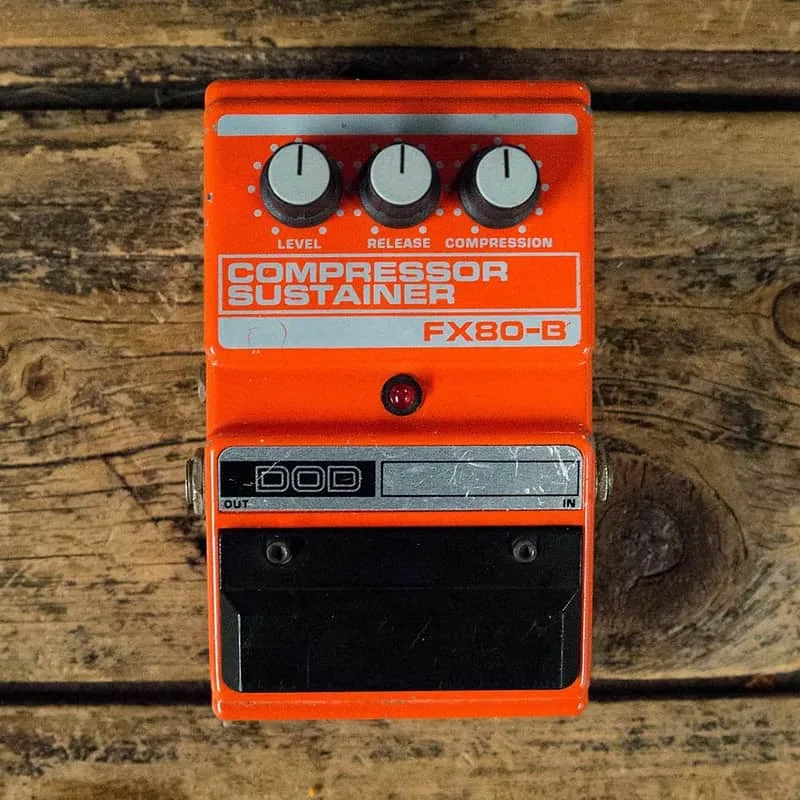
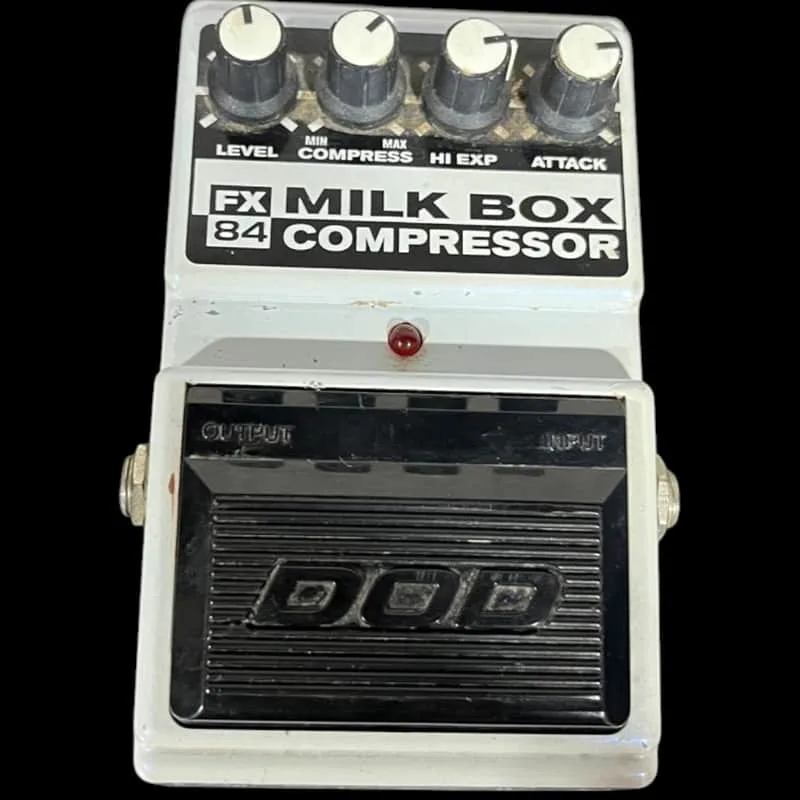
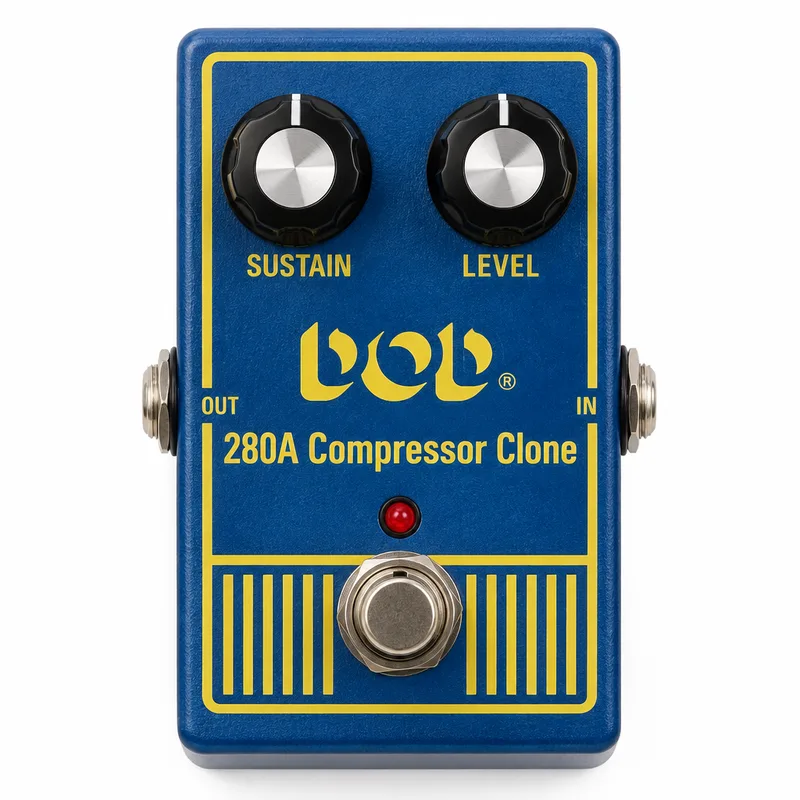
DOD's compressor lineage also includes the DOD FX80B Compressor Sustainer and the DOD FX84 Milk Box, and the 280 circuit itself has been copied in the DOD 280A Compressor Clone.
Videos
ProGuitarShopDemos
Eirik Stordrange
Brett Kingman
Questions
Does the DOD 280 take a 9V battery?
Yes. The current DOD Compressor 280 runs on a 9V alkaline dry battery or the PS0913DC power supply through its 9V power jack. The power jack was one of the pedalboard-friendly additions DigiTech made when it reissued the pedal in 2014, alongside the LED indicator and true bypass switching.
Is the DOD Compressor 280 reissue true bypass?
Yes. The reissue has true bypass switching, so with the effect off the signal passes through without the circuit coloring it. The reissue also added a blue LED status indicator and a modern 9V power jack, features the original DOD Compressor 280 did not have.
How does an optical compressor like the DOD 280 work?
The DOD 280 uses an electro-optical circuit. Inside, an LED shines on a light-dependent resistor, and the brightness of that LED varies with your signal level, which in turn varies how much dynamic compression is applied. The single Compression knob controls how much of this effect is applied to your signal.
Who made the DOD 280 reissue?
The reissue was made by DigiTech, the Harman brand that also handles the DOD name, and announced in September 2014. The pedal is based on the original DOD Compressor 280 circuit design with updated components, and DigiTech remains the support contact for it.
Sources (5)
- DOD Compressor 280, DigiTech, 2026-02-26
- DigiTech Reissues the DOD Compressor 280, Premier Guitar, 2014-09-26
- Compressor 280 by DOD, RockBoard PedalPedia, 2026
- DOD Compressor 280 review, Guitar World, 2023-07-05
- Harman's DigiTech Updates Its DOD Compressor 280, Guitar Interactive Magazine, 2014-09-30