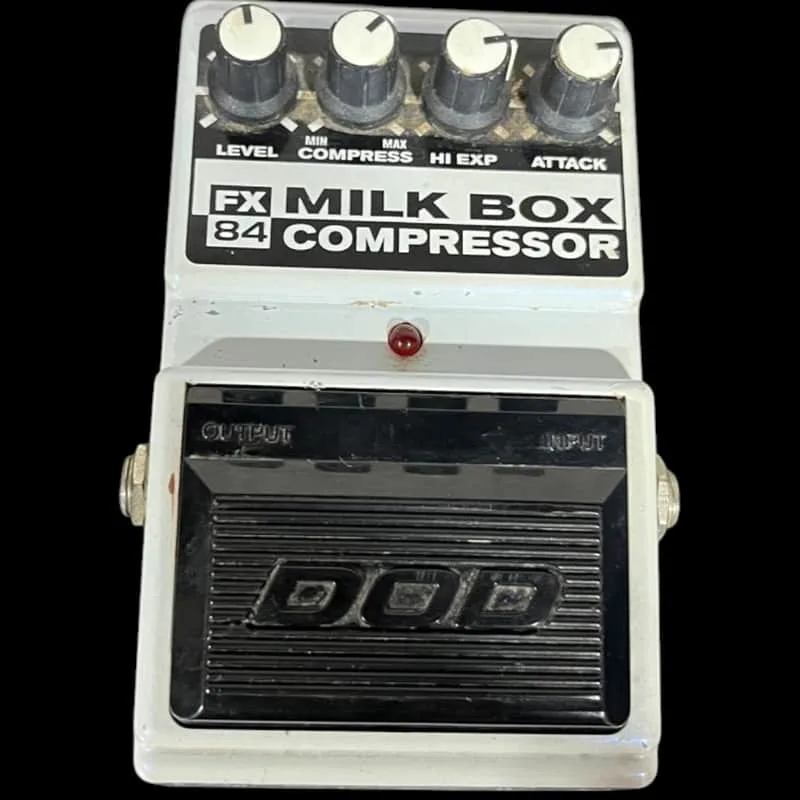
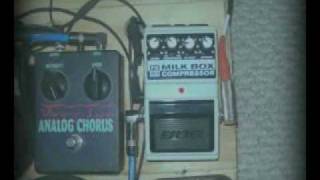


The DOD FX84 Milk Box is a compressor pedal with a high-frequency expander, part of DOD's Jason Lamb series and released at Winter NAMM 1996. The expander is its distinguishing feature: it is designed to boost the highs that might otherwise be reduced too much during heavy compression, so the compressed signal does not lose its top end. Barry Rudolph, writing in Music Connection's "New Toys" directory, called it "a super-smooth compressor with a high frequency expander" and summed up its sound in two words: "Very creamy."1
What it does to a player's sound
The compression action is designed more for sustain than for punch or limiting, according to Ovnilab's review by Cyrus Joaquin Heiduska. Players looking for an evening-out of dynamics and longer note decay are the intended use; players looking for a limiter that clamps peaks are not.2
The low end behaves in a particular way worth knowing before buying. Heiduska found that "It seems to allow strong waves of low frequencies to pass by uncompressed. This results in a big low end tone, but it also means it does not prevent clipping of the next device." In other words, the Milk Box keeps the low end big by leaving it alone, and whatever comes after it in the chain has to handle those peaks.2
The Pasteurization control and the high-frequency expander
The pedal's signature control is labeled Pasteurization, in keeping with the dairy theme. Barry Rudolph described it plainly: "The 'Pasteurization' control dials in a variable amount of high frequency expansion to complement the finished compressed sound."1
Ovnilab's review explains why the feature exists at all. Compression reduces the level of a signal's loudest moments, and high frequencies, which carry less energy, can end up reduced too much in the process. The expander control is designed to boost those highs back up.2
How well it works depends on the setting. Heiduska's verdict on the expander was mixed: "It works OK, but to me it only sounded good at settings below 11:00." Pushed past that point, the effect stopped working for his ear.2
Controls
The Milk Box's control set reflects its origin. JHS Pedals' history of the pedal notes that Jason Lamb "created the Milk Box compressor with actual cow udders and knobs labeled quarts, cream, etc." on the original version.3
| Control | What it does |
|---|---|
| Pasteurization | Dials in a variable amount of high-frequency expansion to complement the finished compressed sound1 |
| Compression and level controls (dairy-themed labels on the original) | Set the amount of compression and output, per the pedal's design as a sustain-oriented compressor23 |
Cow spots or pearlescent white
There are two cosmetic versions of the Milk Box, and the difference is skin deep. The earlier model was painted with cow spots and carried the silly dairy-themed knob names. The newer version, the one Ovnilab reviewed, has a pearlescent white paint job. Functionally the two are the same compressor.23
The original cow-spot version's knobs are labeled with dairy terms such as quarts and cream. The pearlescent white version is the same circuit with different cosmetics.23
Bypass and where it sits on a board
The Milk Box is not true bypass. Heiduska found that "The footswitch is not 'true bypass', but unlike with most other DOD pedals, the buffered bypass here is quite good sounding." A buffered bypass leaves a small electronic circuit in the signal path when the pedal is off, which can matter on large boards, but in this case the reviewer judged the buffer favorably against other DOD pedals of the era.2
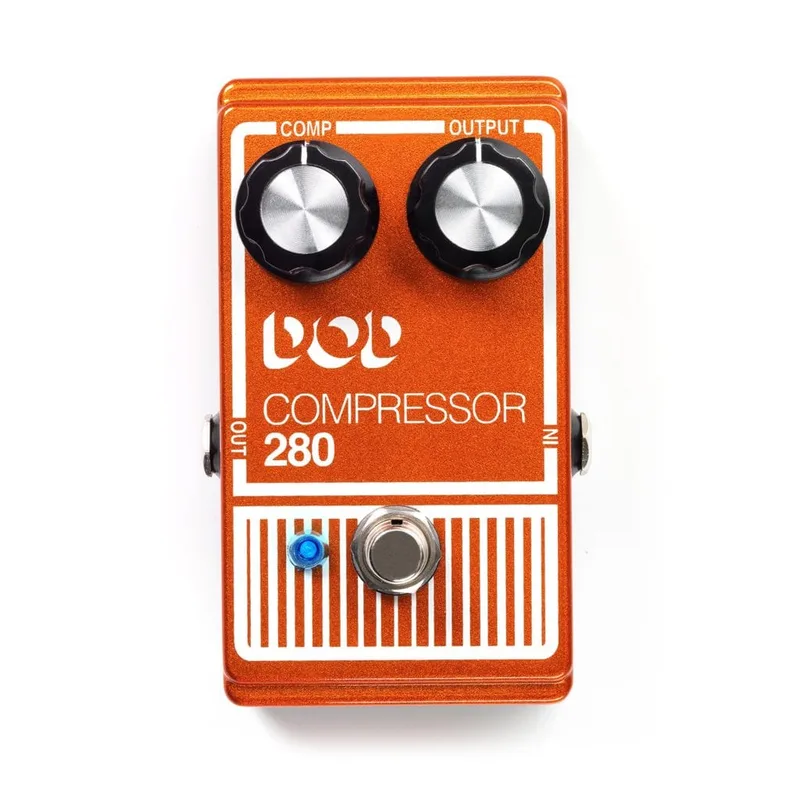
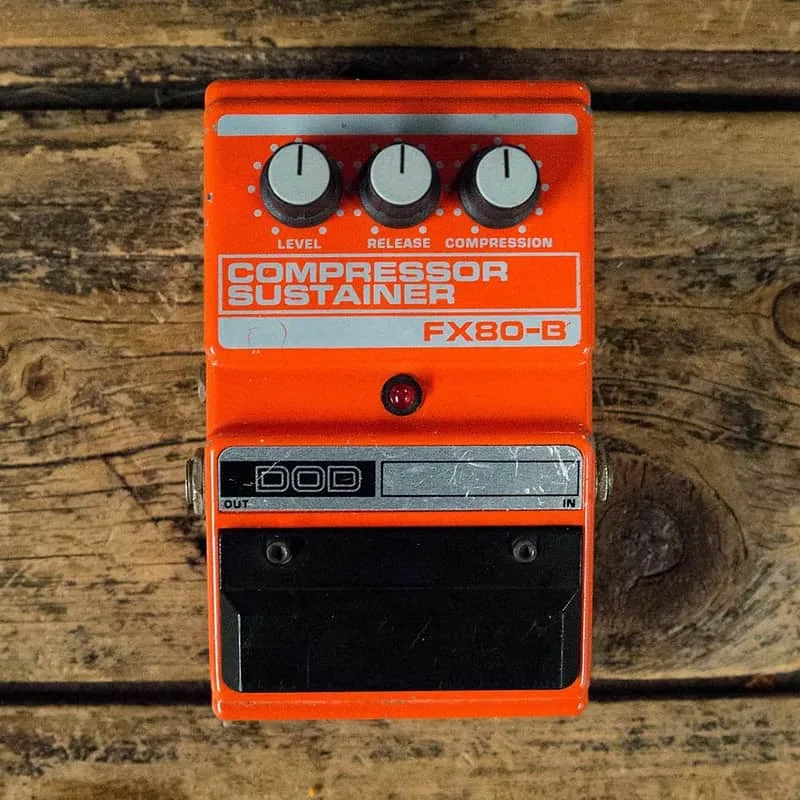
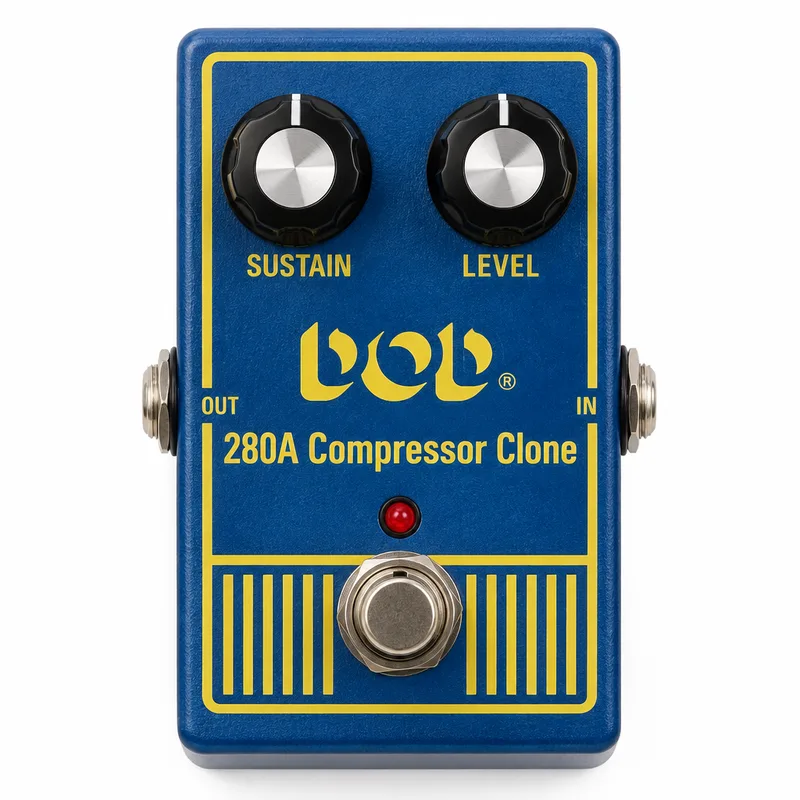
The Milk Box belongs to a line of DOD compressors that includes the DOD Compressor 280, the DOD FX80B Compressor Sustainer and the DOD 280A Compressor Clone. For a wider view of what a compressor does on a board, see the page on Compressor Pedals.
What reviewers said
The published record on the Milk Box comes from two independent reviewers and one history piece, and they agree on the essentials while differing on emphasis.
- Ovnilab's Cyrus Joaquin Heiduska found the compression designed for sustain rather than punch or limiting, praised the buffered bypass as quite good sounding by DOD standards, and judged the high-frequency expander usable only below about 11:00 on its control.2
- Barry Rudolph, in Music Connection's "New Toys" directory, described the pedal as a super-smooth compressor and called its sound "Very creamy."1
- JHS Pedals' history places the pedal in the Jason Lamb series and documents its Winter NAMM 1996 release and its dairy-themed design.3
One practical note from Ovnilab: Heiduska wrote that "ever since I started promoting the Milkbox here a few years ago, their prices have gone up." The Milk Box is a long-discontinued pedal, so used prices are what a player will encounter.2
Videos
Brandon A
TheSuperFunAwesomeHappyTimePedalShow
pedal:ice
Questions
Is the DOD Milk Box true bypass?
No. The Milk Box uses buffered bypass rather than true bypass. Ovnilab's reviewer noted that unlike most other DOD pedals, the buffer in the Milk Box is quite good sounding, so the bypass stage is not the drawback it can be on other pedals from the same maker. Players who want strictly true bypass switching will want to account for the buffer, but many will find it transparent in practice.
What does the Pasteurization knob do on the Milk Box?
The Pasteurization control dials in a variable amount of high-frequency expansion to complement the finished compressed sound. Compression can dull the top end as it works, so this control lets the player restore or boost the highs that heavy compression might otherwise reduce too much. It is the Milk Box's signature feature and the control that sets it apart from a straightforward compressor.
Does the DOD Milk Box squash low notes?
According to Ovnilab's review, the Milk Box seems to allow strong waves of low frequencies to pass by uncompressed. That produces a big low end tone, but it also means the pedal does not prevent clipping of the next device in the chain. Bass players and low-tuned guitarists get a full low end rather than an evenly limited one.
What is the difference between the cow-spot and white Milk Box?
The earlier model was painted with cow spots and carried silly, dairy-themed names for each of the knobs, such as quarts and cream. The newer version has a pearlescent white paint job. Functionally the two are the same compressor; the difference is the cosmetics and the labeling of the controls.
Sources (3)
- DOD Five Stomp Pedals, Barry Rudolph / Music Connection "New Toys" directory, 2024
- DOD FX84 Milk Box, ovnilab.com
- PEDALS VS FOOD, JHS Pedals