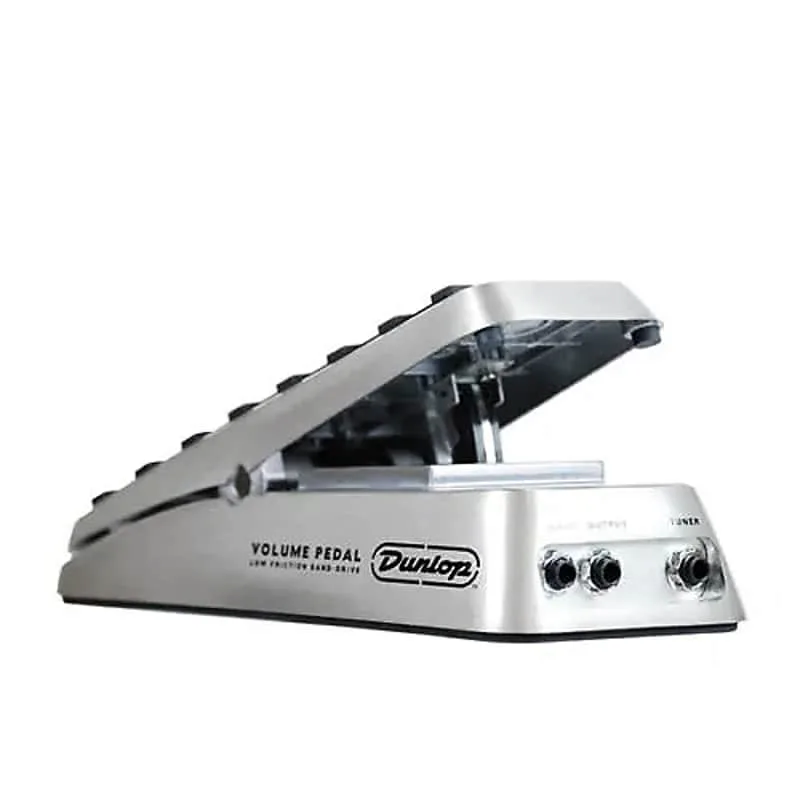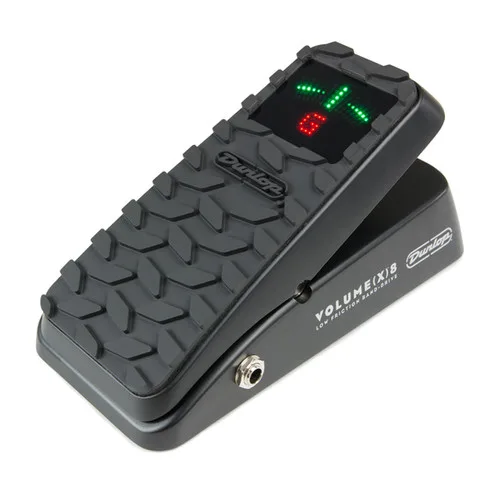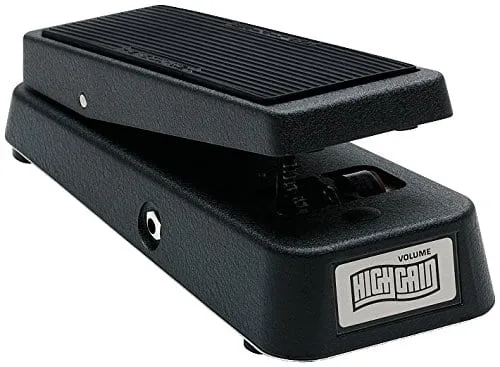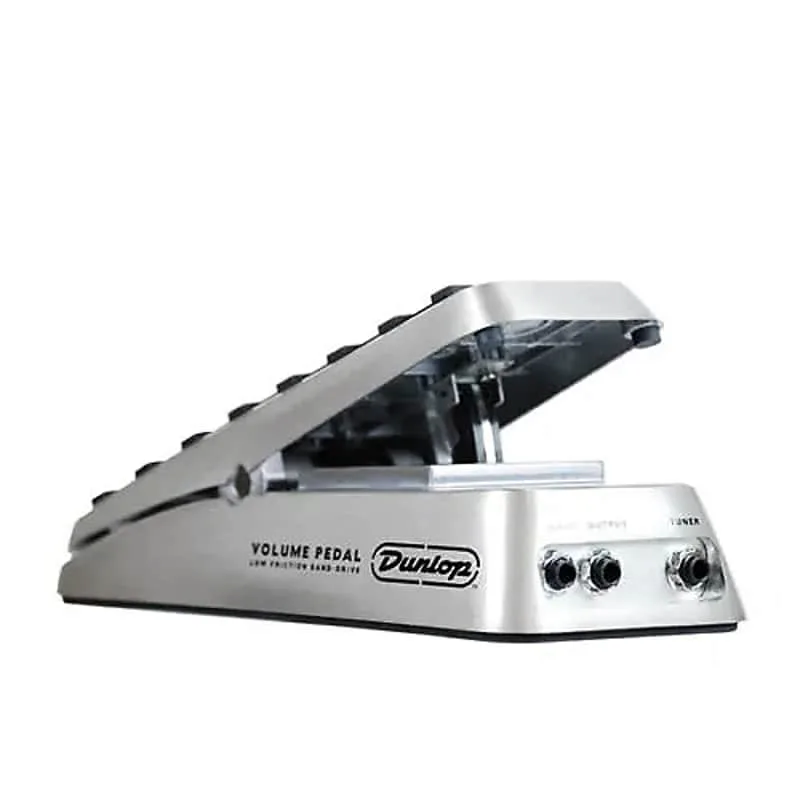



The Dunlop DVP1 is a passive volume pedal: a treadle you rock with your foot to control your level, with no power supply or battery needed because the volume changes are made using a conventional passive pot1. Dunlop released it in July 2010, describing it as a revamp of the basic volume pedal built around high-quality low-noise components to keep the signal path as clean as possible2.
What it does and how it is built
Because the DVP1 is passive, it simply varies the level of whatever you feed it, and MusicRadar's reviewer found that appropriate level amendments are smoothly progressive from off to the full-on position1. The pedal's casing is described as beefy but smooth, in space-age brush-finished aluminum, with a rubber-covered baseplate. The treadle section is long and topped with a tire-like, heavy patterned rubber insert that gives serious grip underfoot, and the pedal's substantial weight helps keep it firmly in place1.
The treadle mechanism is where Dunlop did its "clever thinking": the partner treadle mechanism employs Dunlop's new Steel Band Drive, designed for minimum maintenance and friction-free performance1.
"A pedal that combines fuss-free performance with confidence-inducing durability."
Jacks and the tuner feed
The DVP1's connections comprise input and output jacks plus an independent tuner feed, all rear-mounted at the opposite end of the case from the tension screw1. The tuner feed means you can keep a tuner connected and monitoring your signal without having to mute your amp or re-patch between songs.
Sweep tension and the Steel Band Drive
A rear-mounted tension screw adjusts the sweep action stiffness, so you can set how much resistance the treadle gives under your foot1. Combined with the Steel Band Drive, which Dunlop designed for minimum maintenance and friction-free performance, the idea is a smooth, quiet sweep that stays that way over time1.
How it compares
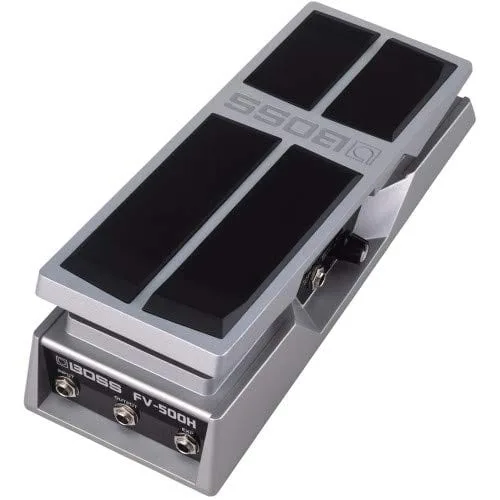
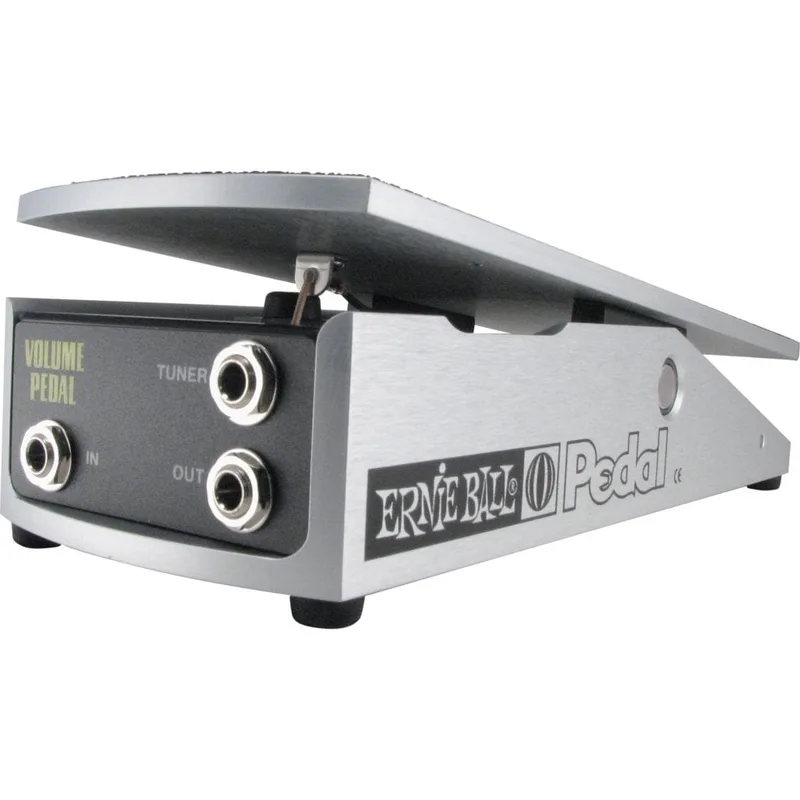
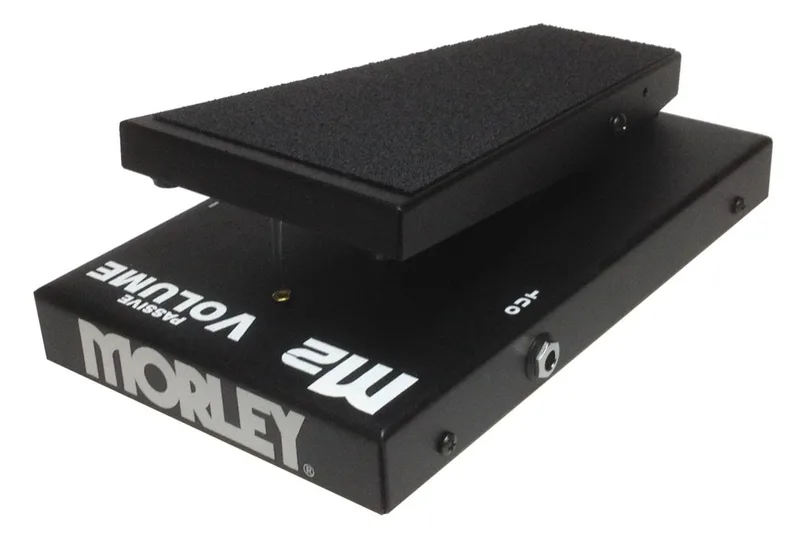
MusicRadar called the DVP1 an obvious competitor to the Boss FV-500H, judging its construction and operation top-notch and a viable alternative, though the reviewer found it a bit pricey and lacking the FV-500H's minimum volume facility1. Elsewhere on the site you can compare it with other passive designs such as the Ernie Ball Mono Volume Pedal and the Morley M2 Passive Volume, or see the wider field in Volume Pedals.
Videos
Vans With Benefits
fpe
Radomír Flek (Fleksible)
Questions
Does the Dunlop DVP1 need power?
No. The DVP1 is a passive volume pedal: volume changes are made using a conventional passive pot, so there is no battery or power supply to worry about. That also means it can sit anywhere on a pedalboard without adding to the power budget, and it will pass signal even if nothing is plugged into a power source.
Does the DVP1 have a tuner output?
Yes. Alongside the input and output jacks, the DVP1 has an independent tuner feed, so you can send a signal to a tuner without interrupting your main signal path. The jacks are rear-mounted at the opposite end of the case from the tension screw.
How do I adjust the sweep tension on the DVP1?
A rear-mounted tension screw adjusts the sweep action stiffness. Turn it to make the treadle stiffer or looser to suit your playing, and note that it sits at the opposite end of the case from the input and output jacks.
Does the DVP1 affect my tone?
MusicRadar's reviewer found that the well-chosen components ensure there is no noticeable signal degradation. No Treble likewise noted that the pedal features high-quality low-noise components to keep the signal path as clean as possible.
What is the Steel Band Drive?
Steel Band Drive is the name Dunlop gives to the DVP1's treadle mechanism. It was designed for minimum maintenance and friction-free performance, replacing the string-and-pulley arrangements common on volume pedals.
Sources (2)
- Dunlop DVP1 Volume Pedal review, MusicRadar, 2012-02-01
- Gear Watch: Dunlop DVP1 Volume Pedal, No Treble, 2010-07-11