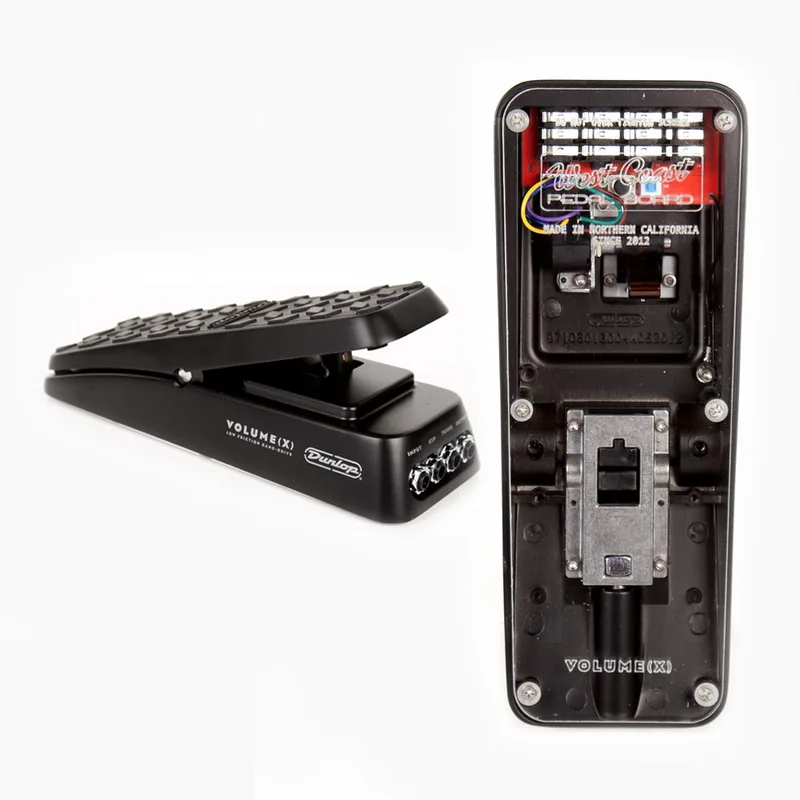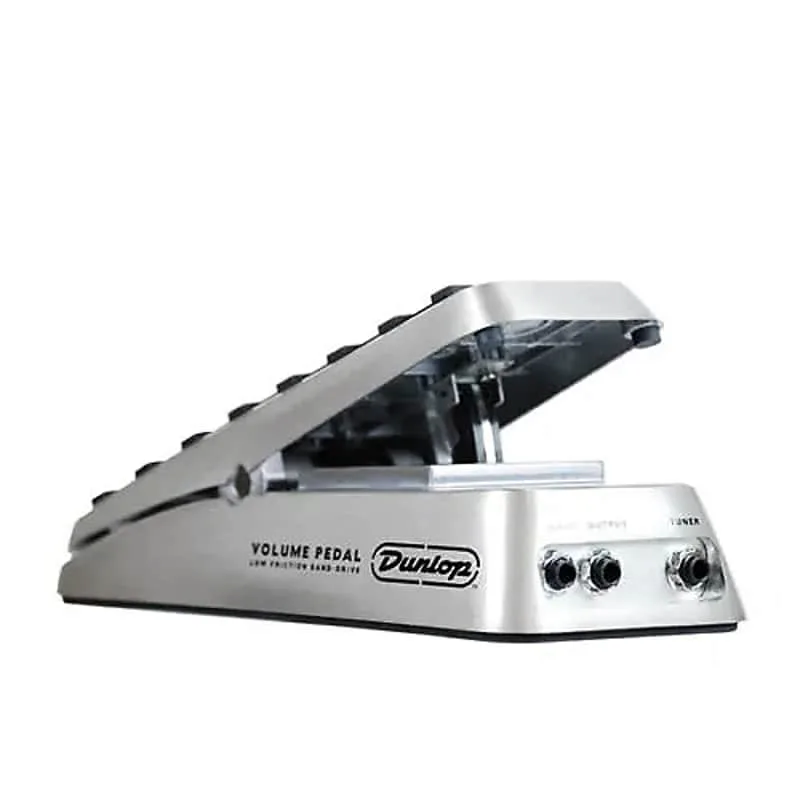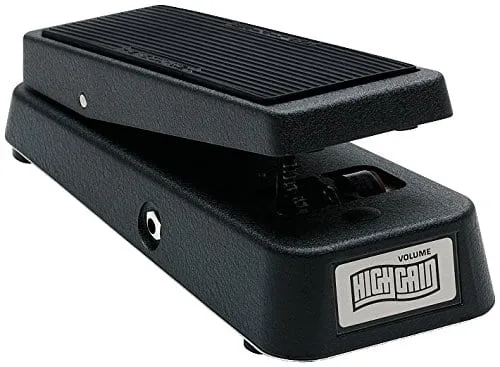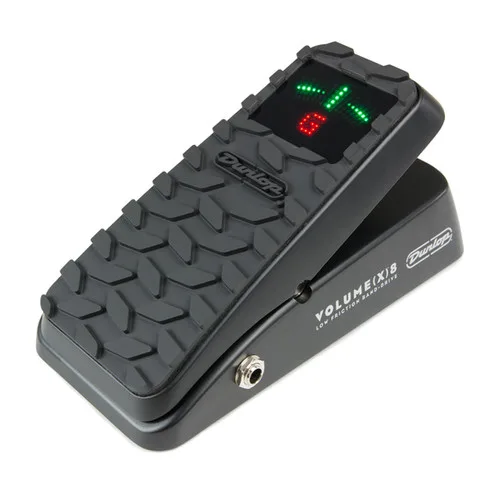


The Dunlop DVP5 Volume (X) 8 is a compact volume pedal and expression pedal from Dunlop, designed in collaboration with pedalboard maker Pedaltrain to take up as little board space as possible12. At just 20cm (eight inches) in length, it is built for players whose pedalboards are already crowded2. Dunlop's own description of what it does is simple: "step on this pedal to create incredibly smooth volume swells or control your favorite FX parameters"1.
It is a passive unit, so it needs no power supply, no battery, and no wall wart: you plug in and play13. It works in two modes. Volume mode uses a 250 kΩ pot for conventional volume control with your guitar plugged into the input jack. Expression mode uses a 10 kΩ pot and lets you control a parameter on another effect, such as delay time or wah sweep, through the FX jack1.
The jacks: input, output, FX and tuner
The DVP5 has four jacks: Volume, FX, Output, and Tuner1. The front-mounted rather than side-mounted socketry saves left and right space on a pedalboard, which matters when every centimeter counts2.
| Jack | What it does |
|---|---|
| Input | Connects your guitar1 |
| Output | Volume signal control1 |
| FX | Expression control of an effect parameter1 |
| Tuner | Constant signal to a tuner1 |
The tuner jack is one of the pedal's most practical features. It sends signal to your tuner regardless of where the rocker is, and it keeps the tuner out of your main signal chain12. Guitar World's reviewer Trevor Curwen noted the benefit: "There's a separate jack to connect your tuner, so you keep that clear of the main signal chain, plus you can tune silent"2. MusicRadar agreed, writing that "The tuner input is very handy. Simply rock the pedal back on your heel and tune up without anyone noticing"3.
In volume mode, the output signal is muted when the rocker reaches the full heel-down position1. That is what makes silent tuning possible: heel down, your amp is quiet while the tuner jack keeps reading your guitar.
Using it as an expression pedal
Hook up a TRS cable from the FX jack and the DVP5 becomes an expression pedal32. Expression use requires a TRS cable, not a standard instrument cable2.
As an expression pedal, you can adjust the maximum and minimum parameter settings via the treadle or an internal pot3. The usual method is to set the toe value first, then the heel2. The internal 50 kΩ pot, wired in series with the expression pot, sets the minimum heel-down value, and it ships fully counterclockwise from the factory1. To reach it you have to unscrew the baseplate, which is held by four screws32.
There is also an internal switch for reversing foot/heel polarity, so you can set the maximum value at the heel-down position instead of toe-down if an effect works better that way12.
Treadle and size: an eight-inch board-friendly design
A curved rear end to the chassis and a complementary recess on the treadle deliver a wide range of travel despite the small footprint2.
The treadle runs on Dunlop's patented Low Friction Band-Drive, which the manual calls road-proven1. Guitar World found that "the smooth treadle action courtesy of Dunlop's patented Low Friction Band-Drive feels just right and will sit exactly where you leave it"2. The pedal also has a flat rubber base and an adjustable torque clutch3, with provision to tighten or loosen the treadle tension using an Allen key2.
The DVP5 itself is passive and takes no power. A separate modified version, the Shnobel Tone Dunlop DVP5 + Tuner Mod, adds a tuner buffer and is a different product: it takes standard 9V power with a 75mA current draw4.
Mounting plate and accessories
For players who want to fix the pedal to a board, West Coast Pedalboard makes a dedicated mounting solution for the DVP55:
- Translucent and durable 3/16 inch cast acrylic plate5
- Four stainless steel #6X32 by 3/8 inch screws included5
- Fits the Volume X 8 volume pedal5
History: developed with Pedaltrain
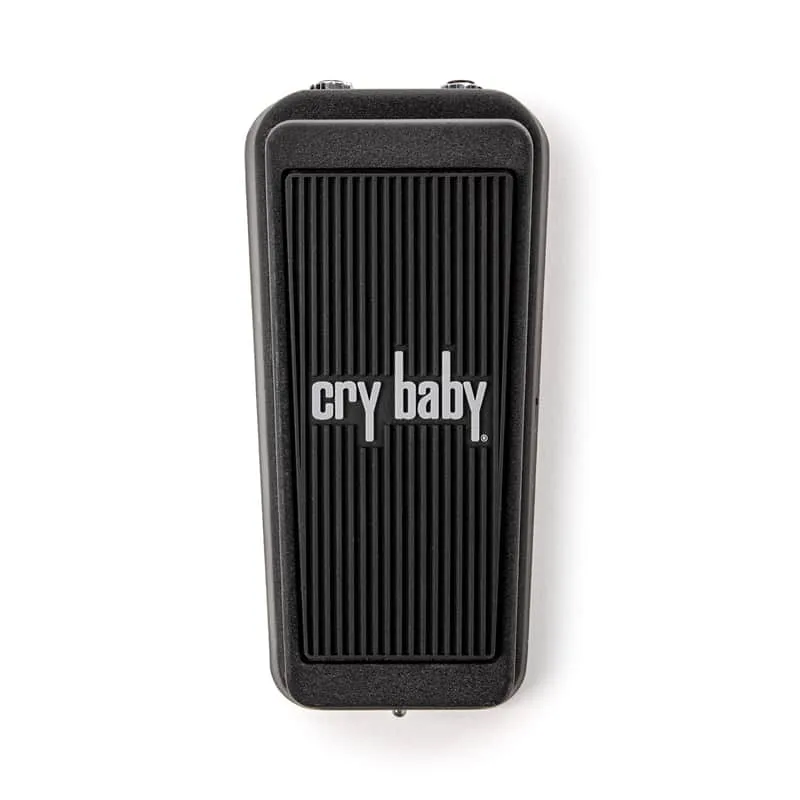
The DVP5 was designed in collaboration with Pedaltrain, the pedalboard company12. According to MusicRadar, it was developed alongside the Cry Baby Junior while Dunlop and Pedaltrain were spitballing ideas; since the two companies were already working together on a compact wah, developing a similarly compact volume pedal made sense3. The Volume (X) line sits alongside other Dunlop products including the MXR Carbon Copy delay line6.
What reviewers said
Both published reviews were positive about the pedal's practicality. MusicRadar called it "a very practical volume/expression pedal, so handy it could well become a perennial fixture on your 'board," noting it works well for instant muting, rolling things back to clean up a dirty amp, or swelling to a violin-like attack3. Guitar World's verdict was similarly enthusiastic: "We're talking serious utility with this diminutive charmer, it's a shoo-in for any pedalboard!"2
MusicRadar added one reservation about value: "At this price, it may struggle to wow your attention away from larger pedals, but if a crowded pedalboard is compromising your pedal choices, the two-in-one format and dinky design tick all the boxes"3.
Videos
Leigh Fuge
Stu's Guitar Channel
shnobel
Questions
Does the Dunlop Volume X 8 need power?
No. The DVP5 is a passive unit and does not require a power source to operate, in either volume or expression mode. There is no power jack on the pedal itself. A separate modified version sold by Shnobel Tone adds a tuner buffer, and that version takes standard 9V power with a 75mA current draw.
What cable do I need to use the DVP5 as an expression pedal?
A TRS cable. You run it from the pedal's FX jack to the expression input on your effect. Expression mode uses a 10 kΩ pot, and you can set the maximum and minimum parameter values with the treadle, or with an internal 50 kΩ pot that you reach by unscrewing the baseplate.
Does the tuner output stay on when the DVP5 is heel down?
Yes. The signal to the tuner jack is active regardless of rocker position, so you can tune at any point. In volume mode the main output signal is muted when the rocker reaches full heel-down, which lets you tune silently between songs without anyone hearing you.
How do I adjust the treadle tension on the Volume X 8?
The pedal has an adjustable torque clutch, and there is provision to tighten or loosen the treadle tension with an Allen key. The treadle uses Dunlop's patented Low Friction Band-Drive, which reviewers found smooth and stable, staying where you leave it.
Is there a mounting plate for the Dunlop Volume X 8?
Yes. West Coast Pedalboard makes a mounting solution for the DVP5: a translucent 3/16 inch cast acrylic plate with four stainless steel screws included, sized 12 by 6 by 1 inches, that fits the pedal for pedalboard mounting.
Sources (6)
- DVP5.pdf, Jim Dunlop, 2021
- Dunlop DVP5 Volume (X) 8 review, Guitar World, 2021-07-09
- Dunlop CBJ95 Cry Baby Junior and DVP5 Volume (X) review, MusicRadar, 2021-07-28
- Dunlop DVP5 + Tuner Mod, Shnobel Tone
- Dunlop Volume X 8 DVP5, westcoastpedalboard.com
- MXR® Carbon Copy® Mini Analog Delay, Dunlop (lifestyle.jimdunlop.com), 2019-05-15