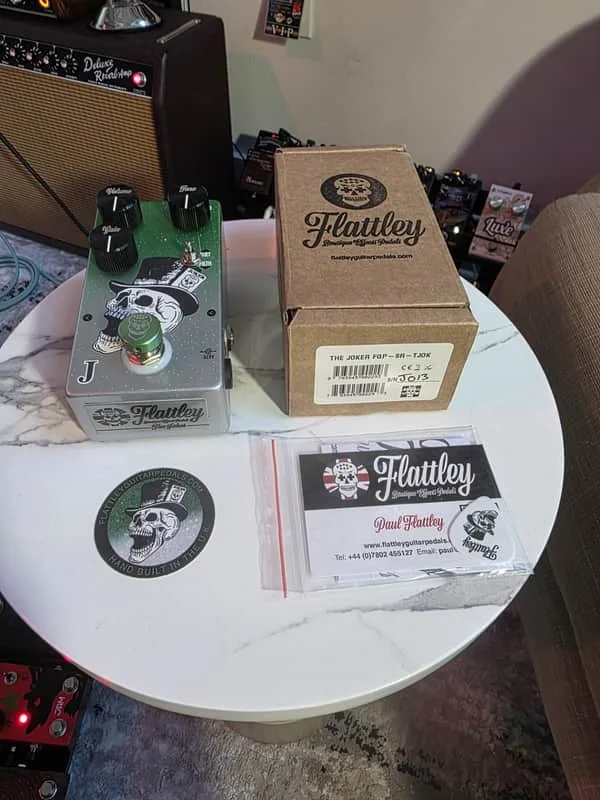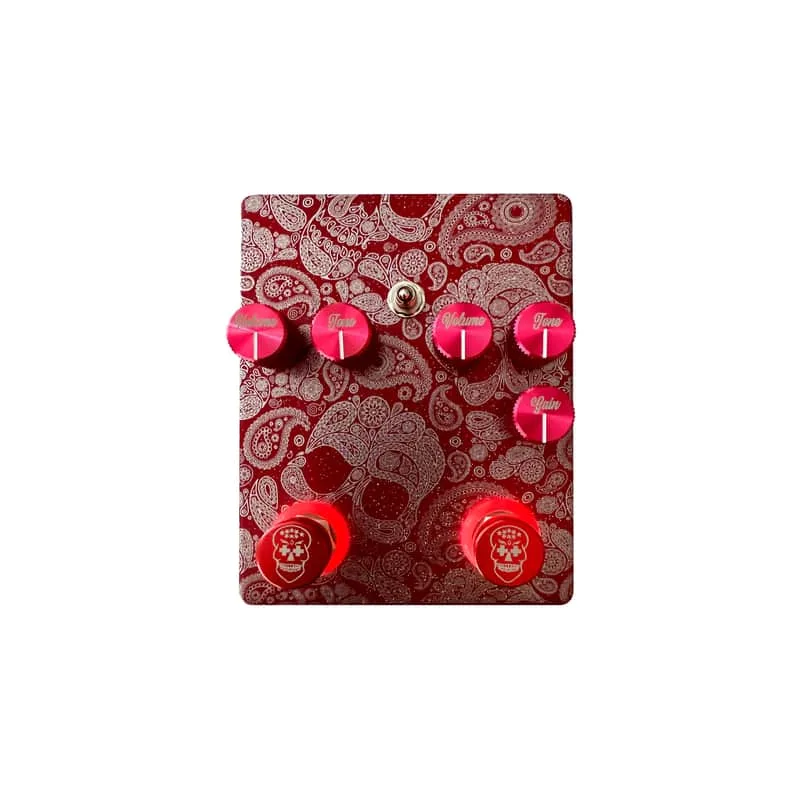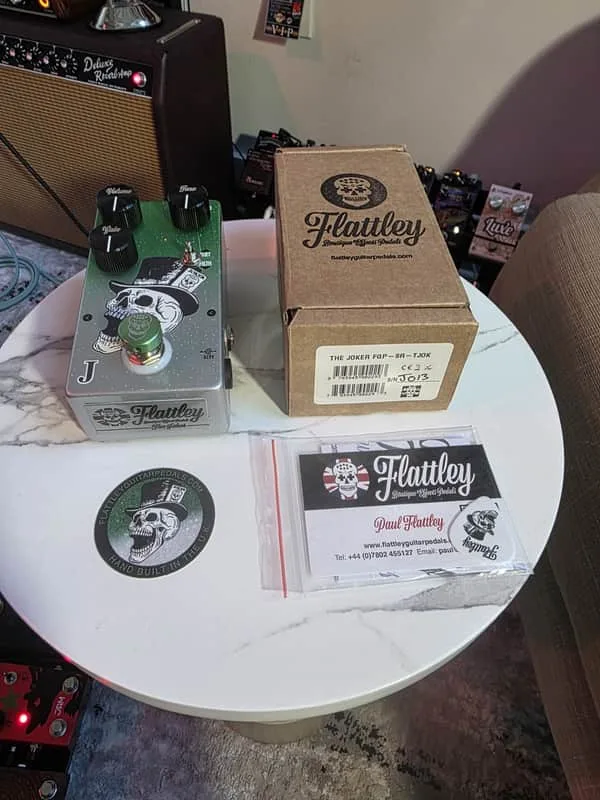


The Flattley Joker Valve Tone is a gain stage, saturator, overdrive and distortion pedal built around an FET-based 12AX7 valve simulation added to a clean boost. Flattley launched it to coincide with the 2026 NAMM show, priced at £259 / $319 on the Flattley webstore1. The aim, according to Guitar Pedal X's Stefan Karlsson, was to sound similar to an overdriven single-channel valve amp, and the pedal can also be used to push other pedals rather than only working on its own1.
The controls and the two modes
The Joker Valve Tone carries four controls: Volume, Tone, Gain and Saturation. A mode switch selects between Dirt, which covers boost and overdrive territory, and Filth, which is the distortion mode1.
The two modes behave differently. Guitar Pedal X describes Dirt as more open and less compressed, while Filth adds weight, punch and rounded distortion1. That split means the pedal can sit at the gentler end of the gain range as a boost or overdrive, or be pushed into fuller distortion territory, all within one enclosure.
The origin of the design follows the same logic. The pedal came about when Paul had the idea of asking what happens if you add controlled distortion to a normally clean booster, and the answer was the FET-based 12AX7 valve simulation layered onto that boost1.
Using it with other pedals
Because the core is a clean boost with a valve-style gain stage on top, the Joker Valve Tone works in more than one place on a board. Guitar Pedal X notes that it can enhance other gain pedals, delays and modulations, or work on its own as an overdrive or distortion1. Players already running delay pedals or modulation effects can use it to add an amp-like gain stage in front of them, while players comparing it with dedicated overdrive pedals or distortion pedals can treat it as either.
Circuit lineage and design
The Joker Valve Tone shares FET architecture with the Flattley Outlaw, and Guitar Pedal X describes it as complementing the Ace Tone Boost and Outlaw Plexi in the maker's range1. The enclosure carries a green metallic flake finish with a matching green Halo LED, and the artwork is by Phoebe, which the reviewer called one of her best works to date1.
What reviewers said
Guitar Pedal X's review, published at the time of the NAMM launch, was strongly positive on how the pedal responds1:
"it really is one of the most vibrant and amp-like experiences I have encountered - both in sound and feel"
The same review describes the pedal as "a beautifully dynamic and vibrant amp-like gain stage / saturator / overdrive and distortion with myriad uses"1.
Videos
Premier Guitar
Tone Nerds
Philip Czarnecki and Flattley Guitar Pedals
Questions
What is the difference between Dirt and Filth on the Flattley Joker Valve Tone?
Dirt is the more open and less compressed of the two modes, covering boost and overdrive territory. Filth is the distortion mode, adding weight, punch and a rounded distortion character. Both modes are supported by the same four controls: Volume, Tone, Gain and Saturation.
Can the Joker Valve Tone be used to boost other pedals?
Yes. Guitar Pedal X notes that it can enhance other gain pedals as well as delays and modulations, or simply work on its own as an overdrive or distortion. That flexibility is part of what the reviewer called its myriad uses.
Who designed the Flattley Joker Valve Tone?
The pedal was designed by Paul at Flattley. The idea came from asking what happens if you add controlled distortion to a normally clean booster, which led to an FET-based 12AX7 valve simulation being added to the clean boost circuit. The artwork is by Phoebe.
How much does the Flattley Joker Valve Tone cost in the US?
As of the 2026 NAMM show in January 2026, the Joker Valve Tone was listed at $319 in the US, alongside a UK price of £259, on the Flattley webstore.
Is the Joker Valve Tone related to the Flattley Outlaw?
Yes, in circuit terms. Guitar Pedal X reports that the Joker Valve Tone shares FET architecture with the Outlaw, and that it complements the Ace Tone Boost and Outlaw Plexi in Flattley's range.
Sources (1)
- Guitar Pedal X, Guitar Pedal X, 2026-01-20