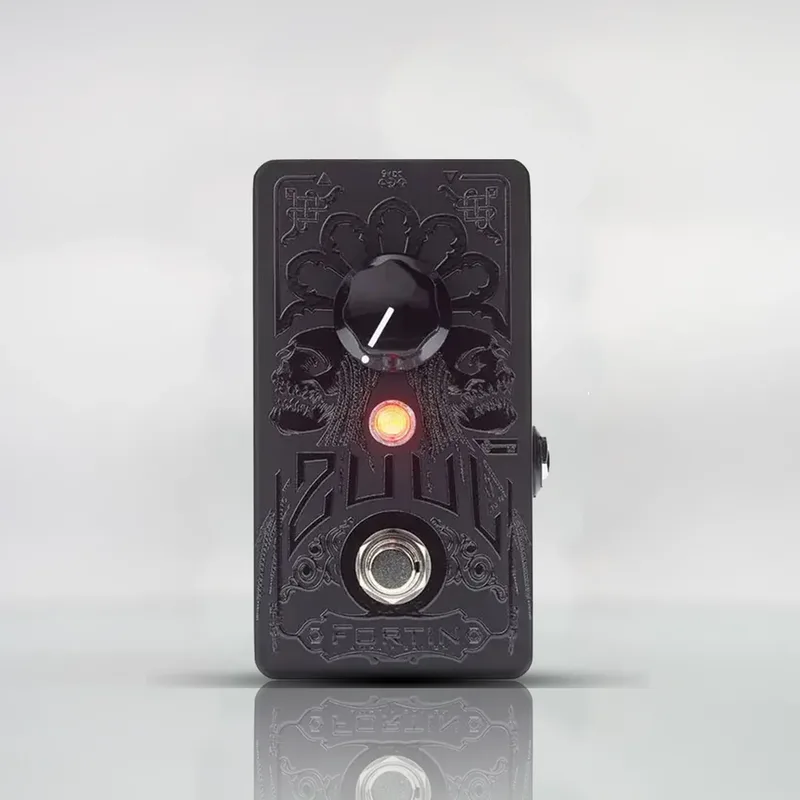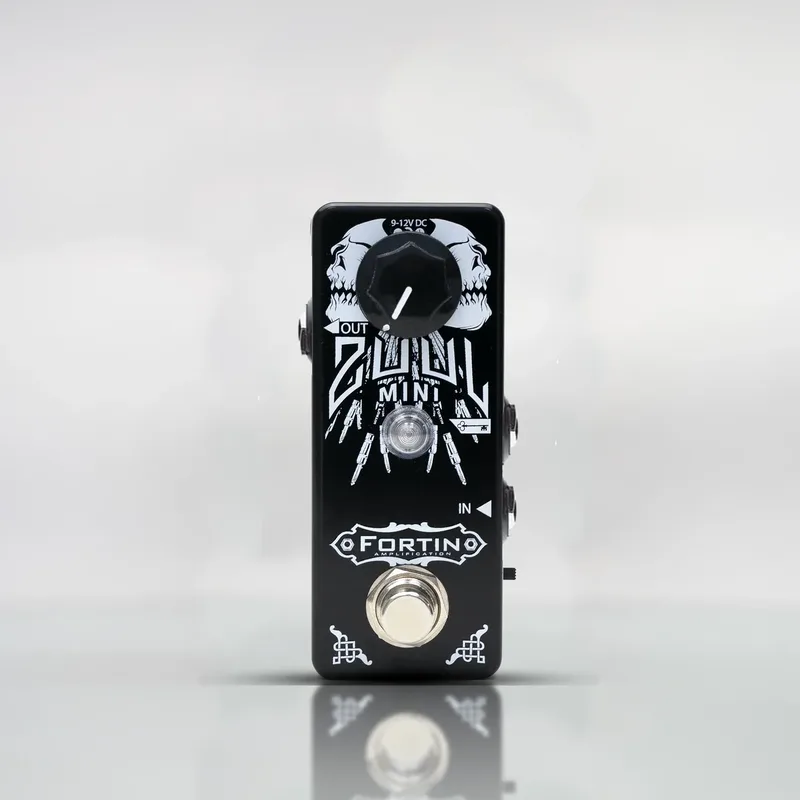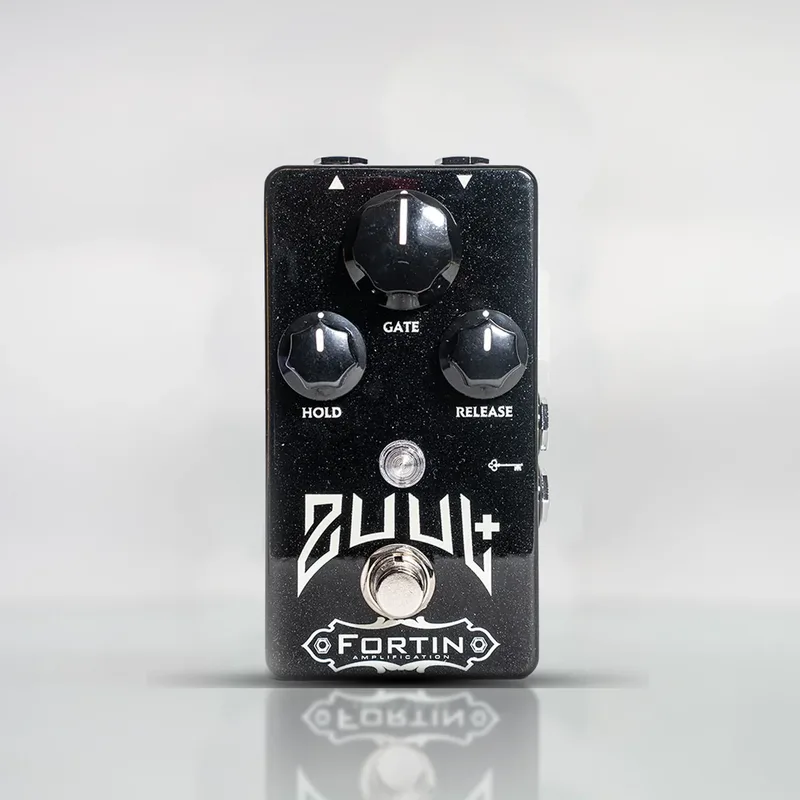


The Fortin Zuul is a noise gate pedal from Fortin Amps, sold under the name "Intelligent Reactive Guitar Noise Gate Technology"1. Its defining feature is a KEY input: a separate side jack that lets the gate be controlled by a different signal than the one passing through the main input and output. In practice, that means you can split your clean guitar signal off before the amp and feed it to the KEY input, so the gate tracks your actual playing dynamics even when the pedal itself sits in a loud effects loop or after high gain stages2.
Fortin sells the Zuul family in several formats: the original Zuul, the Zuul+ and Zuul+ Blackout, and the Fortin Mini Zuul, which Fortin describes as having "all the same features as the original Zuul but in mini-form factor"3.
How the gate works and how you control it
The core control is the Gate (threshold) knob, which Fortin describes as adjusting "how much level is required to open the noise gate and allow a signal to pass through"1. The DIY community notes that the threshold knob also controls the dynamics of the gate circuit, so one knob shapes both when the gate opens and how it behaves2. Guitar Pedal X's review lists the full control set as Hold, Gate and Release4.
On the original Zuul, a side switch (an internal jumper on early versions) changes the threshold range to compensate for different input signal levels5. The Mini Zuul instead handles Hold and Release with a side-mounted two-position switch, as Gearnews describes in their noise gate buying guide6.
| Control | What it does |
|---|---|
| Gate | Sets how much level is required to open the gate and pass signal1 |
| Hold | Sets how long the gate stays open after the signal drops4 |
| Release | Sets how quickly the gate closes4 |
| Side switch (Zuul) | Changes threshold range for different input signal levels5 |
| Side switch (Mini Zuul) | Two-position switch for Hold and Release6 |
The KEY input and effects loop placement
The KEY input is the feature that separates the Zuul from most compact gates. The KEY signal can come directly from your guitar, split off from another Fortin pedal or from any other signal source, which lets the gate be controlled by a different signal than the input and output jacks2. This is what makes series effects loop placement practical: the pedal can sit after a loud preamp while a clean guitar signal tells it when to open.
Fortin states the Zuul can be used in front of an amplifier or in a series effects loop3. The company also says the Zuul "will not color the tone of your amp / signal chain"7. One thing to know: the Zuul buffers the signal, so if you are not already running a buffer, Fortin notes you may feel the Zuul inserts one1.
LED indicator
The Zuul uses a dual color LED for visual feedback of the gating action: green means the gate is open, orange means it is closed, and off means the pedal is in bypass5. That gives you an immediate read on whether your threshold setting is doing what you expect.
The DIY version
The Zuul has a notable presence in the DIY pedal community. The circuit is built around the THAT4301 IC, with 2N3904 transistors in the layout2. Tagboard Effects published a vero layout for the circuit in 2019, describing the Zuul as "the most transparent noise gate on the market" with "studio quality specifications with simple straight forward operation"2.
"ZUUL is the most transparent noise gate on the market!"
PedalPCB offers a schematic, info and PCB for the circuit under the name Muzzle2. In July 2020, a builder named SteveF reported the vero layout built and worked as intended, and the layout was tagged verified2.
Videos
Ola Englund
FortinAmps
Plague Scythe Studios
Questions
What do the LED colors on the Fortin Zuul mean?
The Zuul has a dual color LED that shows the gating action at a glance. Green means the gate is open and your signal is passing through, orange means the gate is closed and muting the signal, and off means the pedal is in bypass. It is a quick way to confirm the threshold is set correctly.
Can the Zuul go in an effects loop?
Yes. Fortin describes the Zuul as usable in front of an amplifier or in a series effects loop. The KEY input is what makes the loop placement practical: the gate can sit after your high gain preamp while a clean signal from the guitar, split off before the amp, drives the gating decision.
What is the KEY input on the Zuul for?
The KEY input lets the gate be controlled by a different signal than the one passing through the input and output jacks. You can feed it a split directly from the guitar, so the gate tracks your clean playing dynamics even when the pedal itself is placed in a loud effects loop or after gain stages.
Is there a DIY version of the Fortin Zuul?
Yes. The circuit is built around the THAT4301 IC, and DIY builders have reproduced it. Tagboard Effects published a vero layout in 2019, and PedalPCB sells a schematic, info and PCB for the circuit under the name Muzzle. A builder named SteveF verified the vero layout as working in July 2020.
Sources (7)
- ZUUL+® - Intelligent Reactive Guitar Noise Gate Technology - Fortin Amps, Fortin Amps
- Guitar FX Layouts: Fortin Amplification Zuul, Guitar FX Layouts (tagboardeffects.blogspot.com), 2019-05-01
- MINI ZUUL®, Fortin Amps
- Guitar Pedal X, Guitar Pedal X, 2025-05-26
- ZUUL® - Intelligent Reactive Guitar Noise Gate Technology - Fortin Amps, Fortin Amps
- The 7 Best Noise Gate Pedals of 2026: Not Hiss Problem (or Hers), gearnews.com, 2026-07-27
- ZUUL+® BLACKOUT, Fortin Amps