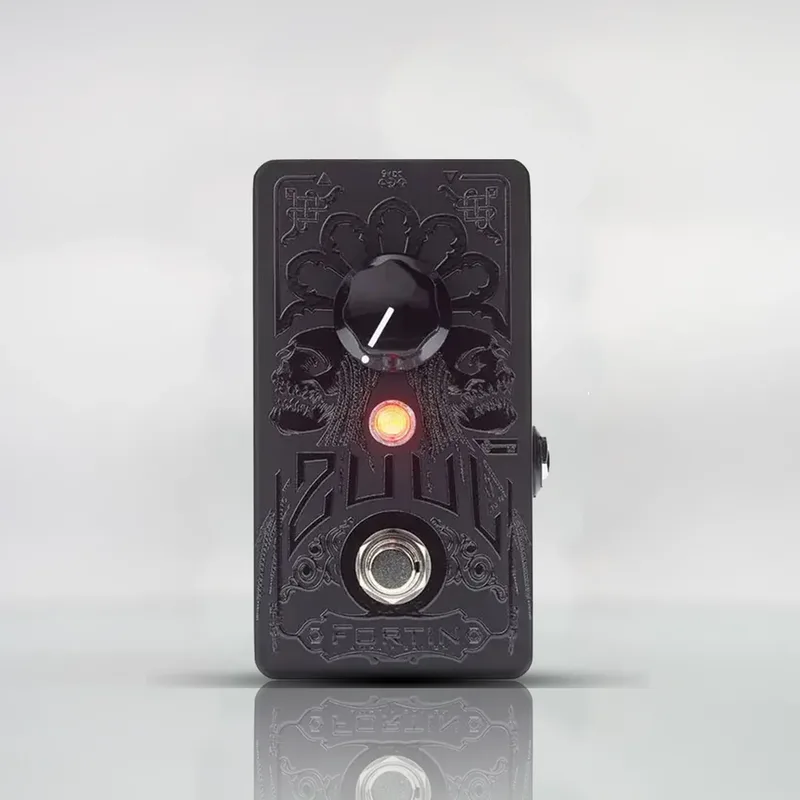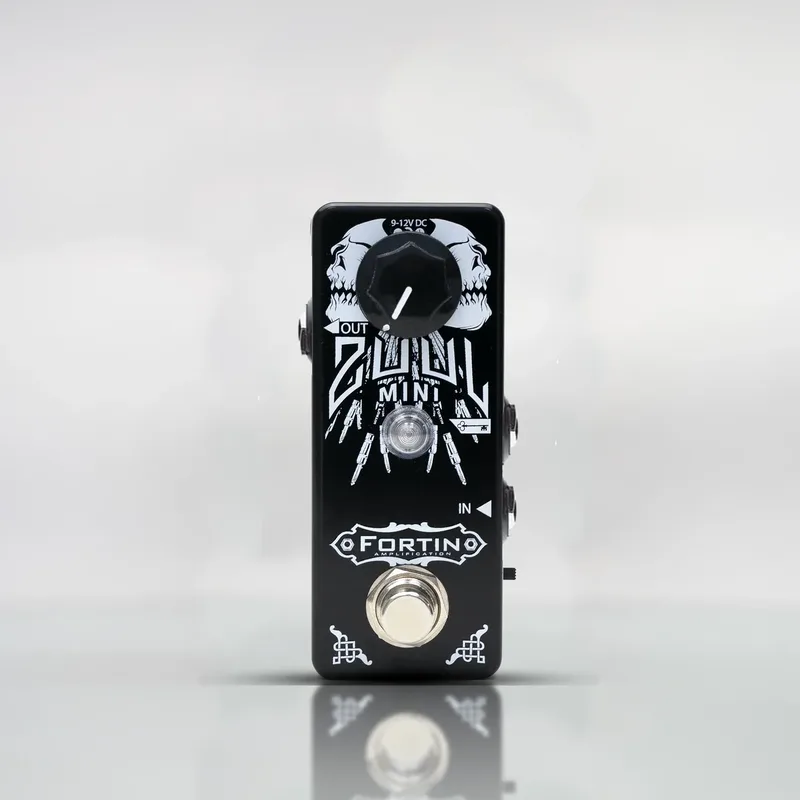

The Fortin Mini Zuul is a compact noise gate pedal from Fortin Amps, built around what the maker calls Intelligent Reactive Guitar Noise Gate Technology. Fortin positions it as the same circuit as the full-size Fortin Zuul, stating it has "all the same features as the original Zuul but in mini-form factor"1. For a player with a crowded pedalboard, it delivers the Zuul's gating in an enclosure measuring 3.6" x 1.5" x 1.2" (92.5mm x 38.5mm x 30.99mm) wide, deep and high1.
A noise gate mutes or attenuates the signal when it falls below a set level, so hum, hiss and idle noise from high-gain rigs stay silent between notes. The Mini Zuul's threshold control adjusts how much level is required to open the gate and allow a signal to pass through1. Fortin lists the pedal for 2CM, 3CM, or 4CM applications, meaning it can sit in a simple two-cable setup or in the loop of an amplifier using three- or four-cable methods1.
A buffered, true bypass signal path
The Mini Zuul uses industry standard true bypass switching, so when the pedal is off the signal passes around the circuit1. When it is on, the picture changes: Fortin notes that "the Zuul will buffer the signal so if you are not already running a buffer you may feel like the Zuul inserts" a buffer into the chain1. In practice this means the pedal behaves like other key-input gates that condition the signal while active, rather than leaving it untouched.
The measured performance Fortin publishes points to a clean audio path: a dynamic range of 120dB and total harmonic distortion of 0.025%1. Those figures describe the pedal's electronics rather than its gating behavior, but they indicate the circuit itself is not a significant source of coloration.
The Hold and Release switch
Writing in Gearnews' noise gate buying guide, Julian Schmauch describes the Mini Zuul as offering Hold and Release on a side-mounted two-position switch2. Hold and Release controls shape how the gate behaves after the signal drops: how long it stays open and how quickly it closes. On a two-position switch, the player chooses between two preset behaviors rather than dialing them in continuously.
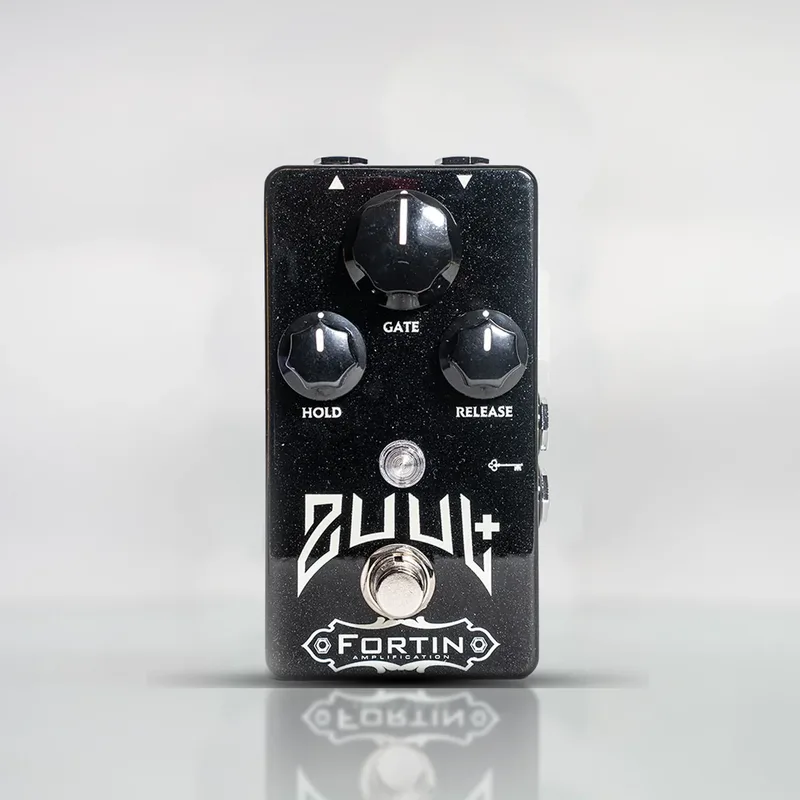
That switch is the practical difference in control layout between the Mini Zuul and its larger siblings. The original Zuul carries a single Threshold knob, and as Schmauch puts it, "the Zuul+ adds Hold and Release to the original's single Threshold knob"2, making those parameters adjustable controls on the plus version.
How it differs from the Zuul family
Fortin's noise gate line covers several versions, and the Mini Zuul sits at the compact end1:
| Model | Form and controls | Notable features |
|---|---|---|
| Mini Zuul | Mini enclosure, threshold control, Hold and Release on a side-mounted two-position switch12 | Same features as the original Zuul in mini form1 |
| Zuul | Full-size enclosure, 3DPT true bypass mechanical stomp3 | Side switch (internal jumper on early versions) to change the threshold range for different input signal levels3 |
| Zuul+ | Full-size enclosure | Hold and Release added to the single Threshold knob4; ground lift switch for KEY IN/KEY THRU to eliminate ground loops in 3CM or 4CM applications4 |
The Zuul+ also draws 40mA at 9V4, matching the Mini Zuul's power requirement. The Zuul and Zuul+ Blackout share the same 9 to 12V DC center-pin negative, fully regulated adapter specification, not included3.
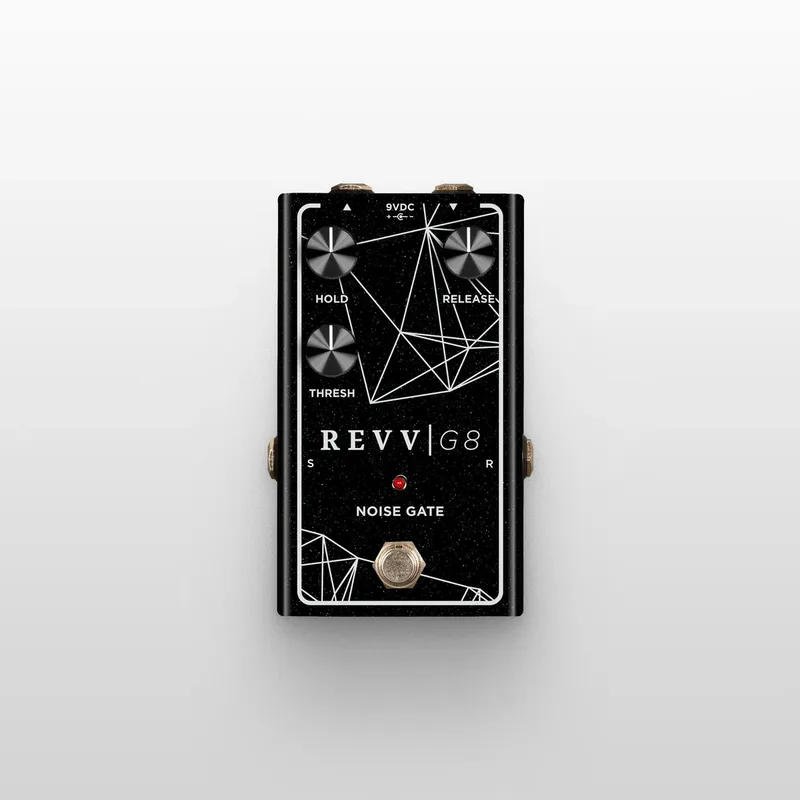
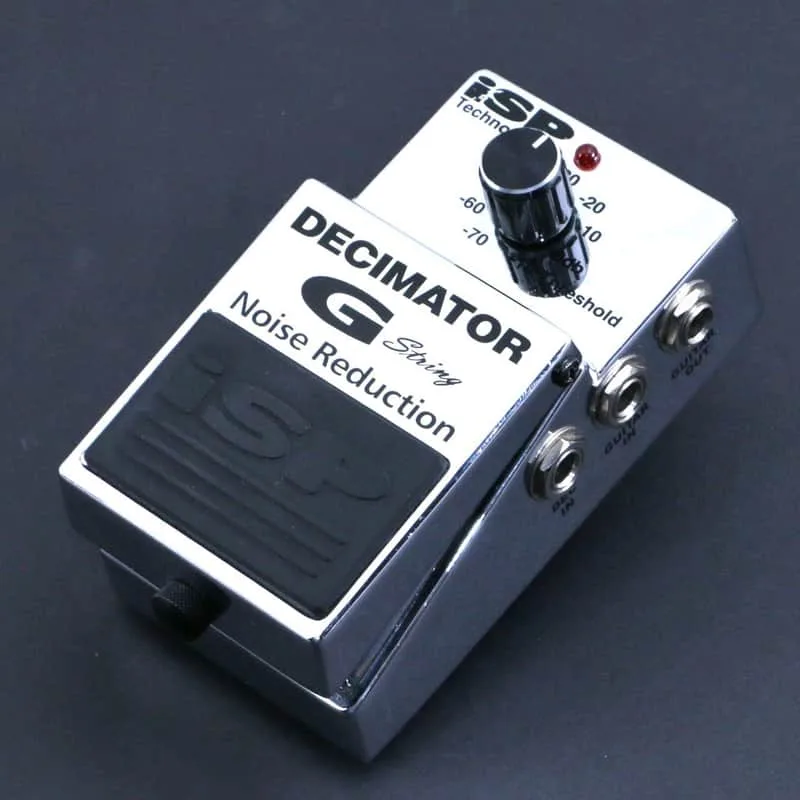
For players comparing gates more broadly, the Mini Zuul's key-input-style operation places it alongside pedals like the Revv G8 Noise Gate and the ISP Technologies Decimator G String, which also track the instrument signal while gating elsewhere in the chain.
What reviewers said
Published coverage of the Mini Zuul is limited. In Gearnews' 2026 guide to noise gate pedals, Julian Schmauch covers the pedal's control layout, noting the Hold and Release side switch2. Of the wider Zuul family, the same guide's verdict on the Zuul+ is direct about where it earns its keep:
"the Zuul+ wins the moment there's a fuzz in front of it"
Gearnews, Julian Schmauch2
That comment speaks to the family's strength with high-output, noisy front-end pedals, the situation where a reactive gate matters most2.
Power and practical notes
The Mini Zuul ships without a power adapter. It needs a 9 to 12V DC supply with a center pin negative, fully regulated, drawing 40mA1. There is no battery option, so plan for a pedalboard power supply or a dedicated adapter.
The pedal carries Fortin's limited 1-year warranty and is built in the U.S.A.1. At $199.99 USD as listed in October 2026, it sits at the premium end of compact noise gates1.
Videos
Man Bun Metal Head
Questions
Is the Fortin Mini Zuul true bypass?
Yes. Fortin describes the Mini Zuul as using industry standard true bypass switching. The company also notes that the Zuul will buffer the signal, so a player who is not already running a buffer may feel the Zuul inserts one into the chain. It is a buffered, true bypass design.
What power does the Fortin Mini Zuul need?
It runs on a 9 to 12V DC adapter with a center pin negative, fully regulated, drawing 40mA. The adapter is not included with the pedal, so you need to supply your own power supply or isolated output.
What is the difference between the Zuul and the Mini Zuul?
Fortin says the Mini Zuul has all the same features as the original Zuul but in a mini form factor. The full-size Zuul adds a side switch, an internal jumper on early versions, that changes the threshold range to compensate for different input signal levels. The Zuul+ versions add Hold and Release controls and a ground lift switch.
Is the Fortin Mini Zuul made in the USA?
Yes. Fortin lists the Mini Zuul as built in the U.S.A., and the same applies to the full-size Zuul and the Zuul+ Blackout. The pedal carries Fortin's limited 1-year warranty.
Sources (4)
- MINI ZUUL®, Fortin Amps
- The 7 Best Noise Gate Pedals of 2026: Not Hiss Problem (or Hers), gearnews.com, 2026-07-27
- ZUUL® - Intelligent Reactive Guitar Noise Gate Technology - Fortin Amps, Fortin Amps
- ZUUL+® - Intelligent Reactive Guitar Noise Gate Technology - Fortin Amps, Fortin Amps