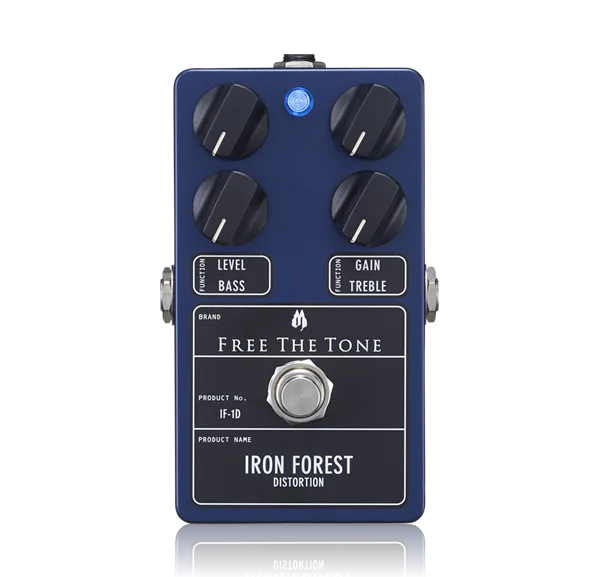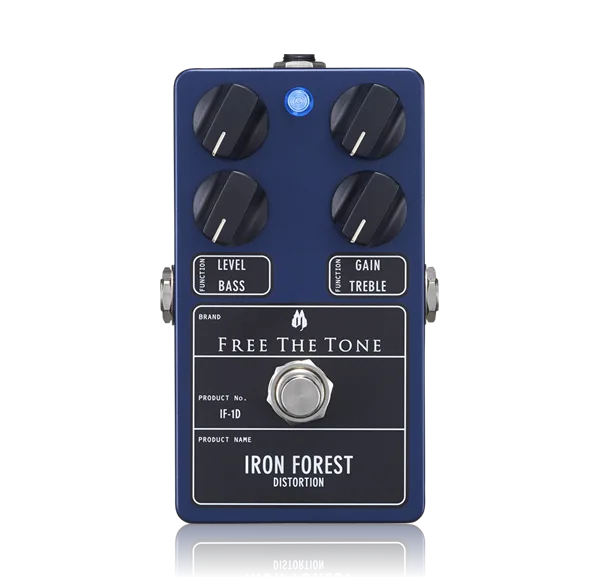


The Free The Tone IRON FOREST IF-1D is an analog distortion pedal from Japanese maker Free The Tone. It keeps things simple: four rotary controls, Gain, Treble, Bass and Level, with no extra switches or modes12. RockBoard's PedalPedia describes it as delivering a "powerful tone with ample distortion that stands out from the band ensemble sound"3.
The pedal is discontinued. Free The Tone's product page marks it as production ended, at an original Japanese list price of 25,300 yen including tax1.
A four-knob analog distortion
The IF-1D is built around one idea: a distortion pedal that does the job without a panel full of options. MusicRadar's review framed it as a pedal for players who would "instead of extra switches and options, go for four basic rotaries"2. The circuit is analog, as listed in RockBoard's PedalPedia entry for the pedal3.
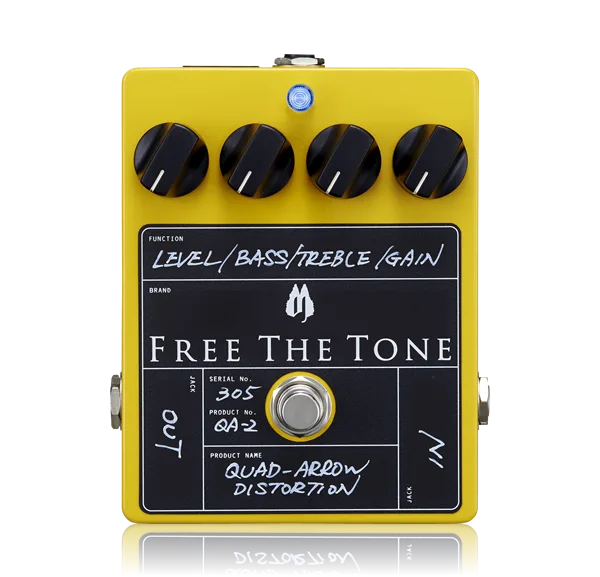
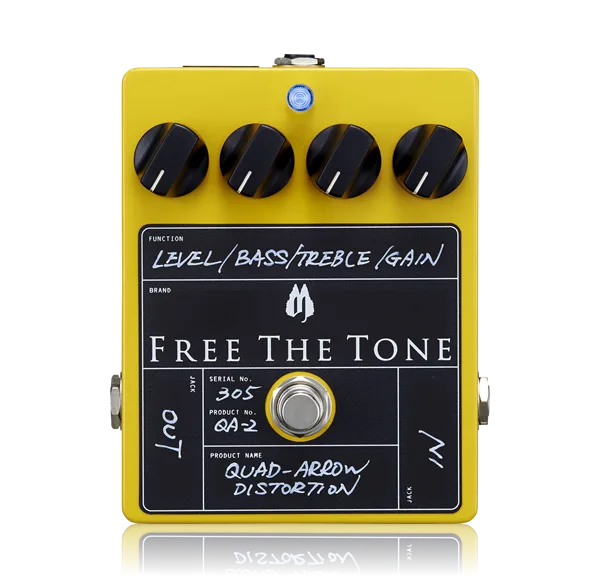
Free The Tone positions the Iron Forest as a distortion with equalizer-style tone shaping, and its own description of the sound is a "powerful tone with ample distortion that stands out from the band ensemble sound"3. In MusicRadar's review, the reviewer found the tonal options similar to the higher priced Quad Arrow Distortion pedal, with rich distortion and plenty of sustain, biased toward hard rock and modern metal with a brighter tone and sharper percussive attack4. That comparison points to the Free The Tone Quad Arrow Distortion QA-2 as the pricier sibling in the maker's distortion line.
The controls: Gain, Treble, Bass, Level
The panel has four knobs, and Free The Tone's specifications list them as GAIN, TREBLE, BASS and LEVEL1. MusicRadar described the same layout as "four rotary dials; level/gain/bass/treble"4.
| Control | What it does |
|---|---|
| Gain | Sets the amount of distortion |
| Treble | Shapes the high end |
| Bass | Shapes the low end |
| Level | Sets the output volume |
The two tone controls carry more weight than their plain names suggest. MusicRadar's review found that "the bass and treble pots are very powerful, enabling you to create a metal-type, mid-scooped sound by boosting both", and that backing them toward 12 o'clock returns a more mid-rich sound2. For a player, that means the IF-1D can cover both a scooped modern metal voicing and a more traditional mid-forward distortion from the same two knobs.
The HTS circuit
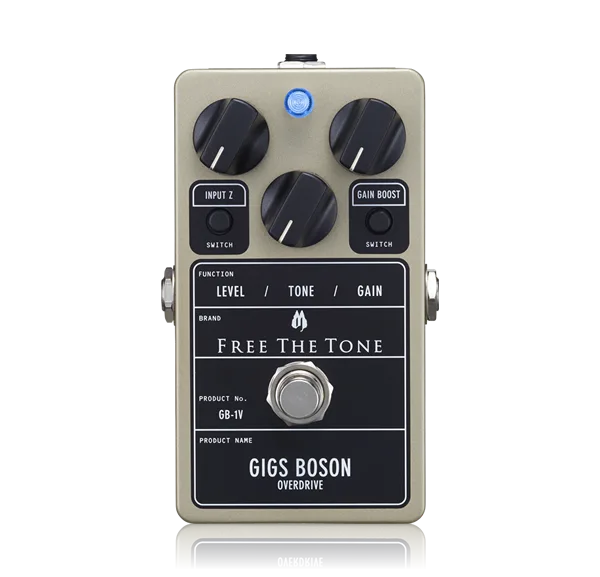
Inside, the IF-1D uses Free The Tone's HTS (Holistic Tonal Solution) circuit, the same circuit MusicRadar noted in the Gigs Boson overdrive25. Free The Tone developed HTS to manage the pedal's interface from the input section through to the output section. According to the maker, it solves the shortcomings of true-bypass circuits and of the common buffer-plus-electronic-switch combination, and manages how the pedal interacts with connected gear and the effect circuit itself5.
For the player, Free The Tone says the HTS circuit keeps the effect tone and the bypass tone at the same consistent quality, and MusicRadar credited it with "pure tones, silent on/off switching"14. That is the practical difference from a standard true-bypass pedal: the signal path is managed whether the effect is on or off, rather than simply cut out of the circuit.
Power and connections
The IF-1D runs on DC9V, from either a 9V (006P type) battery or an AC adapter through its DC9V input jack1. RockBoard's PedalPedia entry lists the same supply as 9V DC, center negative3. Current draw is approximately 9mA13, low enough that the pedal places almost no demand on a shared pedalboard supply.
Connections are a pair of 1/4-inch standard jacks, one input and one output, and the output load impedance is rated at 10k ohms or above1.
The IF-1D is discontinued, so specifications like the center-negative 9V DC supply and the 9mA draw matter mainly when buying or powering a second-hand unit13.
What reviewers said
MusicRadar's verdict on the Iron Forest was positive on the core sound, calling it "edgy, aggressive distortion that avoids ever getting fizzy", and listing that as a reason to buy2. The same review noted the hard rock and modern metal bias, with rich distortion and plenty of sustain4.
"Edgy, aggressive distortion that avoids ever getting fizzy."
Videos
Brett Kingman
Brett Kingman
BUZZBEE TV
Questions
Is the Free The Tone Iron Forest IF-1D discontinued?
Yes. Free The Tone lists the IF-1D as production ended on its Japanese product page, alongside its original tax-included price of 25,300 yen. It is no longer in current production, so finding one means the second-hand market.
Is the IF-1D analog or digital?
The IF-1D is an analog pedal. RockBoard's PedalPedia entry for the Iron Forest lists the circuit type as analog, and Free The Tone's own product page describes it simply as a distortion pedal with four rotary controls.
Does the Iron Forest run on a battery?
Yes. Free The Tone's specifications list power as DC9V from either a 9V (006P type) battery or an AC adapter, with a DC9V input jack for the adapter connection. So it works on a standard 9V battery or a power supply.
How much current does the IF-1D draw?
Free The Tone lists the current draw as approximately 9mA, and RockBoard's PedalPedia entry gives the same 9mA figure. That is low enough to share a modest power supply with several other pedals.
What does the HTS circuit do?
HTS stands for Holistic Tonal Solution, a circuit Free The Tone developed to manage the pedal's interface from input to output. It aims to solve the shortcomings of true-bypass and buffer-plus-electronic-switch designs, keep the effect and bypass tones consistent, and provide silent on/off switching.
Sources (5)
- IRON FOREST / IF-1D|Products 商品紹介|Free The Tone, Free The Tone
- Free The Tone Iron Forest Distortion IF-1D review, MusicRadar, 2013-03-04
- IF-1D Iron Forest Distortion by Free The Tone, RockBoard PedalPedia, 2026
- Hands on with the Free The Tone Gigs Boson Overdrive and Iron Forest Distortion pedals, MusicRadar, 2012-11-30
- GIGS BOSON / GB-1V|Products 商品紹介|Free The Tone, Free The Tone