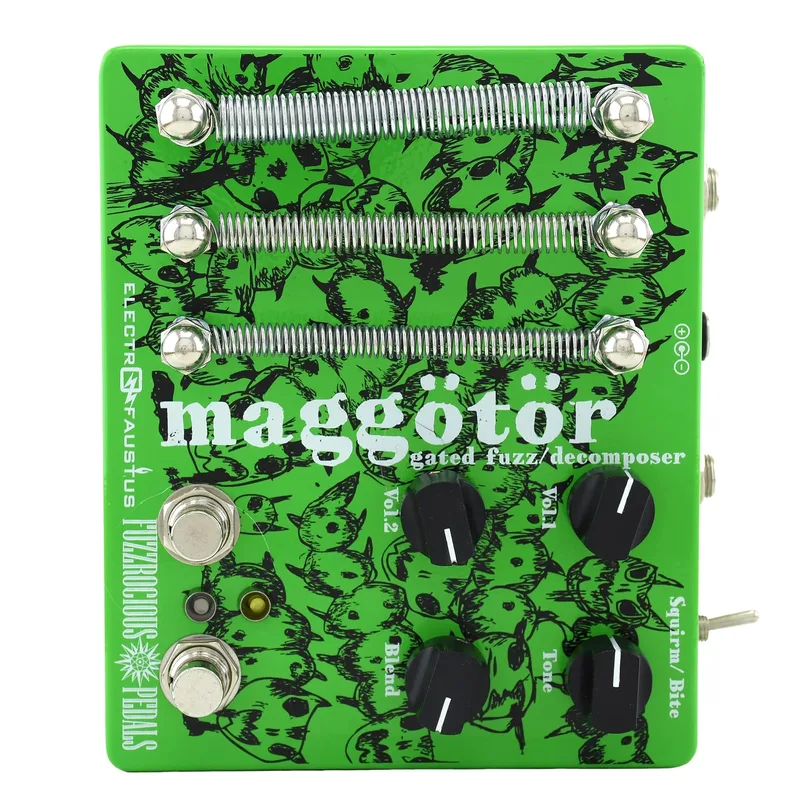

The Fuzzrocious Maggotor Gated Fuzz Decomposer is a gated fuzz pedal, a type of fuzz that cuts the signal off sharply between notes for a choppy, destroyed sound. Josh Scott of JHS Pedals described it plainly: "this pedal 100% destroyed the guitar."1
What it does
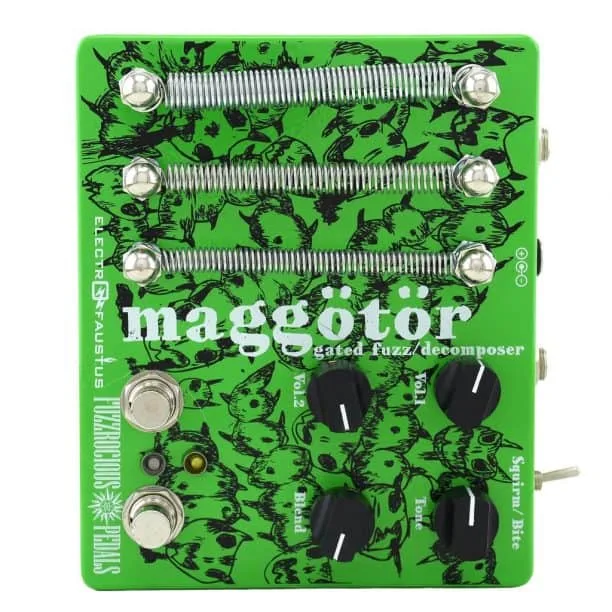
The Maggotor is built around chaos rather than conventional fuzz response. Its enclosure carries three springs on the outside, which Josh Scott described as being there "for freeform carnage," inviting physical interaction with the pedal itself as part of the sound.1
It also has two switches, labeled bite or squirm. In squirm mode, Scott said, "the guitar doesn't really do anything," so the pedal's output carries on regardless of playing. In bite mode, he called the result "epic."1
"this pedal 100% destroyed the guitar ."
The Maggotor Gated Fuzz Decomposer is built for exactly that kind of reaction: it carries three springs on the outside of the enclosure for freeform carnage, and two switches labeled bite or squirm. In squirm mode the guitar doesn't really do anything, while bite mode is described as epic1.
For players comparing gated fuzzes within the Fuzzrocious range, the Maggotor sits alongside other extreme designs like the Fuzzrocious Maggotor and the Fuzzrocious Afterlife Reverb v2, though its external springs and two-mode switching set it apart as a deliberately unpredictable take on the gated fuzz idea1.
Videos
Fuzzrocious Pedals
Questions
What does the Maggotor's bite or squirm switch do?
The pedal has two switches labeled bite or squirm. In squirm mode, the guitar does not really do anything, meaning the pedal's output stays chaotic regardless of playing. In bite mode, Josh Scott of JHS Pedals described the result as epic. The pedal is aimed at players who want heavily gated, destroyed fuzz textures rather than conventional touch-sensitive fuzz response.
Why are there springs on the outside of the enclosure?
The Maggotor has three springs mounted on the outside of its enclosure. Josh Scott of JHS Pedals described them as being there for freeform carnage, meaning players can physically interact with the springs to alter the sound. It is an unusual, hands-on design feature that treats the pedal's housing as part of the circuit's behavior.
Sources (1)
- HOW TO DESTROY YOUR GUITAR, JHS Pedals