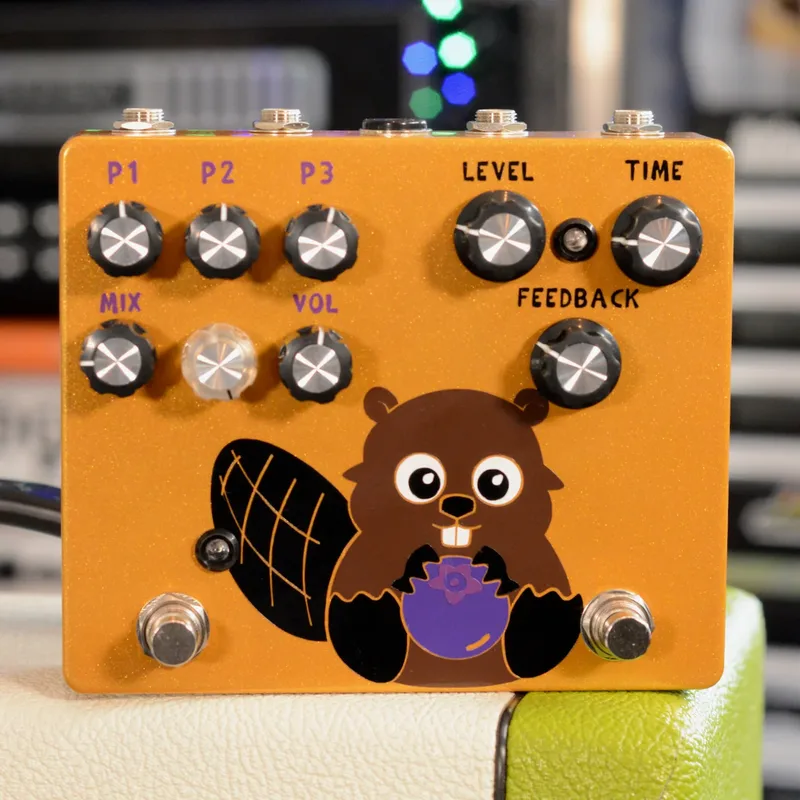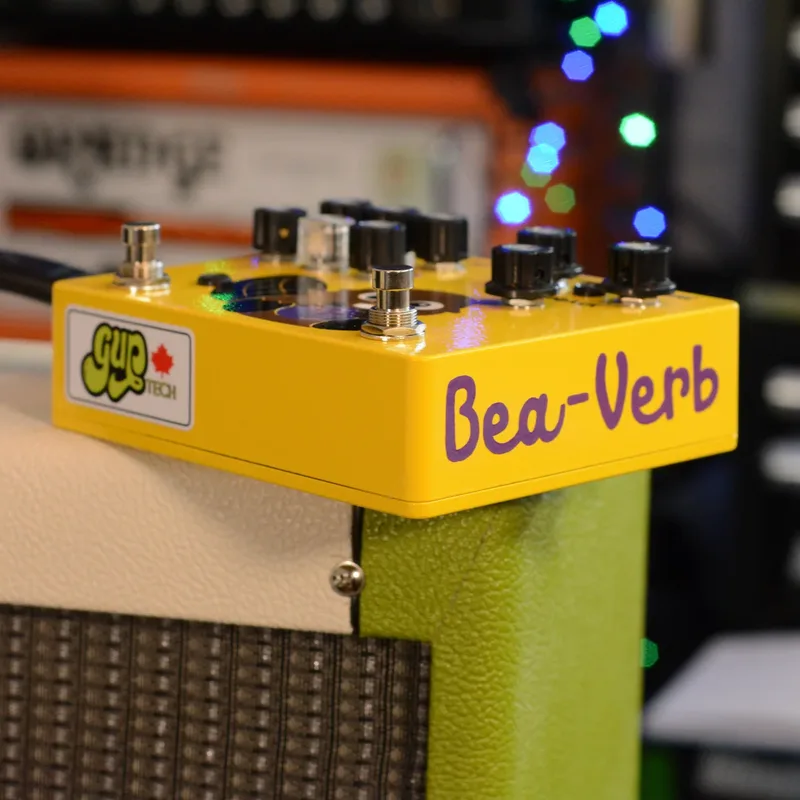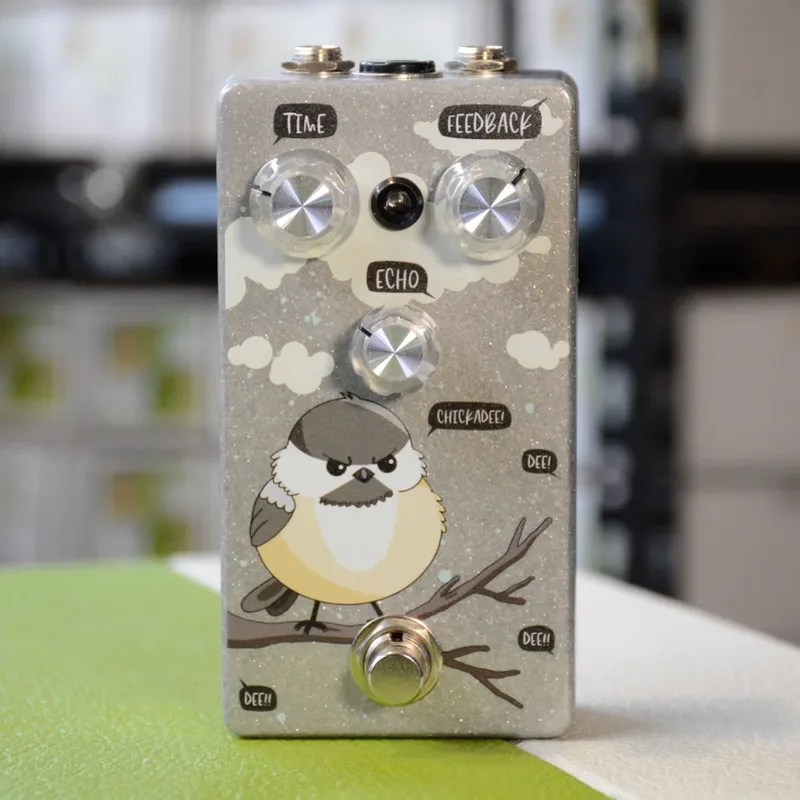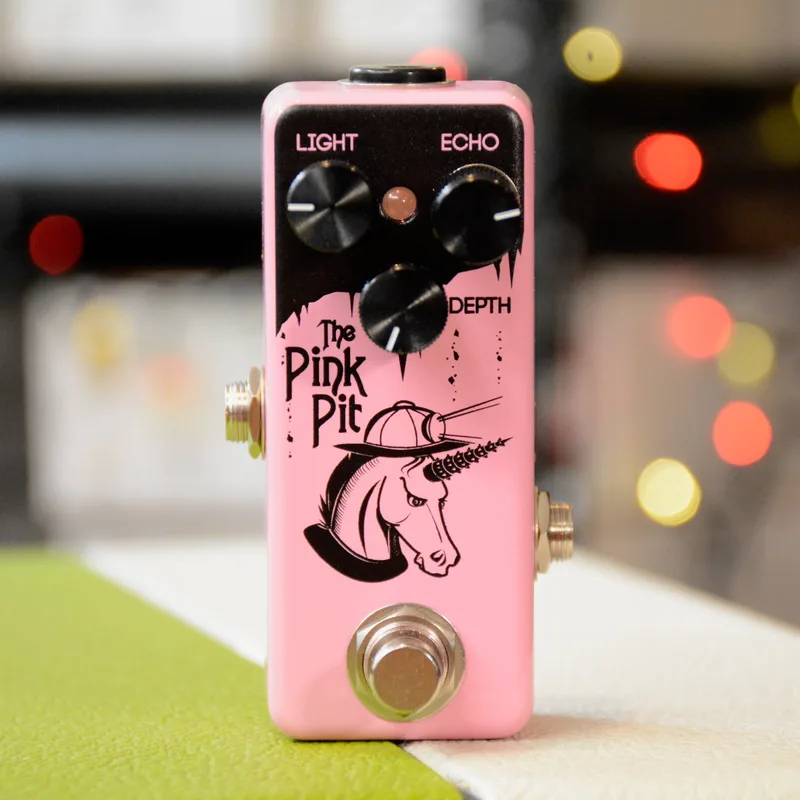


The GUP Tech KSTR is a compact digital delay pedal, and by the maker's own description one of the easiest delays to use: three knobs cover delay time, repeats and mix level, with a delay range of 25ms to 450ms1. It sits in the delay category alongside GUP Tech's other hand-built pedals, such as the GUP Tech Bea-Verb Douche Edition.
Controls
The KSTR keeps things to three knobs, in the pattern most delay players already know:
| Control | What it does |
|---|---|
| Time | Adjusts the delay time between 25ms and 450ms1 |
| Feedback | Sets the number of repeats1 |
| Level | Controls the amount of delay mixed with the original signal1 |
Power
The pedal runs on 9V DC with center negative polarity only, and draws 24mA1. That polarity matches the standard center-negative supplies most pedalboards use, but the 24mA draw is worth checking against your supply's output ratings before adding it to a daisy chain.
Versions and name
GUP Tech offers the KSTR in two finishes, which the maker describes as the day (blue) or night (sparkle black) edition1.
The name is a nod to the maker's Canadian home: as GUP Tech puts it, "A \"Castor\" is the French for Beaver, that's where the name of the KSTR came."1
Videos
GUPtech
GUPtech
Questions
What is the delay time range of the GUP Tech KSTR?
The Time knob adjusts the delay time between 25ms and 450ms, according to GUP Tech. That covers short slapback-style settings at the low end and longer, more spacious repeats toward the top of the range, with the Level knob setting how much of the delayed signal is mixed with your original tone.
What polarity does the KSTR use?
The KSTR runs on 9V DC with center negative polarity only, and it draws 24mA. That is the standard polarity used by most pedal power supplies, but the 24mA draw means it should be powered from a supply output that can handle that current rather than a low-output daisy-chain connection.
Where is the GUP Tech KSTR made?
GUP Tech builds the KSTR in Saguenay, Québec, Canada. The maker states that all of its pedals are made by the company there.
Why is it called the KSTR?
The name comes from the French word for beaver. According to GUP Tech, a castor is the French for beaver, and that is where the name of the KSTR came from.
Sources (1)
- KSTR - Digital Delay, GUP Tech (guptech.ca)