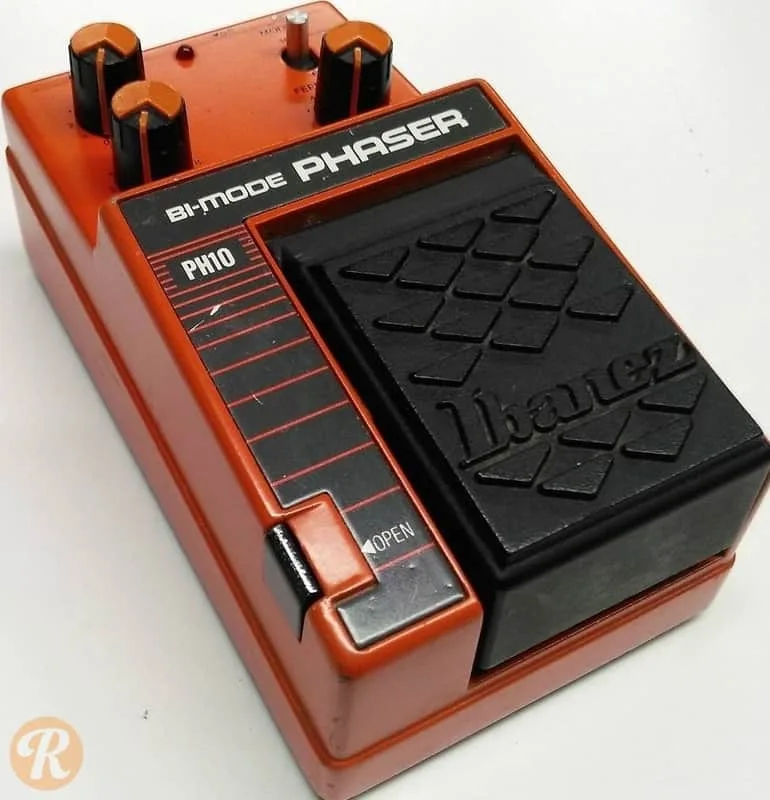

The Ibanez PH10 Bi-Mode Phaser is a phase shifter pedal from Ibanez's 1980s line, produced from 1986 to 1993 and made in Japan. Its defining feature is the "bi-mode" part: a mode selector that switches between a six stage phase shift and a ten stage phase shift, giving two distinct depths of phasing in one box1. ToneHome, the vintage pedal reference, calls it "the phase shifter of the '80s"1.
The controls: Speed, Width, Feedback and Stage
The PH10 gives you four ways to shape the effect:
- Speed sets the rate of the phaser sweep1.
- Width shapes the phaser effect, working alongside the other knobs1.
- Feedback controls how much of the phased signal is fed back into the circuit1.
- Stage is the switch that selects between the six and ten stage modes1.
Ibanez's own wording, preserved on the ToneHome page, is that "the PH10 also features speed, width and feedback controls allowing you to get just the sound that you want"1. The manual's suggested starting point gives a sense of how the controls interact: Feedback at "0", Stage at "6", Speed at "3" and Width at "4"1.
Six stage or ten stage
The mode selector is what separates the PH10 from a single-mode phaser. It "allows you to go from a six stage phase shift to a ten stage phase shift"1. In a phaser, each stage of phase shift adds a notch to the swept filter, so the ten stage setting produces more notches moving through your signal than the six stage setting. Players who want a subtle sweep can stay on six; those who want a deeper, more pronounced effect can switch to ten without touching anything else.
Phaser versus flanger
If you are deciding whether a phaser is the right modulation effect for your board, it helps to know how it differs from a flanger. On the PH10's page, ToneHome puts it plainly: "The cancellations of a phaser are less complex than flange cancellations, causing a smoother swept effect"1, with a different spacing between the "teeth" of the "comb". In practice that means the PH10's sweep is smoother and less metallic than what a flanger produces. For more on the type, see Phaser Pedals.
Availability and related Ibanez phasers
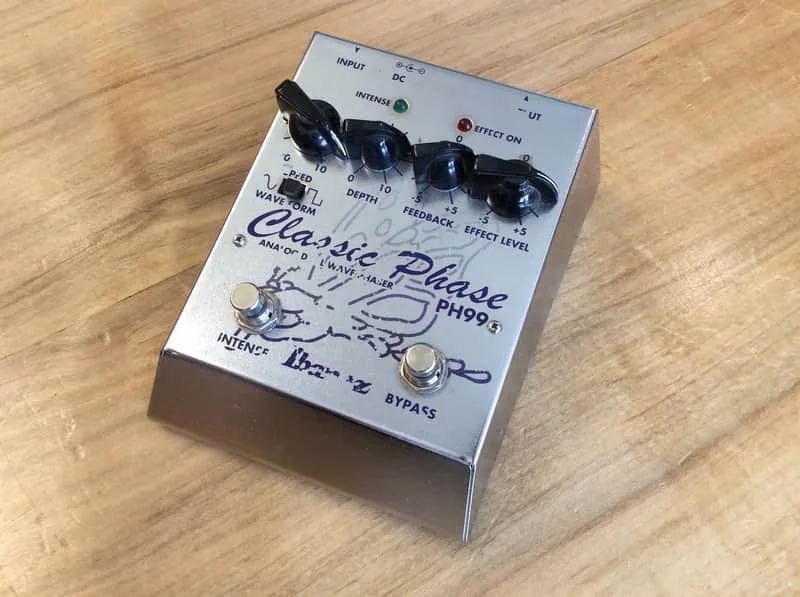
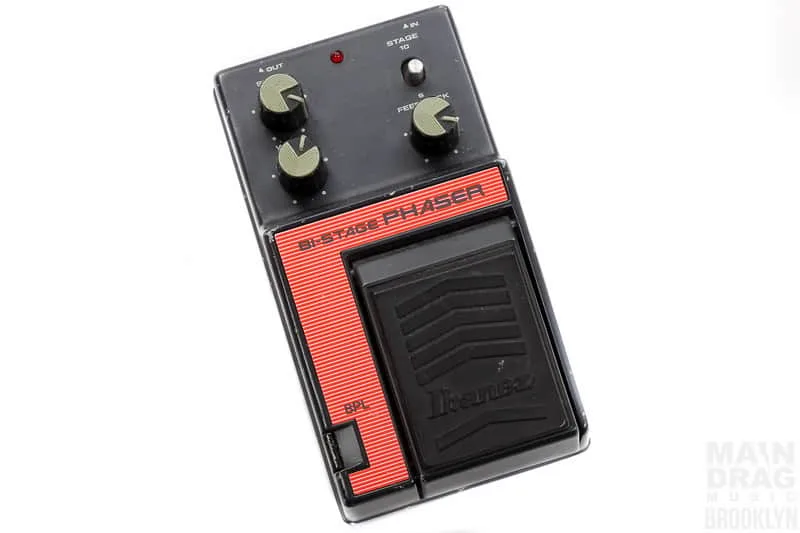
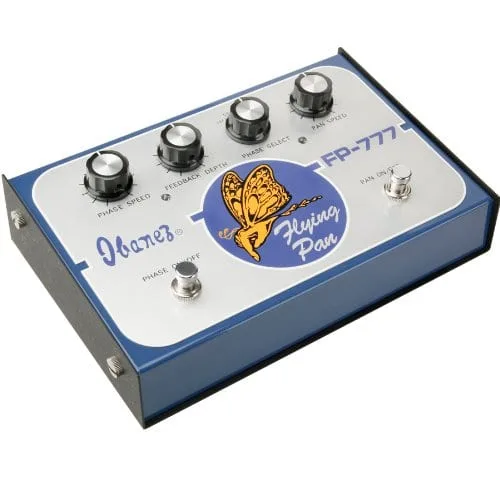
The PH10 has not been reissued, so any unit you find is from the original 1986 to 1993 run1. ToneHome reports availability as good and collectibility as average, which is useful context if you are hunting one down1. Ibanez's phaser history includes other models covered elsewhere on this site, such as the Ibanez PH99 Classic Phase, the Ibanez BPL Bi-Stage Phaser and the Ibanez Flying Pan.
Manual
The owner's manual for the PH10 is available as a PDF from ToneHome, and it is the source of the suggested control settings quoted above1.
Videos
Amduscias
Questions
What is the difference between the six and ten stage settings on the PH10?
The PH10 has a mode selector that switches between a six stage phase shift and a ten stage phase shift. More stages mean more notch points in the swept filter, so the ten stage setting gives a deeper, more pronounced phasing effect, while the six stage setting is the gentler of the two. The Stage switch sits alongside the Speed, Width and Feedback knobs, so you can dial in the sweep either way.
Where was the Ibanez PH10 made?
The Ibanez PH10 was made in Japan. An example unit shown on the reference site ToneHome carries a 1989 date, which falls within the pedal's production period.
Has Ibanez reissued the PH10?
No. ToneHome lists the PH10 as not re-issued, so the pedal exists only in its original 1986 to 1993 production run. The site reports its availability on the used market as good and its collectibility as average.
How does a phaser sound different from a flanger?
A phaser and a flanger both sweep comb-filter notches through your signal, but the cancellations of a phaser are less complex than flange cancellations, which causes a smoother swept effect, with a different spacing between the teeth of the comb. Flangers also typically add a delayed, sometimes modulated and feedback-laden character that phasers do not.
Is there a manual for the Ibanez PH10?
Yes. The owner's manual for the Ibanez PH10 Bi-Mode Phaser is available as a PDF download from ToneHome, the vintage pedal reference site.
Sources (1)
- TONEHOME, TONEHOME (tonehome.de), 1989