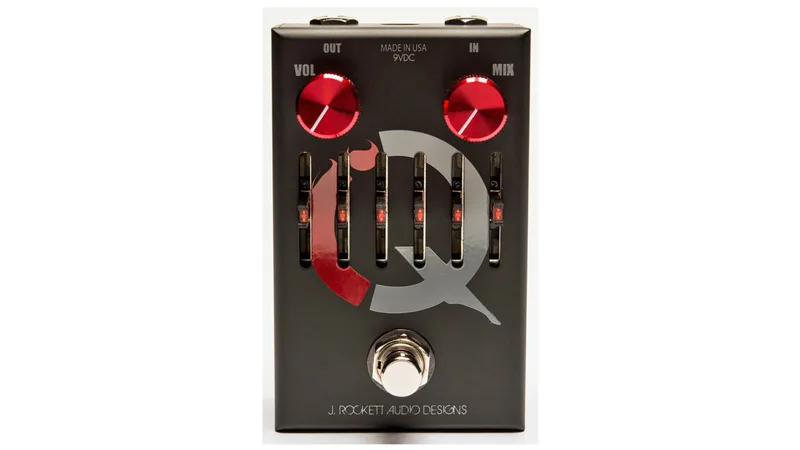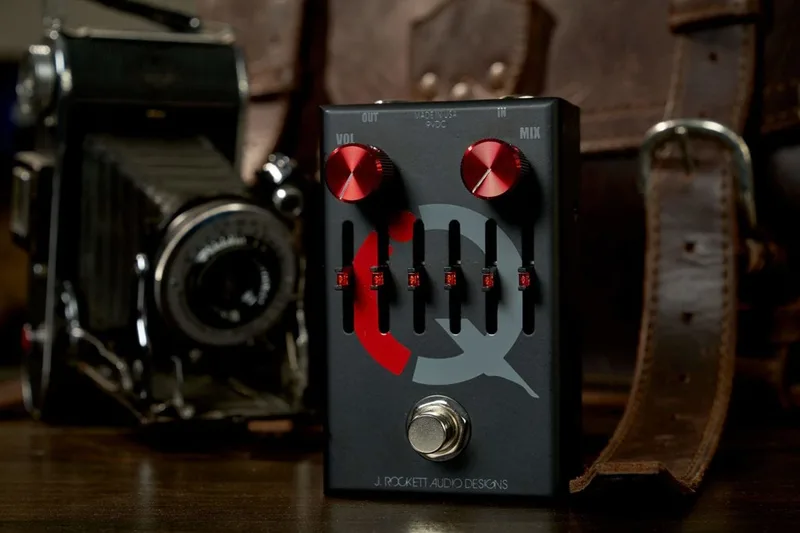


The J. Rockett I.Q. Compressor is a compressor pedal from J. Rockett Audio Designs, announced in 2017 as the second new product of that year and part of the company's Q Series of pedals123. What sets it apart from most pedals in its lane is a six-band graphic EQ that sits before the compressor in the circuit, so the EQ does not just shape your tone, it decides which frequencies get compressed hardest41.
The rest of the pedal is deliberately simple. Like the classic Ross and DynaComp circuits, it uses a two-knob scheme: Volume for overall output and Mix for the wet/dry blend4. There are no attack or release controls on the outside, though an internal trim pot sets the compressor's attack42. Premier Guitar's reviewer summed up the concept as a pedal that "has the ability to be super subtle or powerfully transformative"4.
How the EQ and compressor work together
The core idea is the EQ's position in the signal path. Because the six sliders feed the compressor rather than following it, each slider's gain setting effectively sets a per-band threshold: boost a band and that frequency is driven harder into compression, cut it and it is compressed less15. As Guitar Pedal X's Stefan Karlsson put it, "There's no Attack or Release to worry about - these are all individual Thresholds you are setting per Frequency Band"5.
The six bands and their ranges:
| Band | Frequency | Cut/Boost |
|---|---|---|
| 1 | 100 Hz | up to 18 dB12 |
| 2 | 200 Hz | up to 18 dB12 |
| 3 | 400 Hz | up to 18 dB12 |
| 4 | 800 Hz | up to 18 dB12 |
| 5 | 1.5 kHz | up to 18 dB12 |
| 6 | 3.2 kHz | up to 18 dB12 |
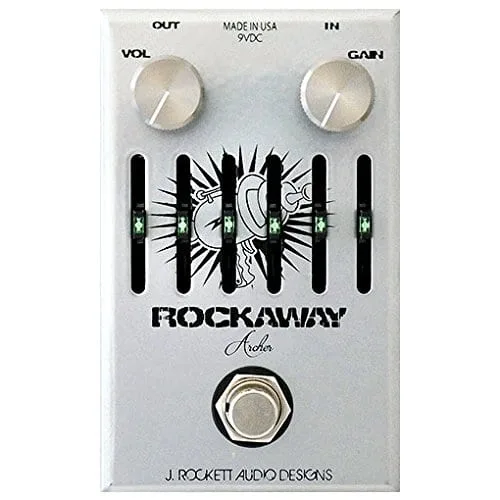
Each slider is a sliding boost/cut control with a small red light at the top that illuminates when the effect is engaged, a detail Gearnews' writer singled out as a favorite touch42. The circuit lineage is shared with the company's Rockaway Archer overdrive, which also packs a six-band graphic EQ targeting the same frequency clusters53.
Controls
The control layout is minimal by compressor standards:
- Volume: increases or decreases the pedal's overall output2. Premier Guitar noted you have to turn it up to about 2 o'clock to reach unity gain4.
- Mix: blends the compressed signal with your dry guitar tone, so transients and pick attack stay intact2. In the wetter half of its throw, the compression becomes much more audible and tactile, evening out pick attack4.
- EQ sliders: six bands, 18 dB of boost or cut each, all pre-compression412.
- Internal attack pot: a mini trim pot inside the enclosure that sets the compressor's attack2.
There are no external attack or release controls, and the compression ratio is fixed to some extent along with them4. Guitar Pedal X noted the layout matches the rest of the Q Series: Volume on the left, and where the overdrives in the range have a Gain knob on the right, the compressor has Mix5.
With the Mix knob dialed right back, the pedal functions as just a six-band EQ, with the compression effectively out of the picture5. Players looking for a pure EQ pedal and a compressor in one box get both here.
Power and connections
The I.Q. runs on 9V DC with a standard center-negative tip and positive sleeve, the same convention as most modern pedals1. Input and output jacks are top-mounted at the head of the pedal, which saves width on a pedalboard; Premier Guitar noted the tight quarters mean these jacks are board mounted rather than chassis mounted41. The enclosure is stout and heavy, crafted from thick-gauge steel4, and Guitar Pedal X described the Q Series enclosures as tank-like steel, the width of regular compact pedals but nearly an inch less tall5.
What reviewers said
Premier Guitar's 2021 review found the pedal relatively quiet and relatively transparent with the EQ flat, crediting "its 6-band EQ, wet/dry mix control, relative transparency at flat levels, and relative quietness"4. The reviewer also noted the two-knob scheme keeps operation simple despite the six sliders4.
"All-round this is a really smart and pretty unique take on the Compressor genre which I would no doubt properly deploy..."
Karlsson judged it particularly appealing for funk players, and grouped it with the Melody and Rockaway overdrives as a compelling trio sharing the same EQ architecture5. Gearnews' writer highlighted the Mix control as the standout feature, since blending compressed and dry signal keeps transients and attack intact2. MusicRadar's Michael Astley-Brown framed it as the latest in the Q Series, a compressor that "just happens to feature an EQ section" rather than the other way around32.
Where it sits in the range
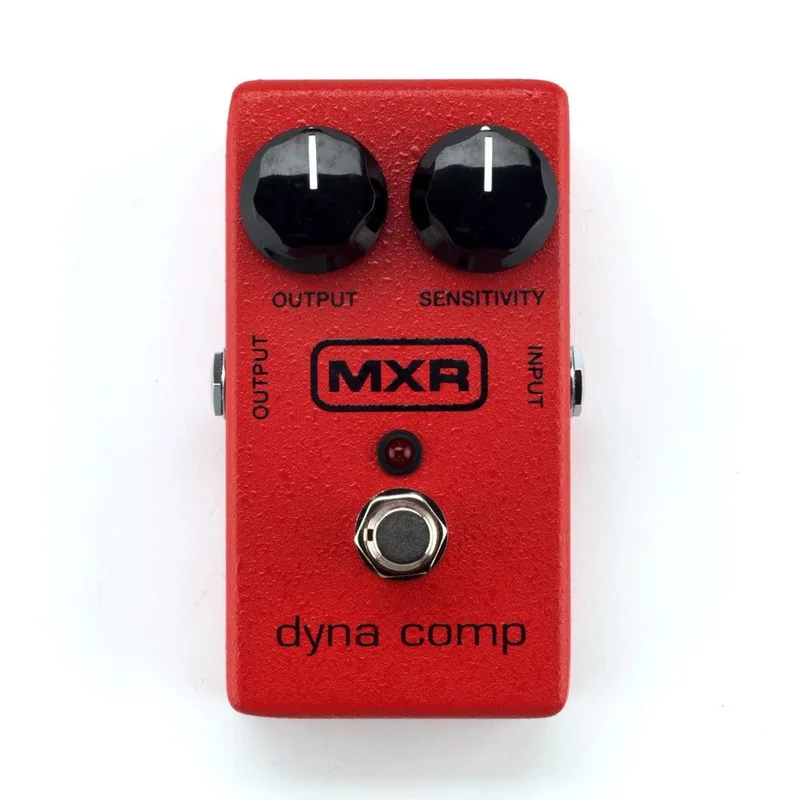
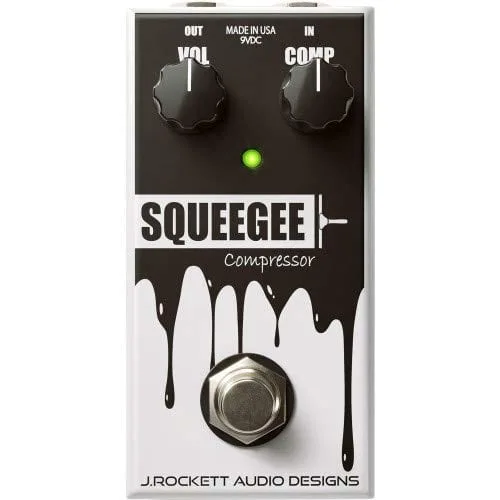
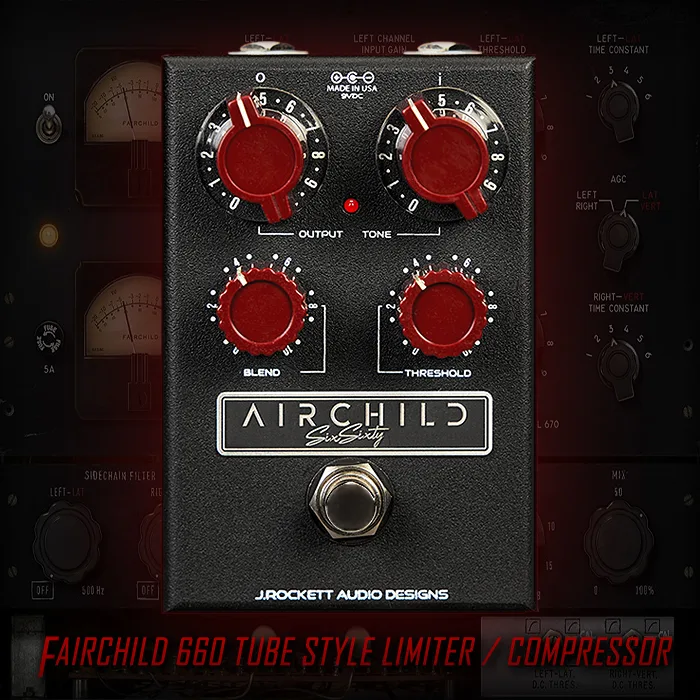
The I.Q. Compressor is one of several compressors in J. Rockett's lineup, alongside the Squeegee and the Airchild 660. Its distinguishing feature against those and against two-knob classics like the Ross and DynaComp is the pre-compression EQ: rather than compressing everything equally and shaping tone afterward, it lets you decide frequency by frequency what gets squeezed415.
Videos
Premier Guitar
Premier Guitar
J. Rockett Audio Designs
Questions
Is the J. Rockett I.Q. Compressor true bypass?
Yes. Gearnews described it as a true-bypass boutique compressor when it launched in 2017. With the effect off, your signal passes through without the circuit in the path, which suits players who leave pedals on a board but disengaged for long stretches.
Does the I.Q. Compressor have an attack control?
Not on the outside. There are no attack or release knobs on the pedal, and the compression ratio is fixed. Inside, however, there is a mini trim pot that lets you set the compressor's attack, so the behavior can be adjusted once and left alone.
Can the J. Rockett I.Q. be used as just an EQ?
Yes. Guitar Pedal X found that if you dial the Mix knob right back, the pedal functions as just a six-band EQ, with no compression acting on the signal. That makes it two pedals in one enclosure for players who want tone shaping on demand.
What frequencies are on the I.Q. Compressor EQ?
The six sliders cover 100 Hz, 200 Hz, 400 Hz, 800 Hz, 1.5 kHz, and 3.2 kHz, and each offers 18 dB of boost or cut. Because the EQ sits before the compressor, boosting a band also pushes that frequency harder into the compression.
How much does the J. Rockett I.Q. Compressor cost?
It carried a $229 street price at launch in 2017, and Premier Guitar still listed it at $229 street in its 2021 review. Guitar Pedal X quoted £229 in the UK as of July 2026, so the US price has held steady across the pedal's life.
Sources (5)
- J. Rockett Launches I.Q. Compressor: A Deep Dive, Premier Guitar, 2017-05-15
- J Rockett Pedals' I.Q. Compressor pedal: Cut, boost and compress, gearnews.com, 2017-05-15
- Raise your IQ with J Rockett's new EQ-equipped compressor pedal, MusicRadar, 2017-05-15
- J. Rockett I.Q. Compressor Review, Premier Guitar, 2017-08-11
- Guitar Pedal X, Guitar Pedal X, 2022-04-12