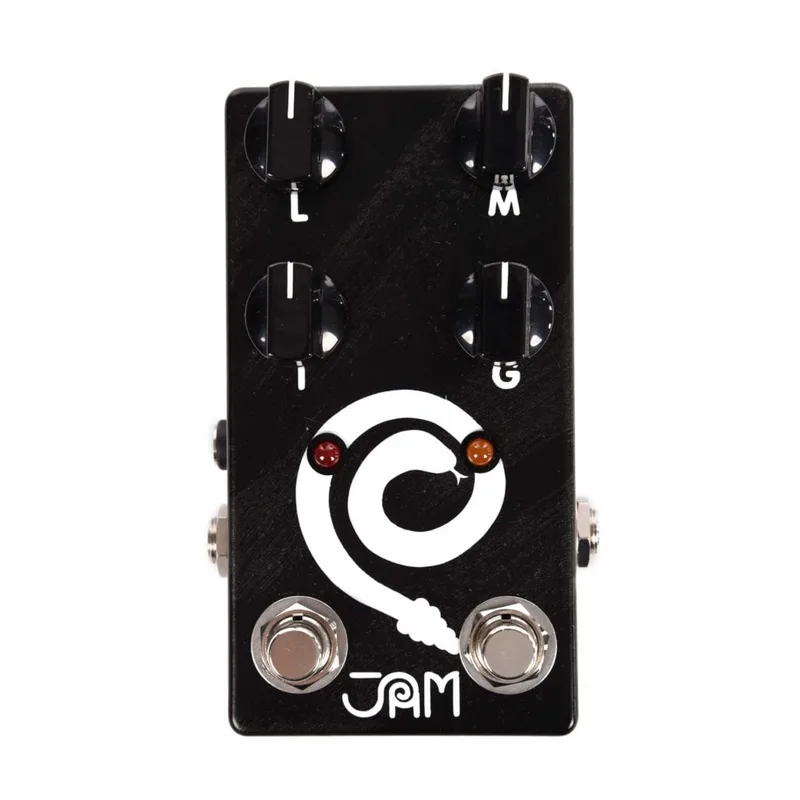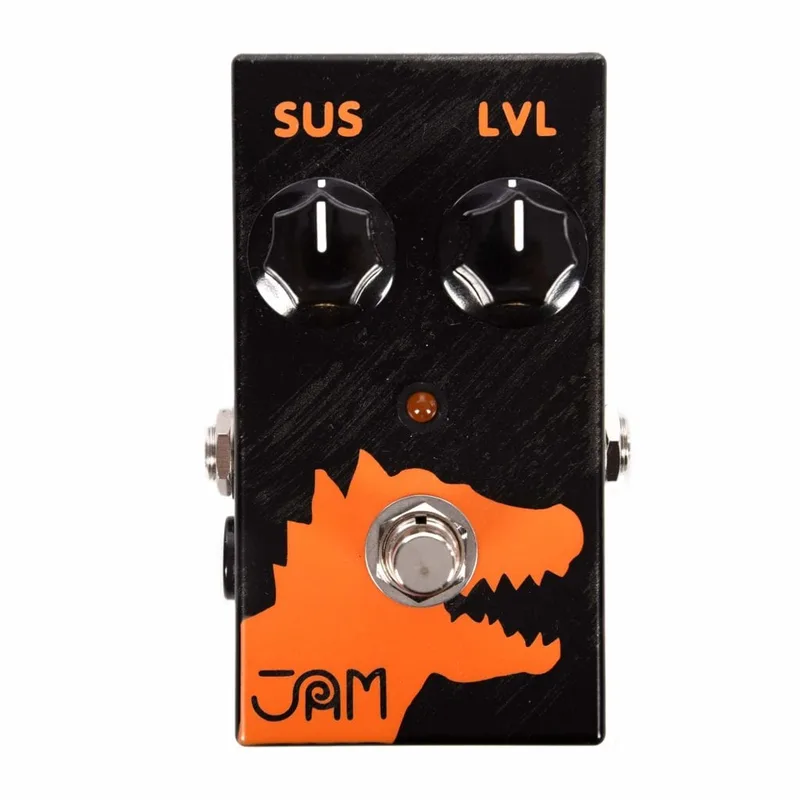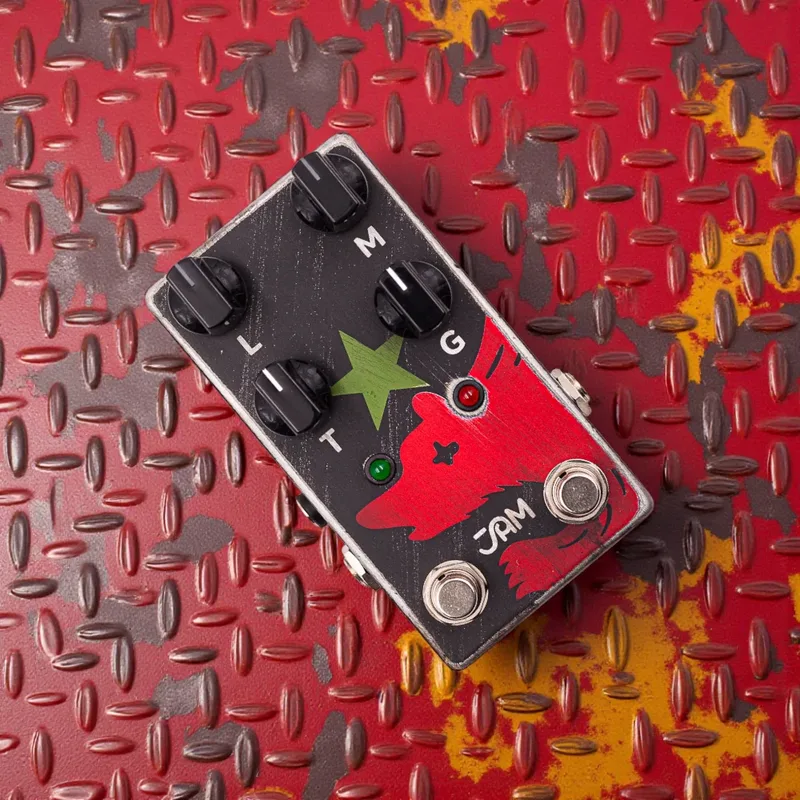


The JAM Pedals "Brown" Red Muck Bass is a bass fuzz and distortion pedal built around Big Muff-style circuit ideas, with a clean blend and two footswitchable gain stages. JAM Pedals says the circuit draws on the '71 Triangle and later Red Army/Civil War Big Muff designs, adding a smoother response, stronger mids, fat lows and an expanded Tone range compared with those originals1. It sits in the fuzz corner of the bass pedal world, alongside the company's Rattler Bass distortion and Dyna-ssoR Bass compressor.
Controls and footswitches
The pedal keeps its face simple: three knobs and two footswitches.
| Control | What it does |
|---|---|
| Gain | Controls fuzz intensity1 |
| Level | Sets output1 |
| Tone | Shapes the response1 |
| Mix | Sets the ratio between dry bass and fuzz-distortion, preserving attack and low-end definition1 |
The two footswitches give it a two-stage gain structure. The right footswitch engages the main effect; the left engages the high-gain stage for instant additional saturation1. That means you can set a moderate fuzz for general playing and jump to a heavier, more saturated sound mid-song without bending down to turn a knob.
The Mix knob is the part bass players will care about most. Because fuzz circuits tend to thin out attack and low end, blending dry bass back in keeps the note's fundamental intact while the fuzzed signal sits on top. JAM Pedals describes it as preserving attack and low-end definition1.
Power and setup
The Red Muck Bass runs on 9V DC, center-negative, and draws 12 mA1. That is a light load, so it fits easily on a shared supply with the rest of a board.
The maker lists the price in pounds sterling, £294.00 GBP1. No US dollar price is given.
The Achenbach and Relic versions
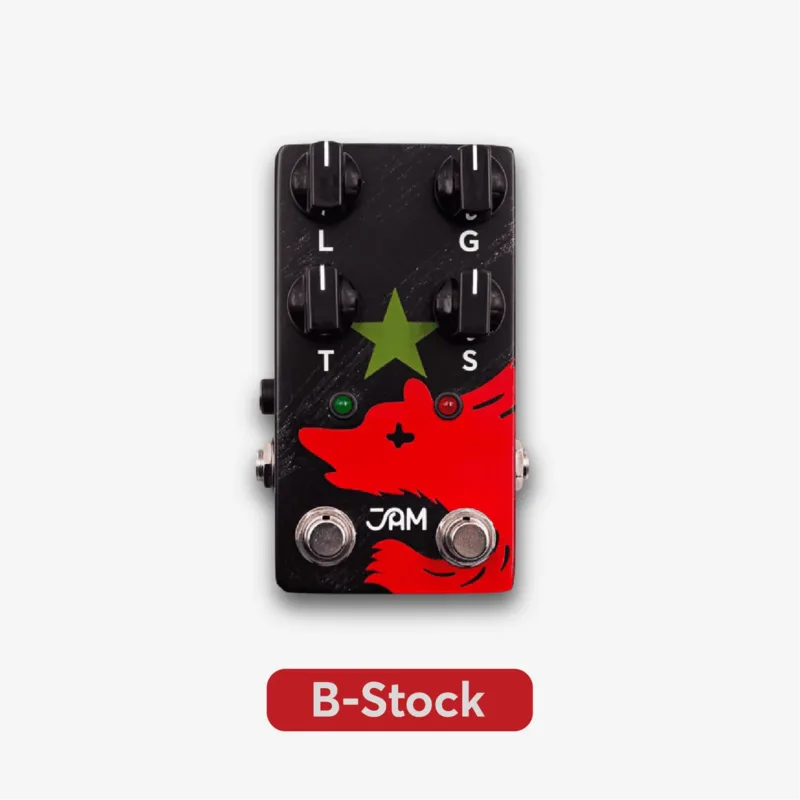
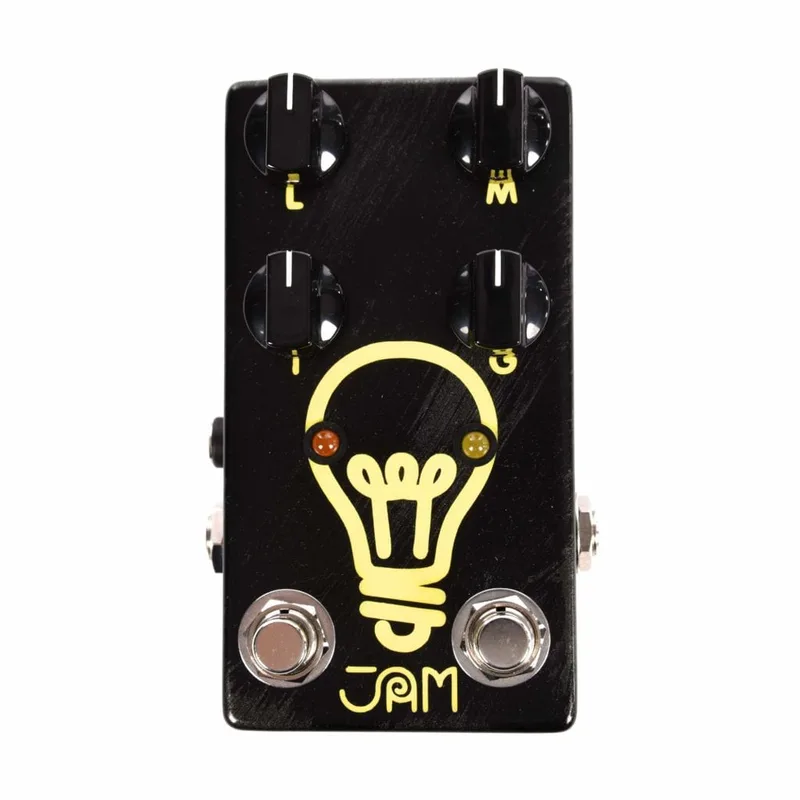
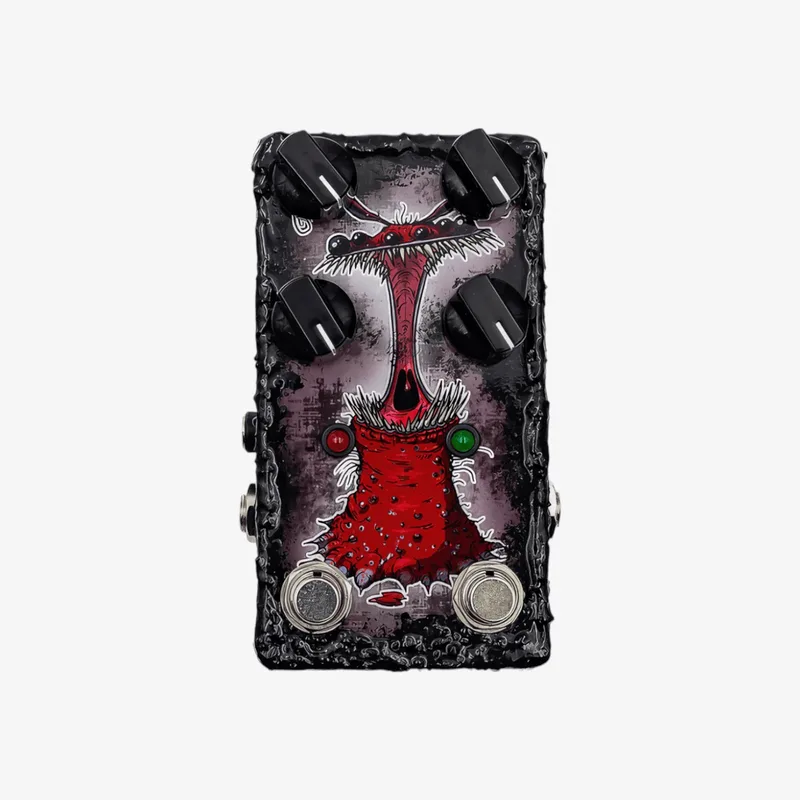
JAM Pedals also offers the pedal as the "Achenbach" Red Muck Bass and the "Relic" Red Muck Bass. The maker describes all three as the same sound with different artwork1, so the choice between them is visual rather than tonal. A B-Stock version, the Red Muck Bass B-Stock (Mislabeled), also appears in the company's range.
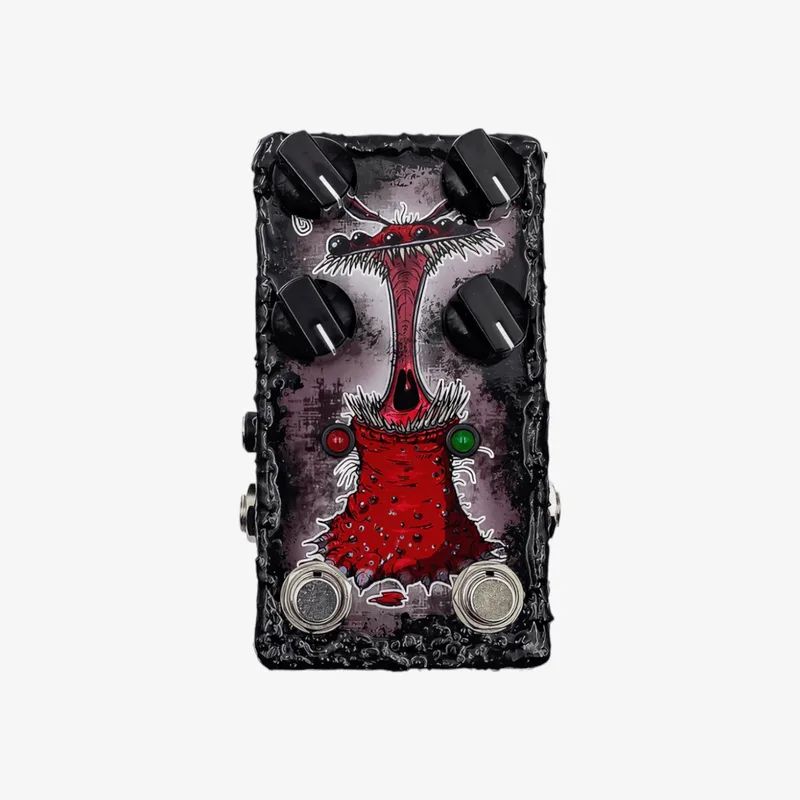
Every custom artwork pedal is a one-of-a-kind hand-painted piece. JAM Pedals states that the pedal you receive will differ in detail from the photos shown, making it uniquely yours1. If a matching look matters to you, the hand-painted finish means no two are identical.
Videos
Riffs, Beards & Gear
BassTheWorld.com
Janek Gwizdala
Questions
Is the JAM Pedals Red Muck Bass true bypass?
Yes. JAM Pedals lists the Red Muck Bass as true bypass, so when the effect is off your bass signal passes through without the fuzz circuit loading it. That matters on a bass board, where preserving low-end definition is often the reason for running a clean blend in the first place.
How much current does the Red Muck Bass draw?
JAM Pedals specifies a current draw of 12 mA at 9V DC, centre-negative. That is a light load by pedal standards, so it sits comfortably on a shared power supply or daisy chain alongside other pedals without needing its own outlet.
What is the difference between the Brown, Achenbach and Relic versions?
According to JAM Pedals, the "Achenbach" Red Muck Bass and "Relic" Red Muck Bass have the same sound as the "Brown" version, with different artwork. The circuit and controls are unchanged between them; the difference is purely visual.
Will my Red Muck Bass look like the one in the photos?
Probably not exactly. JAM Pedals says every custom artwork pedal is a one-of-a-kind hand-painted piece, and the pedal you receive will differ in detail from the photos shown. The company presents this as making each pedal uniquely yours.
What does the left footswitch do on the Red Muck Bass?
The pedal has two gain stages on separate footswitches. The right footswitch engages the main effect, and the left engages the high-gain stage for instant additional saturation. In practice that gives you a rhythm fuzz and a heavier lead sound on tap without touching a knob.
Which Big Muff versions is the Red Muck Bass based on?
JAM Pedals says the circuit draws on the '71 Triangle and later Red Army/Civil War Big Muff designs, adding a smoother response, stronger mids, fat lows and an expanded Tone range compared with those originals.
Sources (1)
- “Brown” Red Muck Bass, JAM Pedals (www.jampedals.com)