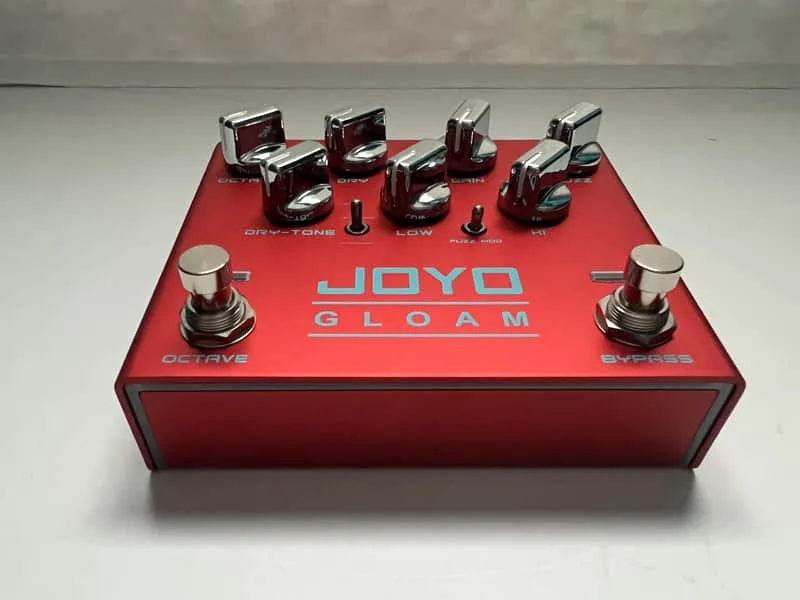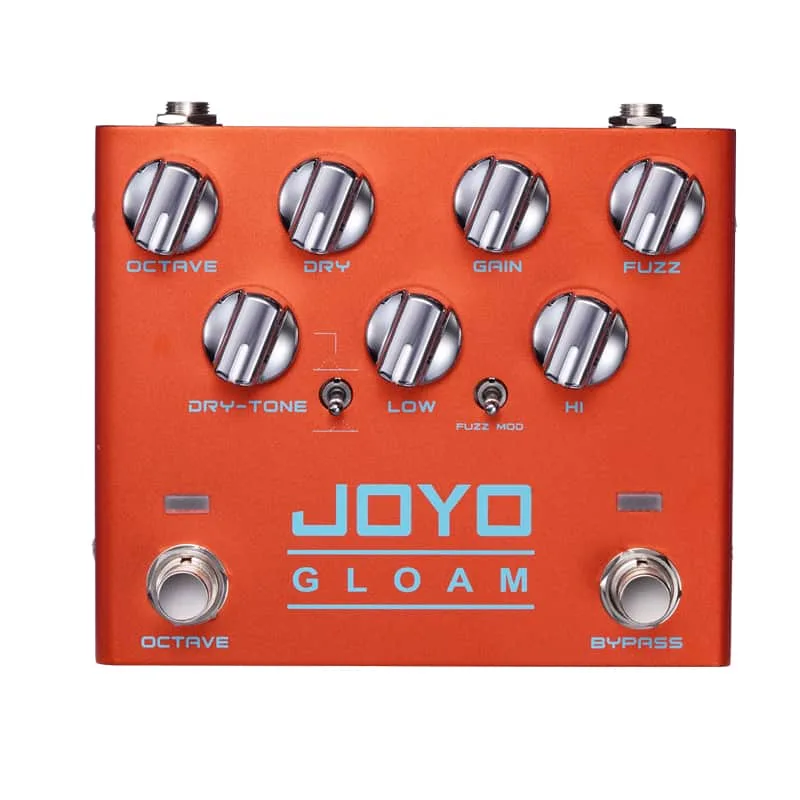


The Joyo Gloam, sold as the JOYO R-29 Gloam, is a low octave and fuzz pedal from Joyo aimed squarely at bass players. It packs two circuits into one box, a sub octave and a fuzz channel that can be controlled individually, and RockBoard's PedalPedia notes that the two can be adjusted independently1. Bass Musician Magazine's reviewer Cláudio Ribeiro describes it as combining modern sub-octave effects with rich fuzz tones, delivering deep, aggressive fuzz and balanced octaver sounds2.
What it does to your sound
The Gloam's two channels work together or separately. With the fuzz and octaver combined, Ribeiro found the circuits create a wide range of sounds, from classic, aggressive fuzz to synth-like tones reminiscent of a Moog synthesizer2. The dry/wet mix knob lets you blend your clean signal against the effected one, which is what keeps a bass line sitting under the fuzz rather than buried by it1.
His verdict on the two fuzz modes was mixed: "While one of the fuzz modes is highly usable and delivers a rich, aggressive tone, the other mode falls short and is less practical2."
Cláudio Ribeiro, Bass Musician Magazine2
The controls
The pedal's panel covers both circuits, with the fuzz side getting the most attention2:
| Control | What it does |
|---|---|
| Gain | Controls the amount of gain in the fuzz circuit |
| Fuzz | Adjusts the intensity of the fuzz effect |
| Bass | Controls the bass frequencies in the fuzz circuit |
| Fuzz Mode Switch | Switches between two different fuzz modes |
| Dry Volume | Controls the volume of the clean signal |
| Dry Tone Frequency Switch | Selects between two different frequency points for the dry tone |
All control descriptions per the Bass Musician Magazine review2.
The octaver cannot be used without the fuzz circuit activated. The only way to solo the octaver is by turning down the fuzz, so plan your settings around the two circuits running together2.
Power and size
The Gloam runs on DC 9V, and RockBoard's listing specifies 9V DC with a center negative plug, the standard for most pedal power supplies12. At 130 x 110 x 50 mm and 403g, it is a compact, mid-weight pedal that fits a crowded board without much fuss2.
Where it sits among the alternatives
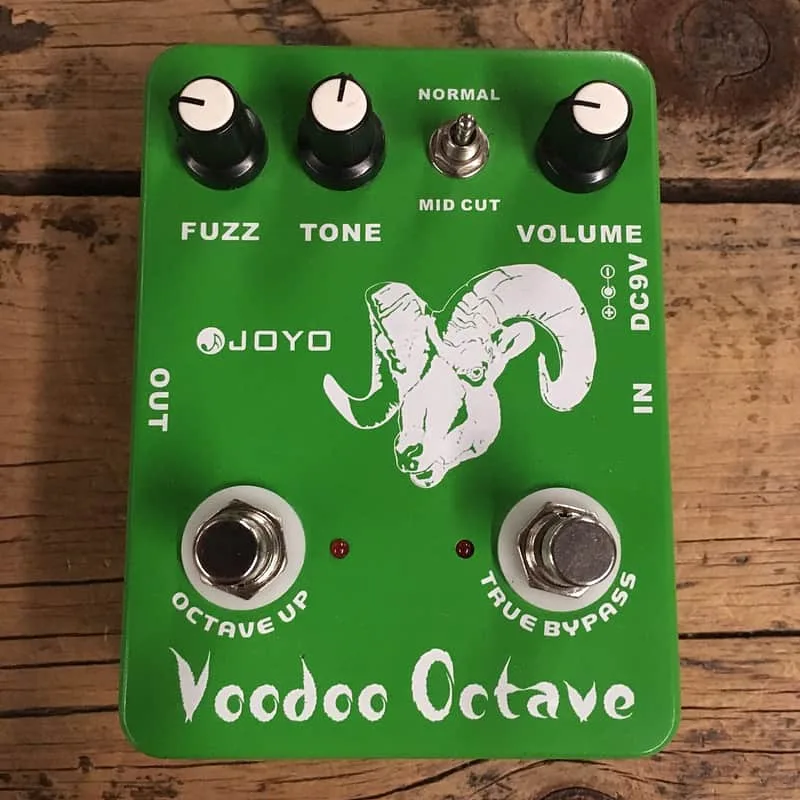
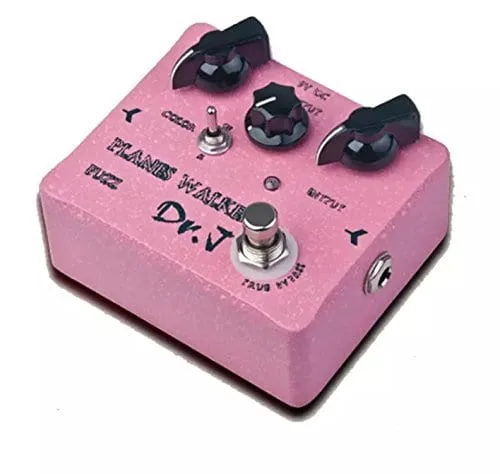
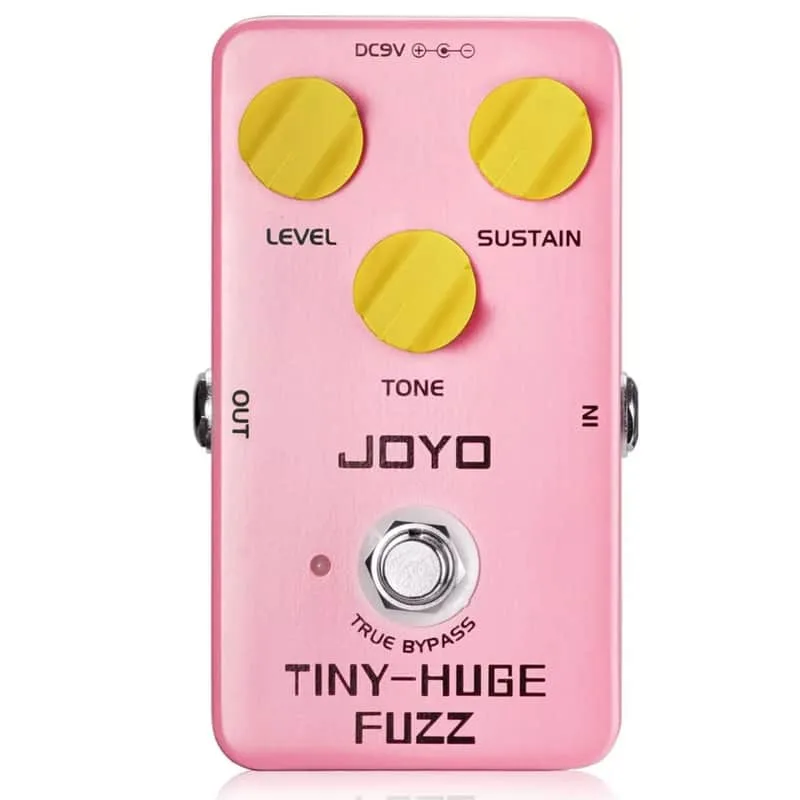
Within Joyo's own range, the Gloam is the company's bass-focused take on the octave-plus-fuzz formula. Players looking at octave effects more broadly can compare it against the JF-12 Voodoo Octave, a dedicated octave pedal, or browse the wider Octave & Pitch Pedals and Fuzz Pedals categories. For bass-specific options, the Bass Pedals page gathers pedals designed with low-tuned instruments in mind.
Videos
JOYO AUDIO
JOYO AUDIO
BassTheWorld.com
Questions
Is the Joyo Gloam made for bass?
Bass Musician Magazine's reviewer Cláudio Ribeiro describes the Gloam as a sub-octave fuzz pedal specifically designed for bass players, combining sub-octave effects with fuzz tones. The pedal carries a Dry Volume control for the clean signal and a Dry Tone Frequency Switch, both of which matter for keeping a bass part defined under the fuzz.
Can the Joyo Gloam octaver be used without the fuzz?
No. According to the Bass Musician Magazine review, the octaver cannot be used without the fuzz circuit activated. The only way to solo the octaver is by turning down the fuzz, so the two circuits are controlled individually but the octaver always runs with the fuzz engaged.
What power does the Joyo Gloam need?
The Gloam runs on 9V DC with a center negative plug, the standard supply for most pedalboards. RockBoard's PedalPedia listing and the Bass Musician Magazine review both give the working voltage as DC 9V.
How big is the Joyo Gloam?
The Bass Musician Magazine review lists the pedal at 130 x 110 x 50 mm and 403g, so it sits comfortably on a pedalboard and is light enough for a gig bag without adding much weight.
Sources (2)
- R-29 Gloam by JOYO, RockBoard PedalPedia, 2026
- Gear Review: Exploring the Joyo Gloam, Bass Musician Magazine, 2024-07-22