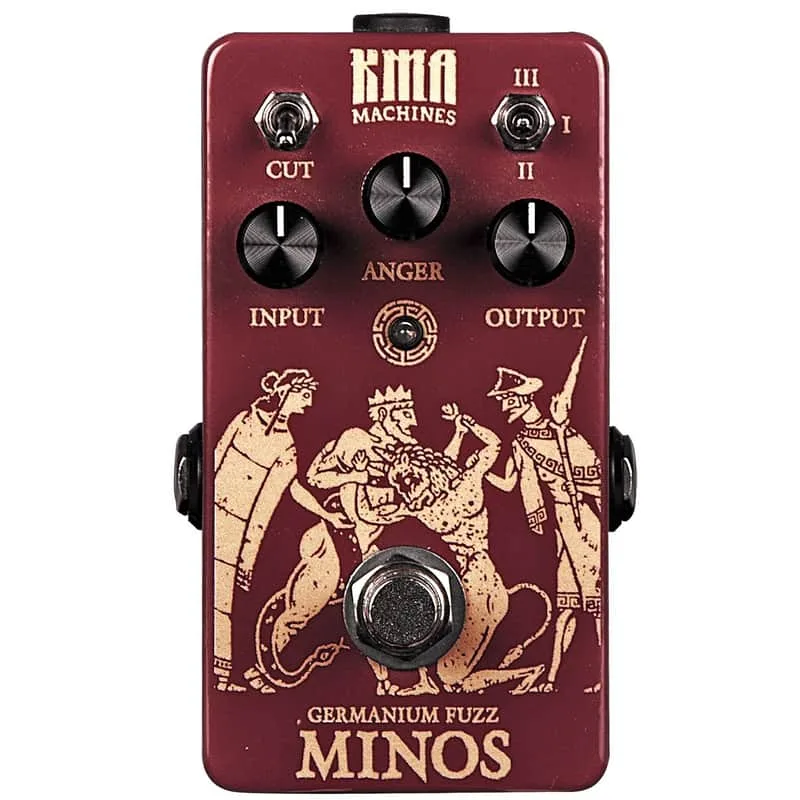


The Minos Germanium Fuzz is a fuzz pedal from KMA Audio Machines built around a three-stage germanium circuit. KMA describes it as their modern approach to the old-fashioned three-stage germanium sound, derived from the legendary Tonebender MKII and the unique, hard-to-find Superfuzz1. Unlike a one-trick vintage clone, the Minos is pitched at a broader range of gain structures: KMA says it sweeps through shades from raunchy low-gain distortion to thick, angry fuzz sounds1.
Controls and how they shape the sound
The front panel carries three user controls, and the circuit adds two more inside the pedal1:
| Control | What it does |
|---|---|
| INPUT | Dials in the amount of pregain and bass input; counter-clockwise gives a gritty and crisp overdriven sound, turned up gives a thick and woolly fuzz sound1 |
| Tone-cut | Modifies the high end, taming the brightness on full gain1 |
| Three-way bass switch | Sets the bass response at the output, choosing between lo-fi jangle, punchy low mid, or deep and boomy fuzz1 |
| Two internal trim-pots | Set the bias of the second and third transistor, changing the overall character of the fuzz1 |
The INPUT control is the main gain dial, and it is what lets the Minos work as a gritty overdrive as well as a full fuzz. The tone-cut addresses a common complaint with germanium fuzz at maximum gain, where the top end can turn harsh. The bias trim-pots are the traditional germanium tweak: because germanium transistors drift with temperature, setting bias shapes the fuzz's character, and KMA has made that adjustment accessible inside the pedal rather than locking it at the factory1.
The bias trim-pots are internal. Changing the Minos's overall fuzz character means opening the pedal and adjusting them with a screwdriver, not turning an external knob.
KMA sums up the intent behind all this flexibility: "Its versatility gives you a tool for different style of fuzz sounds and music1."
What reviewers said
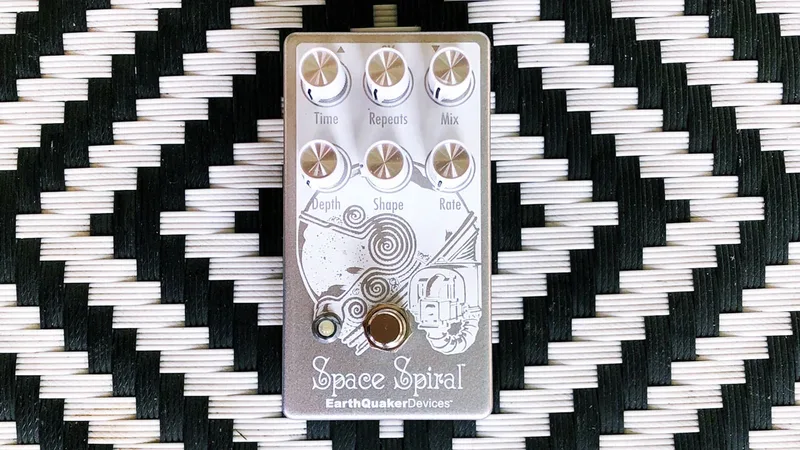
The Minos has drawn attention from reviewers who know the territory: The Pedal Zone, a channel that is fond of fuzz and of Germany's own KMA Audio Machines, took a close look at the pedal1. For its demo, the channel paired the Minos with a Fender Telecaster US into a Fender Deluxe Reverb 65 RI mic'ed with an Aston Origin, with an EarthQuaker Devices Space Spiral Modulated Delay used for extra textures1.
Videos
KMA Machines
The Pedal Zone
Eirik Stordrange
Questions
Is the KMA Minos a germanium or silicon fuzz?
The Minos is a germanium fuzz. KMA Audio Machines describes it as a modern approach to the old three-stage germanium sound, and the circuit is derived from the Tonebender MKII and the Superfuzz, both germanium-era designs. There is no silicon clipping stage in the description of the pedal.
What does the bass switch on the Minos do?
The three-way switch sets the bass response at the output of the pedal. According to KMA's description, it chooses between a lo-fi jangle, a punchy low mid, or a deep and boomy fuzz, so you can match the pedal to a bright or dark amp or a bass-heavy rig.
Can you adjust the bias on the Minos?
Yes, but not from the outside. The Minos has two internal trim-pots that set the bias of the second and third transistor, which changes the overall character of the fuzz. Opening the pedal to set bias is a familiar ritual for germanium fuzz owners, and the Minos builds it in.
What is the tone-cut control for on the Minos?
The tone-cut modifies the high end of the fuzz. KMA added it to tame the brightness that germanium fuzzes can produce at full gain, letting you roll off top end without changing the gain structure of the circuit.
Can the Minos do low-gain overdrive as well as heavy fuzz?
Yes. KMA describes the Minos as having a broader range of gain structures than a typical Tonebender-style pedal. With the INPUT control low, counter-clockwise, it gives a gritty and crisp overdriven sound; turned up it produces a thick and woolly fuzz.
Sources (1)
- KMA Audio Machines Minos Germanium Fuzz, Delicious Audio, 2019-08-16