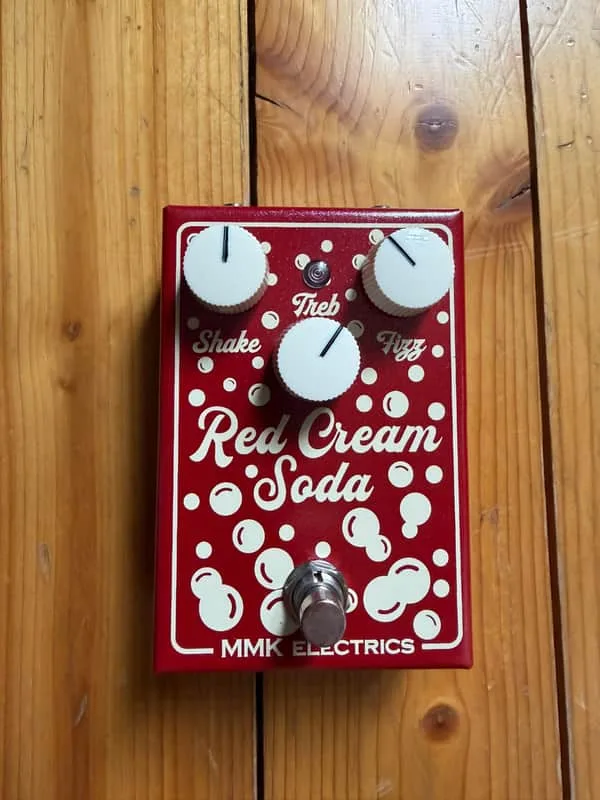


The MMK Electrics Red Cream Soda is a wide-ranging overdrive and distortion pedal from Alaskan maker MMK Electrics, built around a CMOS circuit with BAS33 diodes in an asymmetrical clipping arrangement1. Pedal of the Day described it as producing "a fuller bodied tone, creamy, more volume, huge gain swing and a versatile treble cut"1. It sits in the overlap between overdrive pedals and distortion pedals, covering low, medium and high gain from a single set of three knobs.
Controls
The pedal has three knobs, and each does a distinct job1.
| Control | What it does |
|---|---|
| Shake | Sets the output, with unity volume at 12 o'clock1 |
| Fizz | Delivers low, medium and high gain, overdrive and distortion; huge gain swing from 10 o'clock to max, with the signal taking the dry clean path at lower settings where no gain is heard1 |
| Treb | Controls your highs, a versatile treble blend that helps shape tone around any pickup and amp1 |
The Fizz control is the gain engine. Below about 10 o'clock the signal effectively runs the clean path, and from 10 o'clock to maximum the gain opens up across overdrive and distortion territory1. Pedal of the Day summed up the layout this way: "Sometimes, three knobs is all you need to completely transform your rig, and that is most certainly the case today"1.
The dry signal path
There is no blend knob, but the pedal does not need one: the dry signal path is permanently fixed, so some clean signal is always present in the mix1. For a player, that means the pedal keeps a thread of your untouched tone under the gain at every setting, which helps chords and single notes stay defined without a separate control to manage.
Klon and Tube Screamer comparisons
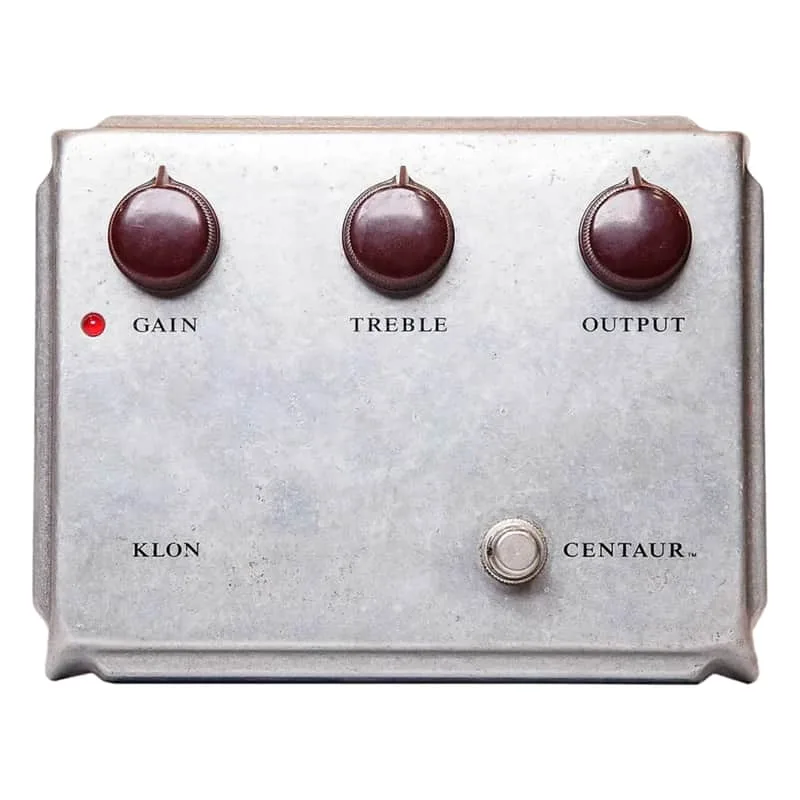
Pedal of the Day framed the Red Cream Soda's lineage with a memorable line: "Imagine if a Centaur and a Tube Screamer had a baby: that would be the best way to describe the Red Cream Soda"1. The two pedals it name-checks are the most compared overdrives in the business, and they differ in real ways.
The Klon Centaur uses hard clipping diodes. On JHS Pedals' video history of the pedal, Josh Scott noted that "it has hard clipping diodes a lot of people thinks is a soft clipper like a tube screamer type thing but it is not"2. He also called the Klon clone the new Tube Screamer, a topology so widely copied by builders roughly 15 years after its release that by 2010 cloning was widespread: "I would say it is the new tube screamer"3.
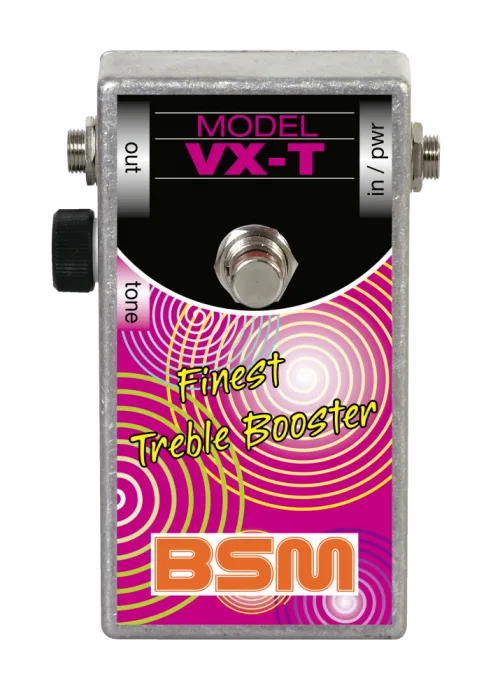
The Tube Screamer, by contrast, uses a symmetrical clipping stage4, and its lineage runs back to treble boosters: those circuits "were based on the old Treble Boosters and therefore had a very similar frequency response," replacing germanium boosters by the end of the seventies5.
Reviewers have long weighed the two against each other. In a Premier Guitar roundup, Joe Gore wrote that for many listeners the Klon "offered a vast sonic upgrade over Screamer-style overdrives, with greater headroom and sparkle and a more practical tone circuit"6. Warren Haynes, interviewed by GuitarPlayer, said of using a Klon as a clean boost: "The Klon did that even better to the extent that you couldn't detect any difference in the tone if you set it that way"7. On the other side, a gearnews.com shootout of 22 Tube Screamer originals and clones found that "the sonic differences are surprisingly small," with the basic character holding across models8. An AMZ Guitar Effects comparison of clean boosters called the Klon "the one to beat so far"9.
Against that backdrop, the Red Cream Soda's pitch is simple: take the two reference points, add a fixed dry path, a treble blend and a gain control that sweeps from clean to distortion, and put it all on three knobs1.
Videos
Buddy Blues
Pedal of the Day
Ambient Endeavors
Questions
Does the MMK Red Cream Soda have a dry signal blend?
There is no separate blend control, but the pedal behaves as though one is built in. According to Pedal of the Day, the dry signal path is permanently fixed, so some clean signal is always present in the mix. That means the pedal keeps a portion of your untouched guitar tone underneath the gain at all settings, which preserves note definition without needing a knob for it.
What does unity volume at 12 o'clock mean on the Shake knob?
Shake sets the pedal's output level, and Pedal of the Day notes that unity volume falls at 12 o'clock on the knob. Unity means the pedal's output is the same level as your clean signal. Below 12 o'clock the pedal is quieter than your bypassed tone, and above it the pedal pushes the volume up, which is useful for kicking into a solo.
What kind of clipping diodes does the Red Cream Soda use?
The pedal's CMOS circuit uses BAS33 diodes in an asymmetrical clipping arrangement, according to Pedal of the Day. Asymmetrical clipping clips the signal unevenly in each direction, which shapes the character of the distortion differently from the symmetrical clipping stage found in a Tube Screamer.
Is the Red Cream Soda like a Klon or a Tube Screamer?
Pedal of the Day put it this way: imagine if a Centaur and a Tube Screamer had a baby, and said that is the best way to describe the Red Cream Soda. The two reference pedals differ in clipping approach and character, and the Red Cream Soda draws on both lineages while adding its own treble blend and wide gain range.
Sources (9)
- MMK Electrics Red Cream Soda Overdrive Distortion, Pedal of the Day, 2023-10-14
- 1970's Op-Amp Distortion (Boss DS-1, ProCo Rat, Ross Distortion, Ibanez SD-9, MXR Micro Amp), JHS Pedals (YouTube), 2019-04-04
- The History And Future Of The JHS Klon Centaur Replica, JHS Pedals (YouTube), 2022-12-05
- Boss SD-1 review, Guitar.com, 2025-04-29
- RG Treble Booster, treblebooster.net, 2025
- Overdrive Overload: 6-Pedal Review Roundup, Premier Guitar, 2015-05-13
- Warren Haynes says this is the greatest distortion pedal, GuitarPlayer (www.guitarplayer.com), 2024-12-12
- The Big Tubescreamer Shootout: 22 Originals and Clones Head-to-Head, www.gearnews.com, 2026-07-08
- Reviews of boost pedals, muzique.com (AMZ Guitar Effects)