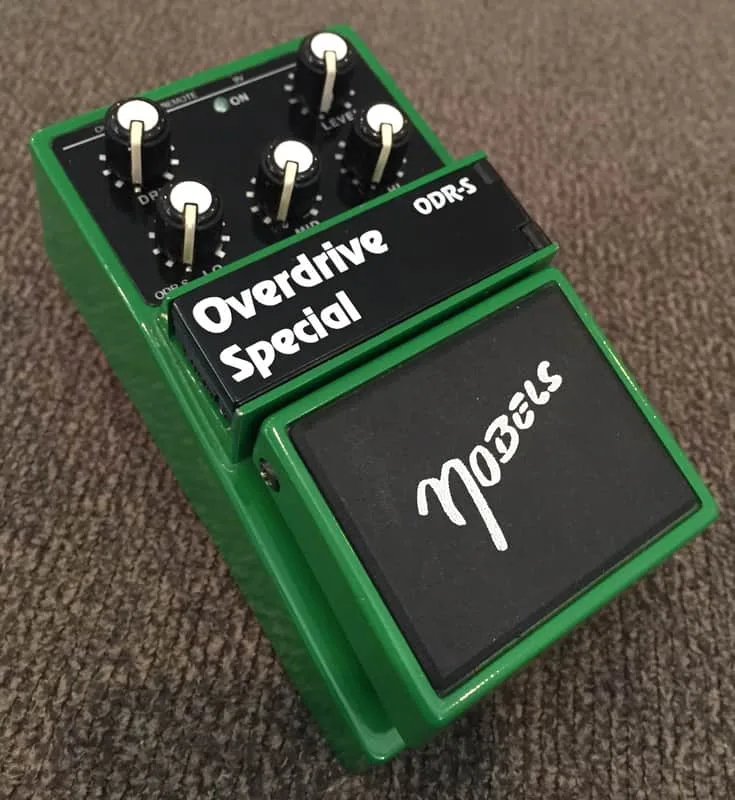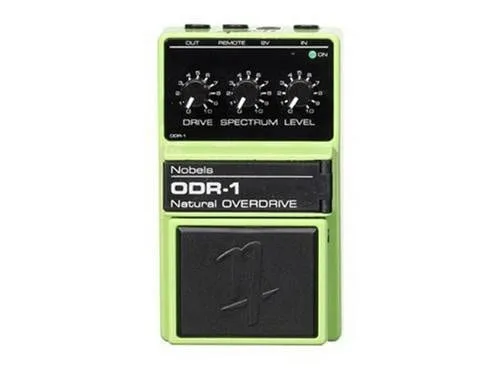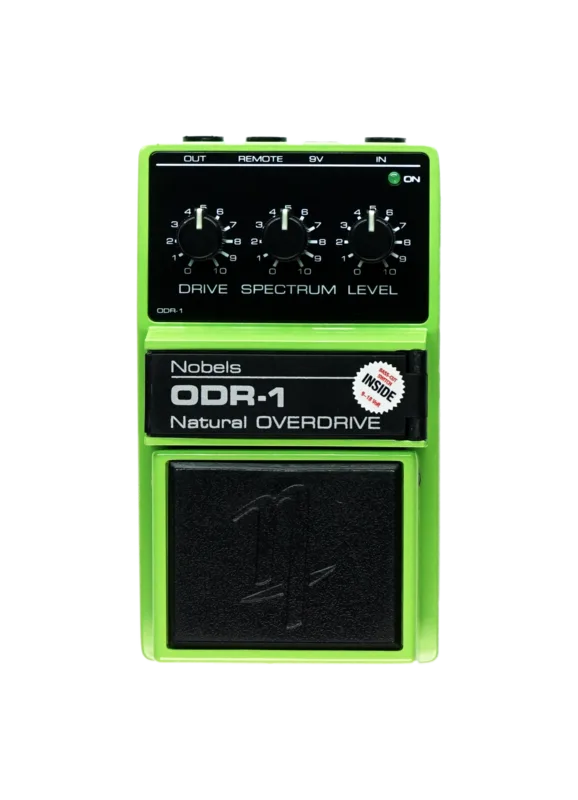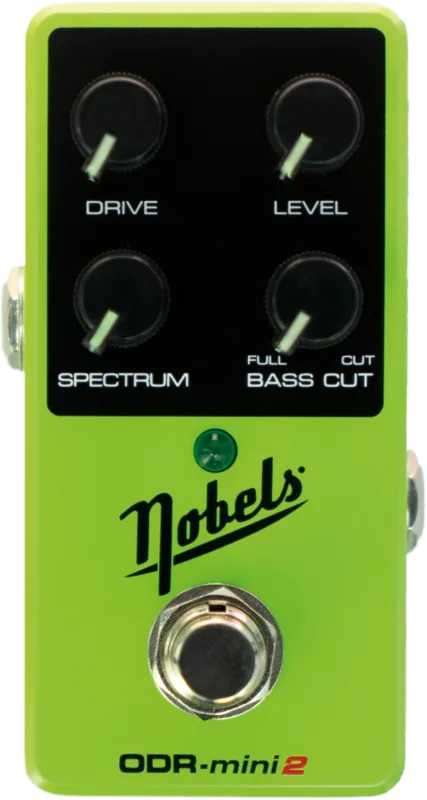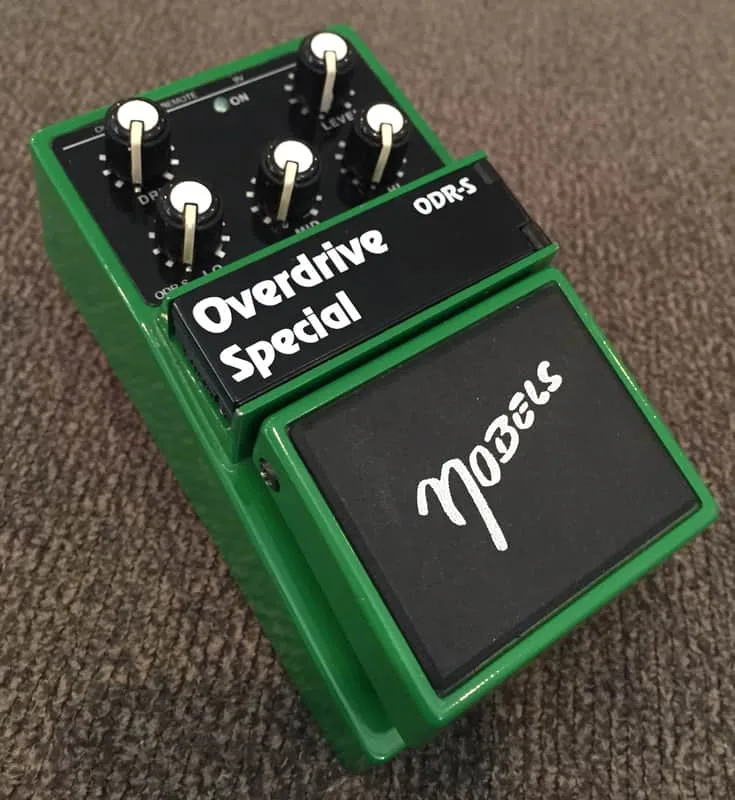


The Nobels ODR-S Overdrive Special is an overdrive pedal first released in 1993 as a sibling of the company's more famous ODR-11. Where the ODR-1 became the pedal Nobels is best known for, the ODR-S took the same family idea in a different direction, changing both the clipping and the tone controls.
What it does
The ODR-S is a hard-clipping overdrive, but the diodes doing the clipping are germanium instead of the silicon used in the ODR-11. Germanium and silicon diodes clip at different thresholds and with different characters, so this is the core sonic difference between the two pedals: same family, different clipping flavor.
The other major difference is the tone section. The ODR-1's Spectrum control, a single knob that shapes the overall voicing, is replaced on the ODR-S by a full 3-band EQ1. The midrange control uses a transistor gyrator concept, while the bass and treble controls follow a standard Baxandall arrangement1. For a player, that means separate, independent control over low, mid and high content rather than one blended tone knob, which is a more conventional EQ layout than the ODR-1's.
How it compares to the ODR-1
| Feature | ODR-S | ODR-1 |
|---|---|---|
| Clipping diodes | Germanium1 | Silicon1 |
| Tone control | Full 3-band EQ1 | Spectrum control1 |
| Midrange | Transistor gyrator concept1 | Spectrum control1 |
| Bass and treble | Standard Baxandall arrangement1 | Spectrum control1 |
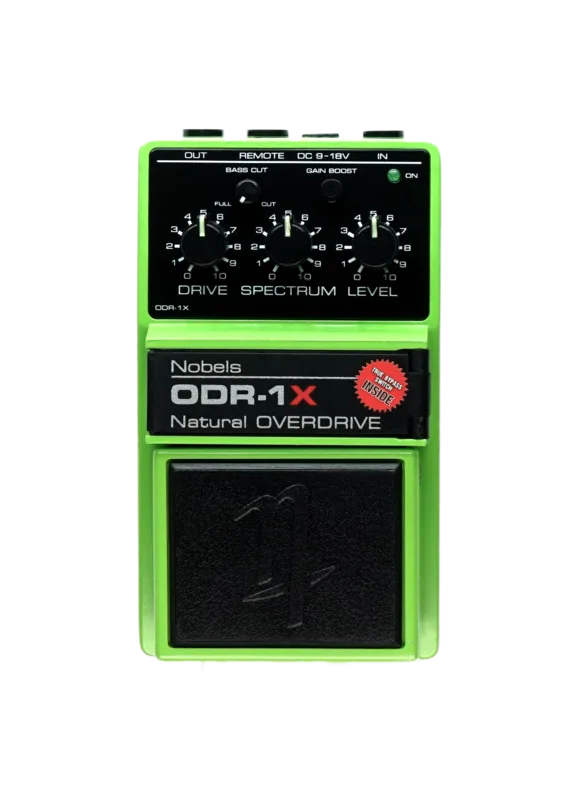
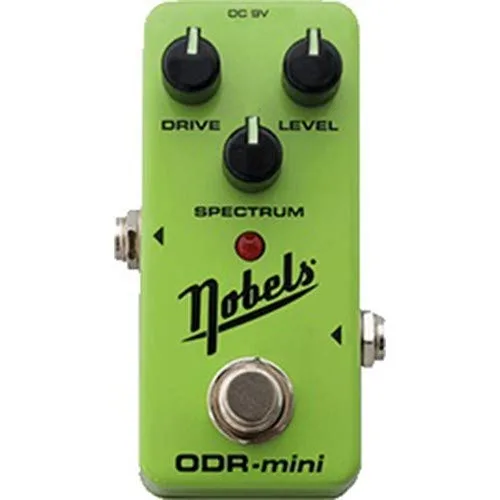
If you are weighing the two, the choice comes down to whether you want the ODR-1's single-knob Spectrum voicing or the ODR-S's separate bass, mid and treble controls, and whether germanium or silicon clipping suits your amp and pickups. Nobels has since built out the ODR line further with pedals like the ODR-1X and the compact ODR-Mini, but the ODR-S remains the line's 3-band EQ, germanium-clipping branch. For a wider view of the category, see Overdrive Pedals1.
Videos
Nobels Official
ShortScaleGearDemos
GitarreSpielen1
Sources (1)
- Arcturus Natural Overdrive / Nobels ODR-S, Aion FX, 2023-09-08