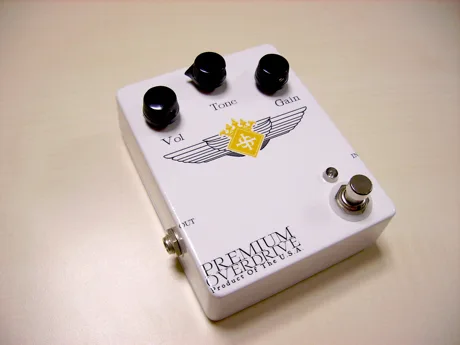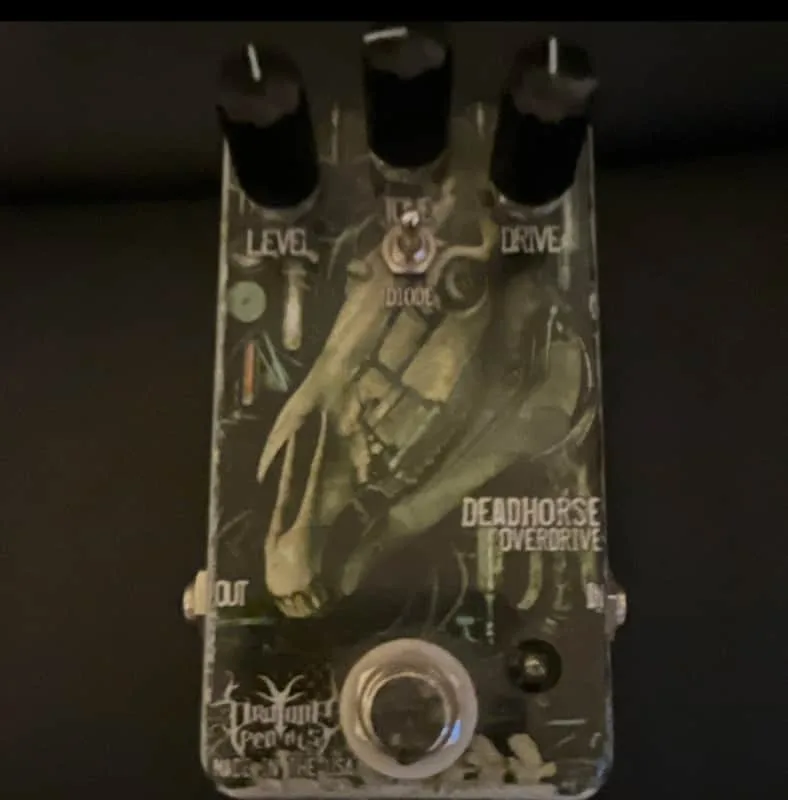



The Pro Tone Pedals Dead Horse Overdrive is an overdrive pedal built by hand in the U.S.A. by Pro Tone Pedals. It is the company's take on the classic Tube Screamer circuit, the "certain famous green box," but with more gain and output available than a stock Tube Screamer-style pedal1. The original Dead Horse Overdrive dates back to 2007, when it was Pro Tone Pedals' entry into the Tube Screamer clone space2, and the line was later developed into the MKIII, a third iteration of what Pro Tone Pedals calls its flagship product2.
A Tube Screamer circuit with more gain and output
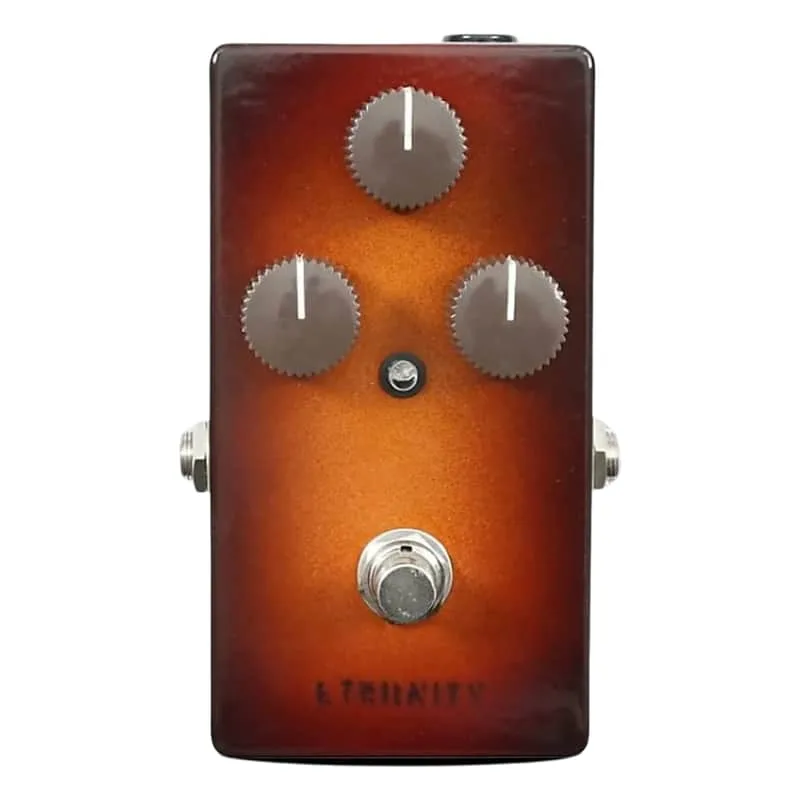
The Tube Screamer is easily one of the most popular and heavily copied circuits in the overdrive pedal industry3. Aion FX describes it as "the quintessential mid-hump overdrive pedal made famous by Stevie Ray Vaughan, and the source circuit behind dozens of highly-regarded boutique overdrives," including the Landgraff Dynamic Overdrive, the Fulltone Fulldrive, and the Lovepedal Eternity4. Its lineage goes back further still: the maker treblebooster.net notes that the Treble Booster was replaced by "a new circuit from Japan, the so called Tube Screamer," with a very similar frequency response to the old boosters.
The Dead Horse sits squarely in that family. Pedal of the Day's reviewer, Mike B, put it plainly12:
"It's based on a Tube Screamer…but it sounds WAY better!"
What separates it from a stock clone is the amount of drive and output available. Utilizing the legendary JRC4558 IC chip, the same op-amp associated with the Tube Screamer circuit, the Dead Horse offers "a bunch more drive on tap than a traditional TS-type pedal," in the reviewer's words, making it what he called "a true powerhouse that delivers on all its promises"1. That extra drive is the reason the pedal has drawn attention from higher-gain players: Premier Guitar reported that the Dead Horse has been called "the best overdrive for modern metal guitar tones on the market today"2.
The controls and diode switch
The Dead Horse keeps the familiar three-knob layout of the circuit it is based on, with Gain, Tone, and Volume controls5.
| Control | What it does |
|---|---|
| Gain | "Like any old gain control…except with MORE," in the reviewer's words1 |
| Tone | A great range with an extended bass frequency, from chunky, beefy low-end to crisp and sparkling highs1 |
| Volume | Gives off a ton of output, enough to push an amp hard1 |
The extra control a stock Tube Screamer does not have is the diode selection toggle switch. It lets you switch between symmetrical and asymmetrical clipping diodes, which changes the character of the overdrive: symmetrical clipping is the smoother, more even sound associated with the original circuit, while asymmetrical clipping lets more of the unclipped signal through for a more open, textured sound. The reviewer called it "a tasty diode selection toggle switch…for even more sonic options"1.
Build details include a super-bright LED for easy onstage identification, a stomp switch built to withstand years of hard stomping shows, and a durable aluminum housing1.
The MKIII and its bass frequency switch
In 2015, Pro Tone Pedals introduced the Dead Horse Overdrive MKIII, the third iteration of the pedal2. The MKIII keeps the Gain, Tone and Volume controls5 and the same power requirement, a standard 9 volt negative tip BOSS style adapter, which Guitar Interactive Magazine reported was included free with U.S. orders5. It also carries over the hardwired true bypass with grounded input and the aluminum housing5.
The big change is on the low end. The MKIII adds a 6-way Bass Frequency selection switch which, combined with a Bass foot switch, offers a total of seven different voice settings2. The voices cover a wide spread of players:
- The classic Dead Horse response
- The traditional mid hump of the TS line
- A more bass friendly curve for 7 and 8-string players
- The extreme bass cut found on the Attack Overdrive2
Pro Tone Pedals chose a switch rather than a sweeping knob for a stated circuit reason: "Performing a clean sweep would require adding more components to the audio path, which detracts from the overall voice of the pedal." A switch keeps the extra components out of the signal path2.
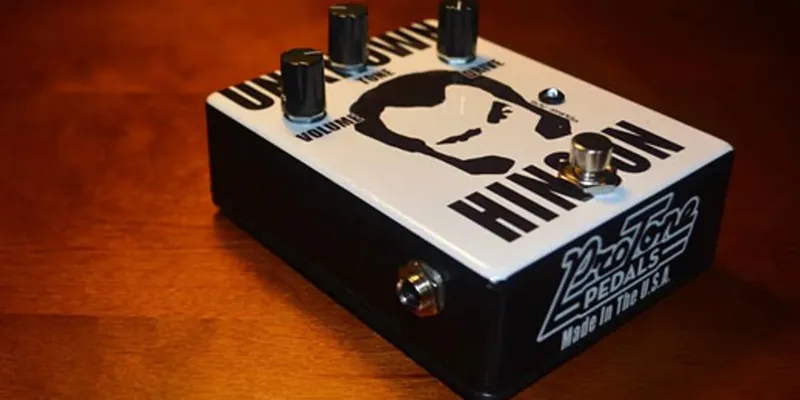
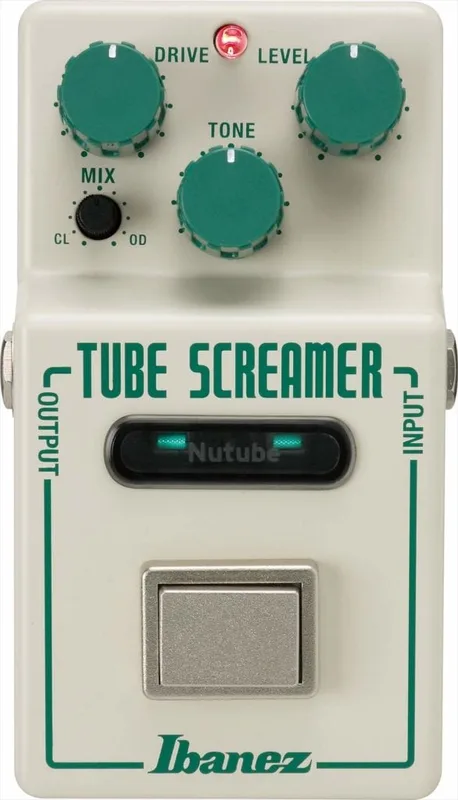
For players comparing Tube Screamer family pedals, the MKIII's switchable bass voicing is the main thing that sets it apart from fixed-voicing clones, and the diode toggle on the original is what sets it apart from a stock circuit. Related Pro Tone Pedals overdrives include the Unknown Hinson Signature Overdrive and the Pro Tone Gold Label Overdrive, and the Tube Screamer line itself continues in pedals such as the Ibanez Nu Tube Screamer216.
Videos
Ryan Siew
PlayThisRiff.com guitar and bass lessons
fret.co.za
Questions
Is the Dead Horse Overdrive good for metal?
Pedal of the Day's reviewer called it a true powerhouse with a bunch more drive on tap than a traditional TS-type pedal, and Premier Guitar reported the pedal has been called the best overdrive for modern metal guitar tones on the market. The MKIII's bass frequency options also include a bass friendly curve aimed at 7 and 8-string players.
Is the Dead Horse Overdrive true bypass?
Yes. Both the original Dead Horse Overdrive and the MKIII use hardwired true bypass with a grounded input, which Pro Tone Pedals describes as giving noise free operation when the pedal is switched off.
What power supply does the Dead Horse Overdrive need?
It operates on a standard 9 volt BOSS style adapter with a negative tip. Guitar Interactive Magazine reported that the adapter was included free with U.S. orders of the MKIII.
Where is the Dead Horse Overdrive made?
Pro Tone Pedals builds the Dead Horse Overdrive by hand in the U.S.A. Both the original and the MKIII are hand-crafted in the same durable aluminum housing.
What op-amp is in the Dead Horse Overdrive?
The Dead Horse Overdrive uses the JRC4558 IC chip, the same op-amp associated with the classic Tube Screamer circuit it is based on.
Sources (6)
- Pro Tone Pedals Dead Horse Overdrive, Pedal of the Day, 2016-04-03
- Dead Horse Overdrive MKIII: Pro Tone Pedals Launch, Premier Guitar, 2015-09-10
- Review: EarthQuaker Devices' Plumes will make even the industry's best Screamer clones green with envy, Guitar World, 2019-12-04
- Stratus Classic Overdrive / Ibanez® Tube Screamer, Aion FX, 2018-09-22
- Pro Tone Pedals introduces 3rd iteration of The Dead Horse Overdrive MKIII, Guitar Interactive Magazine, 2015-09-09
- Ibanez NuTube Screamer to be released at NAMM Show, gearnews.com, 2018-01-01