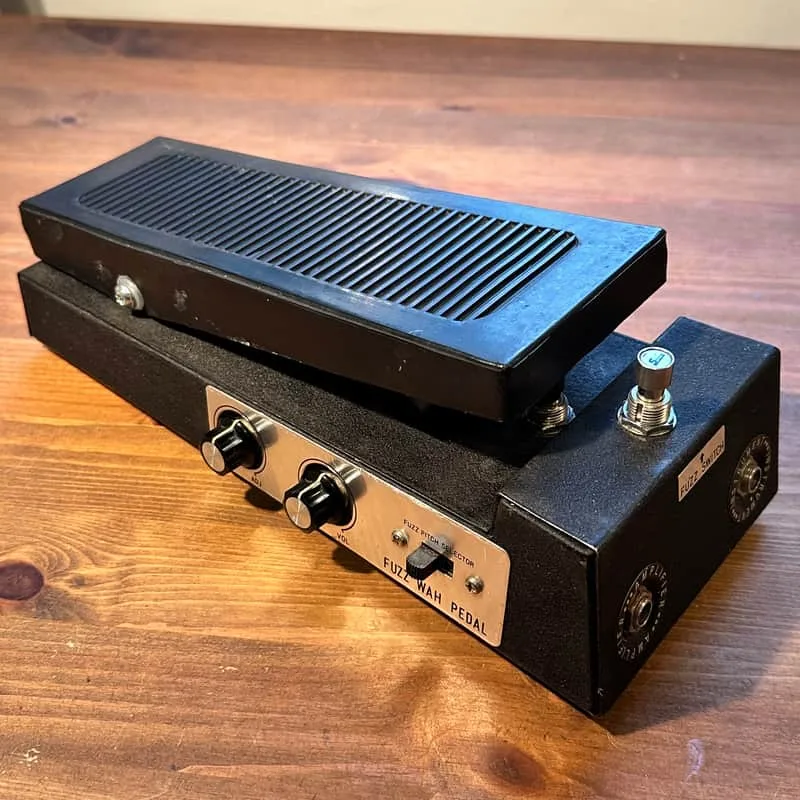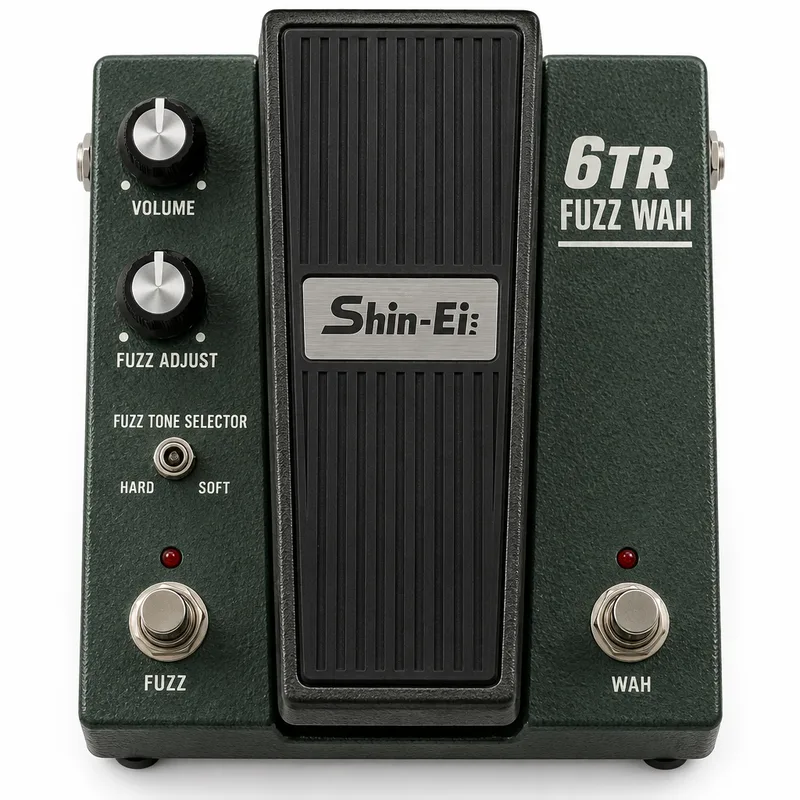


The Shin Ei 6TR Fuzz Wah is a vintage Japanese fuzz wah pedal from Shin-Ei, combining a fuzz circuit and a wah in one treadle unit. It is best known today among circuit traceurs and DIY builders: the fuzz section is two transistors short of being an exact Super Fuzz circuit, which places it between the FY-2 Companion Fuzz and the FY-6 Super Fuzz in Shin-Ei's fuzz lineage1.
What it does to your sound
The fuzz is the reason players seek this pedal out. The technical analysis that traced the circuit describes it plainly1:
"This is the chainsaw fuzz your friends warned you about, to me its like the superfuzz without the octave up."
The wah section is less celebrated. The same analysis notes that the wah in these units is widely known to be less than desired, and that it is definitely not a funk machine, though the fuzz makes up for it1.
One thing a player needs to know before plugging in: the 6TR is known for a severe volume drop and does not meet unity gain in most situations, very much like the FY-21. The original FY-2 circuit is similarly sluggish on output level, with an overall sound that is quite thin and nasal3. Builders report that removing the diodes gives a lot of the volume back1.
The controls and switches
The 6TR keeps its control set simple1:
| Control | What it does |
|---|---|
| Volume knob | Sets output level |
| Fuzz adjust knob | Sets fuzz intensity |
| Fuzz stomp switch | Turns the fuzz on or off |
| Wah stomp switch | Works like a standard wah, operated by the treadle |
| Fuzz tone selector switch | Changes the fuzz from hard to soft |
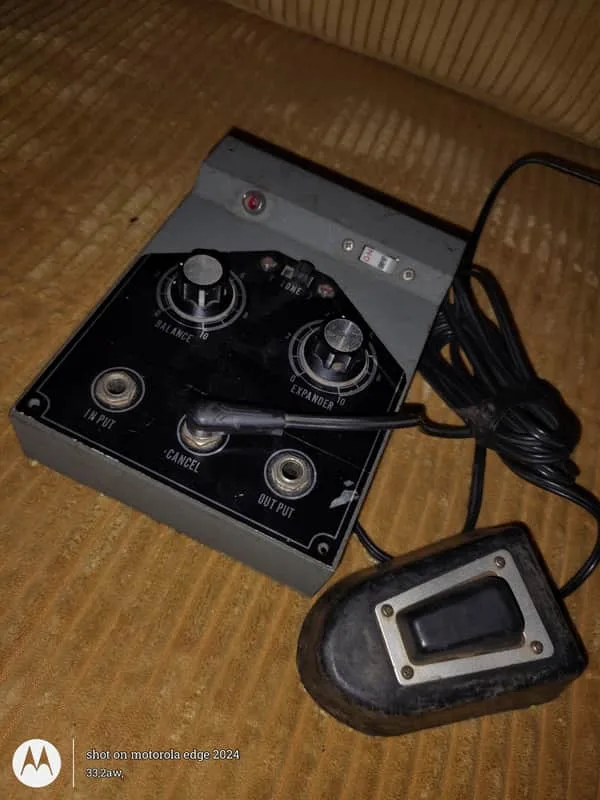
The hard and soft positions of the tone selector work much like the tone switch on the Super Fuzz: soft mode gives a scooped, darker sounding tone, and hard mode gives a cutting midrange sound1. On the FY-6 Super Fuzz itself, Shin-ei controls the equivalent voicing with a Balance knob, an Expander knob and a slider switch selecting Tone 1 and 2, located on the left side of the unit4.
A circuit between the FY-2 and the FY-6
The 6TR's place in the Shin-Ei family is what makes it interesting to compare against its relatives. The analysis that traced it puts it directly between the two better-known circuits1:
"These are 2 transistors short of being an exact superfuzz circuit (TR-8) and in my opinion lie somewhere between"
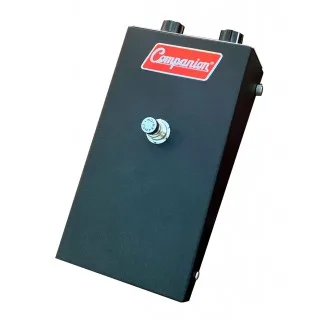
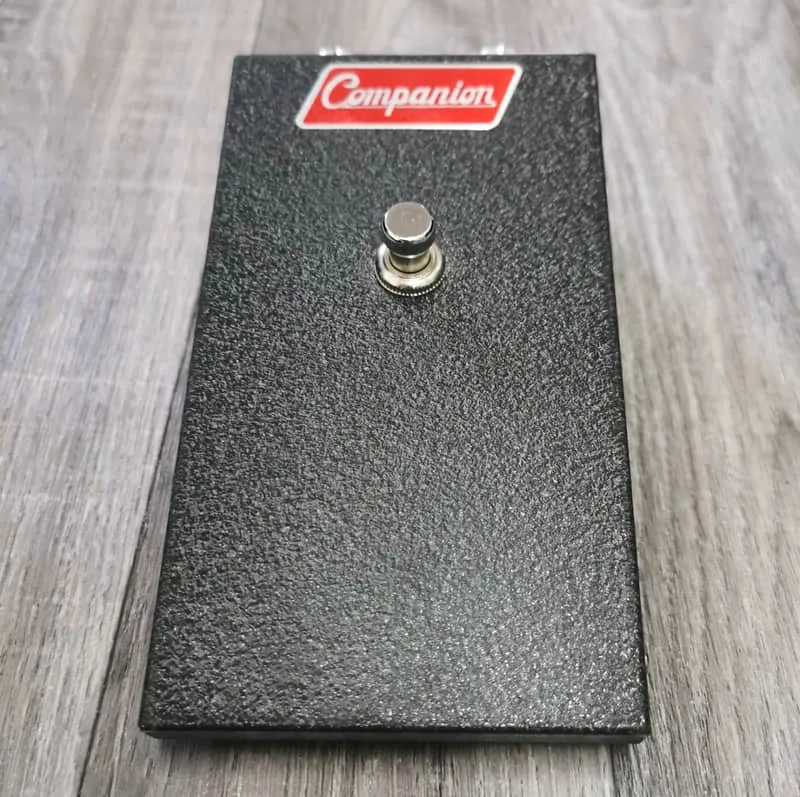
The FY-2 Companion Fuzz is a Japanese fuzz circuit from the late 1960s with volume and fuzz controls and a volume drop, described by Union Tube & Transistor as rare and highly sought-after5. The FY-6, meanwhile, is the re-branded Super Fuzz, a distinct circuit from the FY-26. Shin-ei's own reissue of the FY-6 duplicates the original electronic circuitry, using the highest quality original design Matsushita/Panasonic transistors4.
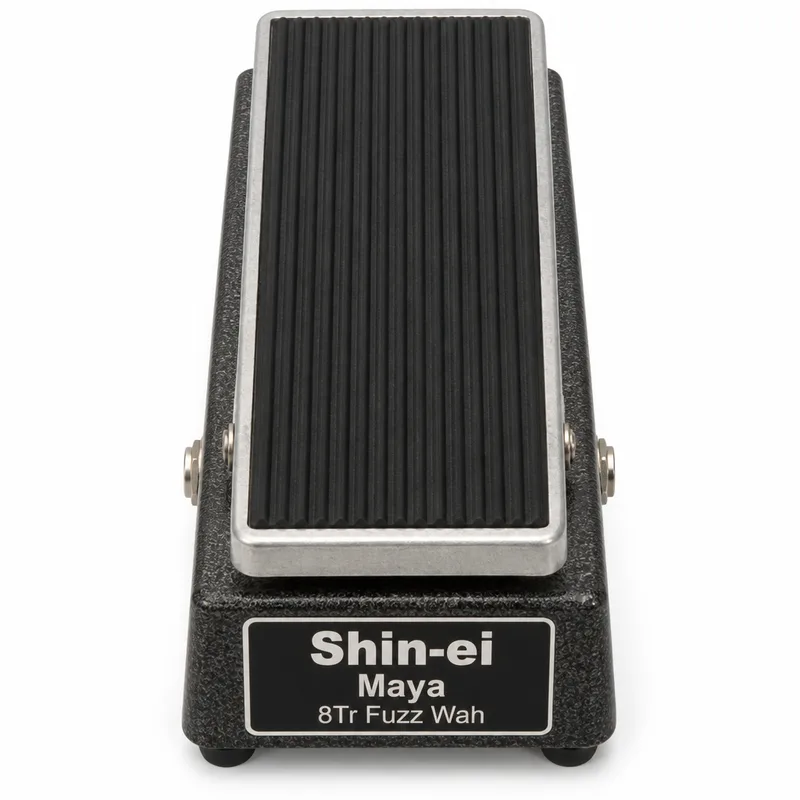
The 6TR shares its signal order with the related 8TR Fuzz Wah: on both, the fuzz comes before the wah2.
The Psychocandy connection
The 6TR carries a notable, if unconfirmed, piece of lore. It is supposedly the fuzz tone used by The Jesus and Mary Chain back in the day on Psychocandy1. The claim comes from the circuit analysis rather than from the band, so treat it as reported rather than documented.
Building a clone
The 6TR has a second life as a DIY project, with a published layout and an active builder community. Points a builder should know1:
- The original circuit uses C828 type transistors; one builder used 2SC5088 transistors instead, because the 828s never seemed to work1.
- Builders of the related FY-2 layout have used 2N3904, 2SC828, 2N2222 and 2N5088 transistors3.
- The wah inductor has 4 pins but only 2 are used; the other 2 are repeated pins found on some inductors1.
- The layout was published as 2 separate boards instead of 1 massive board, to give more placement options in an enclosure1.
- Removing the diodes gives a lot of the volume back1.
The published layout has been corrected more than once after builders reported errors. A September 2020 correction states that the 1K resistor connecting the 10uF capacitor must connect to the base of the bottom right transistor, not the emitter1. Anyone building from an older version of the layout should work from the updated one.
On the value of the original units, the analysis is positive:
"They are well worth it in my opinion"
For players tracing the wider Shin-Ei fuzz family, the 6TR Fuzz Wah is another circuit worth knowing: one reviewer who has spent time with the original units found them "well worth it in my opinion" and underrated for their price21. For anyone building a clone, the DIY layout for the 6TR was drawn as two separate boards rather than one massive board, which the builder notes gives more placement options inside an enclosure1.
Videos
Pacafeliz
Jeff Mckittrick
Francisco Sánchez de la Vega
Questions
Does the fuzz come before the wah on the Shin Ei 6TR?
Yes. On the 6TR the fuzz stage comes before the wah stage in the signal chain, the same arrangement as on the related Shin Ei 8TR Fuzz Wah. That order matters for how the wah sweeps the already-fuzzed signal rather than the clean guitar.
What does the hard and soft switch do?
The fuzz tone selector switch changes the fuzz character between hard and soft. Soft mode gives a scooped, darker sounding tone, while hard mode gives a cutting midrange sound, much like the tone switch on the Super Fuzz.
What is the difference between the Shin Ei 6TR and the Superfuzz?
The 6TR's fuzz circuit is two transistors short of being an exact Super Fuzz circuit, so it sits somewhere between the FY-2 Companion Fuzz and the FY-6 Super Fuzz. To builders who have traced it, it sounds like the Super Fuzz without the octave up.
Why is the Shin Ei 6TR so quiet compared with a bypassed signal?
The 6TR is known for a severe volume drop and does not meet unity gain in most situations, very much like the FY-2 Companion Fuzz, whose original circuit is sluggish on output level with a thin, nasal sound. Builders report that removing the diodes gives a lot of the volume back.
Was the Shin Ei 6TR used on Psychocandy?
It is supposedly the fuzz tone used by The Jesus and Mary Chain back in the day on Psychocandy, according to the technical analysis that traced the circuit. The claim is reported rather than confirmed by the band.
Which transistors do builders use in a 6TR clone?
The original circuit uses C828 type transistors, but builders have had better luck substituting 2SC5088 types where the C828s did not work. Builders of the related FY-2 layout have also used 2N3904, 2SC828, 2N2222 and 2N5088 transistors.
Sources (6)
- Guitar FX Layouts: Shin Ei 6TR Fuzz Wah, Guitar FX Layouts (tagboardeffects.blogspot.com), 2017-03-16
- Guitar FX Layouts: Shin Ei 8TR Fuzz Wah, tagboardeffects.blogspot.com, 2017-03-17
- Guitar FX Layouts: Shin-Ei FY-2 Companion Fuzz with mods, Guitar FX Layouts (tagboardeffects.blogspot.com), 2014-03-25
- Shin-ei FY-6 Baby Crying Super Fuzz, Shin-ei (shin-ei.com)
- Shiny - Union Tube & Transistor, Union Tube & Transistor
- Shin-Ei™ Companion Fuzz™ Clone: DIY Kit, PCB & Schematic, General Guitar Gadgets, 2014-05-15