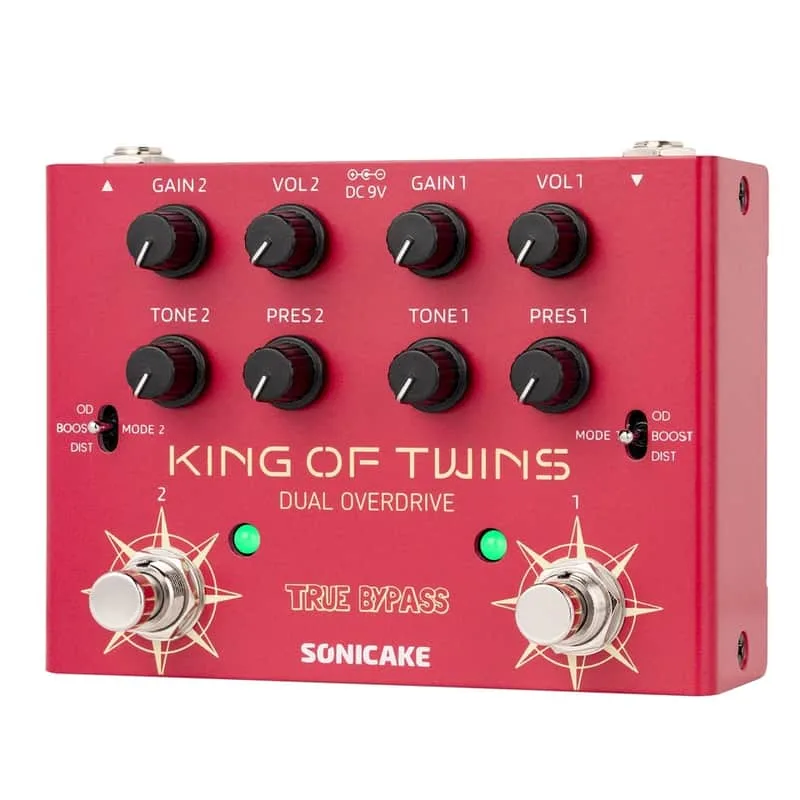


The Sonicake King of Twins is a dual-channel overdrive pedal from Sonicake, carrying the model number QDS-08 and a list price of $54.99 USD as of the maker's product page1. Each of its two channels offers three modes: overdrive, boost and distortion, and the two channels can be used individually or stacked for more gain1. It is a compact, budget-priced way to put two gain stages on a board under one pair of footswitches.
What it does
The King of Twins gives you two independent gain channels, each switchable among overdrive, boost and distortion1. Sonicake describes the dual-channel structure and triple-mode design as covering classic blues overdrive, full-bodied clean tone, and warm and vintage distortion1. Because the channels can be stacked, the pedal can work as a single low-gain stage or as two stages feeding each other, in the manner players usually associate with dual-overdrive designs1.
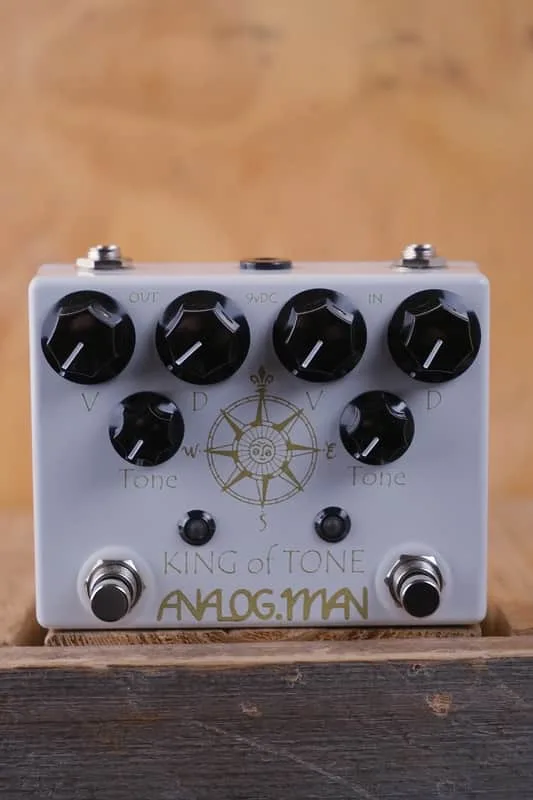
Sonicake also describes the circuit as KOT style, noting that "The KOT style circuit is a really common thing already"1. In other words, the design follows a well-known dual-overdrive template rather than inventing a new one.
The maker's own description of the circuit:
"Pure analog circuitry delivers realistic overdrive tones and a dynamic response."1
Controls and channels
Each channel carries four dedicated knobs for tone shaping, giving eight knobs across the pedal1. The maker does not name the individual knobs on the product page, so the exact functions per channel are not spelled out there, but the four-knobs-per-channel layout means each side of the pedal is shaped independently.
| Feature | Detail |
|---|---|
| Channels | Two, usable individually or stacked1 |
| Modes per channel | Overdrive, Boost, Distortion1 |
| Knobs | 4 dedicated knobs per channel1 |
| Bypass | True bypass1 |
| Circuit | Analog, described as KOT style1 |
Power and practicalities
The pedal runs on a DC 9V center negative adapter, which is not included, and draws 7mA1. That low current draw means almost any standard 9V pedalboard supply can handle it, and the maker's specification does not list a battery option1. At 120mm deep, 90mm wide and 53.5mm tall, and weighing 383g, it is a compact enclosure for a two-footswitch pedal1.
No power adapter is included with the King of Twins, and Sonicake's specifications list no battery option. You will need a 9V center negative supply to use it1.
Where it sits in Sonicake's range
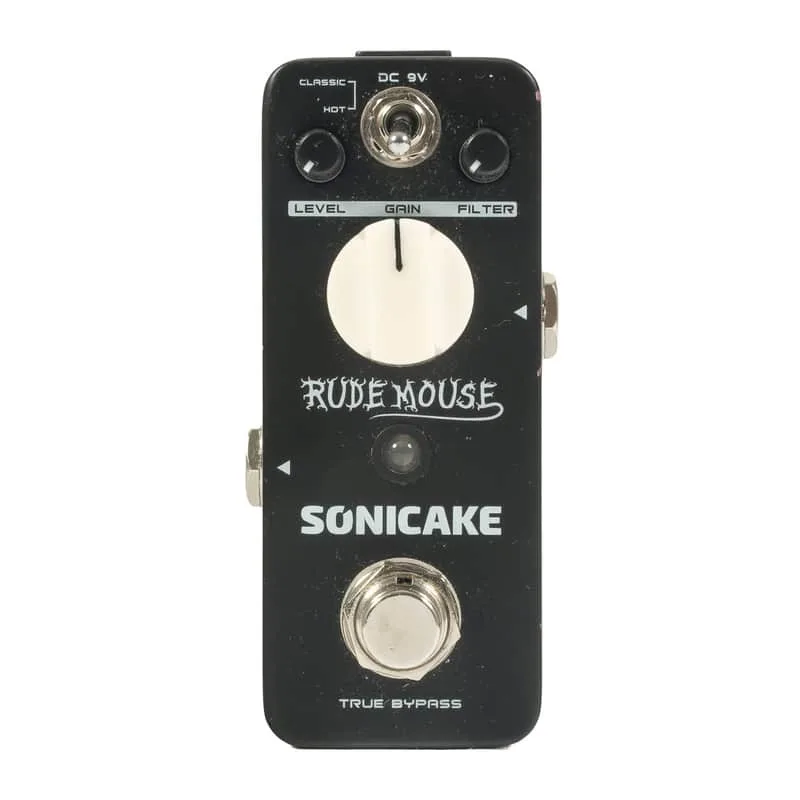
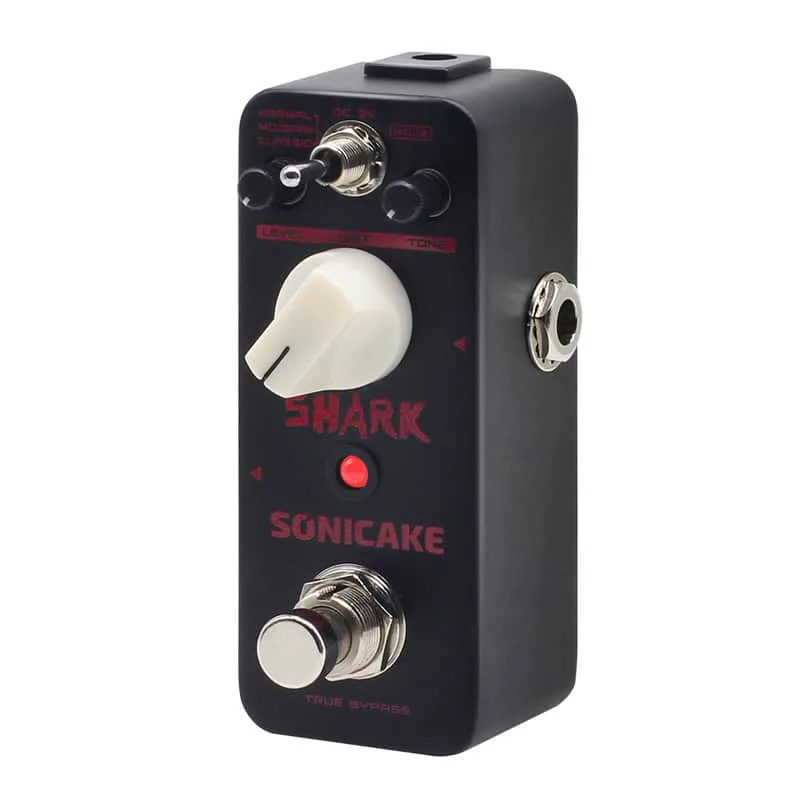
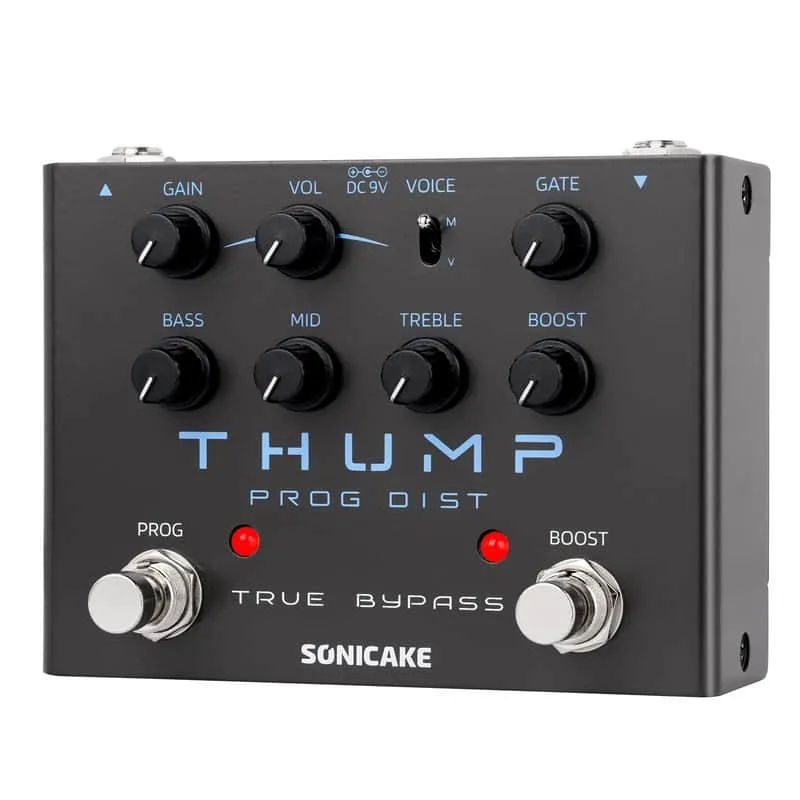
Sonicake builds a line of compact, low-priced drive pedals, and the King of Twins is the maker's dual-footswitch entry in it. Players comparing it within the same maker's catalog may also look at the Sonicake Rude Mouse, a Rat-style distortion, the Sonicake Shark, the Sonicake Thump, or the Sonicake Cowboy. For the wider field, see the site's pages on Overdrive Pedals, Boost Pedals and Distortion Pedals21.
Videos
Budget Pedal Chap
Double D guitar
Riffs & Rig
Questions
Does the Sonicake King of Twins take a battery?
Sonicake specifies power from a DC 9V center negative adapter, and states that the adapter is not included. The product page does not list a battery option, so plan on using a 9V center negative supply with the pedal.
Is the Sonicake King of Twins true bypass?
Yes. Sonicake says the pedal uses a true bypass circuit, which the maker describes as ensuring the original taste of tone when the pedal is switched off.
What is the model number of the King of Twins?
The model number is QDS-08, listed by Sonicake as the product name on the King of Twins product page.
Does the King of Twins come with a power adapter?
No. Sonicake lists the power requirement as DC 9V center negative and notes that the adapter is not included, so you will need to supply your own 9V center negative power supply.
Can the two channels be stacked on the King of Twins?
Yes. Sonicake says the dual-channel controls can be used individually or stacked for a powerful gain, so both channels can run together into one another.
Is the King of Twins an analog pedal?
Yes. Sonicake describes the King of Twins as using pure analog circuitry, which the maker says delivers realistic overdrive tones and a dynamic response.