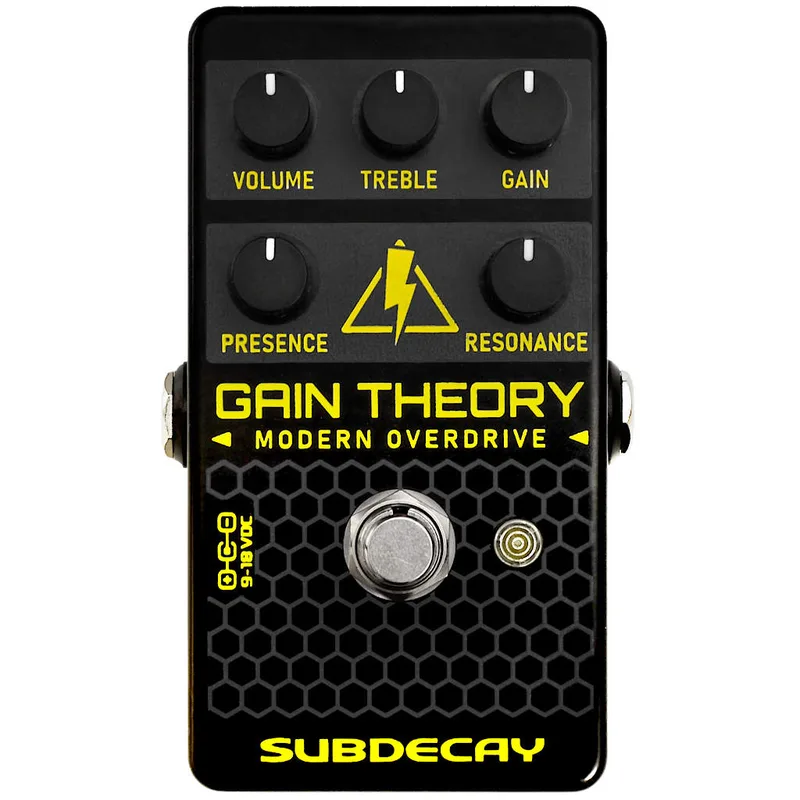

The Subdecay Gain Theory GT1 is a high-gain overdrive pedal from Subdecay, described by the maker as "High gain inspired by 90s amp design"1. It sits on the heavier end of the overdrive range, closer to the territory of a cranked high-gain amp than a light blues push, and it is listed at $179.00 USD as of 15 October 20262.
What it does
Subdecay's product page describes the GT1 as offering "Multiple Gain stages for natural overdrive that preserves articulation"1. The gain structure is built over three stages, including a parabolic response and subtle asymmetrical soft clipping that emulates a cascade of triode stages, the gain stages found in a tube amp preamp1.
The maker describes the pedal's approach this way:
"It sculpts your signal across three stages, clearing out the 'mud zone' before the heavy saturation even hits."
In practical terms, that means the low-end buildup that can make a high-gain pedal sound thick and undefined is trimmed before the distortion stage, so the saturated part of the sound arrives with the mids and lows already shaped1.
Resonance and Presence
The GT1 borrows an idea from the power section of 1990s high-gain amps: dedicated Resonance and Presence controls. Subdecay places these at the very end of the chain, driven by a circuit inspired by tube phase inverters, so they shape the sound after the gain stages rather than before it1.
| Control | What it does |
|---|---|
| Resonance | Controls a tight band of low-end (100 to 250 Hz) for percussive cabinet thump you can feel1 |
| Presence | Shapes the top end after the gain stages, in the manner of a high-gain amp's power section1 |
Because these controls work at the end of the circuit, they respond differently from the tone knobs on a typical overdrive, which usually cut or boost before the clipping stage. Resonance in particular targets a narrow low band rather than a broad bass tilt1.
Where it sits among Subdecay's overdrives
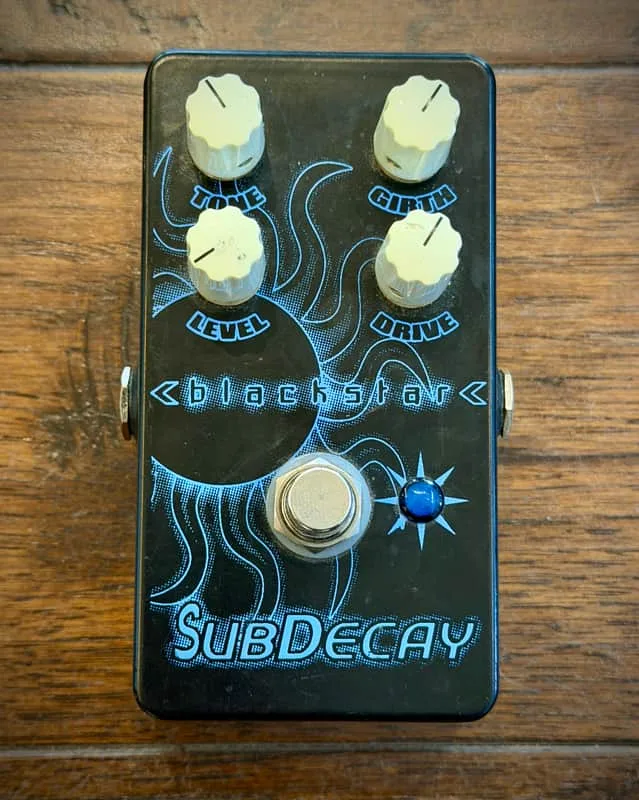
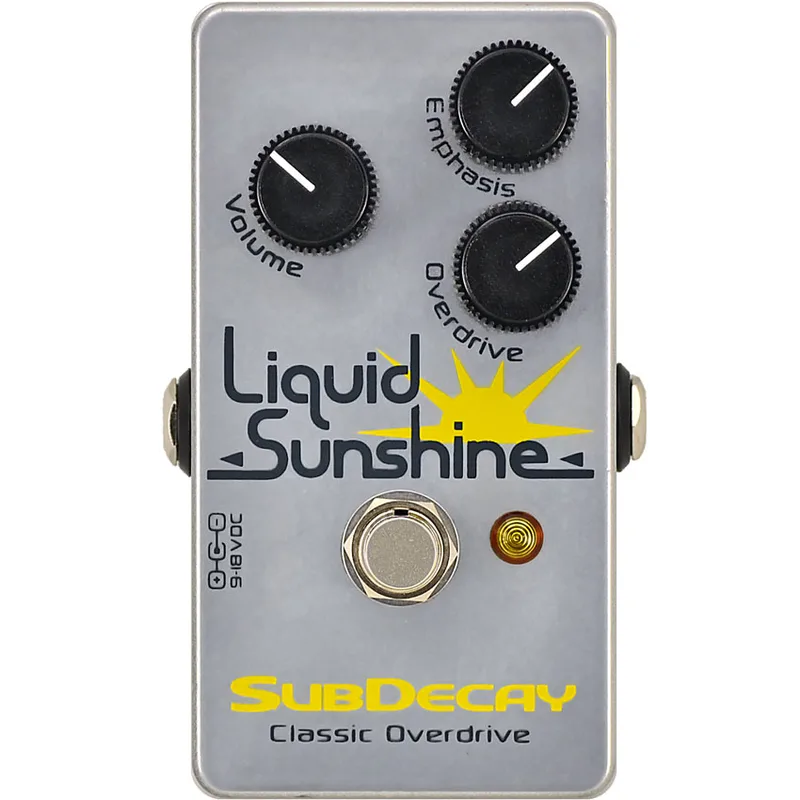
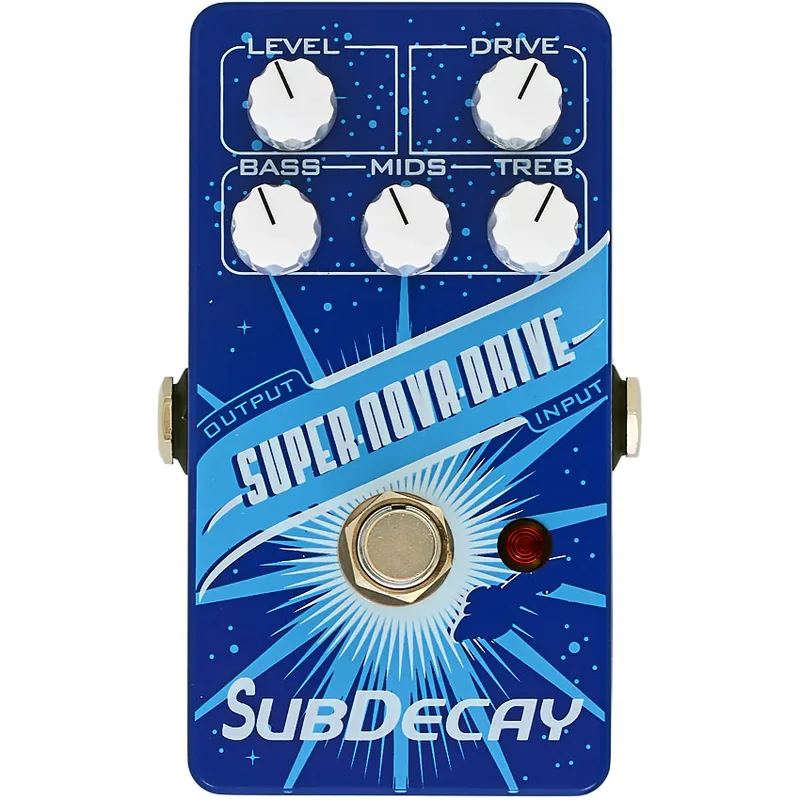
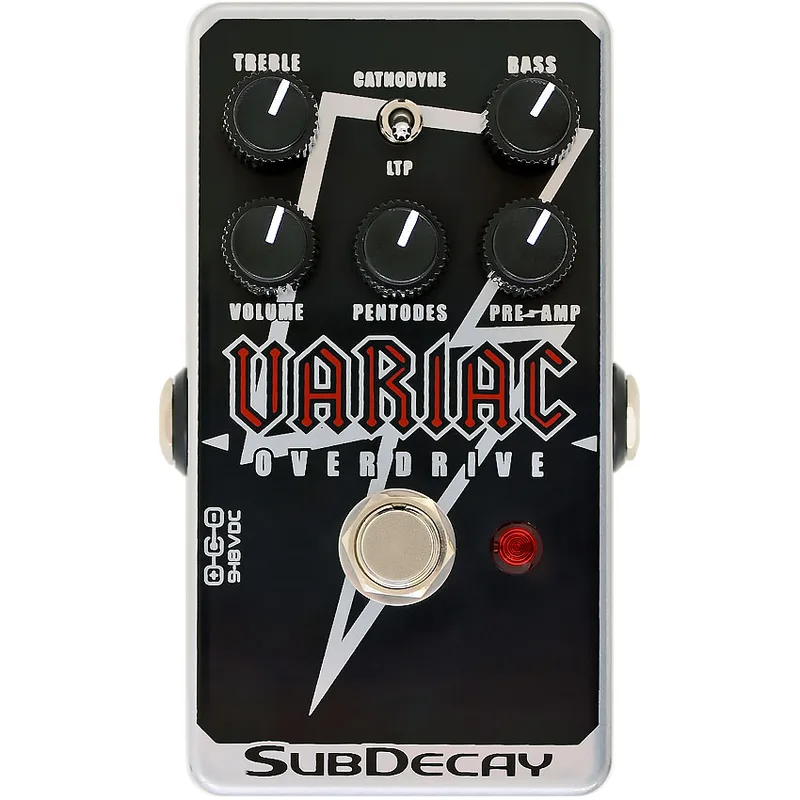
Subdecay's overdrive range covers lighter and heavier territory, from the SubDecay Liquid Sunshine and Subdecay Variac Overdrive to the Subdecay SuperNova Drive and Subdecay Blackstar w/ Girth. The GT1 is the maker's entry aimed squarely at high gain, and players comparing it with lower-gain drives such as those covered in Boss SD-1 vs Ibanez TS9 Tube Screamer should expect a different character: more gain stages, and post-gain Resonance and Presence shaping rather than a simple tone control. For a wider view of the category, see Overdrive Pedals.
Videos
Subdecay
Questions
What kind of pedal is the Subdecay Gain Theory GT1?
It is a high-gain overdrive pedal. Subdecay describes it as high gain inspired by 1990s amp design, with a gain structure built over three stages that includes a parabolic response and subtle asymmetrical soft clipping emulating a cascade of triode stages. It is aimed at players who want natural overdrive that preserves articulation rather than a fuzzy or compressed distortion.
What do the Resonance and Presence controls do?
Subdecay places these controls at the very end of the circuit chain, driven by a stage inspired by tube phase inverters, the way a power section works in a high-gain amp. Resonance controls a tight band of low-end between 100 and 250 Hz for percussive cabinet thump, while Presence shapes the top of the sound after the saturation has happened.
Sources (2)
- Gain Theory Overdrive, Subdecay, 2026-05-17
- Quasar Phaser mk5, Subdecay, 2026-10-15