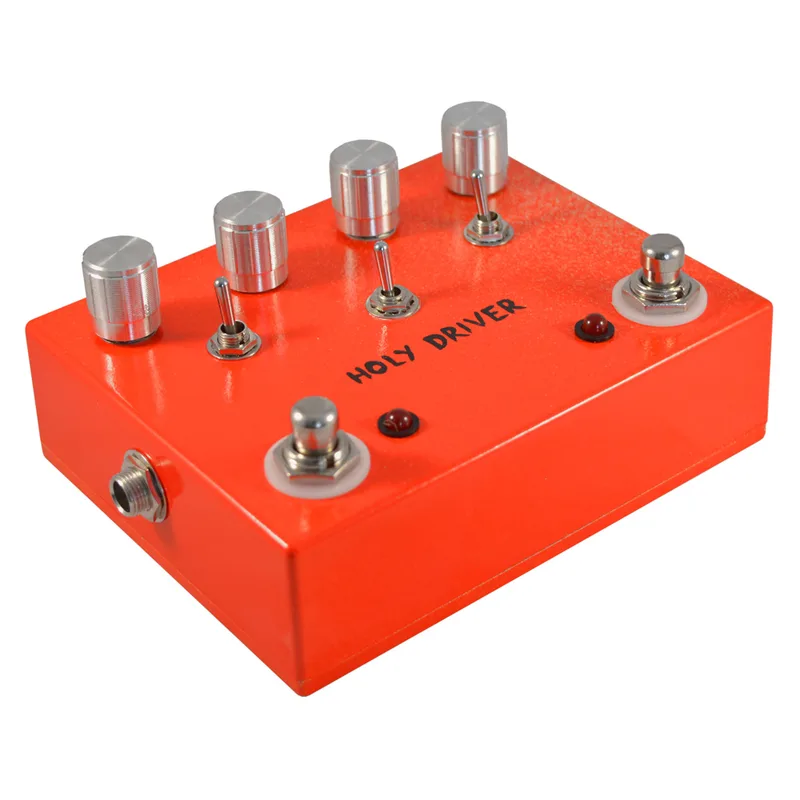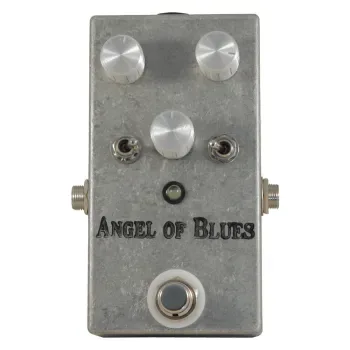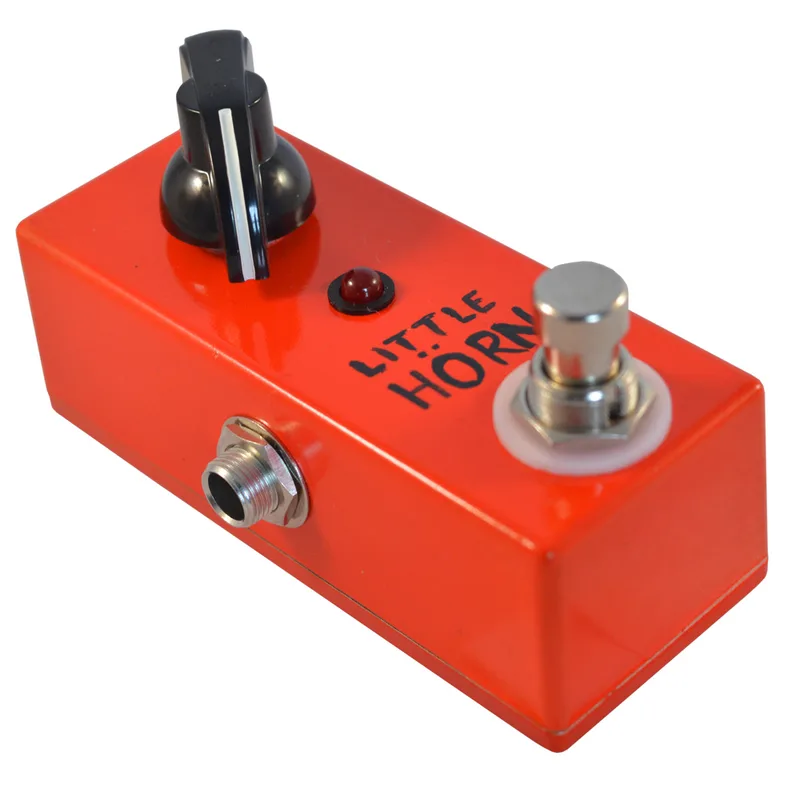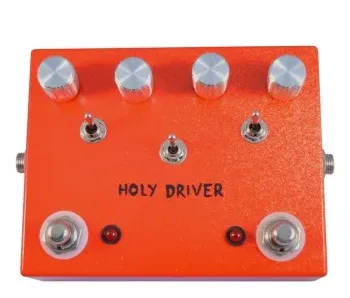

The Vein-Tap Holy Driver is an overdrive and boost pedal in one box, made by Vein-Tap. The maker describes it as "the only overdrive and boost pedal you will ever need," cramming two pro-level pedals into a single chassis1. The overdrive side carries the same circuitry as the Vein-Tap Angel of Blues, while the boost side uses the Little Horn v2.0 boost circuit, giving up to 24dB of clean gain1.
What sets the Holy Driver apart from most two-in-one pedals is the Pre / Post Boost switch, which lets you decide whether the boost drives the overdrive harder or simply lifts the finished overdrive sound in volume1. Both sides are true bypass and fully independent, so you can run one, the other, or both at once1.
The controls: modes, clipping and boost order
The overdrive side of the Holy Driver carries over the feature set of the Angel of Blues, including its Modern / Classic tone profile switch and a diode clipping switch1.
| Control | What it does |
|---|---|
| Pre / Post Boost switch | Places the boost before the overdrive circuit (Pre) or after it (Post)1 |
| Modern / Classic switch | Selects the overdrive tone profile on the drive side1 |
| Diode clipping switch | Selects symmetric or asymmetric clipping on the overdrive side1 |
| Boost knob | Sets the amount of clean boost, up to 24dB1 |
The Pre / Post switch is the pedal's distinguishing control. As Vein-Tap's Ben explains in the maker's buying guide, the switch "lets you choose whether the boost cascades into the overdrive, or vice versa"2. In the Pre position, the boost feeds the overdrive circuit, so a high boost setting pushes the drive into a harder, more saturated sound. In the Post position, the boost sits after the overdrive, which is the arrangement to reach for when you want the same driven tone, just louder, for a solo.
The clipping switch changes how the overdrive's diodes shape the waveform. Symmetric clipping cuts both halves of the wave equally, while asymmetric clipping treats the top and bottom differently, and the switch lets you hear the difference between the two without touching anything else1.
Circuits from the Angel of Blues and Little Horn
The Holy Driver is effectively two existing Vein-Tap circuits in one enclosure. The overdrive side is the same circuitry as the Angel of Blues, including its Modern / Classic profile switch1. The boost side is the Little Horn v2.0, a clean boost the maker originally launched in 2014 with "up to 24dB of high quality, transparent boost"31.
The v2.0 revision matters for noise. Vein-Tap says the Holy Driver uses the Little Horn's v2.0 boost, so "the noise to gain ratio is far less thanks to advanced power conditioning"1. The boost also has a very high input impedance, over 5MΩ, which the maker says keeps the sparkle in your pickups1.
The Little Horn circuit is versatile on its own. Vein-Tap describes using it in the preamp position to push an amp harder, or in an effects loop to make an existing tone louder without changing its character4. The maker's buying guide puts it more colorfully: the Little Horn "can embiggen your tone and push your tube amp into sweet, tight, musical overdrive"5.
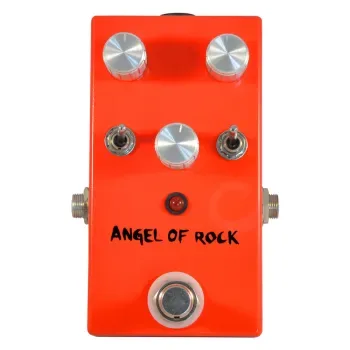
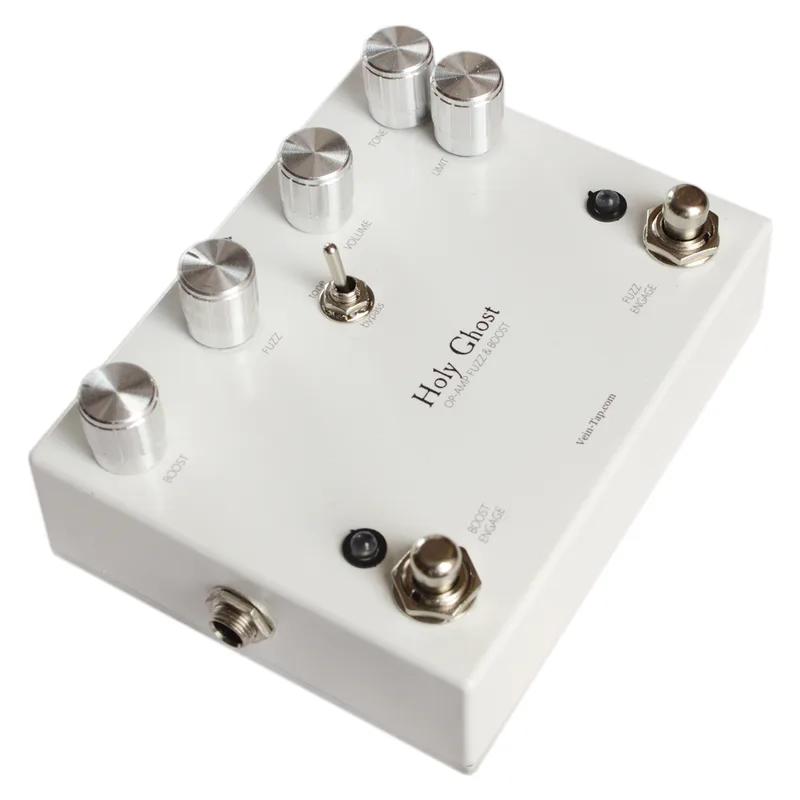
The Holy Driver sits in a family of similar two-in-one pedals from the same maker. The Holy Roar pairs an Angel of Rock-based distortion with the same Little Horn boost, which can also act as an always-on buffer at zero setting6. The Holy Ghost pairs an '78 IC Muff-based fuzz with the same boost section, with the boost following the fuzz in the signal chain7. The Holy Driver is the overdrive version of the format.
Classic and Modern tone profiles
The Modern / Classic switch on the overdrive side selects between two voicings1:
- Classic: a mellow, smooth overdrive with a boost in the mid frequencies, which Vein-Tap positions as suited to blues or gentler rock tones1
- Modern: a flatter, more aggressive, bass-heavy tone aimed at modern rock1
Because the two profiles change the midrange character and the low-end response, the switch effectively gives you two overdrive voicings. The Classic profile is a mellow, smooth overdrive with a boost in the mid frequencies, while the Modern profile is a flatter, more aggressive, bass-heavy tone for modern rock1.
Videos
Vein-Tap.com
Questions
Is the Vein-Tap Holy Driver true bypass?
Yes. Both the overdrive and boost sides are wired with true bypass, and each side is independent, so the two halves can be switched on and off separately. When a side is off, its circuitry is out of the signal path entirely.
Can the boost be placed before the overdrive on the Holy Driver?
Yes. A Pre / Post Boost switch on the pedal lets you choose the order. In the Pre position the boost feeds into the overdrive circuit, pushing it harder; in the Post position the boost comes after the overdrive, raising the volume of the driven sound.
How much boost does the Holy Driver give?
The boost side offers up to 24dB of clean gain, using the Little Horn v2.0 boost circuit. That is enough to push a tube amp into overdrive on its own, or simply to make an existing tone louder.
Where is the Vein-Tap Holy Driver made?
It is hand-crafted in the UK by Vein-Tap, and covered by the maker's Lifetime Guarantee. Vein-Tap describes its pedals as handmade in the UK and guaranteed to last a lifetime.
What is the difference between the Classic and Modern modes?
Classic is a mellow, smooth overdrive with a boost in the mid frequencies, aimed at blues and gentler rock tones. Modern is flatter and more aggressive, with more bass, aimed at modern rock. A switch on the overdrive side selects between them.
Sources (7)
- Holy Driver Overdrive and Boost Pedal, Vein-Tap.com, 2026-09-01
- Boost Before Overdrive or Overdrive Before Boost?, Vein-Tap.com, 2016-06-13
- The Little Horn Cometh, Vein-Tap.com, 2014-10-28
- The Little Horn Guitar Boost Pedal from Vein-Tap.com, Vein-Tap.com, 2026-09-01
- Overdrive Pedal vs Amp Distortion: Which is Better?, Vein-Tap.com, 2015-05-19
- Holy Roar Distortion and Boost Pedal, Vein-Tap.com, 2026-09-01
- Holy Ghost Fuzz and Boost Pedal, Vein-Tap.com, 2026-09-01