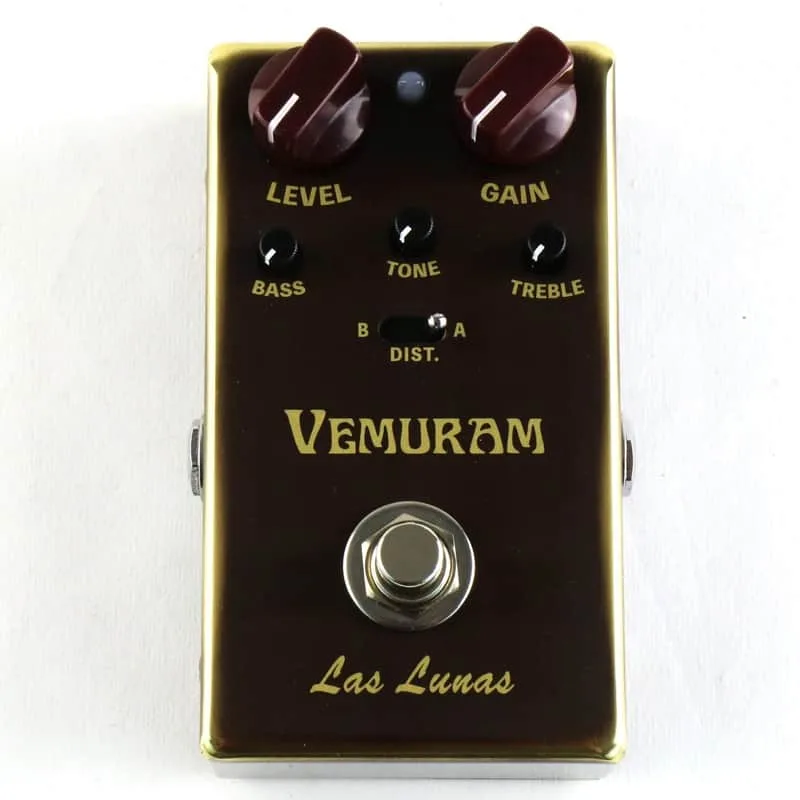


The Vemuram Butter Machine is an analog distortion pedal from the high-end Tokyo pedal maker Vemuram, developed in collaboration with the Los Angeles session guitarist Michael Landau to create what the maker calls his ideal distortion pedal. RockBoard's PedalPedia describes it as user-friendly and wide in range, saying it lets you control your picking nuance and dynamics and that "the drive goes from overdrive to full-on distortion effortlessly"1. In practice that places it in the territory covered by Overdrive Pedals as well as Distortion Pedals, depending on where you set the gain.
From the SD-9 to Michael Landau's pedal
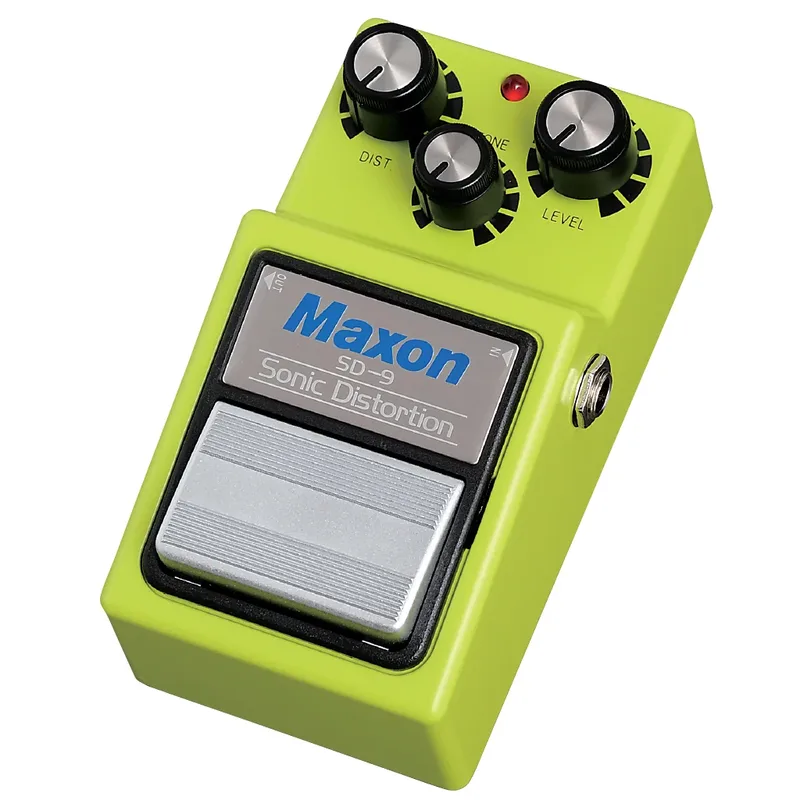
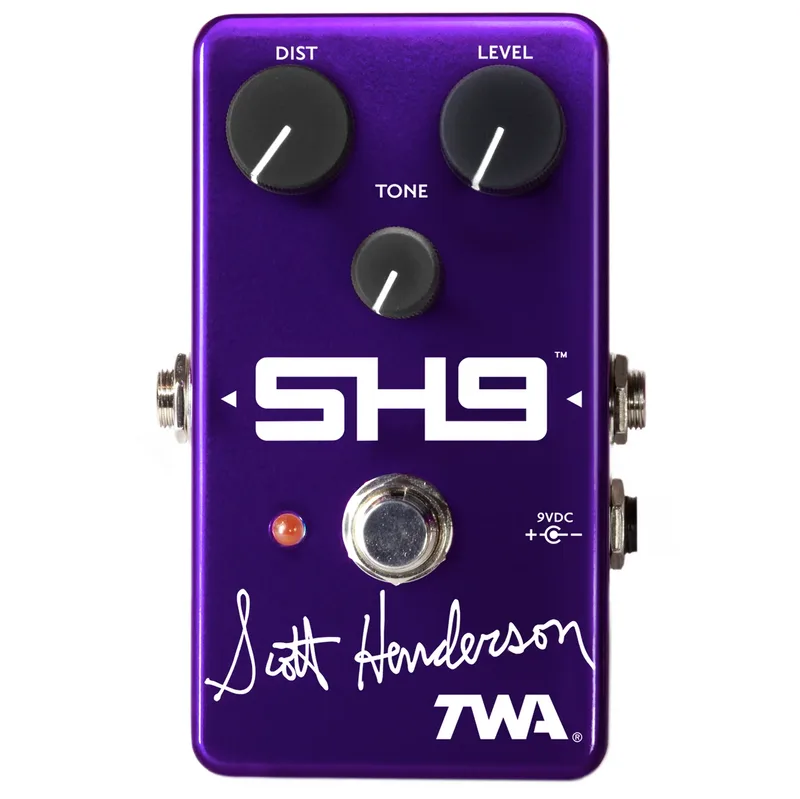
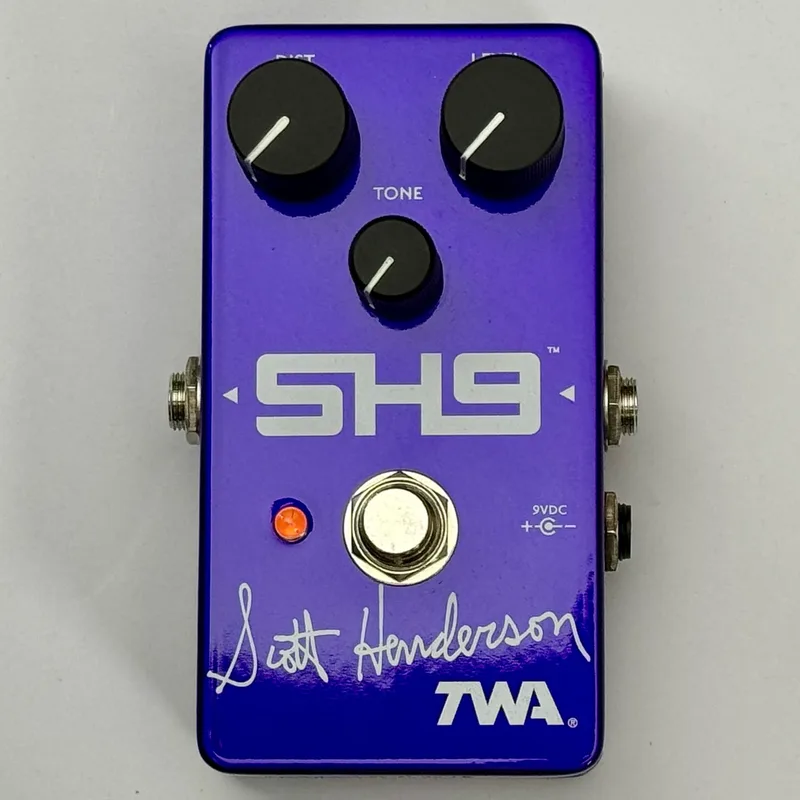
The Butter Machine is not a copy but a custom take on the Maxon SD-9 Sonic Distortion, built for Landau, who has a long-term relationship with the Ibanez/Maxon SD9 Sonic Distortion34. The SD-9 itself carries a strong reputation: MusicRadar notes it is a stompbox that Scott Henderson has called "the best distortion pedal ever made"5. Guitar Pedal X places the Butter Machine alongside the TWA SH9 as pedals "based on a similar philosophy and take on the Maxon SD-9 Sonic Distortion"3.
The development story is unusually long for a single pedal. RockBoard's PedalPedia says it made countless prototypes over more than two years of research and development, with Landau using the prototypes at his sessions and on tour so the company could hear his direct feedback1. MusicRadar's report on the launch adds that it took several prototypes and months to reach a final design that reflected "many improvements" on the initial request2.
Landau's involvement is documented beyond the design process: RockBoard's PedalPedia says he used the prototypes at his sessions and on tour, as well as at his recording sessions and home studio in Los Angeles1. The pedal's connection to the Maxon SD-9 Sonic Distortion runs through Landau himself, who has a long-term relationship with the Ibanez/Maxon SD9 Sonic Distortion64.
Controls
| Control | What it does |
|---|---|
| Gain | Sets the drive amount, from overdrive to full-on distortion1 |
| Tone | Shapes the overall voicing3 |
| Volume | Sets output level3 |
| Low-Mid (rear trimmer) | Internal trim for the low-mid range3 |
| Sparkle (rear trimmer) | Internal trim for top-end sparkle3 |
Guitar Pedal X notes that both the TWA SH9 and the Butter Machine have "significant advantages over the original SD-9 - with significantly more range on tap"3. The rear trimmers are the practical expression of that: they let you set the low-mid and top-end character behind the panel rather than committing to fixed voicing.
How it compares
Two points from published coverage are worth weighing if you are comparing it with the SD-9 lineage:
- Guitar Pedal X flags the brass enclosure as coming at a $95 premium over the SH9, calling it a "tough decision for some"3.
- The same reviewer, judging from what he had read online and seen on YouTube, said the TWA SH9 "seems to have the edge in its output"3.
On price, Guitar Pedal X listed the Butter Machine at $3953. That figure sits alongside the pedal's brass enclosure, which the same publication noted comes at a $95 premium over the SH93.
The Butter Machine's brass enclosure carries a $95 premium over the SH9, a difference Guitar Pedal X called a "tough decision" for some players3. The Butter Machine remains the pedal in Vemuram's range tied directly to the SD-9 lineage and to Michael Landau.
Videos
Michael Nielsen - Big Hairy Guitars
John Nathan Cordy
Jon is just TOO LouD!!
News
Questions
Who helped design the Vemuram Butter Machine?
Vemuram developed the Butter Machine in collaboration with the Los Angeles session guitarist Michael Landau, who wanted his ideal distortion pedal. The maker says the two worked through countless prototypes over more than two years of research and development, with Landau using the prototypes at his sessions and on tour and giving direct feedback along the way.
What do the rear trimmers on the Butter Machine do?
Alongside the front-panel Gain, Tone and Volume controls, the Butter Machine carries rear trimmers labeled Low-Mid and Sparkle. Guitar Pedal X lists these as part of the pedal's control set, and notes that pedals in this SD-9 lineage, including the Butter Machine, offer significantly more range than the original Maxon SD-9.
What power does the Vemuram Butter Machine need?
The Butter Machine runs on 9V DC with a center-negative plug and draws 12mA, according to the maker's product information. That low draw means it sits comfortably on a pedalboard power supply alongside other standard pedals.
Is the Vemuram Butter Machine analog?
Yes. The maker's product information lists the Butter Machine's circuit type as analog.
Sources (6)
- Butter Machine by Vemuram, RockBoard PedalPedia, 2026
- Hear Michael Landau demo his new $385 Vemuram Butter Machine distortion pedal and explain why it finally replaced his Maxon SD-9, MusicRadar, 2023-10-20
- Guitar Pedal X, Guitar Pedal X, 2023-12-17
- What About The SD9 Sonic Distortion? Ibanez, Maxon/Analogman, Vemuram Butter Machine & TWA SH9, That Pedal Show, 2024-02-02
- The "best distortion pedal ever made" but better? The Maxon SD-9SH stakes its claim, MusicRadar, 2020-01-31
- Guitar Pedal X, Guitar Pedal X, 2026-02-17