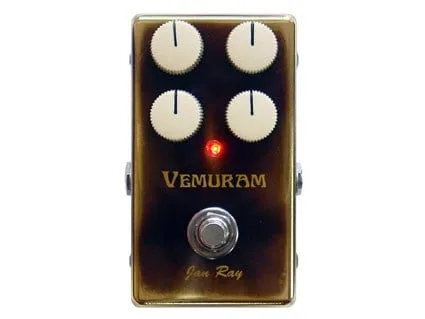


The Vemuram Jan Ray is a boutique analog overdrive pedal, handcrafted in Japan by Vemuram with high-quality components and a robust enclosure. Vemuram designed it to reproduce the punchy, clear tones of 1960s Blackface Fender amps, a sound often described as the "Fender Magic 6"1. Delicious Audio's Paolo De Gregorio calls it probably Vemuram's most popular pedal, and says it recreates the classic Fender Magic 6 tone when pushed2.
The pedal carries four knobs, Volume, Gain, Bass and Treble, plus an internal Saturation trimmer, and RockBoard's PedalPedia describes it as suitable for both transparent drive and amp-like breakup tones1. It is also one of the most discussed pedals in the boutique overdrive world, because DIY builders who traced the circuit found it to be a slightly modified Paul C. Timmy, a claim at odds with Vemuram presenting it as an original design3.
A Blackface Fender sound in a pedal
The Jan Ray's stated purpose is specific: capture the sound of a 1960s Blackface Fender amp being pushed. RockBoard's product listing says it was "designed to reproduce the punchy, clear tones of 1960s Blackface Fender amps, often described as the 'Fender Magic 6'"1. Delicious Audio echoes this, writing that the pedal "recreates the classic 'Fender Magic 6' tone when pushed"2.
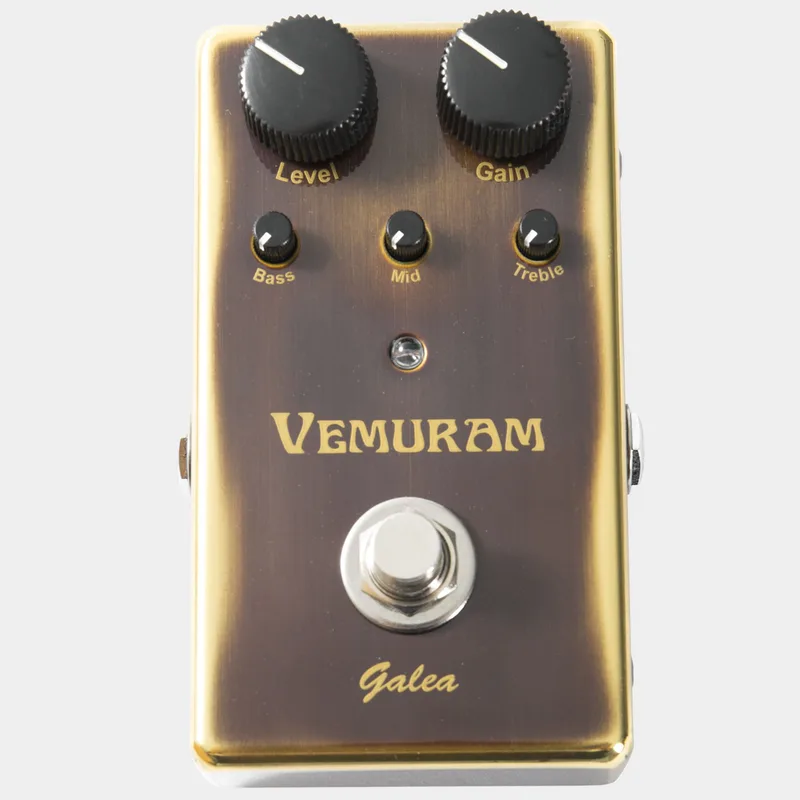
For a player, that means the pedal is aimed at the clean-ish, amp-like breakup territory rather than heavy distortion. Vemuram positions it as working for both transparent drive, where it adds grit without changing the core tone, and amp-like breakup, where it behaves more like a cranked combo1. The four external knobs sit in a familiar layout: on That Pedal Show, the hosts described the arrangement as "level top left, gain top right, bass and treble" on the bottom7.
The enclosure is brass, a signature of Vemuram's build style. Guitar Pedal X's Stefan Karlsson refers to "the brass-enclosed Vemuram Jan Ray typicaly going for £349 in the UK"6, and in a February 2025 piece noted the Jan Ray "would set you back ($375)"5.
Inside the circuit: op-amp, clipping diodes and the Saturation trimmer
The Jan Ray's circuit has been traced and discussed in detail by the DIY community, and that analysis is what made the pedal famous beyond its sound893.
Gain stage and clipping
The circuit is built around an LM1458 dual op-amp, though builders report that any dual op-amp will work in its place, including the 4558, LM833 and TL07210. Four diodes do the clipping, with two diodes following each other in series in each direction, making the clipping less pronounced and "uncompressing" the sound10. The original circuit had two series diode pairs in each direction; the widely shared DIY layout adds a switch for diode selection, giving the option of the Timmy's more compressed mode10.
The Saturation trimmer
The internal trimmer is the Jan Ray's main point of difference from a stock Timmy circuit. On the Vemuram website it is called the Saturation trimmer10. Delicious Audio describes it practically:
"trimmer accessible through a screw in the back panel lets you control the saturation"2
Delicious Audio, 20202
Turning it down makes the pedal more transparent; dialing it up tames the high end for a fatter, more compressed tone2. Technically, the 10K trimmer sits in series with a 680R resistor and in parallel with a 9.1k resistor, giving a resistance range between 630R and 4K9 where the Timmy uses a fixed 3.3k resistor103. The original pedal uses a 3386H trimmer, not a 3296 multi-turn10.
Version differences
Builders on the Guitar FX Layouts blog reported that units with serial numbers below 4000 were "different": the 3.3k resistor to the gain pot was changed to 33k, which sets the minimal gain higher103. Players comparing used Jan Rays may find early and later units behave differently at low gain settings.
Is the Jan Ray a Timmy clone?
This is the question the Jan Ray is best known for, and the answer depends on who you ask.
The circuit evidence comes from the DIY community. Coda Effects, having traced and built the circuit, stated flatly that Vemuram "sold the Jan Ray, a pedal proven to be a slightly modified Paul C. Timmy, while claiming it was an original design"3. A builder on Guitar FX Layouts who completed a verified build reported: "it sounds frickin' great! (it should, since it sounds just about exactly like a Timmy)"10.
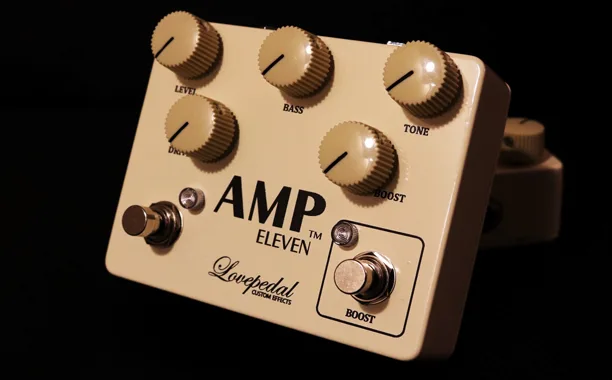
The component-level comparison backs this up, with small differences. The Tone pot is 10K where the Lovepedal Amp 11, another established Timmy derivative, uses 5K, shifting that pot's frequency response; otherwise the components match or fall within tolerance10. One layout correction, changing a bias resistor from 1K5 to 7K5, made the ratio exactly the same as in the Timmy10.
The press is more measured. Guitar Pedal X describes the Jan Ray as "somewhat evolved and differentiated" from the Timmy4, and notes the timing: the Jan Ray appeared around 2012/13, when there were no official Timmys to be had4. That Pedal Show puts it as "some say inspired by (some say a copy of) the Timmy pedal"9.
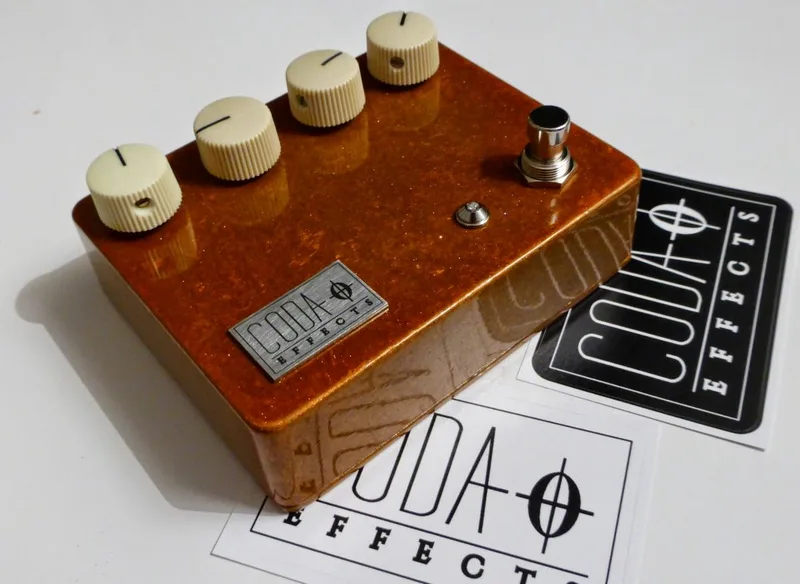
The lineage has spread widely. Coda Effects built its own Jan Ray clone with a laser engraved logo and the same vintage Fender-style knobs3, and Guitar Pedal X has covered Jan Ray-based pedals including the Gigahearts January Dynamic Overdrive3 and the Adag Audio Seagull Transparent Overdrive, an Indonesian take on the circuit3. In 2019, Ibanez and Vemuram announced the TSV808 at Winter NAMM, a collaboration pedal blending the Tube Screamer with the Jan Ray, each firm's most notable pedals11.
What reviewers and builders said
On That Pedal Show, the hosts called the Jan Ray "maybe the bougiest of all bougie overdrive pedals, apart from a Klon," and put its price at "400 and something" quid7. In a 2026 episode they also compared it directly against the Boss BE-5M's OD/Dist sounds from the mid-1980s multi-effects era12.
"a Vemuram Jan Ray, maybe the bougiest of all bougie overdrive pedals, apart from a Klon"7
Mick and Dan, That Pedal Show7
The DIY verdict was positive on the sound itself. The verified Guitar FX Layouts build found it "sounds frickin' great," while noting it sounds essentially like a Timmy10. Coda Effects' own build reports were enthusiastic about the tone but practical about construction: the Jan Ray is "quite annoying to make on vero, mainly because of the four knobs to wire"8. The blog also noted that more gain is available with a simple mod, using a bigger value gain pot such as 1M instead of 500K10.
Videos
Mateus Asato
Guitar Bonedo
intheblues
Questions
Is the Vemuram Jan Ray a Timmy clone?
DIY builders who traced and built the circuit found it to be a slightly modified Paul C. Timmy, and one verified build reported it sounded just about exactly like a Timmy. Guitar Pedal X describes the Jan Ray as somewhat evolved and differentiated from the Timmy, and That Pedal Show calls it inspired by, or some say a copy of, the Timmy. Vemuram presented it as an original design.
Where is the saturation trimmer on the Jan Ray?
The Saturation trimmer is an internal 10K trimmer, accessible through a screw in the back panel. Turning it down makes the pedal more transparent, while dialing it up tames the high end for a fatter, more compressed tone. The original pedal uses a 3386H trimmer rather than a 3296 multi-turn.
What op-amp does the Jan Ray use?
The circuit uses an LM1458 dual op-amp, though builders report that any dual op-amp will work in its place, including the 4558, LM833 and TL072. Four diodes do the clipping, arranged in series pairs in each direction for a less pronounced, uncompressed character.
Is the Vemuram Jan Ray true bypass?
Yes. The maker's product listing specifies true bypass switching, which leaves the tone unaltered when the pedal is off. It runs on 9V DC, center negative, drawing about 5mA.
Is there a Jan Ray with an expression pedal input?
Yes. Builders on the Guitar FX Layouts blog reported an official modded version, priced at $600, that adds an expression pedal socket controlling the volume. The standard Jan Ray does not have this input.
Sources (12)
- Jan Ray by Vemuram, RockBoard (rockboard.de), 2026
- Vemuram Jan Ray Overdrive, Delicious Audio, 2020-08-06
- Coda Effects, Coda Effects, 2015-03
- Guitar Pedal X, Guitar Pedal X, 2024-06-20
- Guitar Pedal X, Guitar Pedal X, 2025-02-07
- Guitar Pedal X, Guitar Pedal X, 2025-10-07
- 1991 Boss BE-5M Multi-FX vs Modern Boutique Guitar Pedals, That Pedal Show (YouTube), 2026-08-21
- Coda Effects, Coda Effects, 2015-11
- Dream Overdrives: Timmy, Jan Ray & Amp11. And A Bit On Ethics, That Pedal Show, 2016-07-22
- Guitar FX Layouts: Vemuram Jan Ray, Guitar FX Layouts (tagboardeffects.blogspot.com), 2013-03-07
- NAMM 2019: Ibanez and Vemuram have teamed-up for a Tube Screamer and Jan Ray hybrid, MusicRadar, 2019-01-25
- 1991 Boss BE-5M Multi-FX vs Modern Boutique Guitar Pedals, That Pedal Show, 2026-08-21