

The Amptweaker TightBoost is a low-gain boost pedal from AmpTweaker, built as a variation on the company's original overdrive, the TightDrive. Where the TightDrive pushes into overdrive, the TightBoost keeps the gain section less aggressive and adds a Mid control that can blend in a wah-like tone, so a player who wants "a lower gain boost pedal with parked-wah tones and more tone tweaking power" has both in one box1. Driven hard, the pedal provides a warm, tube-like breakup2.
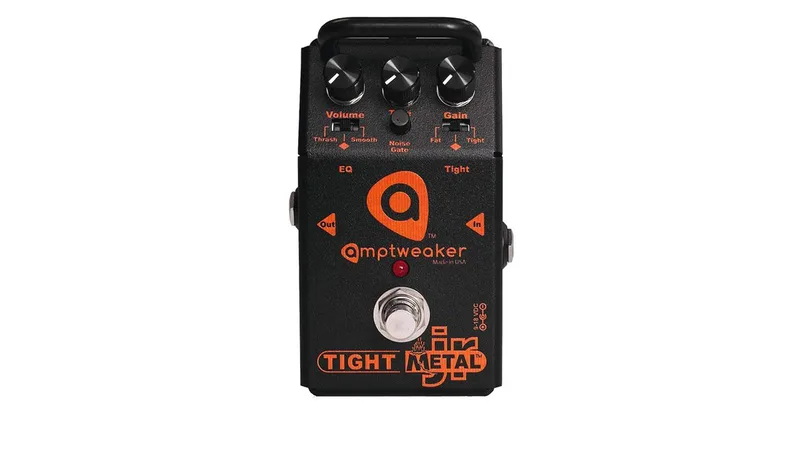
The pedal was announced in August 2010 as a cleaner-boost take on the TightDrive, and at that time Amptweaker was still in the finalization stages and taking additional suggestions and feedback during development2. It went on to become part of the platform Amptweaker later built the TightMetal distortion on3.
What it does to your sound
The TightBoost sits at the clean end of the gain range. It uses the same distortion methods as the TightDrive, but with a less aggressive gain section, so it works as a boost first and an overdrive second12. Premier Guitar's reviewer found it "definitely delivers in a big way" for players who want a lower-gain boost with parked-wah tones and tone-tweaking power1.
The signature trick is the Mid control. As Premier Guitar described it at the pedal's announcement, the Mid gradually becomes a "more peaky" mid-boost and gradually blends in the wah sound without removing the high end2. Cranked, it gives a parked wah sound, the fixed midrange hump you get from a wah pedal left in one position1.
Powering the pedal from 6 to 18 volts changes its character: the lower setting gives a more compressed sound, and higher voltage gives more headroom1.
The controls
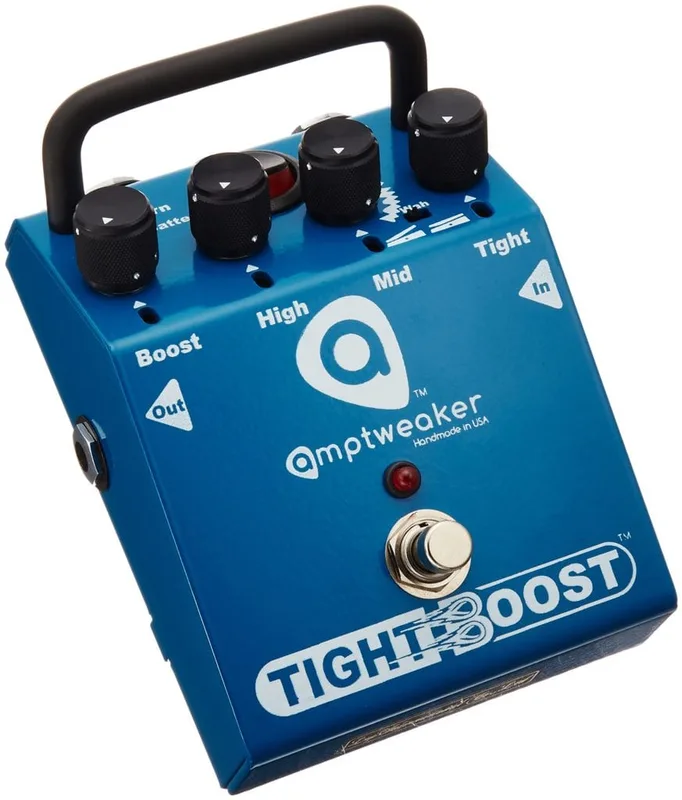
There are controls for Boost, High, Mid, and Tight, all lit with red LEDs when using an external power supply1.
| Control | What it does |
|---|---|
| Boost | Sets the output level of the pedal1 |
| High | Shapes the top end; pulling it down makes the wah effect more pronounced1 |
| Mid | Works interactively with the High control; the more you crank it, the more it becomes a parked wah sound1 |
| Tight | Turning it clockwise tightens up the bottom end while thinning out bass wooliness1 |
| Wah switch | A two-position switch between the Mid and Tight controls that selects the Wah frequency1 |
Different amounts of wah are available by using the High and Tight controls together, so the parked-wah character is something you dial in rather than switch on12.
The effects loop
At the top of the pedal are Return and Send jacks for an FX loop, with a corresponding 2-way switch on the bottom to select between Pre or Post loop placement1. That means other effects can sit before or after the TightBoost's gain stage. Amptweaker's pedals with loops are designed for this kind of placement work; in a Premier Guitar review of the related Bass TightDrive, the reviewer found that "Placing them in the Bass TightDrive's effects loop really helped emphasize their special colors" when running octave or auto-wah devices through it4.
Premier Guitar's reviewer summed up the loop and power options as features that "really extend the usefulness" of the pedal1.
How it differs from the TightDrive
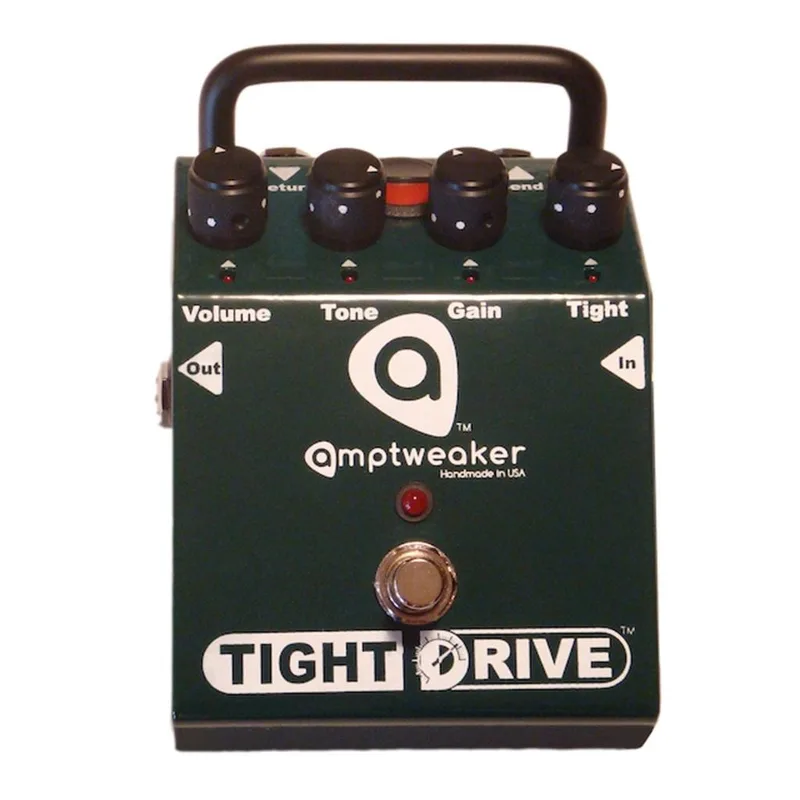
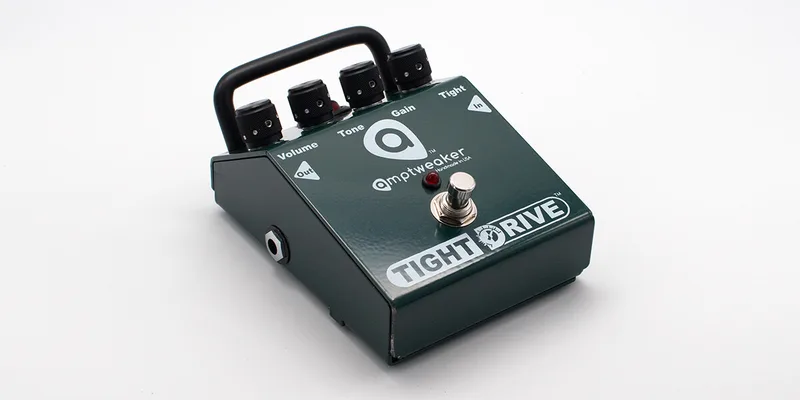
The TightBoost is the successor to the TightDrive, and differs in having a less aggressive gain section and the ability to blend in wah tones1. The two share a family sound: the TightDrive has four knobs, Volume, Tone, Gain, and Tight5, and Amptweaker's own product page for the TightDrive lists its Volume, Tone and Gain controls along with a 3-way tone stack selection6. Where the TightDrive is an overdrive aimed at dirt, the TightBoost is aimed at level, EQ shaping and that parked-wah midrange.
Build and power
Built in a blue, 14-gauge steel, tank-like chassis with a roll bar above the controls, the Tight Boost feels rock-solid and substantial1. Power comes from an external supply across a 6 to 18 volt range, or from a battery: a slide-out magnetic battery compartment hides on the side of the chassis1. Switching is true bypass, and the signal is buffered when the pedal is on1.
The 6 to 18 volt power range means the pedal is not locked to a single supply voltage. Running it at the low end gives a more compressed sound; higher voltage gives more headroom1.
What reviewers said
Premier Guitar's review found much to like: "There is much to love about the Tight Boost, bulletproof construction, tonal flexibility, well thought out design touches and killer tone"1. The reviewer's one reservation was aimed at players who need a lot of gain from a boost: the pedal is not suited for players needing scads of gain1.
Videos
Amptweaker
The Tone King
Aviel Nahoum
Questions
Does the Amptweaker TightBoost take a battery?
Yes. The pedal has a slide-out magnetic battery compartment hidden on the side of the chassis, so you can load a battery without opening the case. It also runs on an external power supply, and the control knobs light up with red LEDs when you use one.
Is the Amptweaker TightBoost true bypass?
Yes. Switching is true bypass when the pedal is off, and the signal is buffered when the Tight Boost is engaged. That means the pedal stays out of your signal path when bypassed but drives your chain while active.
How do you get a wah sound from the TightBoost?
Crank the Mid control and the pedal moves toward a parked wah sound. The Mid works interactively with the High control, and pulling the High down makes the wah effect even more pronounced. A two-position Wah switch between the Mid and Tight controls selects the Wah frequency.
What is the difference between the TightBoost and the TightDrive?
The TightBoost is the successor to the TightDrive and uses the same distortion methods, but it has a less aggressive gain section and a Mid control that blends in a wah sound. The TightDrive is a higher-gain overdrive with Volume, Tone, Gain and Tight controls.
Sources (6)
- Amptweaker Tight Boost Pedal Review, Premier Guitar, 2011-03-31
- Amptweaker Introduces TightBoost Pedal, Premier Guitar, 2010-08-23
- NAMM 2011: Amptweaker introduce TightMetal distortion pedal, MusicRadar, 2011-01-11
- Amptweaker Bass TightDrive Pedal Review, Premier Guitar, 2010-07-20
- Amptweaker TightDrive Pedal Review, Premier Guitar, 2010-07-20
- Tight Drive, amptweaker.com, 2024-07-08