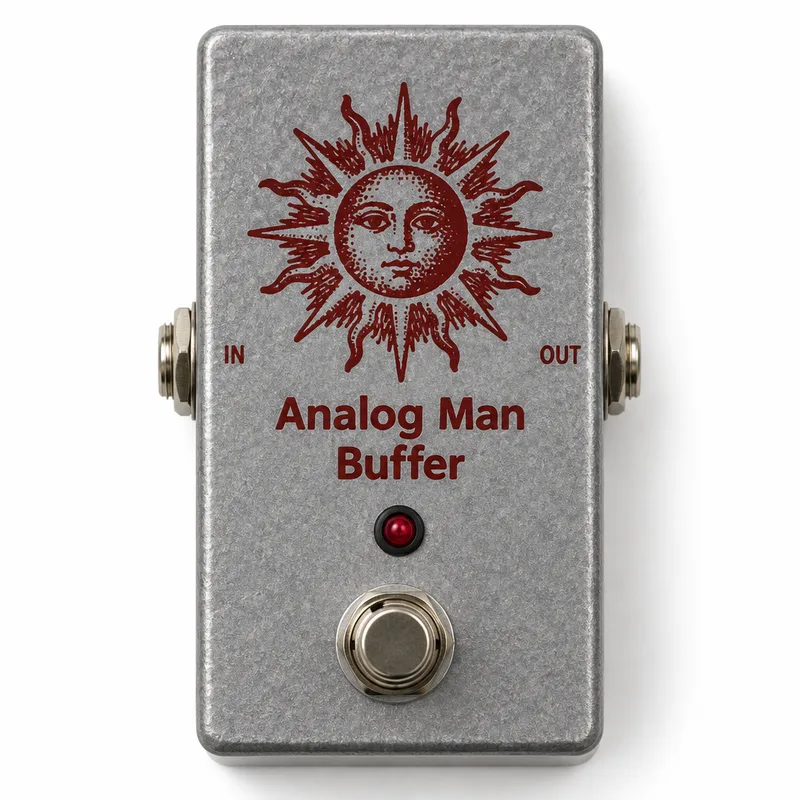
The Analog Man Buffer is a buffer pedal from Analog Man, hand made in the USA, designed to keep your guitar signal strong and its frequencies intact over long cable and pedalboard runs1. Analog Man's stated goal for it is a "virtual cable": the maker describes the sound as warm with a touch of compression and a natural frequency response, but without changing your tone1.
A buffer, as BOSS's Jim Bybee explains, is short for "buffer amplifier": it lowers the output impedance, strengthening the weak high-impedance guitar signal so it can travel over longer cable lengths without tone degradation2. In a Sweetwater demo, Joki Schaller put it more simply: a buffer is a small amplifier at unity gain that changes the impedance from high to low and preserves the signal information for the rest of the chain3. Without one, long unbuffered cable runs and complex chains of stompboxes and patch cables can dull the treble and weaken the response45.
A virtual cable: what the buffer does to your signal
Analog Man's design goal is that the buffer should behave like a cable that costs you nothing. The maker describes it as "warm with a touch of compression and natural frequency response but without changing your tone"1. In other words, it is not meant to add character the way an overdrive or fuzz pedal does; it is meant to preserve what your guitar and amp already sound like once your rig grows past a few pedals and a long cable.
The circuit is where the warmth comes from. Analog Man uses the same input transistor as an old Tube Screamer, giving the buffer the same 510K input impedance as that pedal, and the Tube Screamer's JRC4558D opamp later in the circuit for what the maker calls a warm but clean unity gain amplifier1. The topology is a transistor on the input and an op-amp on the output, which Analog Man describes as "the best of both worlds - nice silky tone and" a strong output1.
That 510K input impedance is worth comparing before you buy, because it is lower than most dedicated buffers on the market1:
| Buffer | Input impedance | Source |
|---|---|---|
| Analog Man Buffer | 510K1 | maker |
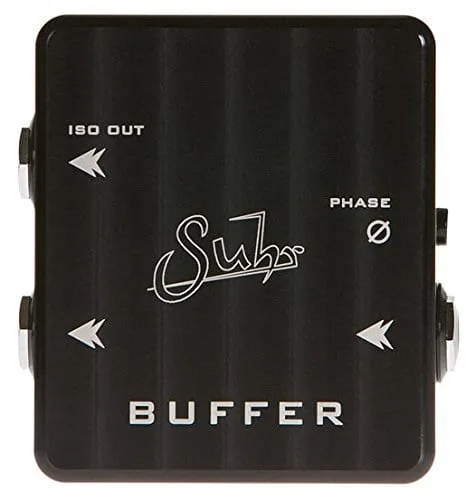
| Suhr Buffer | 1M ohms6 | maker manual |
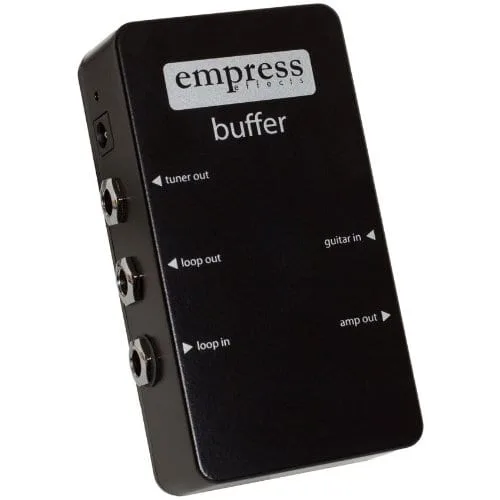
| Empress Effects Buffer | 1M ohms7 | maker |
| Saturnworks IC buffer | 1M ohms8 | maker |
A lower input impedance loads the pickups slightly more, which is part of why the Analog Man unit leans warm rather than perfectly transparent. Whether that matters depends on your pickups and what sits in front of it. See the Suhr Buffer and Empress Effects Buffer pages for the higher-impedance alternatives167.
Built into a volume pedal
One of the Analog Man Buffer's distinguishing features is that it does not have to be a pedal on your board at all. Analog Man can build the buffer into volume pedals and their own switchboxes1:
- Boss FV500-L: normally installed on one side (Input 1/Output 1), the side with the TUNER OUT jack. A second buffer can be added to the other side for stereo buffered signals1.
- Ernie Ball VP Junior 25K 6181: built in with an added power jack, which Analog Man describes as killing two birds with one stone and saving pedalboard space1.
- Analog Man switchboxes: the buffer can be built into any of them, for example a TUNER MUTE SWITCH that also handles your tuner and its cable1.
In both volume pedal installations, the pedal no longer works as an expression pedal once the buffer is installed1.
Power supply notes: 9V to 18V
The buffer runs fine at 9V off a battery or a normal power supply. If you have a really loud signal, Analog Man says you can run it at higher voltages such as 18V for more headroom1.
Analog Man says the buffer may be a little noisy with some digital switching power supplies, such as the 18V Boss supply they sell, so it is best used with a transformer-based power supply1.
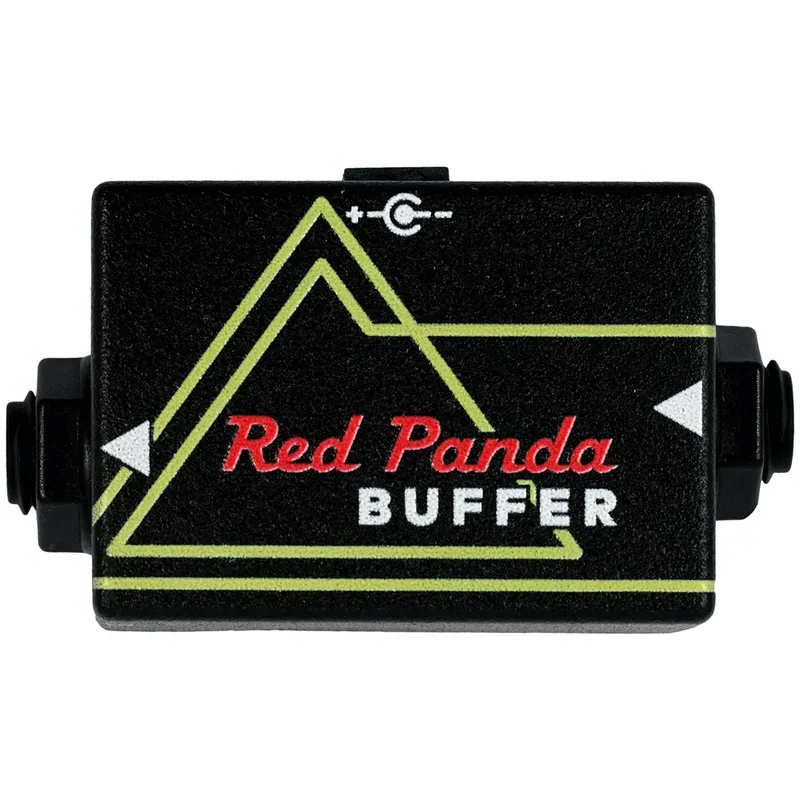
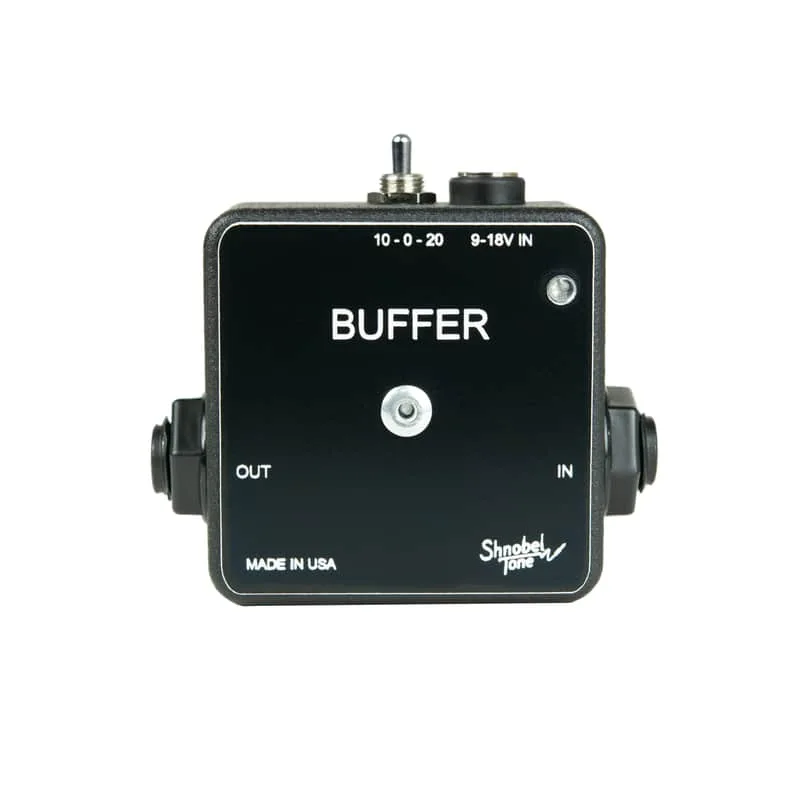
That 9 to 18V range is common among current buffers, including the Red Panda Bit Buffer (9 to 18 VDC, center negative)9, the Shnobel Tone Buffer (9 to 18V)10, the Mythos Buffer (9 to 18 volts)11, the Revival Engineering Glory Buffer (9 to 18V, which the maker pitches as additional clean headroom)91011, and the AmpMojo Trans Am A/B Buffer (9, 12, or 18 volts for varying degrees of headroom)91011. Running at the higher end of the range gives the opamp more room before clipping, which matters most with hot signals or active pickups.
Questions
What input impedance does the Analog Man Buffer have?
510K, matching an old Tube Screamer because the buffer uses that pedal's input transistor1. That is lower than the 1M input impedance of buffers like the Suhr Buffer and Empress Effects Buffer67.
Can the Analog Man Buffer be installed in a volume pedal?
Yes: a Boss FV500-L (normally the side with the TUNER OUT jack, with an optional second buffer for stereo), an Ernie Ball VP Junior 25K 6181 with an added power jack, or any of Analog Man's switchboxes. In the volume pedals it no longer works as an expression pedal1.
Does the Analog Man Buffer work with digital switching power supplies?
It runs, but Analog Man says it may be a little noisy with some digital switching supplies, such as the 18V Boss supply they sell, and recommends a transformer-based supply1.
Where is the Analog Man Buffer made?
All Analog Man buffers are hand made in the USA1.
Sources (11)
- Analog Man Buffer Pedal, Analog Man (analogman.com), 2020
- Why Buffers are Important for Great Tone, BOSS (articles.boss.info), 2024-02-05
- Lehle Sunday Driver II: Give Your Darkened Tones a Boost!, Sweetwater, 2023-08-30
- Do I need a buffer?, blog.lehle.com, 2017-06-14
- IC Buffer for Guitar Pedals: Op-Amp Buffer Kit & Schematic, General Guitar Gadgets, 2014-05-12
- Buffer Manual, Suhr (JS Technologies, Inc.), 2022
- Buffer - Empress Effects Inc., Empress Effects Inc.
- Buffer Pedals for Guitar or Bass, Saturnworks Pedals, 2026-08-08
- Buffer - Red Panda, Red Panda
- Buffer | Shnobel Tone, Shnobel Tone
- Buffer - Mythos Pedals, Mythos Pedals