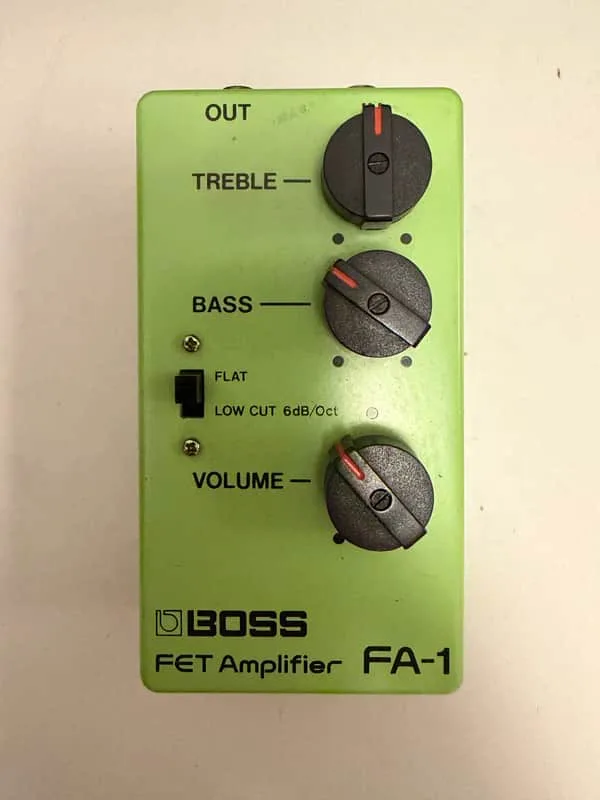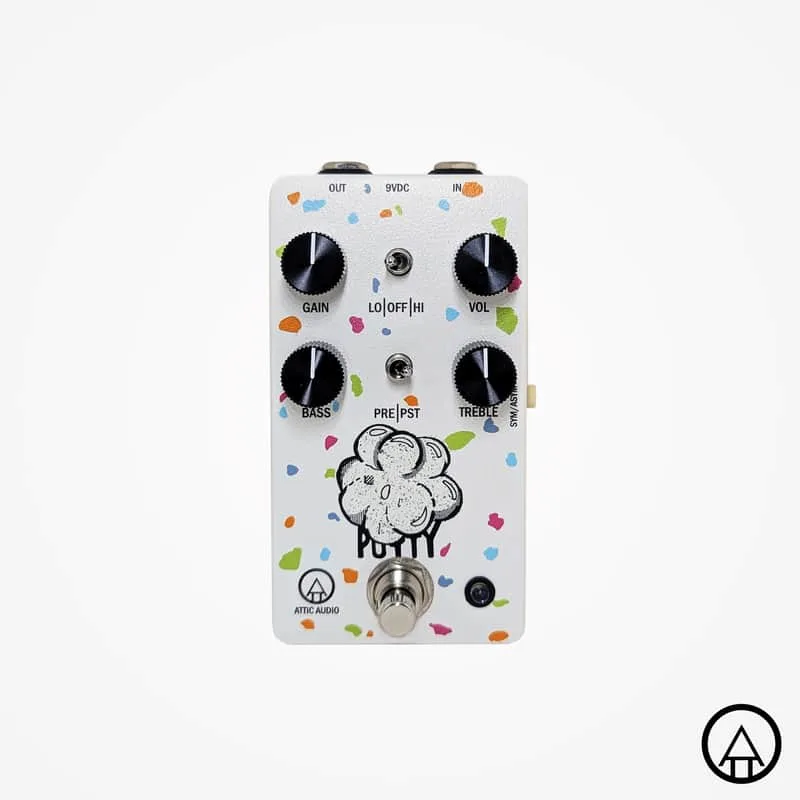


The Attic Audio Putty is a tone-shaping boost and overdrive pedal and saturation preamp from Attic Audio, an indie pedal maker based in Malta1. Its circuit is a take on the Boss FA-1, copying the original in spirit but turning it from a simple tone-improving preamp into what Guitar.com's reviewer called "something of a sonic multi-tool"1. With clipping switched off and the controls at halfway, the starting point is a subtle clean boost that adds some sparkly bite to the top end1.
The manual gives four settings to start with that cover the range of sounds the pedal can produce: a clean boost, a light rhythm tone, a more overdriven sound, and fuzzy distortion2. Guitar.com's reviewer Richard Purvis described the spread of gain on offer:
"It can do a lovely low-gain thing that sounds a lot like a Klon but without the midrange push, it can work equally well"1
The Putty takes 9V DC, center negative, at up to 20mA from a pedalboard power supply2.
What it does: boost, overdrive and saturation preamp
The FA-1 heritage means the Putty starts life as a preamp, but the clipping options push it well past clean boost territory. A three-way toggle selects between three clipping modes, lo, off and hi, for varying levels of saturation2.
- Clipping off: a subtle clean boost with sparkly top-end bite at halfway settings1
- Lo clipping: acts more as a transparent overdrive pedal, with a nice bit of grit that Guitar World found great for light rhythm work2
- Hi clipping: does not quite get to metal distortion, but delivers enough saturation for fuzzed-out hard rock riffs on a clean amp2
Guitar.com's reviewer also placed the pedal's gain range in familiar company, noting it can do a low-gain sound like a Klon without the midrange push, a medium-gain ODR-1 or Plumes type of tone, and light fuzz1. For players weighing it against other gain stages, the distinctions between overdrive, distortion and fuzz map onto the Putty's lo and hi clipping positions.
The controls
The four main controls are gain, volume, bass and treble, which Guitar.com describes as basically the original Paul Cochrane Timmy template1. Around those sit the switches that give the pedal its range.
| Control | What it does |
|---|---|
| Gain | Sets the amount of drive into the clipping stage |
| Volume | Sets the output level |
| Bass | Active EQ, +/-15dB gain, ~350Hz cutoff2 |
| Treble | +/-10dB gain, ~1.2kHz cutoff2 |
| Clipping toggle | Three positions: high, low or no clipping1 |
| Sym/asym button | Pressed in unlocks symmetrical clipping; unpressed engages asymmetrical2 |
| Pre/post EQ switch | Places the tone stack before or after the gain stage1 |
The clipping symmetry button is a push-button on the side that makes the clipping symmetrical or asymmetrical1. The pre/post tonestack switch is the more subtle of the two: Guitar World's reviewer found that with the EQ placed pre-gain it does not really do much, while in post it makes a more noticeable difference on lower-gain settings and a very noticeable difference at higher gain2.
There is one footswitch only, so you have hands-free access to one of those sounds at a time; Guitar.com noted some players might wish it had a second footswitch for switching clipping modes on the fly1. The bypass itself is true bypass, and the footswitch can work in momentary or latching mode2.
What reviewers said
Both published reviews were positive. Guitar.com's Richard Purvis found the pedal "takes the edge off spiky clean tones beautifully"1, and Guitar World's verdict was that the Putty "proves there's still plenty of space for innovation"2.
Guitar World's reasons to buy:
- Can play a variety of roles
- Sounds great in all modes
- Momentary and latching footswitch
- Simple to start dialing in sounds, but plenty of depth2
The same review called it "quite the creative tool", noted "there isn't a bad setting here", found it "pretty keenly priced", and concluded it is "a worthy option for players who need a multi-role overdrive pedal"2.
Availability
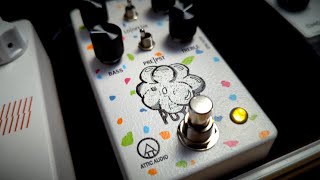
The Putty launched at $217.16 in the US, £179 in the UK, and €169 in Europe as listed by Guitar.com12. As of May 2026 it had newly arrived in the UK through Northern Stompboxes1. The enclosure is lightly textured all over in a very bright white with small dashes of color, a hand-drawn graphic of a piece of putty, and a white LED on either side of the footswitch2.
Videos
Pedals and Tea
EytschPi42
Happy Mag
Questions
Can the Attic Audio Putty run on a battery?
No. The Putty requires a 9V DC pedalboard power supply with a center-negative plug and cannot be run on battery power. It draws a maximum of 20mA, so it is easy on a power brick, but there is no battery option.
Is the Attic Audio Putty true bypass?
Yes. Guitar World lists its bypass as true bypass, and the single footswitch can work in either momentary or latching mode. Momentary mode lets you use the effect only while the switch is held down.
Can the Putty's footswitch work in momentary mode?
Yes. The bypass is listed as true bypass in both momentary and latching configurations, so the footswitch can be set to engage the effect only while it is held, or to toggle on and off conventionally.
What does the pre/post EQ switch on the Putty do?
It places the bass and treble tone stack either before or after the gain stage. Guitar World's reviewer found the pre position made little difference, while the post position was noticeable at lower gain and very noticeable at higher gain settings.
Can the Attic Audio Putty get metal distortion?
Not quite. In its high clipping mode on a clean amp, Guitar World found it does not quite reach metal distortion, but it delivers enough saturation for fuzzed-out hard rock riffs.
Sources (2)
- Attic Audio Putty review, Guitar.com, 2026-05-12
- Attic Audio Putty Saturation Preamp review, Guitar World, 2026-08-13