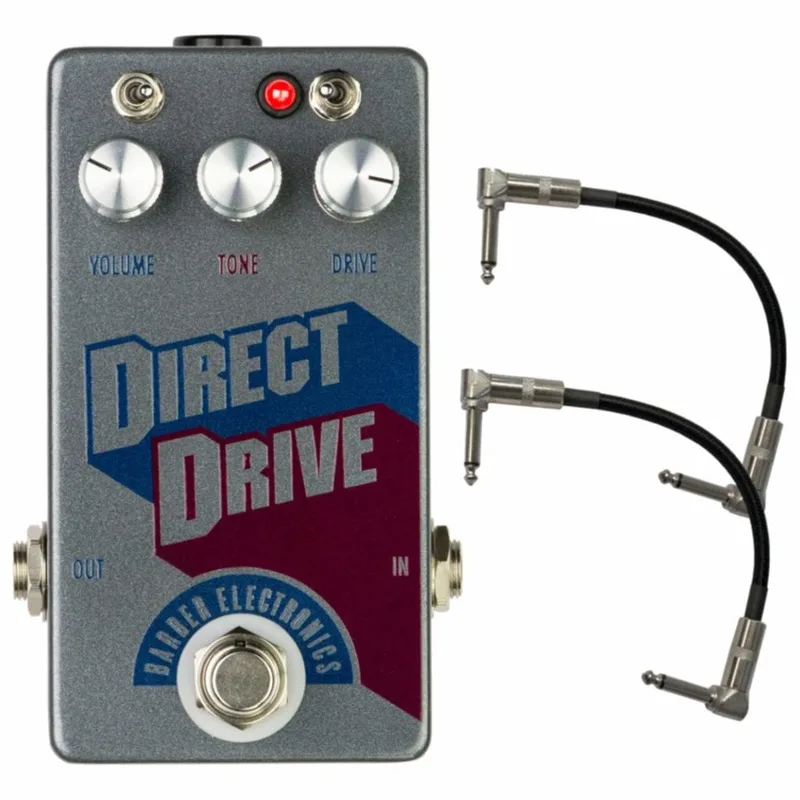


The Barber Direct Drive is an overdrive pedal from Barber Electronics built around vintage British amp voices. Barber describes the current Compact Direct Drive as bringing "a colossal catalog of vintage British voice to your pedal-board," ranging from what the maker calls the elastic-bells of GZ34 sag to the tight crush of an EL34 output section, along the lines of early UK combos with KT66 tubes, a 4-input head into a wall of 4x12 cabinets, and a modified master-volume amp from the early 1980s1. The v4 manual frames the pedal more broadly as an overdrive and distortion unit designed to impart a range of British overdrive and distortion sounds into both clean and distorted amplifiers2.
The current pedal is a consolidation: Barber says it packs the most desirable sounds of the Direct Drive, the Direct Drive Low Gain (LG) and the Super Sport into one compact enclosure measuring 2.3 inches wide1. It was updated in 2020 as v4 with a new look, a 3-way midrange toggle and a gain switch expanded to a 3-way toggle1.
What it does: a vintage British overdrive
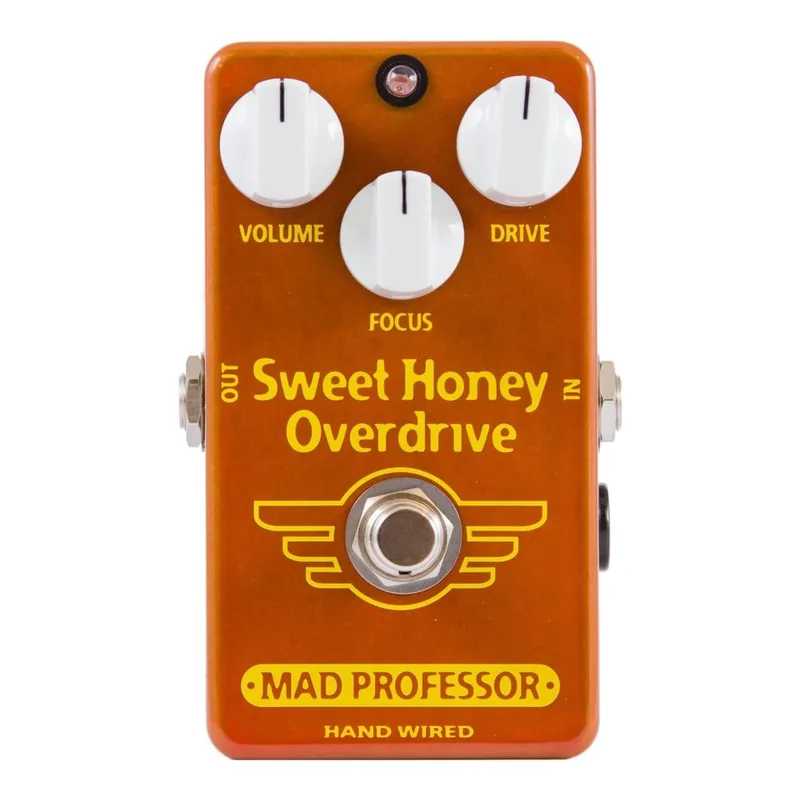
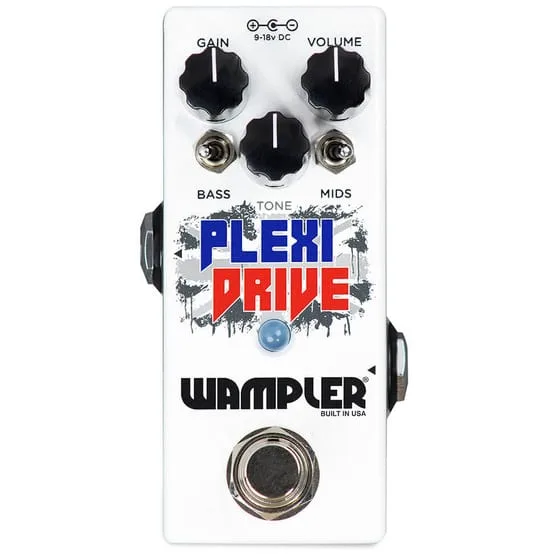
The Direct Drive's job is to push a clean or already-dirty amp toward classic British territory. Barber's own descriptions of the voicing run from sagging tube-rectifier feel to tight, high-output-section grind, and the v4's two 3-way toggles give access to a total of 9 sounds12. Strymon lists the Barber Direct Drive among examples of a two-stage overdrive configuration, alongside the Wampler Ecstasy/Euphoria and the Mad Professor Sweet Honey Overdrive, which places it in a family of pedals whose gain comes from a pair of cascaded stages rather than a single clipping stage3.
The circuit, as drawn in Barber's service schematic, uses op-amp stages with virtual-reference biasing, 1n4148 diode clipping, and a tone network built from .022, .0033 and .0022 capacitors with a 50kB tone pot4. That schematic, drawn by David Barber and dated 3-1-2013, is marked "Use only by permission of Barber Electronics"4.
The controls
The Compact Direct Drive keeps the panel simple: three knobs, a gain toggle and a harmonics (midrange) toggle1. The v4 manual describes what each does.
| Control | What it does |
|---|---|
| Gain | Sets the amount of sustain and drive: nearly-clean gutsy edge at low settings, throaty grind in the middle, singing sustain and harmonics fully open2 |
| Volume | Sets the output level; most players find unity between 10 o'clock and 2 o'clock, depending on pickup output and the guitar's volume setting2 |
| Tone | A simple high-end roll-off; Barber suggests 2 to 3 o'clock as a starting point for balanced sound2 |
| Gain toggle (right) | Three settings: higher gain to the left, Ultra-Dynamic in the middle, low gain to the right2 |
| Midrange toggle (left) | Left is neutral mids, middle is full and fat, right is clear with strong fundamentals2 |
The two toggles multiply out to the v4's 9 sounds2. The gain switch on the earlier Compact schematic had two positions, A and B4; the 2020 update expanded it to three positions, adding what Barber calls a third hyper-dynamic "4 in input" style sound1.
Ultra-Dynamic mode
Ultra-Dynamic is the middle position of the gain toggle. Barber's description of it, from the v4 manual:
"The Ultra-Dynamic mode is getting into the very early '4 input' vintage amp sound, really raw, looser thicker lows, and an open but sweet top when combined with the neutral-mids setting on the midrange switch."
In other words, it is the setting that reaches back past master-volume amps to the raw, looser feel of the earliest 4-input heads, and Barber pairs it with the neutral-mids position on the other toggle.
Power
The pedal runs on a 9 to 18 VDC adaptor with a negative tip (center) connector1. The v4 manual is blunt about polarity: "it must be negative tip (center) or damage will result"2. Current draw is 12 mA1.
No batteries and no adaptor in the box. Barber states the Compact Direct Drive does not accept internal batteries and that the power adaptor is not included, so plan on a 9 to 18 VDC center-negative supply from day one1.
Build details
Barber highlights a few construction points players care about on a small pedal: solder lugs for the jacks rather than PCB-mounted through-panel parts, and a true-bypass footswitch1.
What reviewers and builders said
Published reaction to the Direct Drive circuit comes largely from the DIY community around Guitar FX Layouts, where IvIark published a stripboard layout for the Compact Direct Drive in May 2014, based on a 2013 Dave Barber schematic5. The comments on that page read like a long-running user review.
- IvIark called it "a great overdrive," finding "everything from an almost clean boost for sparkling fingerpicking to roaring plexi (don't need to build a Guv'nor now)"5.
- Doron Barness rated it "Definitely one of the great Marshall sounds out there along with the Wampler Plexi-Drive," and liked the added mid-control mod5.
- MAO found it "Sounds excellent, a nice alternative to the Wampler Plexi Drive"5.
- Another builder reported "great sound, right from the first note" on a completed build5.
Not everything was unconditional. One commenter felt the tone control in the TMB stack was "not doing that much," and suggested a log pot for the bass control would give better control5. Another builder's view on the presence control in a modded version was that it "doesn't do that much so i'd omit that one"5. On taper choices for the mods, MAO settled on linear taper for the Mid control and audio taper for the Bass, but kept the stock three-knob version5.
Schematics and DIY layouts
Barber's service schematic for the Compact Direct Drive exists, drawn by David Barber and dated 3-1-2013, but it is explicitly restricted: "Use only by permission of Barber Electronics"4. The v4 manual is available from Barber's site1.
For DIY builders, Guitar FX Layouts published a vero layout for the Compact Direct Drive as a variant of the Barber Direct Drive; a commenter on the layout asked whether the underlying circuit was the V2 or V3 Direct Drive5. The schematic behind the circuit is dated 3-1-2013 and shows 1n4148 diode clipping, op-amp stages with v ref biasing, and a tone network of .022, .0033 and .0022 capacitors with a 50kb tone pot4.
Related Barber pedals
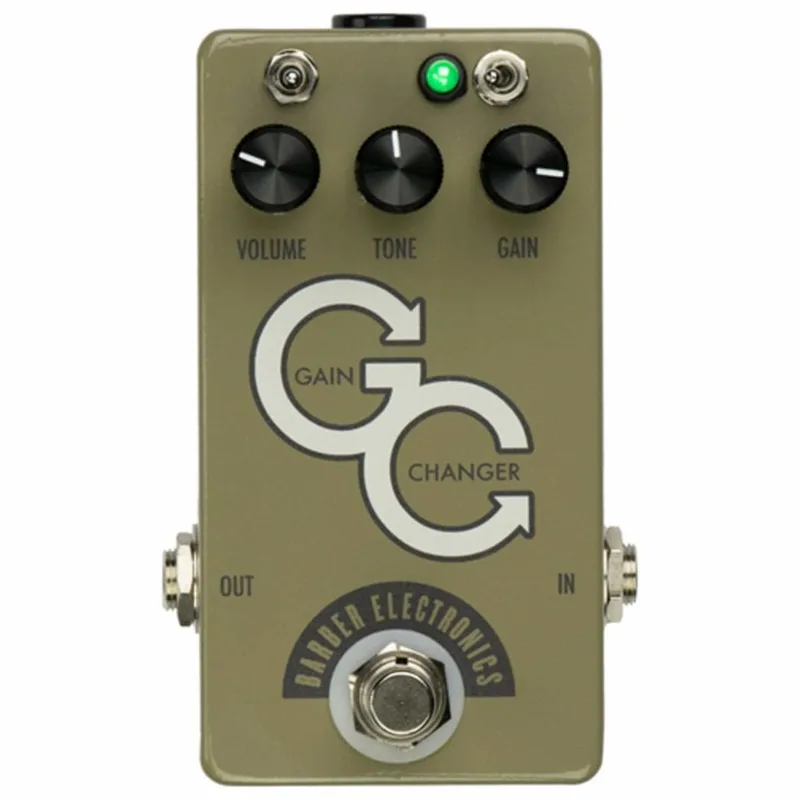
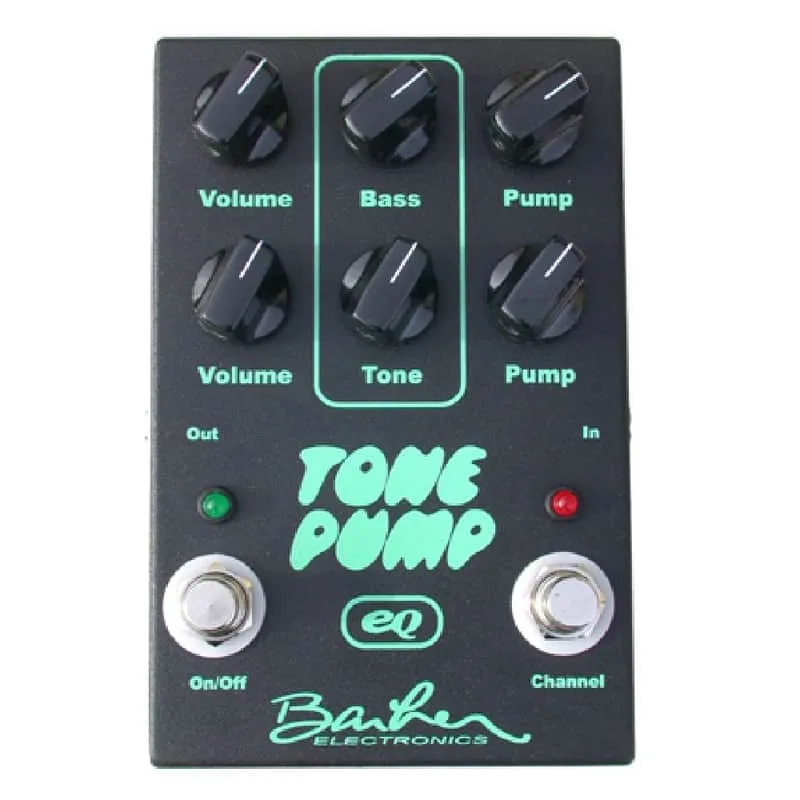
The Direct Drive sits in a Barber range that also includes the Gain Changer, the Gain Changer SR, the Tone Pump, the PLUS V2, the FWW Plus and the B.U.S.S Five Watt World edition. The Compact Direct Drive itself has its own page covering the current production pedal in detail.
Videos
ProGuitarShopDemos
willievega
Thyago Farias
Questions
Does the Barber Compact Direct Drive take a battery?
No. Barber states the pedal does not accept internal batteries and that a power adaptor is not included, so you need to supply your own. It runs on a 9 to 18 VDC supply with a negative tip (center) connector, and Barber warns that using the wrong polarity will damage the pedal.
Is the Barber Compact Direct Drive true bypass?
Yes. Barber lists a true-bypass footswitch among the pedal's build features, alongside toggles, pots and solder-lug jacks rather than PCB-mounted through-panel parts. When the pedal is off, your signal passes through without buffering.
What is the difference between the Direct Drive, Direct Drive LG and Super Sport?
They were separate pedals in the Barber range, and the current Compact Direct Drive combines what Barber calls the most desirable sounds of all three into one enclosure. The Compact is 2.3 inches wide and, in its v4 update from 2020, adds a 3-way midrange toggle and an expanded 3-way gain toggle for a total of 9 sounds.
Is there a schematic or DIY layout for the Barber Direct Drive?
Barber's own service schematic of the Compact Direct Drive, drawn by David Barber and dated 3-1-2013, is marked for use only by permission of Barber Electronics. Guitar FX Layouts published a stripboard (vero) layout in May 2014 based on a 2013 Dave Barber schematic, with community mods adding Mids and Bass controls.
What does Ultra-Dynamic mode do on the Barber Direct Drive?
On the v4, Ultra-Dynamic is the middle position of the gain toggle. Barber describes it as getting into the very early 4-input vintage amp sound: really raw, with looser and thicker lows, and an open but sweet top end when combined with the neutral-mids setting on the midrange switch.
Where should I set the volume on the Direct Drive for unity?
The v4 manual says most players find unity volume between 10 o'clock and 2 o'clock on the Volume knob, depending on pickup output and where the guitar's own volume control is set. Start in that range and adjust by ear against your bypassed signal.
Sources (5)
- Direct Drive, Barber Electronics, 2020
- Direct-Drive_V4_NOV_2020.pdf, Barber Electronics, 2020-11
- What are some examples of the 6 circuits available in Sunset?, Strymon (www.strymon.net), 2021-07-15
- C:\Users\David\Dropbox\Compact, Barber Electronics, 2013-01-03
- Guitar FX Layouts: Barber Compact Direct Drive, Guitar FX Layouts (tagboardeffects.blogspot.com), 2020-04-28