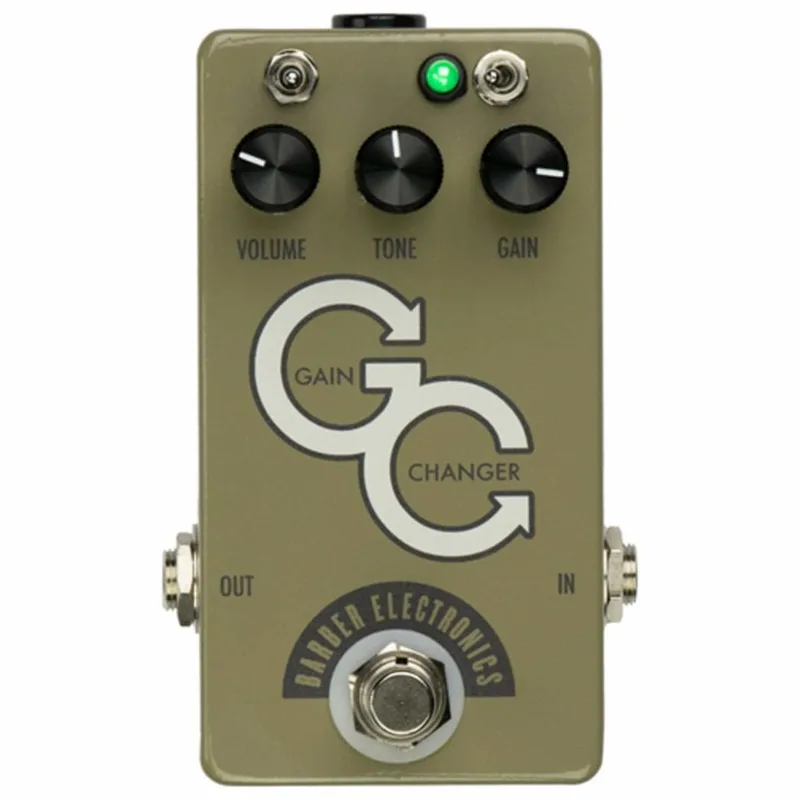


The Barber Gain Changer SR is a compact overdrive pedal from Barber Electronics, designed, in the maker's words, "to be a highly versatile and compact overdrive pedal"1. Barber says it incorporates sounds from the company's classic LTD, LTD SR and Unlimited pedals into one small box, aiming to "solve most guitar player's overdrive needs in one small pedal"1. The product page describes the SR model as improving "warmth, clarity and note separation" and harnessing "a vast spectrum of EQ and gain"2.
The pedal measures 2.3 inches wide, is hand-built, and carries a list price of $179.95 USD, with USPS priority shipping at $12 in the US2.
The controls and the three-way EQ switch
The Gain Changer SR keeps its control set simple: a volume control, a tone control, and a gain switch, plus the three-way EQ toggle that is the pedal's main feature31.
| Control | What it does |
|---|---|
| Volume | Sets the output level3 |
| Tone | Shapes the high end3 |
| Gain switch | Selects the gain setting3 |
| EQ switch (3-way) | Chooses between three EQ voices1 |
The EQ switch is where the SR earns its versatility. Barber's manual describes the three positions:
- Toggle right: flat EQ, like the LTD SR pedal1
- Toggle middle: thick-mid EQ, like the LTD v21
- Toggle left: a "flat+fat" setting, flat EQ with added fatness1
In practice this means you can move between the flat, sweet EQ of the LTD SR, the vintage snarling-fat EQ of the classic LTD v2, and a newer voice that combines flat EQ with a little added fatness, all from one toggle2.
Power and build
The SR runs on a 9 to 18 volt DC adaptor, and the manual is firm about polarity: "Make sure you use a 9-18 volt DC adaptor, it must be negative tip (center) or damage will result."1 Current draw is 12mA, low enough for most isolated supplies and daisy chains2.
No power adaptor is included, and the pedal does not accept internal batteries, so you will need your own 9 to 18V DC negative-tip supply before it will run1.
The build follows Barber's serviceability philosophy. The product page highlights "real honest solder lugs for jacks, True-bypass footswitch, toggles and pots," and notes there are no PCB-mounted through-panel parts that cannot be serviced on the road or that lead to high-cost repairs2.
Where it came from
The Gain Changer SR is part of a lineage. Barber Electronics built it by folding the sounds of the LTD, LTD SR and Unlimited pedals into one enclosure1. On JHS Pedals' blog, Josh traced the family tree: "This pedal evolved from these LTD drive pedals that he did in the past"4. He also called the Gain Changer his favorite of the maker's compact work: "my favorite thing he's done in the small enclosure with these settings."4
The designer behind it is David Barber, who drew the original Gain Changer service schematic himself; the drawing is dated December 6, 2012 and released for use only by permission of Barber Electronics3. That schematic shows the clipping stage built on 1n4148 silicon diodes3. Josh of JHS Pedals puts the designer's standing plainly:
"the guy who makes them, David Barber, is an industry legend."
On That Pedal Show, Josh of JHS Pedals called David Barber, who designs and builds the pedals, an industry legend, and noted that the Gain Changer evolved from the LTD drive pedals Barber had made earlier4.
Barber Electronics sells the SR direct, and buyers can email David Barber himself with questions; he offers to help choose the right pedal for a player's guitar, amp and playing style2.
How it differs from other Barber drives
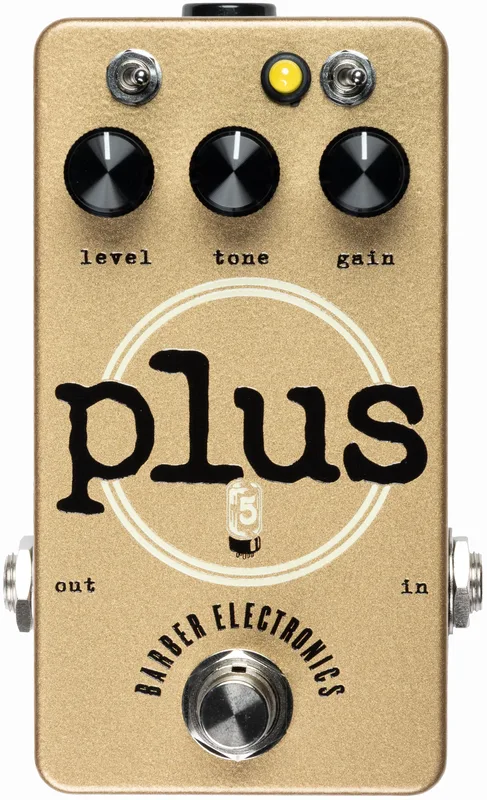
The SR's pitch is consolidation: rather than choosing between the flat LTD SR voice and the thicker LTD v2 voice, the EQ switch puts both, plus a third "flat+fat" option, in one 2.3-inch enclosure2. The related Barber PLUS V2 takes a different approach to a similar goal, with a gain control that sets sustain and harmonic content, and its own three-way filter switch (left for the least highs, middle for the most open and dynamic sound, right for something in between)5. The PLUS V2 also runs on a wider 9 to 30 volt DC negative-tip supply, where the SR tops out at 18 volts51.
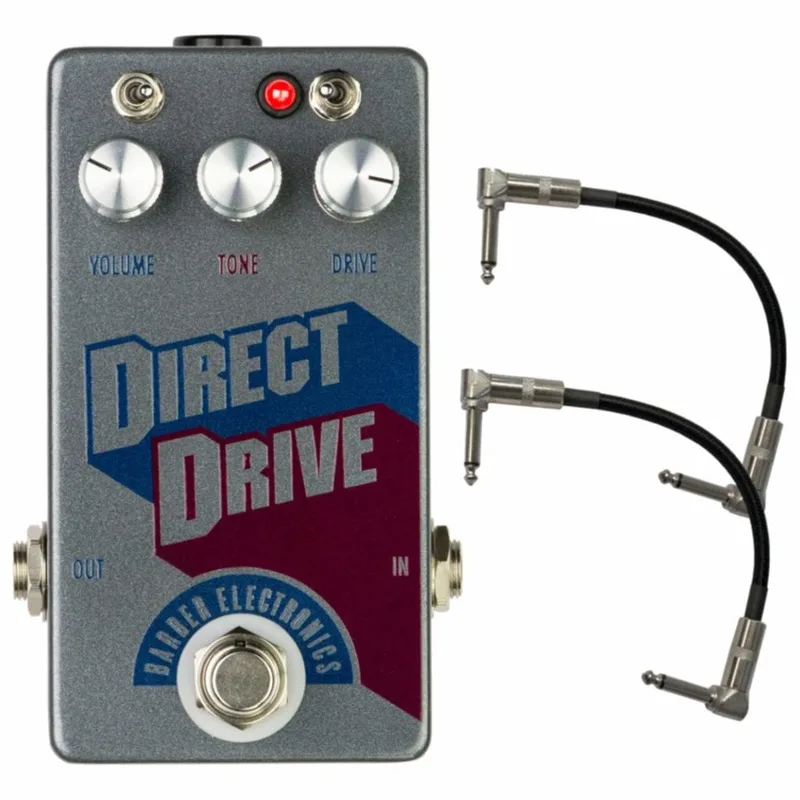
For players weighing the SR against other overdrives in the wider field, the Barber Direct Drive and Compact Direct Drive cover higher-gain territory on the distortion side of the line.
Videos
Visual Guy
pastorjaredstepp
roknfnrol
Questions
Does the Barber Gain Changer SR take a battery?
No. The Gain Changer SR does not accept internal batteries, and no power adaptor is included in the box. It needs an external 9 to 18 volt DC supply with a negative tip (center) polarity; the manual warns that using the wrong polarity will damage the pedal.
Is the Barber Gain Changer SR true bypass?
Yes. Barber lists a true-bypass footswitch among the pedal's build features, alongside toggle switches and pots with real solder lugs rather than PCB-mounted through-panel parts. When the pedal is off, your signal passes straight through without buffering.
What is the difference between the Gain Changer SR and the LTD SR?
The Gain Changer SR is a smaller, more versatile pedal that folds several Barber drives into one box. Its three-way EQ switch includes a right position that Barber says matches the flat EQ of the LTD SR, a middle position with the thick-mid EQ of the LTD v2, and a left position that adds fatness to a flat EQ.
Does the Gain Changer SR come with a power supply?
No. Barber's product page states that a power adaptor is not included, and the pedal does not take internal batteries. You need your own 9 to 18 volt DC negative-tip supply. US orders ship by USPS priority mail for $12.
Who designed the Barber Gain Changer?
David Barber, founder of Barber Electronics, drew the original Gain Changer service schematic himself, dated December 6, 2012. JHS Pedals' Josh has called him an industry legend. Buyers of the SR can email David Barber directly with questions about choosing a pedal.
What clipping diodes does the Barber Gain Changer use?
The original Gain Changer service schematic, drawn by David Barber and dated December 6, 2012, shows 1n4148 diodes in the clipping stage. These are small-signal silicon switching diodes, a common choice for a tight, clear overdrive clipping character.
Sources (5)
- Gain ChangerSR.doc, Barber Electronics
- Gain Changer, Barber Electronics
- C:\Users\David\Dropbox\Gain Cha, Barber Electronics, 2012-12-06
- UNDERRATED OVERDRIVES, JHS Pedals
- PLUS manual draft 4.0, Barber Electronics