The Behringer PEDAL FLANGER is a flanger pedal from Behringer, built as a tribute to the Tycobrahe Pedalflanger, a rare analog flanger from 19761. Where the original was a massive unit, Behringer's version is considerably more compact, but it keeps the idea that made the Tycobrahe unusual: a rocking foot pedal built into the flanger itself1.
Behringer bills it as "chorus, flange, leslie and vibe in one stomp," with four classic modulation worlds in a single all-analog circuit2. It is a true bypass pedal that runs on a 9V battery or the optional Behringer PSU-SB DC supply2.
A tribute to the Tycobrahe Pedalflanger
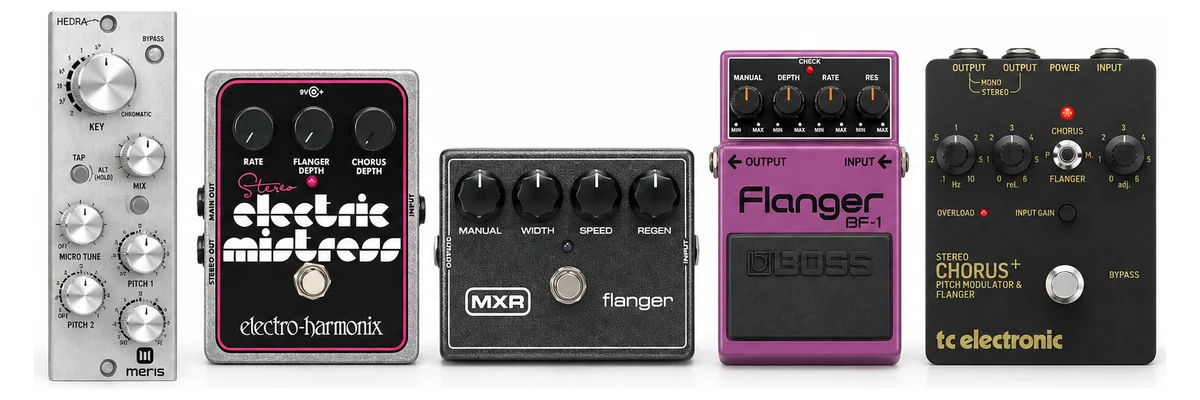
The pedal Behringer copied is one of the most obscure classics in flanger history. The Tycobrahe Pedalflanger was released in 1976, and Free The Tone, which has studied the unit, calls it "a very rare effects unit"31. JHS Pedals groups it with "the classic (and absurdly expensive) analog flangers of the past like the Electro-Harmonix Electric Mistress," which tells you what original units cost on the used market today4.
Gearnews reported one piece of lore about the original: "Rumor has it that Black Sabbath's Geezer Butler used both pedals extensively on the band's albums in the early '80s"1. That rumor is attributed, not confirmed, but it is part of why the Pedalflanger carries the reputation it does among bass players especially.
Behringer unveiled its version on September 18, 2026, with pre-order pricing of $96.30 USD at Sweetwater in the US and 79 euros at Thomann in the EU1. Gearnews also listed the price as $74.00 / £66.00 / 79.00 EUR, so the two figures for the US price differ between the announcement and the pricing roundup in the same article1. Delivery was still listed as several months out1.
"Compared to the massive 1976 original unit, Behringer's Pedal Flanger is considerably more compact."
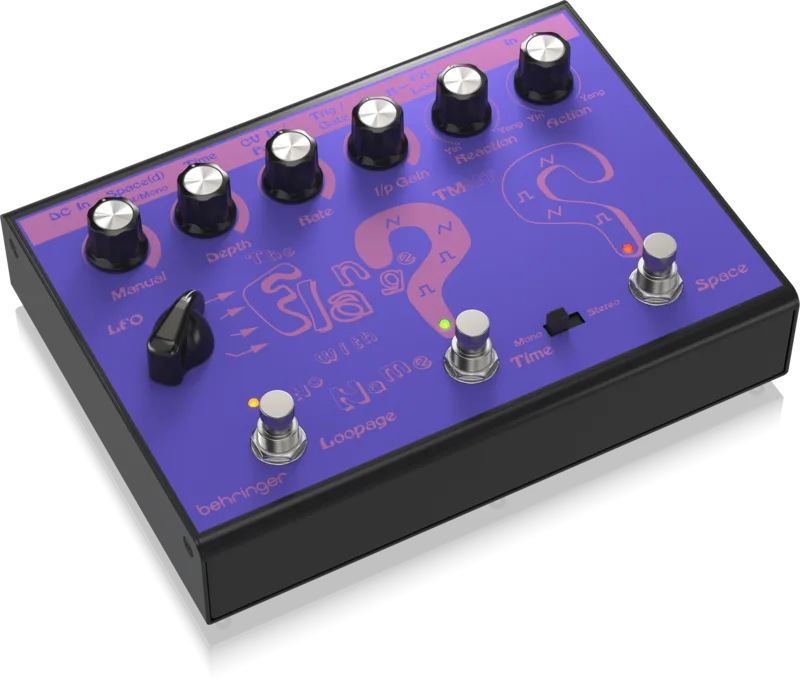
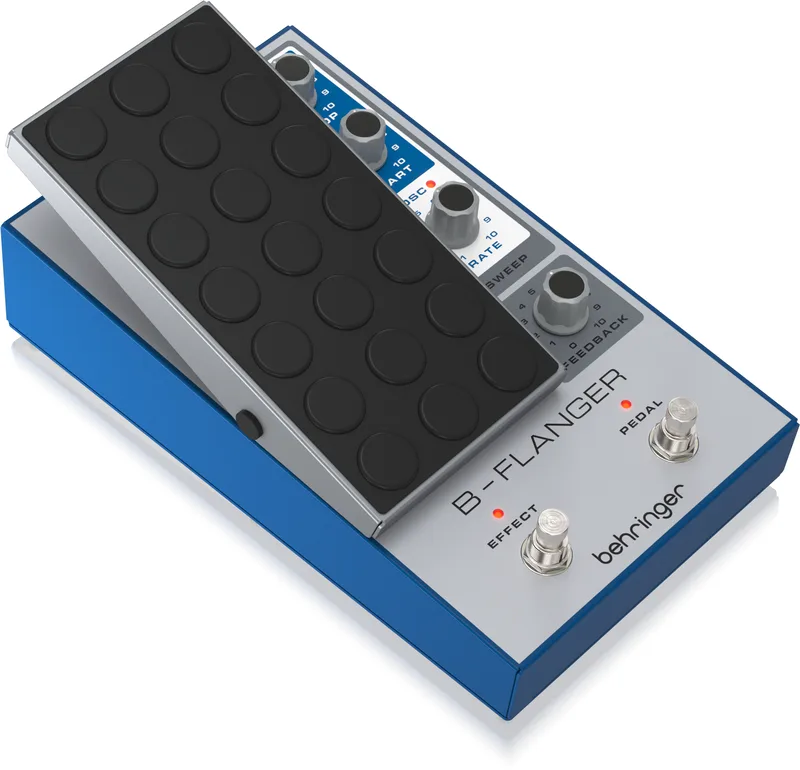
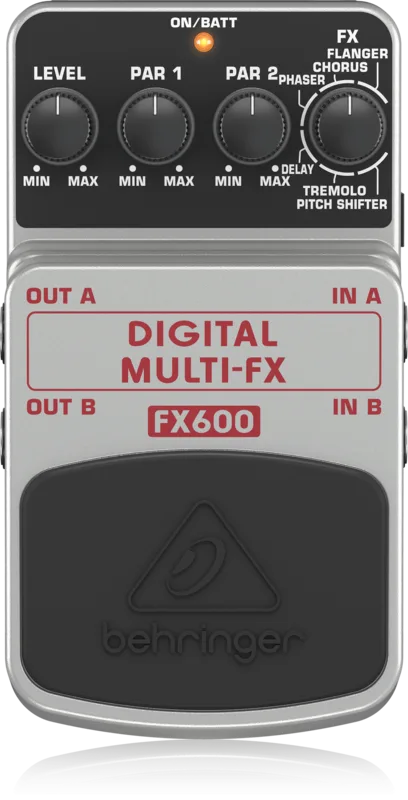
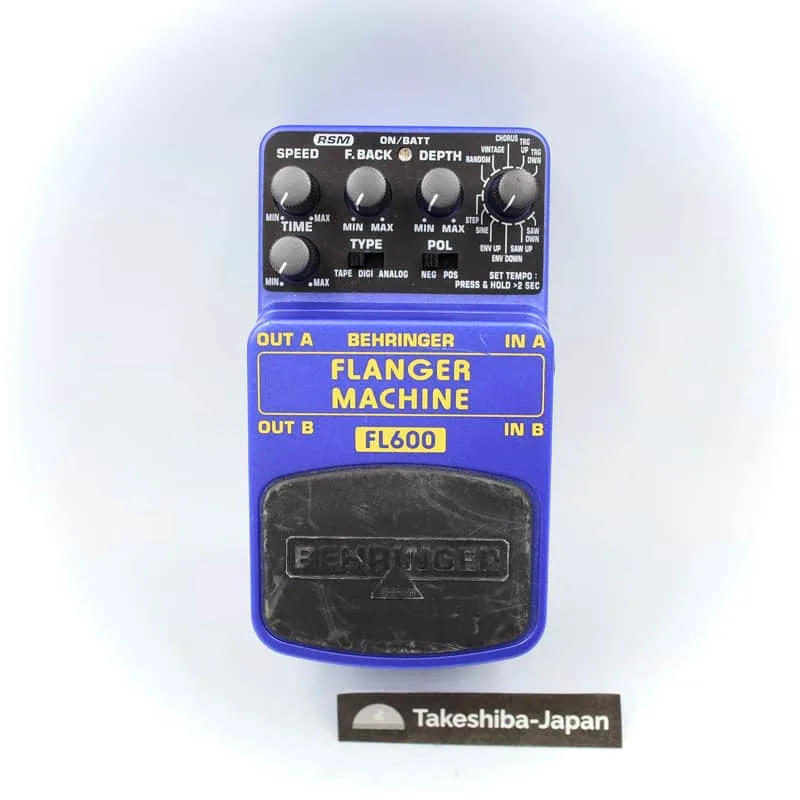
This is not Behringer's only recent flanger project. Earlier in 2026 the company announced the Behringer FLANGE WITH NO NAME, its take on the 90s boutique Lovetone Flange With No Name, and it also sells the Behringer B-FLANGER and the Behringer FX600. The Pedal Flanger is the one aimed squarely at the Tycobrahe1.
The controls and switch positions
The control panel is simple. Two knobs, one switch, and the rocking foot pedal itself.
| Control | What it does |
|---|---|
| Spread | Sets the length of the delay1 |
| Intensity | Determines how intense the flanger effect is1 |
| Mode switch (Auto) | Tilting the pedal accelerates the LFO, making the effect more swirling and almost chorus-like1 |
| Mode switch (Manual) | The signal passes through the built-in filter, and the pedal turns into a wah1 |
| Foot pedal | Integrated pedal for manual filter sweeping in Manual mode2 |
Behringer's own description of the controls is that "dedicated controls for sweep spread and feedback intensity let you dial in everything from subtle stereo widening to space-rock chaos"5.
The Auto position is the hands-free option: the LFO sweeps the filter on its own, and rocking the pedal with your foot pushes the sweep faster and more swirling, almost chorus-like1. Manual is the opposite: the LFO stops and you ride the integrated foot pedal directly across the filter yourself, which turns the pedal into a wah21.
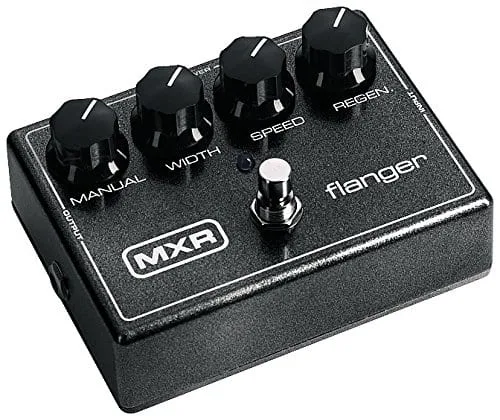
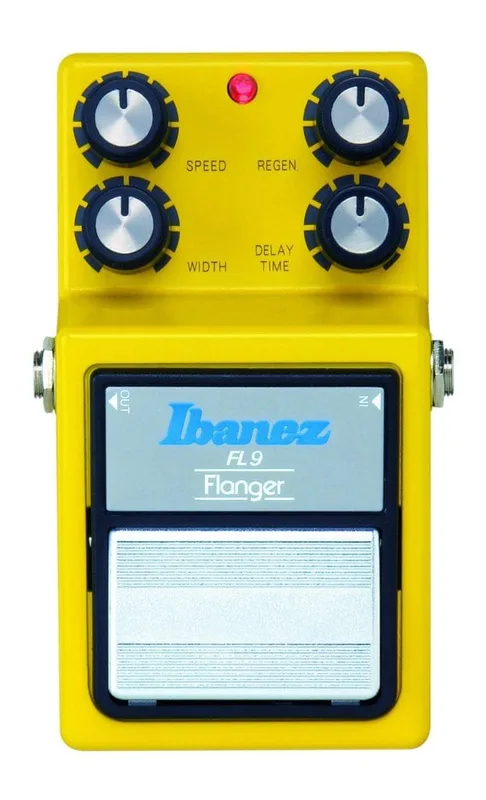
That manual sweep is the feature that separates this pedal from almost every other flanger on the market. Most flangers, like the MXR Flanger or the Ibanez FL9, give you knobs and leave it at that. A few others offer a frozen sweep: the Hartman Analog Flanger has a flange/filter switch that stops the internal sweep generator and fixes the pedal at any point in the sweep. The Pedal Flanger instead puts the sweep under your foot, the way a wah works6.
Power, bypass and connections
The pedal runs on a 9V battery or the optional Behringer PSU-SB DC supply2. That battery option is worth noting because not every flanger has it: the MXR M226 Flanger/Doubler cannot be powered by a battery at all, while the MXR Flanger and MXR EVH117 Flanger each take two 9-volt batteries.
Bypass is true bypass, which Behringer says keeps your clean tone clean when the pedal is off2. That matches the majority of current flangers, including the Fender Hammertone Flanger and the TC Electronic Thunderstorm Flanger, though not all of them: the Carl Martin Axis Flanger uses buffered bypass instead.
On outputs, Behringer's page describes the pedal's range as running from subtle stereo widening to space-rock chaos5, and Gearnews reported that "this pedal should at least be able to send out a stereo signal for subtle to intense widening effects"1. Behringer's own specifications do not spell out the jack layout, so players who need a confirmed stereo output, like the full-stereo Supro Flanger provides, will want to wait for the full manual before pre-ordering.
Questions
Is the Behringer Pedal Flanger based on the Tycobrahe Pedalflanger?
Yes. Behringer unveiled the Pedal Flanger in September 2026 as a tribute to the Tycobrahe Pedalflanger, an analog flanger originally released in 1976. Compared with the massive original unit, Behringer's version is considerably more compact, but it keeps the wah-style rocking pedal of the original.
Does the Behringer Pedal Flanger take a battery?
Yes. Behringer says the pedal runs on a 9V battery or the optional Behringer PSU-SB DC supply. That gives you a choice between battery power and a wall supply, unlike some flangers such as the MXR M226 Flanger/Doubler, which cannot run on a battery at all.
Is the Behringer Pedal Flanger true bypass?
Yes. Behringer states the pedal uses true bypass, which keeps your clean tone clean when the effect is switched off. That matches most modern flangers, though not all: the Carl Martin Axis Flanger, for example, uses buffered bypass instead.
Is the Behringer Pedal Flanger analog?
Yes. Behringer describes it as an all-analog circuit, and the pedal delivers its chorus, flange, Leslie and vibe sounds from that same analog signal path. It sits alongside other current analog flangers like the Supro Flanger and the Maxon FL-9.
What does the Manual switch position do on the Behringer Pedal Flanger?
In Manual mode, the signal passes through the built-in filter and the pedal effectively turns into a wah. You ride the integrated foot pedal directly across the filter, sweeping it by hand the way you would a wah pedal, rather than letting the LFO sweep it for you.
Does the Behringer Pedal Flanger have stereo output?
Behringer's product page describes sounds from subtle stereo widening to space-rock chaos, and Gearnews reported the pedal should at least be able to send out a stereo signal for subtle to intense widening effects. Behringer's own specifications do not spell out the jack layout.
Sources (6)
- Behringer Pedal Flanger: Is it a Wah? Is it a Flanger?, gearnews.com, 2026-09-18
- PEDAL FLANGER, Behringer
- 田村 明浩|Artists アーティスト|Free The Tone, Free The Tone, 2019-10-21
- 3 SERIES FLANGER, JHS Pedals
- PEDALFLANGER, Behringer
- Hartman Analog Flanger Pedal Review - Premier Guitar, Premier Guitar, 2008-10-15