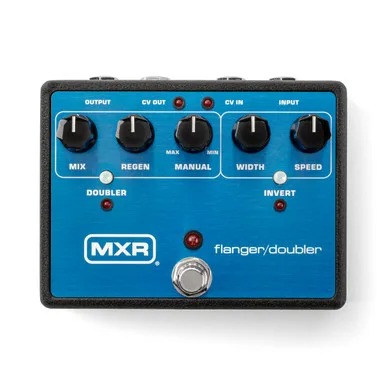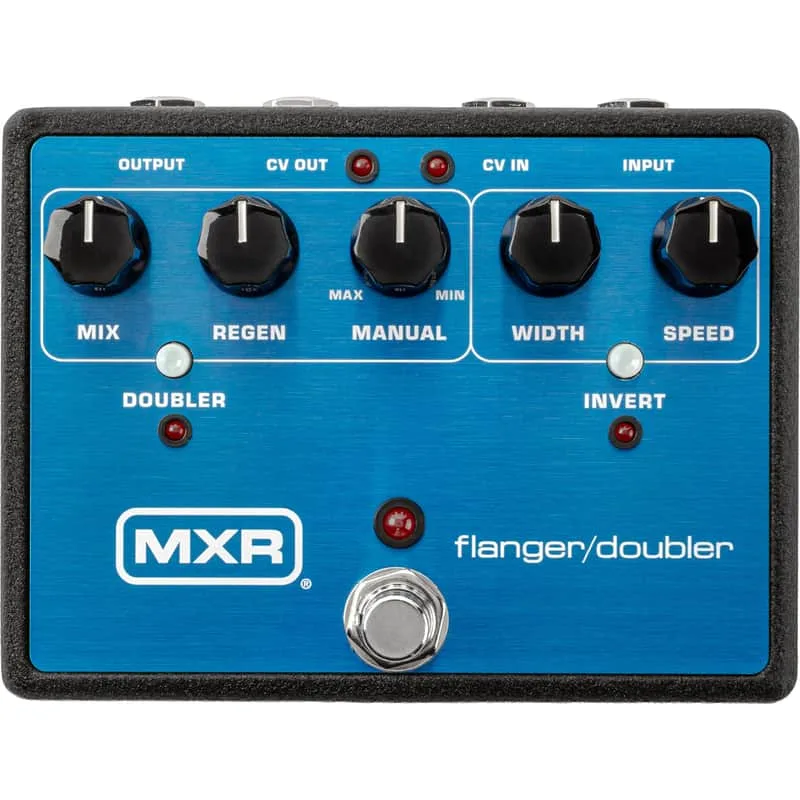

The MXR M226 Flanger/Doubler is an all-analog modulation pedal that puts two effects in one box: a flanger and a doubler. According to the manual, it "recreates the original MXR rack unit in pedal form, authentically capturing classic all-analog flanger and doubler effects" from the 1970s and 1980s. The original was a studio rack unit; Guitar Pedal X described the pedal as MXR reissuing "its 1970s Rack Unit Flanger/Doubler in a mid-size pedal enclosure."1
What it does
The pedal runs two distinct modes. In FLANGER mode, the delay time spans 0.33 ms to 5.5 ms, the short-delay territory where flanging lives. The manual describes this mode as "capable of metallic, jet-engine swooshes." Switch to DOUBLER mode and the delay time moves to 14 ms to 66 ms, a range the manual says can go "from vibrato, cho..." into chorus and doubling territory. Guitar Pedal X put it the same way: "the Doubler button switches up the Delay Time to a more expansive range for the Doubler," covering double-tracking style effects.21
The modulation itself is driven by an LFO with a rate range of 0.025 Hz to 18.5 Hz, so sweeps can run from slow, drifting movement to fast wobble.2
Controls and connectivity
The footswitch toggles the effect on and off, with a red LED showing when it is engaged.2 Guitar Pedal X's coverage of the pedal lists a Width control for the modulation sweep range and a Regen control, described as "Regen / Feedback / Intensity."1
A feature that sets this pedal apart from most flangers is external control. The CV IN jack "allows you to connect external 0-5V control voltage from synths, sequencers, or CV-capable expression pedals," bypassing the Manual, Width, and Speed knobs. For players with modular gear or a CV-capable expression pedal, that means the flanger's sweep can be driven from outside the pedal.2
Power and specifications
The manual states: "This pedal cannot be powered by a battery." It draws 160 mA, so a daisy chain shared with low-draw pedals may not be adequate; the manual names the Dunlop ECB003/ECB003EU adapter or an MXR Brick series power supply.2
| Specification | Value |
|---|---|
| Power supply | 9 volts DC2 |
| Current draw | 160 mA2 |
| Input impedance | > 220 kΩ (Instrument and Line settings)2 |
| Output impedance | < 1 kΩ (Instrument setting)2 |
| Max input level | 0 dBu (Instrument setting)2 |
| Flanger delay time | 0.33 ms to 5.5 ms2 |
| Doubler delay time | 14 ms to 66 ms2 |
| LFO rate | 0.025 Hz to 18.5 Hz2 |
| CV range | 0V to 5V2 |
The input has Instrument and Line settings, which matters if you want to run line-level gear such as a mixer send or synth through it.2
From 1970s rack unit to pedal
The M226's story starts with MXR's 1970s Flanger/Doubler rack unit. Guitar Pedal X's coverage frames the pedal as that rack circuit brought back: "MXR's M226R Flanger/Doubler reissues its 1970s Rack Unit Flanger/Doubler in a mid-size pedal enclosure."1 In a later piece on PastFX's own take on the same rack unit, the same writer noted that MXR's pedal version is "its own slightly different circuit take that in part removes some of the quirks and most of the noise" of the original.3
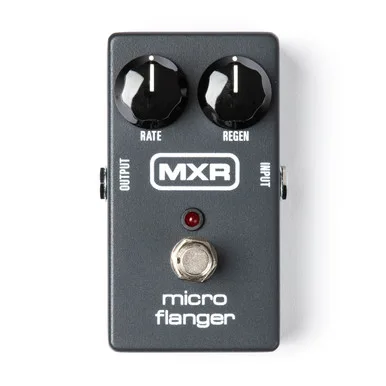
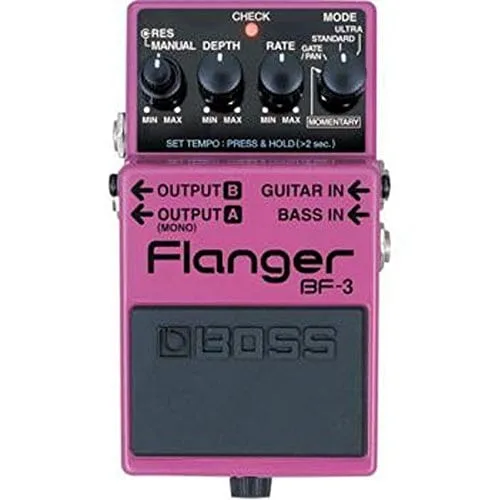
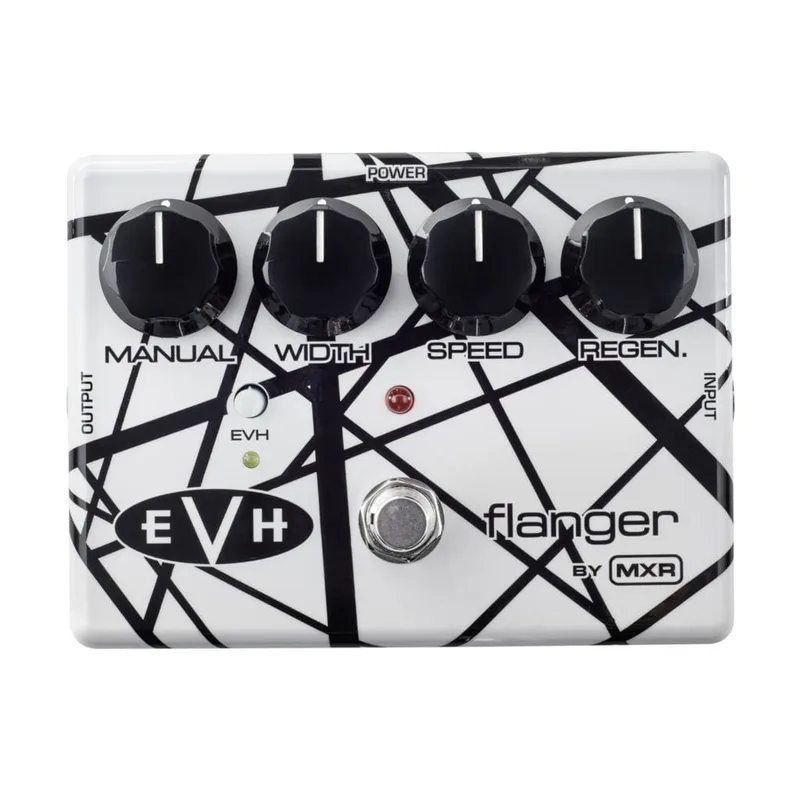
For players comparing options, the rack-unit lineage puts this pedal in a different corner of the flanger world from compact single-mode pedals like the MXR M152 Micro Flanger or the Boss BF-3 Flanger: it is a two-mode design with a long-delay doubler and CV control, aimed at players who want the rack unit's range of sounds in pedal form. See the flanger pedals page for the wider field213.
Videos
American Musical Supply
Sources (3)
- Guitar Pedal X, Guitar Pedal X, 2026-08-13
- M226.pdf, Jim Dunlop, 2026
- Guitar Pedal X, Guitar Pedal X, 2026-09-25