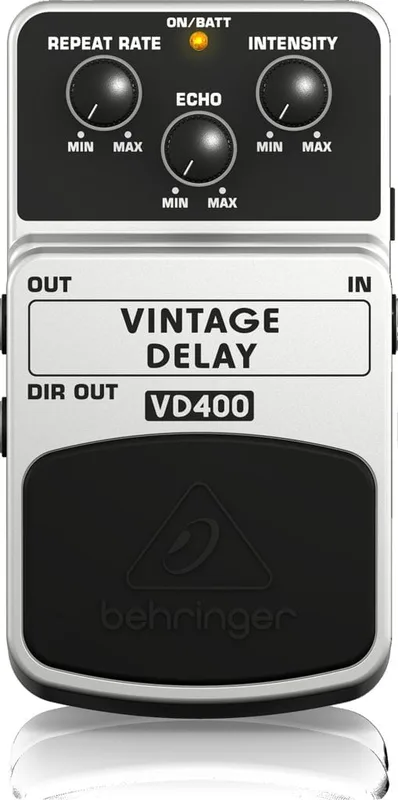


The Behringer Vintage Delay VD400 is a compact delay pedal from Behringer that provides up to 300 ms of true analog delay1. Behringer positions it as a bucket brigade-style analog delay, the kind of circuit associated with vintage echo units, and says it covers ground from elastic delay to vintage slap-back echo, evoking classic 1960s studio sounds2. It is a three-knob pedal aimed at players who want the character of an analog delay without a large outlay.
What it does and how it sounds
The VD400 is an analog delay, meaning the repeats are generated by a bucket brigade circuit, a chain of capacitor "buckets" that passes your signal along in small steps, rather than by a digital converter and memory chip. Behringer's own description of the sound leans on that heritage: "nothing sounds quite like the 'old-school' analog Bucket Brigade-style delay you get when you step on the VD400"1. The maker also says the pedal includes a noise reduction circuit, presented as an advantage of the design2.
With 300 ms of delay time, the pedal sits in short-to-medium delay territory. That is enough for slap-back echo, rockabilly-style repeats, and rhythmic delays that sit behind your playing, but it is well short of the second-plus times available on digital delays. Behringer's framing of the range, "from elastic delay to vintage slap-back echo," matches that shorter window2.
Controls and operation
The pedal keeps its control set to three dials, each dedicated to one function2:
| Control | What it does |
|---|---|
| Repeat Rate | Sets the delay time, how far apart the repeats fall2 |
| Intensity | Sets how many repeats and how strongly they recur2 |
| Echo | Sets the level of the delayed signal against your dry sound2 |
An amber LED on the pedal indicates when the Vintage Delay is activated, so you can see its state on a dark stage2. Behringer also says the top-quality on/off switch maintains excellent signal integrity in bypass mode, so your clean signal passes through the pedal without degradation when the effect is off2.
Power
The VD400 runs on either a 9V battery or Behringer's PSU-SB DC power supply, and the power supply is not included with the pedal1.
If you plan to power the VD400 from a pedalboard supply rather than a battery, you need to buy the PSU-SB separately or use a compatible 9V supply. Nothing comes in the box.
Battery power is a practical option for players who want to try the pedal without investing in a power supply, and it also means the pedal works standalone for practice or travel21.
Where it came from
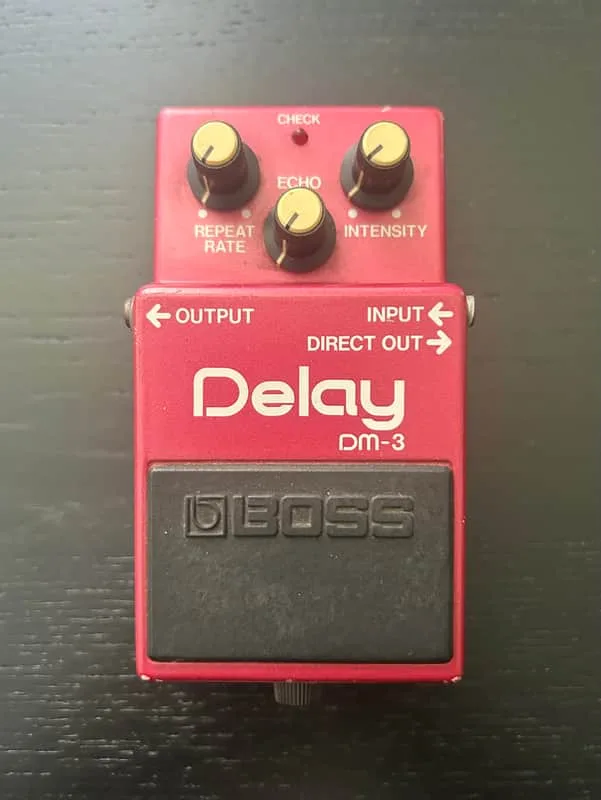
The VD400 is widely understood to be a copy of an earlier analog design. Josh Scott of JHS Pedals, in an article on Behringer's pedal line, identifies the original directly34:
"The original is a BOSS DM3, which originally came out in the mid-eighties and it is a true bucket brigade delay3."
Josh Scott, JHS Pedals3
The Boss DM-3 was a compact analog delay from the mid-1980s, and the VD400 follows the same bucket brigade approach with the same basic three-control layout. Scott also notes a difference in the power rails between the copy and the original in Behringer's vintage-inspired line, observing that "the Behringer runs at nine volts and the original runs at 24 volts" in the case of the Vintage Time Machine3.
What reviewers said
JHS Pedals' verdict on the VD400 is positive on both sound and value3:
"Honestly, this unit holds up really well and these aren't too expensive, so if you have a little extra cash, I recommend this or the new BOSS Waza DM2W analog delay by BOSS."3
Josh Scott, JHS Pedals3
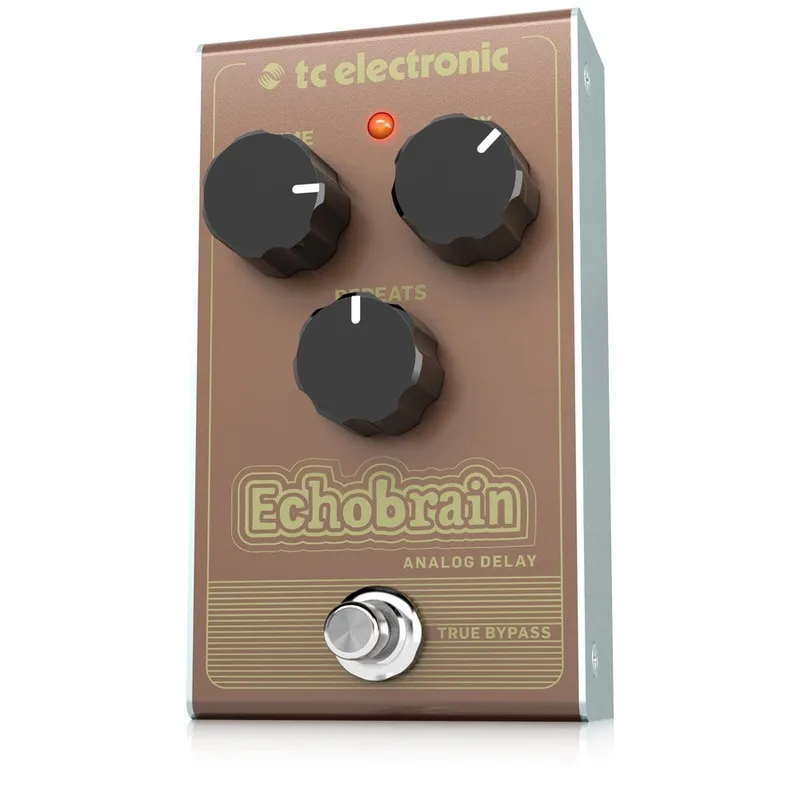
The TC Electronic Echobrain review at Premier Guitar adds a related observation about the VD400's place in the lineage of budget analog delays: "it's quite likely the Echobrain is an improvement and update of the Behringer VD400," which places the VD400 as an earlier step in that line4.
How it compares to other Behringer and budget delays
Behringer's delay lineup includes several pedals at different points on the price and feature scale, and the VD400 is the simplest analog option among them21.
| Pedal | Circuit | Delay time | Notes |
|---|---|---|---|
| VD400 Vintage Delay | Analog bucket brigade | 300 ms1 | Three controls: Repeat Rate, Intensity, Echo2 |
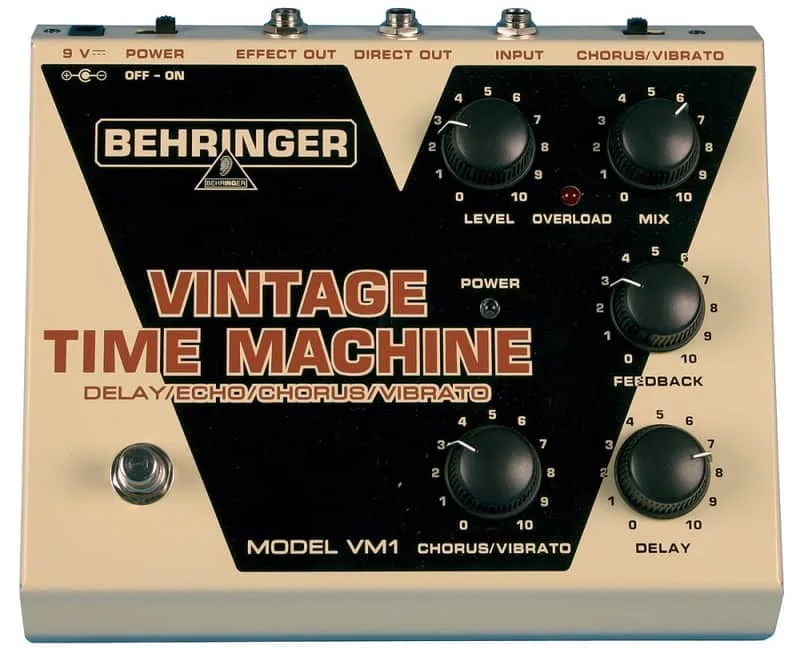
| VM1 Vintage Time Machine | Analog delay with chorus and vibrato | about 550 ms5 | Adds a modulation channel5 |
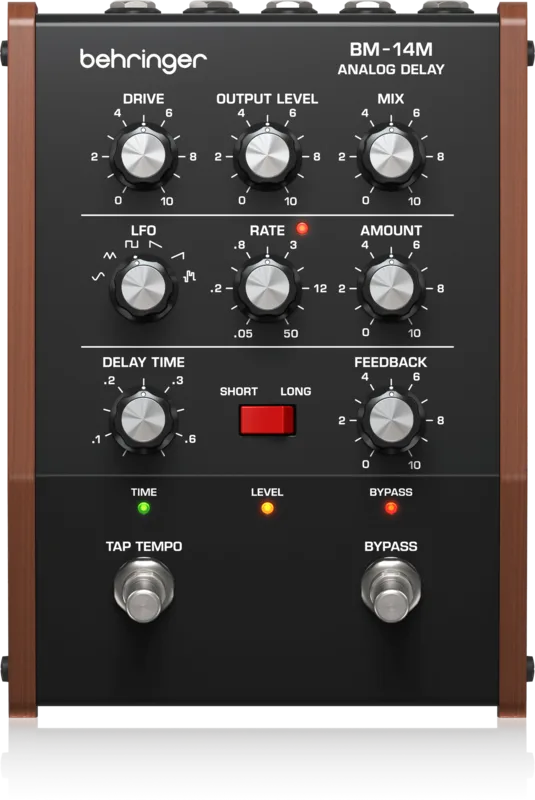
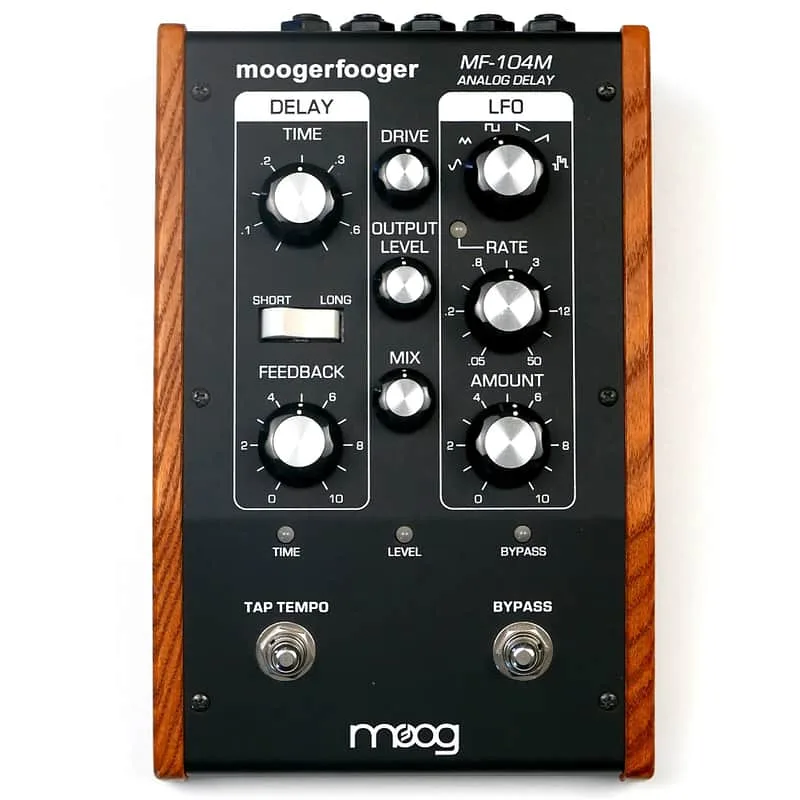
| BM-14M | Analog bucket brigade | Recreation of the Moog Moogerfooger MF-104M with MIDI input |
The VM1 Vintage Time Machine, reviewed by Pedal of the Day in 2019, is described as "an analog delay with a few tricks up its sleeve," offering about 550 ms of delay time along with chorus and vibrato modulation5. MusicRadar's review of the VM1 notes it offers 550 ms of analog delay with chorus and vibrato modulation, true bypass, and power from a nine-volt battery or equivalent center negative power supply6. Compared with the VD400, the VM1 roughly doubles the delay time and adds modulation, at the cost of a more complex pedal.
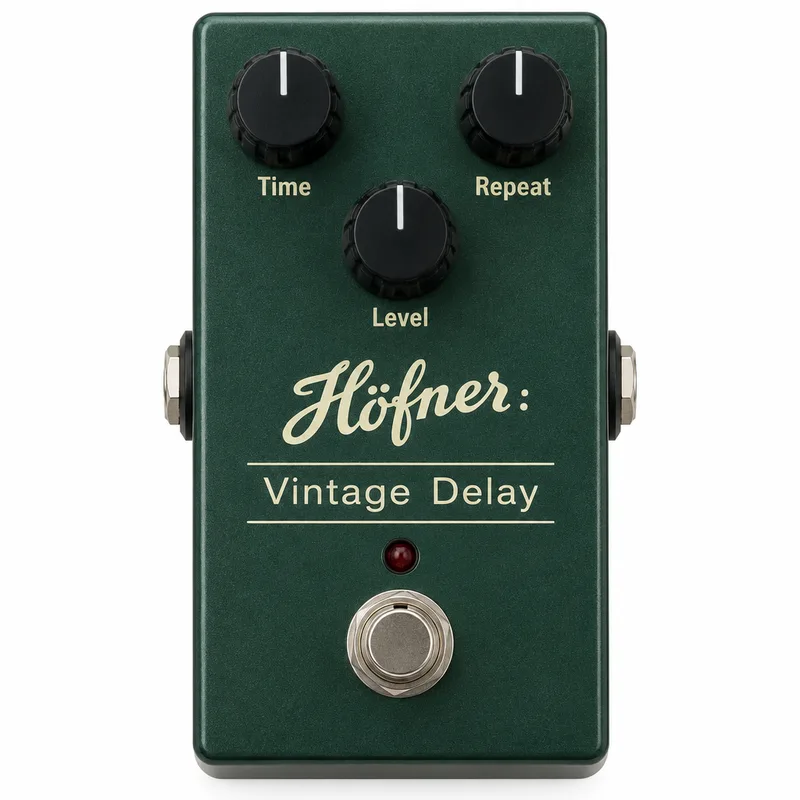
Outside Behringer, the Höfner Vintage Delay takes a different route to a vintage sound: RockBoard's PedalPedia entry says it "gives the sought-after warm sound of the famous tape delay devices, but works with a digital chip," with Time, Repeat and Level controls7. Where the VD400 is a true analog bucket brigade delay, the Höfner is a digital pedal voiced to imitate tape echo, so the two reach for a similar vintage character by different means.
Videos
Behringer
Ryan Lutton
intheblues
Questions
Is the Behringer VD400 analog or digital?
It is analog. Behringer describes the VD400 as providing up to 300 milliseconds of true analog delay, built around a bucket brigade-style circuit rather than a digital processor. JHS Pedals also identifies it as a true bucket brigade delay based on the Boss DM-3.
Does the Behringer VD400 take a battery?
Yes. Behringer says you can power the VD400 with either a 9V battery or the company's PSU-SB DC power supply, which is sold separately and does not come in the box. That makes it usable on a board or standalone without a power brick.
What is the maximum delay time on the Behringer VD400?
The maximum is 300 milliseconds, according to Behringer's product page. That covers slap-back echo and short, rhythmic delay repeats, but not the long ambient delays of digital pedals with second-plus delay times.
Does the Behringer VD400 have a noise reduction circuit?
Yes. Behringer's product page lists a noise reduction circuit among the pedal's features, alongside the analog bucket brigade delay circuit. The maker presents it as one of the advantages of the design.
Does the Behringer VD400 come with a power supply?
No. Behringer states that the PSU-SB DC power supply is not included, so you need to supply your own power supply or run the pedal on a 9V battery.
What is the Behringer Echobrain?
The Echobrain is a Behringer delay pedal that Premier Guitar's reviewer described as quite likely an improvement and update of the VD400. It is a later take on the same budget analog delay idea rather than a rebadge.
Sources (7)
- VD400 | Behringer, Behringer
- VD400 | Behringer, Behringer
- WHAT'S THE DEAL WITH BEHRINGER?, JHS Pedals
- TC Electronic Echobrain Review, Premier Guitar, 2017-09-16
- Behringer VM1 Vintage Time Machine Delay Echo Chorus Vibrato, Pedal of the Day, 2019-12-07
- Behringer Vintage Time Delay review, MusicRadar, 2009-03-12
- Vintage Delay by Höfner, RockBoard PedalPedia, 2026