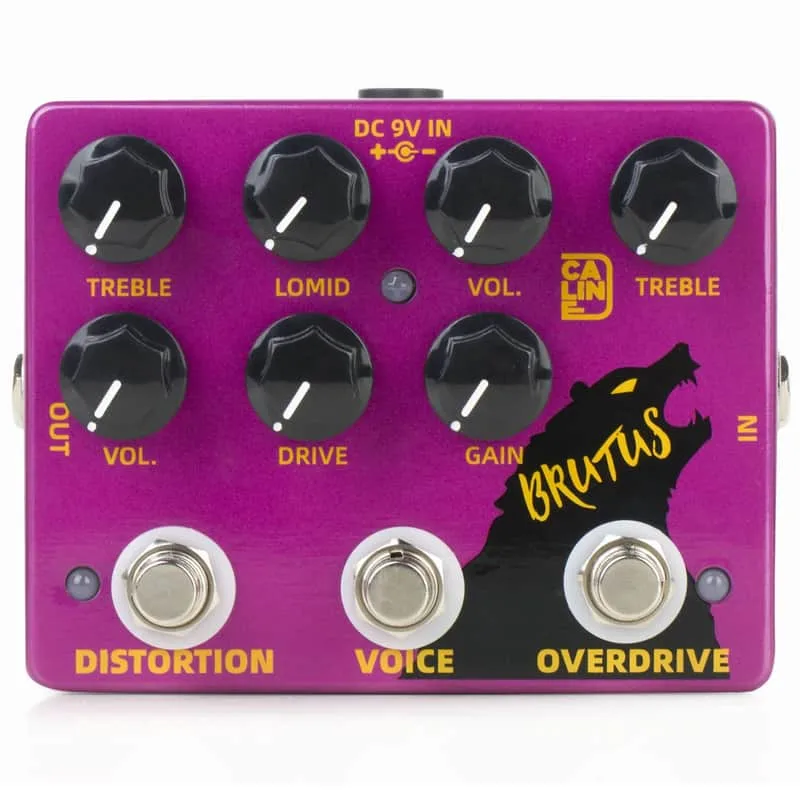


The Caline DCP-02 Brutus Distortion Overdrive is a dual-dirt pedal: two gain effects, a distortion and an overdrive, housed in one sturdy enclosure1. It belongs to Caline's DCP Series, and each side of the pedal is a circuit Caline already sells on its own, so the Brutus is effectively two familiar pedals in one box1.
The two circuits
The distortion side of the Brutus features Caline's CP-74 Action Replay Distortion. Pedal of the Day describes the sound it produces as "a wide and dynamic sound from just above overdrive to a crunchy distortion with lots of low dirt and growl"1.
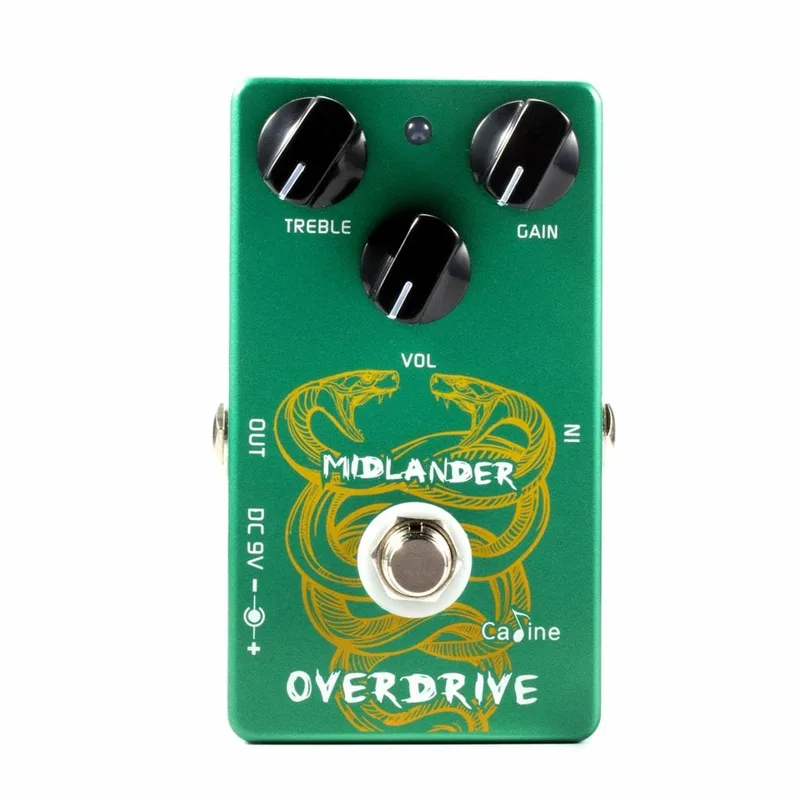
The overdrive side carries Caline's CP-49 Midlander, described as a classic tubescreamer overdrive effect. Its circuit centers on the 4558 chip, which the review calls "the world-renowned 4558 chip" that "provides a full, versatile sound"1. The same review notes that the smooth tones and rich harmonics of this kind of circuit have made it a favorite among blues, rock, fusion and metal guitar players1. The Midlander is also available as a standalone pedal: see the Caline Midlander Overdrive.
The controls
Each side has its own knob set, so the two effects are adjusted independently. The overdrive side has Treble, Gain and Volume knobs, while the distortion side has a 4-knob configuration of Volume, Drive, Treble and Lomid1.
| Section | Controls | What they do |
|---|---|---|
| Distortion | Volume, Drive, Treble, Lomid | The 4-knob configuration of the distortion side1 |
| Overdrive | Treble (output), Gain (drive), Volume | The three-control section of the overdrive side1 |
On the overdrive section, the Treble knob is the output-side tone control, Gain sets the amount of drive, and Volume adjusts the level to taste1.
The Voice switch
Alongside the knobs there is a Voice switch, which sets the order in which the two effects are placed in your signal chain1. That lets you run distortion into overdrive or overdrive into distortion, two stacking orders that behave differently, without changing where the pedal sits on your board.
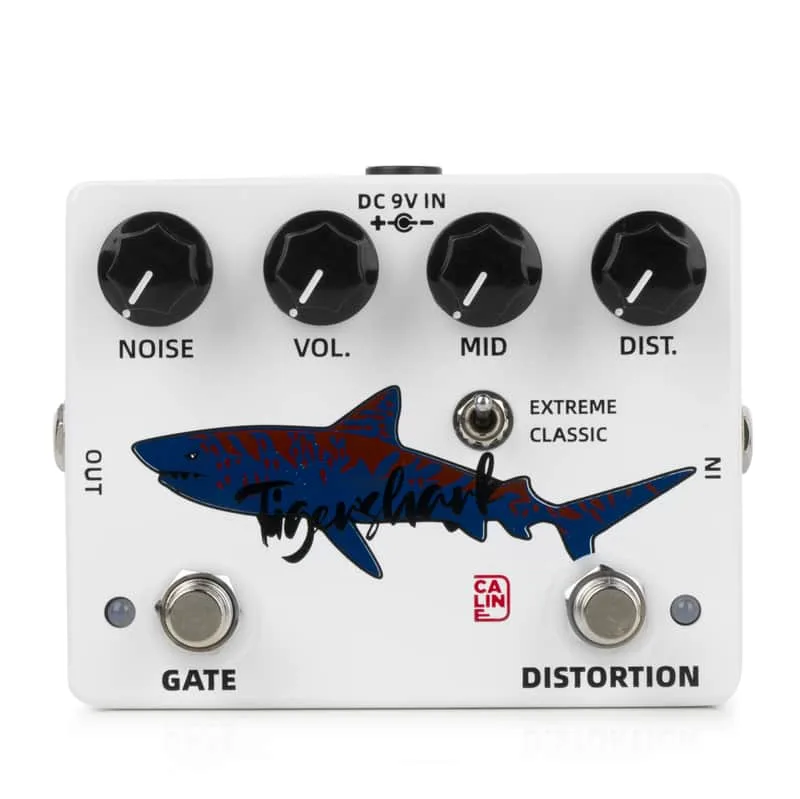
The Brutus is one of several dual-effect pedals in Caline's DCP Series. The Caline DCP-09 Tigershark Distortion Gate pairs a distortion with a noise gate in the same format1.
What reviewers said
Pedal of the Day reviewed the Brutus in December 2020, calling it "a powerful dual-dirt combo" and noting the true-bypass wiring of the circuit1.
Videos
Pedal of the Day
TheSuperFunAwesomeHappyTimePedalShow
Jo Bass
Questions
What does the Voice switch do on the Caline DCP-02 Brutus?
The Voice switch sets the order in which the two effects are placed in your signal chain. That means you can run the distortion into the overdrive or the overdrive into the distortion, which changes how the two circuits stack and interact. It is a way of getting two different combined sounds out of the same pedal without rewiring your board.
Is the Caline DCP-02 Brutus true bypass?
Yes. Pedal of the Day's review notes that the circuit features true-bypass wiring, so when the pedal is off your guitar signal passes through without going through the distortion and overdrive circuits.
Which pedals is the Caline DCP-02 based on?
The distortion side of the Brutus carries Caline's CP-74 Action Replay Distortion circuit, and the overdrive side carries the CP-49 Midlander, which Pedal of the Day describes as a classic tubescreamer overdrive effect. Both circuits are ones Caline already sells as standalone pedals.
Can the distortion and overdrive run in either order on the DCP-02?
Yes. The Voice switch on the pedal sets the order in which the distortion and overdrive are placed in the signal chain, so either circuit can come first.
What chip does the overdrive side of the Brutus use?
The overdrive side uses a 4558 chip, which Pedal of the Day describes as providing a full, versatile sound. The 4558 is a dual op-amp commonly found in overdrive circuits of this kind.
Sources (1)
- Caline DCP-02 Brutus Distortion Overdrive, Pedal of the Day, 2020-12-05